
Osteotomy Nose Before and After
When you notice a crooked nose, wide nasal bridge, or asymmetry from a past injury in the mirror, you might wonder if there's a way to correct these issues. An osteotomy nose surgery offers a solution by precisely repositioning the nasal bones to create balance and symmetry. This technique addresses structural concerns that can't be fixed through cartilage work alone.
Key Takeaways
- Osteotomy involves controlled cuts to the nasal bones to reposition them for improved symmetry and function.
- This technique addresses wide nasal bridges, crooked noses, nasal trauma, and large humps that affect overall facial balance.
- Recovery typically involves swelling and bruising that subsides within two weeks, with full results visible after several months.
- The procedure requires precision and expertise to achieve natural results while maintaining proper nasal function.
- Patients can expect improved facial harmony and better breathing after healing is complete.
What Is Osteotomy in Rhinoplasty?
Osteotomy refers to a surgical technique where controlled cuts are made in the nasal bones to reposition or reshape them. Unlike traditional rhinoplasty that focuses on cartilage and soft tissue, osteotomy during rhinoplasty targets the rigid bony framework of the nose.
The procedure uses a specialized instrument called an osteotome, which makes precise incisions in the bone. This isn't about breaking the nose in the traumatic sense. Instead, it's a calculated surgical maneuver that allows the bones to be repositioned for better alignment and proportion.
https://facialplasticsbh.com/broken-nose-healing-time-what-you-need-to-know/
Common Reasons for Osteotomy Surgery
A wide nasal bridge can make the nose appear disproportionate when viewed from the front. A crooked nose, whether from genetics or trauma, often needs bone repositioning to restore symmetry. When nasal bones healed improperly or developed asymmetrically, cartilage work alone won't correct the structural deviation.
Large nasal humps require osteotomy when a surgeon removes a prominent dorsal hump, creating an open roof. Nasal osteotomies close this gap by bringing the bones together.
Dr. Babak Azizzadeh, a Beverly Hills facial plastic and reconstructive surgeon, is recognized for his expertise in rhinoplasty and revision procedures. His approach combines precision and artistry to achieve natural results.

Types of Osteotomy Techniques
Surgeons use different osteotomy approaches depending on each patient's anatomy and goals. Lateral osteotomies are the most common, made along the sides where the nose meets the cheek. These cuts narrow the nasal pyramid, straighten deviated bones, or close an open roof after hump removal.
When dealing with extremely wide noses, an intermediate short osteotomy provides additional control closer to the bridge. Some surgeons use piezoelectric technology for more controlled cuts with potentially less trauma.
https://facialplasticsbh.com/facelift-vs-botox-which-is-right-for-you/
The Osteotomy Procedure
Before surgery, you'll have a consultation where your surgeon examines your nasal structure and determines if osteotomy is necessary. Digital imaging may help visualize potential outcomes.
On surgery day, you'll receive general anesthesia. Incisions are placed inside the nose or along the columella to minimize visible scarring. The surgeon uses an osteotome to make precise cuts, then repositions the nasal bones. Internal splints and an external cast support the new structure as healing begins.
Recovery and Timeline
After surgery, expect swelling and bruising around the nose and eyes, typically peaking within the first few days. Cold compresses and keeping your head elevated help minimize discomfort.
The external splint stays in place for about a week. Most patients return to light activities within seven to ten days. Initial swelling subsides significantly within two weeks, but subtle swelling persists for months. Your nose continues refining over six to twelve months.
Numbness and tenderness are common during the first few months. Discomfort is manageable with prescribed pain medication during the first week.
Before and After: What to Expect
The changes from osteotomy can be transformative. A wide nasal bridge becomes narrower and more refined without looking artificially thin.
For crooked noses, osteotomy restores symmetry that cosmetic treatments alone cannot achieve. When used to close an open roof after hump removal, the result is a smooth nasal bridge. Patients who had osteotomy to correct nose irregularities from past trauma often experience both aesthetic and functional improvements, including better airflow.
Final results develop over the following year as swelling fully resolves.

Choosing the Right Surgeon
Osteotomy requires advanced surgical skill and thorough understanding of nasal anatomy. Choose someone who specializes in facial plastic surgery and performs rhinoplasty regularly.
Look for a board-certified surgeon with a strong portfolio of osteotomy results. Ask about their approach to bone work and how they handle potential complications. Your surgeon should understand your specific concerns and explain whether osteotomy is necessary or if other techniques can achieve your desired results. This personalized approach is essential for outcomes that look natural and change the shape of your face harmoniously.
If you're considering osteotomy nose surgery, schedule a consultation with a specialist who can assess your unique needs and create a personalized surgical plan.
Potential Risks and Considerations
As with any surgical procedure, osteotomy carries potential risks. Swelling and bruising are expected but vary in severity depending on the extent of bone work required.
Asymmetry can occur if the bones don't heal exactly as planned. While skilled surgeons minimize this risk, minor asymmetries may require revision. Wait at least a year before considering corrective procedures, as the nose continues changing during healing.
Temporary numbness in the nasal tip or surrounding areas is common. Nerves can take several months to regenerate fully. Small risks of infection or excessive bleeding exist but are uncommon when proper surgical protocols are followed.
Conclusion
Osteotomy nose surgery offers a precise solution for structural nasal concerns that can't be addressed through cartilage work alone. Whether correcting a wide bridge, straightening a crooked nose, or restoring symmetry after trauma, this technique delivers significant improvements in appearance and function. With the right surgeon and proper expectations, osteotomy can enhance your facial harmony while maintaining your natural character.
CENTER for Advanced Facial Plastic Surgery specializes in rhinoplasty and facial reconstructive procedures, combining surgical expertise with personalized care to help patients achieve natural, balanced results.


Rhinoseptoplasty Surgery - What to Expect
Rhinoseptoplasty combines two procedures into one surgical session. It addresses both the external appearance of your nose and the internal structures that affect how you breathe. This dual approach can correct a septal deviation while reshaping your nose to better match your facial features. Understanding what happens at each stage helps you prepare realistically and recover more smoothly.
Key Takeaways
- Rhinoseptoplasty addresses both cosmetic concerns and breathing problems in a single procedure.
- The surgery typically takes two to three hours under general anesthesia.
- Swelling peaks within the first 48 hours and gradually decreases over several months.
- Most patients return to work within one to two weeks after surgery.
- Full results become visible after about one year when all swelling has resolved.
Why Choose Rhinoseptoplasty
Some people need their nose reshaped for aesthetic reasons. Others struggle with chronic breathing problems due to structural issues inside the nose. Rhinoseptoplasty handles both concerns at once, which means one recovery period instead of two separate surgeries spaced months apart.
https://facialplasticsbh.com/tag/nose-job/
You might consider this procedure if you experience persistent nasal congestion that doesn't improve with medication, frequent nosebleeds, or difficulty breathing through one or both nostrils. At the same time, you may want to refine the bridge, tip, or overall size of your nose. Combining these goals into one surgery reduces overall healing time and delivers comprehensive results.
The Difference Between Rhinoplasty and Septoplasty
Rhinoplasty focuses on the external structure of your nose. It reshapes bone and cartilage to change how your nose looks from the outside. Septoplasty works on the internal wall, called the septum, that divides your nasal passages. When this wall sits off-center, it blocks airflow and creates breathing difficulties.
Understanding the differences between rhinoplasty and septoplasty helps clarify why some patients need both. If your primary concern involves breathing, but you also want to improve your nose's appearance, rhinoseptoplasty addresses everything in one operation. This approach proves especially useful for patients recovering from trauma or those born with structural abnormalities.
Preparing for Your Consultation
Your first appointment with your surgeon sets the foundation for realistic expectations. Bring photos of noses you admire, but understand that your facial structure determines what's achievable. Your surgeon will examine your nose from multiple angles, discuss your breathing concerns, and take measurements.
Be honest about your medical history, current medications, and any supplements you take regularly. Some substances increase bleeding risk or interfere with anesthesia. Your surgeon needs complete information to plan safely. You'll also discuss whether you smoke, as this significantly affects healing and complication rates.
Dr. Babak Azizzadeh, a Beverly Hills facial plastic surgeon and rhinoplasty expert, is known for his precision in combining functional and cosmetic nasal surgery. His patient-focused approach ensures that each rhinoseptoplasty plan enhances both breathing and appearance. With years of experience performing complex nasal procedures, Dr. Azizzadeh is a trusted choice for patients seeking natural, balanced results.

What Happens During Surgery
Rhinoseptoplasty typically takes place under general anesthesia in an outpatient surgical center. The procedure usually lasts two to three hours, though complex cases may take longer. Your surgeon makes incisions either inside your nostrils (closed technique) or across the columella, the strip of tissue between your nostrils (open technique).
After accessing the internal structures, your surgeon straightens the septum by removing or repositioning cartilage and bone. Next, they reshape the external nose by adjusting the nasal bones, refining the tip cartilage, or reducing the overall size. Some patients need cartilage grafts taken from the septum, ear, or rib to provide additional support or structure.
The surgeon closes the incisions with dissolvable stitches and places a splint on the outside of your nose. Soft silicone splints may go inside your nostrils to support the septum as it heals. You'll wake up in recovery with packing or splints in place, though modern techniques often avoid traditional gauze packing that was common years ago.
Immediate Recovery Expectations
During the first two days, swelling and congestion are most noticeable, and your face may feel tight like a bad head cold. Keep your head raised and use ice packs on your cheeks to ease bruising. Expect mild drainage, avoid blowing your nose, and use only the pain medications your surgeon approves.
The First Week After Surgery
Your surgeon removes the external splint and any internal splints about one week after surgery. This appointment often brings relief, as you can finally breathe more easily and see the initial results. Don't be alarmed if your nose looks swollen or asymmetrical at this stage. Significant swelling remains, and your nose needs several more months to settle.
https://facialplasticsbh.com/facelift-vs-botox-which-is-right-for-you/
You can usually return to work or school within one to two weeks, depending on your job's physical demands. Avoid strenuous activity, heavy lifting, or anything that raises your blood pressure significantly. This includes intense workouts, bending over repeatedly, or straining during bowel movements.

Special Considerations for Younger Patients
Rhinoseptoplasty in children requires careful timing and evaluation. Surgeons generally wait until facial growth is nearly complete, typically around age 15 to 17 for girls and slightly later for boys. Operating too early can interfere with natural development and lead to complications as the face continues growing.
However, severe breathing problems sometimes warrant earlier intervention. Each case requires individual assessment to weigh the benefits against potential risks. Pediatric rhinoseptoplasty follows similar techniques to adult procedures but demands extra attention to growth patterns and long-term outcomes.
Combining Procedures for Comprehensive Results
Many patients combine rhinoseptoplasty with other facial procedures to address multiple aesthetic concerns. Fat transfers can add volume to areas like the cheeks or under-eye hollows, creating better facial balance. Some choose to include cosmetic treatments that address skin texture or other features.
Discuss these options during your consultation. Combining procedures means one recovery period, but it also extends surgery time and may increase swelling. Your surgeon will help determine whether multiple procedures make sense for your specific goals and overall health.
When to Contact Your Surgeon
Schedule a consultation to discuss whether rhinoseptoplasty aligns with your goals and explore your surgical options.
Call your surgeon immediately if you experience severe pain that doesn't improve with medication, fever above 101°F, excessive bleeding, or signs of infection like increasing redness or discharge. Vision changes, severe headaches, or chest pain require emergency medical attention.
Center For Advanced Facial Plastic Surgery - Rhinoseptoplasty Before & Afters


Conclusion
Rhinoseptoplasty addresses both breathing and cosmetic concerns in a single procedure. Recovery takes time, but knowing the process and following your surgeon’s guidance supports better healing and lasting results.
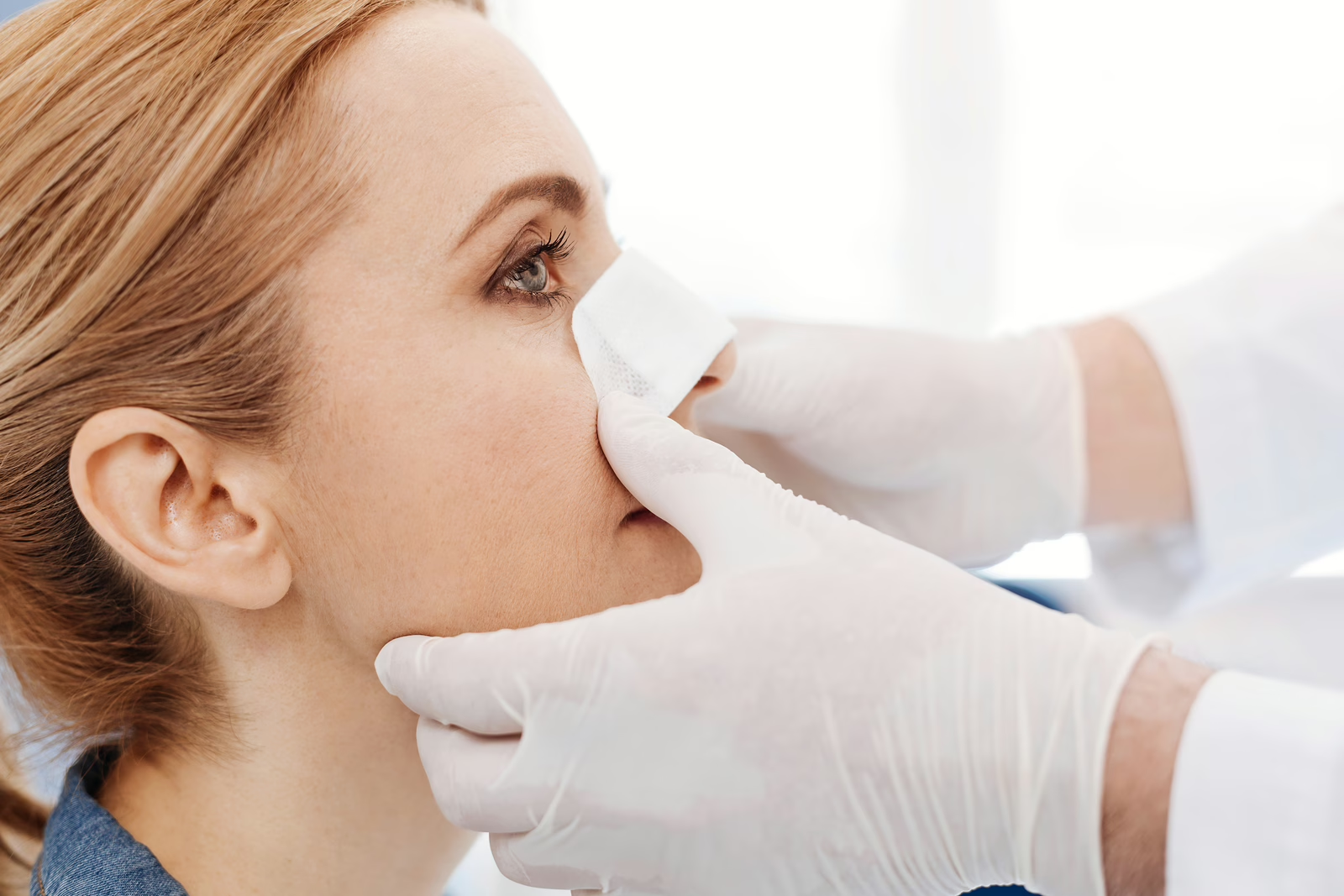
Rhinoplasty vs. Septoplasty: What's the Difference?
People who are considering treatments to enhance the appearance of the nose may come across septoplasty and rhinoplasty procedures. Both of these treatments have their respective pros and cons. And, when it comes to weighing the advantages and disadvantages of septoplasty vs. rhinoplasty surgery, it can be beneficial to work with an expert facial plastic and reconstructive surgeon.
Dr. Babak Azizzadeh of the CENTER for Advanced Facial Plastic Surgery in Los Angeles has comprehensive facial plastic and reconstructive surgery and head and neck surgery expertise. He understands the nose's impact on the facial appearance and can perform septoplasty or rhinoplasty surgery to help a patient achieve a nose that complements the rest of their face. Dr. Azizzadeh also offers insights into the rhinoplasty vs. septoplasty debate to educate his patients about both treatment options.
What Is a Rhinoplasty?
A rhinoplasty, also referred to as a nose job or nose surgery, is one of the most common cosmetic procedures. It is used to enhance the proportions of the nose and address nasal asymmetry.
When completed properly, a nose job can provide a patient with a balanced, natural-looking facial appearance. Nose surgery can also boost a patient's self-confidence, since their nose will appear proportional to their cheeks, eyes, and other facial features.
Why Do Patients Pursue Nose Surgery?
There are many reasons why people consider rhinoplasty surgery. These reasons include:
-
- Improved Facial Symmetry: Rhinoplasty can help a patient achieve a symmetrical facial appearance.
- Correction of Birth Defects and Sinus Issues: Nose surgery can be used to repair and eliminate nose deformities and address chronic sinusitis (nasal passage inflammation).
- Enhanced Breathing: A nose job can correct breathing issues.
Rhinoplasty surgery can be beneficial, but the procedure is not intended for everyone.
Are You a Good Candidate for a Nose Job?
The best candidates for rhinoplasty surgery may display one or more of the following characteristics:
-
- Nasal bridge that is too high or too low
- Wide or flaring nostrils
- Crooked, droopy, long or upturned nose
- Dorsal hump (hump on nose)
- Nose that is too wide or narrow
Dr. Azizzadeh requests an in-person consultation in Beverly Hills or virtual consultation via Zoom before a patient can receive a nose job. The consultation allows Dr. Azizzadeh to evaluate his patient's facial appearance and medical history. If Dr. Azizzadeh deems a patient to be a viable candidate for a nose job, he can then provide him or her with a personalized treatment plan.
What Rhinoplasty Surgery Options Are Available?
Several types of rhinoplasty surgeries are available, including:
-
- Male Rhinoplasty: Accounts for the distinct nose characteristics of men to improve nose symmetry and correct structural defects of the nose.
- Teenage Rhinoplasty: Addresses cosmetic and structural issues of the nose; teenage rhinoplasty is generally performed on boys as early as 16 or 17 years old and girls as early as 15 or 16 years old.
- Ethnic Rhinoplasty: Allows a patient to resize or reshape their nose and improve without sacrificing their ethnic facial characteristics.
Dr. Azizzadeh understands the intricacies of the nose. He strives to perform rhinoplasty surgery that can help a patient achieve a natural-looking and beautiful nose. To accomplish his goal, Dr. Azizzadeh meets with a patient and performs a full evaluation. After Dr. Azizzadeh confirms a patient is a good candidate for nose surgery, he develops a custom treatment plan. This approach ensures that Dr. Azizzadeh can provide his patient with a nose that looks natural and works properly.
What Is a Septoplasty?
A septoplasty corrects a deviated septum, i.e. bone and cartilage that divides the nostrils. A deviated septum blocks one side of the nose, reducing airflow and making it tough to breathe through one or both sides of the nose. In addition, a deviated septum can cause nasal dryness that leads to crusting or bleeding.
During a septoplasty procedure, a surgeon straightens and repositions the nasal septum. The surgeon can trim, reposition, or replace nasal cartilage or bone and cut and remove parts of the nasal septum before reinserting them into the correct position.
Why Do Patients Pursue Septoplasty Surgery?
Septoplasty can benefit patients who are dealing with a deviated septum and experience breathing issues. The procedure treats structural issues of the nose, so a patient can breathe comfortably through the nose.
Are You a Good Candidate for a Septoplasty?
Patients may qualify for a septoplasty if they have a deviated septum that causes breathing problems. They may also snore excessively, to the point where the issue makes it difficult to fall or stay asleep.
What Is the Biggest Difference Between Rhinoplasty and Septoplasty Surgery?
Rhinoplasty and septoplasty are procedures used to treat the nose. Yet, a nose job is commonly used to correct cosmetic problems that affect the appearance of the nose, while a septoplasty treats structural issues of the nose.
Can Rhinoplasty and Septoplasty Surgeries Be Performed at the Same Time?
Dr. Azizzadeh can perform rhinoplasty and septoplasty surgeries simultaneously. He does so if he believes that both procedures can help his patient optimize the form and function of the nose.
If a patient requires a rhinoplasty, septoplasty, or both, Dr. Azizzadeh prepares this individual for their surgery. He offers instructions to help his patient get ready for their surgery day. Dr. Azizzadeh also provides recovery tips and recommendations.
Septoplasty vs Rhinoplasty Recovery
The septoplasty and rhinoplasty recovery processes are similar. Both procedures can cause swelling, bruising, and other short-term side effects. Furthermore, it can take septoplasty and rhinoplasty patients one year or longer before they see the full results of their surgery.
Dr. Azizzadeh requests follow-up appointments throughout their recovery from septoplasty or rhinoplasty surgery. He monitors his patients' results in the weeks and months following surgery. Dr. Azizzadeh also encourages his patients to get in touch with him if they have concerns and questions during this time.
Rhinoplasty vs. Septoplasty: Which Nose Surgery Is Right for You?
Rhinoplasty and septoplasty are both nose surgeries, and determining which procedure can help a patient achieve their desired results can be challenging. Fortunately, Dr. Azizzadeh removes the guesswork commonly associated with rhinoplasty and septoplasty procedures.
Dr. Azizzadeh is happy to meet with patients to discuss septoplasty and rhinoplasty surgeries and other facial plastic and reconstructive procedures. To find out more, contact us online or call us today at 310-683-4085 to schedule a consultation with Dr. Azizzadeh.



How to Choose a Rhinoplasty Surgeon: 5 Things You Need to Consider
Many rhinoplasty surgeons are available across the United States. Each of these surgeons can perform a nose job. But, results can vary based on the surgeon.
Ultimately, the decision to undergo a rhinoplasty is a momentous one, and it needs to be taken seriously. And, finding a professional, qualified, and trustworthy rhinoplasty surgeon is a must.
How to Find a Rhinoplasty Surgeon
An online search can provide a great starting point to find a great rhinoplasty surgeon. The search takes only a few seconds to complete and provides the websites and contact information for dozens of rhinoplasty surgeons close to home.
Along with an online search, it helps to check out reviews of rhinoplasty surgeons. These reviews can provide insights into what it is like to work with a nose job surgeon.
Look for nose job surgeons who have earned awards from RealSelf and other organizations that honor members of the plastic surgery community. These surgeons have been recognized for their ability to consistently deliver outstanding nose job results.
How to Find a Good Nose Job Doctor
For those who are trying to figure out how to choose a rhinoplasty surgeon that meets their expectations, help is available. Now, let's look at five factors to consider when selecting a surgeon to perform your rhinoplasty.
1. Board Certification
Ask prospective surgeons if they are board-certified. If a surgeon has earned board certification, he or she has received extensive training in their specialty and passed stringent exams. Therefore, this surgeon is qualified to practice medicine in one or more areas.
The American Board of Facial Plastic & Reconstructive Surgery and American Board of Otolaryngology-Head & Neck Surgery are two of the leading providers of board certification for nose surgeons. By partnering with a rhinoplasty surgeon who possesses certifications from both of these organizations, a patient can feel good about their surgeon's ability to administer treatment with precision and care.
2. Before and After Photos
Nose job before and after photos give patients a glimpse into a rhinoplasty surgeon's ability to deliver the optimal treatment results. The photos show how a surgeon can perform a nose job that allows a patient to resize or reshape their nose and enhance their facial appearance. They also highlight how a surgeon can help a patient achieve a nose that complements their eyes, cheeks, and other facial features.
3. Clear Communication
The best nose surgeon will meet with a patient before a rhinoplasty. He or she will listen to what their patient has to say about nose surgery and respond to any concerns regarding treatment. Also, the surgeon will learn about a patient's nose job treatment goals.
Furthermore, a nose surgeon should ask their patient questions about their medical history and discuss which rhinoplasty options can deliver their patient's desired results. The surgeon should also discuss all aspects of rhinoplasty surgery, so their patient can establish realistic expectations about postoperative care, recovery time, and potential risks, among other things. The bottom line: if a nose surgeon does not make their patient feel comfortable with a rhinoplasty, this patient should search for another surgeon.
4. The Office
A nose surgeon's office itself should have a professional, friendly staff that treats a patient with respect and courtesy. The office should also have an ambiance that puts patients at ease.
Choose a nose surgeon that operates an accredited facility, too. In addition, verify that a nose surgeon's office is affiliated with a high-quality aftercare provider that is easily accessible.
5. Personalized Care
It is important to find a nose surgeon who treats each patient on a personal level. This surgeon avoids a “one-size-fits-all” approach to rhinoplasty surgery. Instead, he or she allocates the time, energy, and resources necessary to provide their patient with personalized care.
The Bottom Line on How to Choose a Rhinoplasty Surgeon
Research is key when it comes to choosing a rhinoplasty surgeon. The more an individual learns about a surgeon, the more likely it becomes that he or she can make an informed decision on whether this surgeon is the right choice for treatment.
Reach out to a nose job surgeon to learn from him or her, too. This allows an individual to get expert insights into nose surgery and how a surgeon approaches treatment. If the individual decides to move forward with treatment, he or she can feel confident in their surgeon's ability to deliver the best results.
Learn More About Nose Surgery
Dr. Babak Azizzadeh of the CENTER for Advanced Facial Plastic Surgery is a top choice for nose surgery in Beverly Hills. He is world-renowned for his facial plastic surgery and head and neck surgery expertise.
By meeting with Dr. Azizzadeh, a patient can learn about his holistic approach to nose surgery. Dr. Azizzadeh will share insights into nose surgery and determine if his patient is a good candidate for treatment. From here, Dr. Azizzadeh will work closely with his patient to ensure he or she is satisfied with their rhinoplasty.
Dr. Azizzadeh offers in-person consultations in Beverly Hills and virtual consultations via Zoom to people who are considering rhinoplasty surgery. To learn more or request a consultation, please contact us online or call us today at 310-683-4085.

What's Rhinoplasty? Here's Everything You Need to Know
Rhinoplasty, also known as a nose job or nose surgery, is used to improve the facial appearance and correct structural defects of the nose. It is an intricate procedure, and as such, patients should closely evaluate rhinoplasty surgery before they undergo treatment.
The CENTER for Advanced Facial Plastic Surgery in Los Angeles understands weighing the pros and cons of rhinoplasty surgery can be difficult. As part of our efforts to educate patients about nose surgery, let's examine some of the topics surrounding this treatment.
What to Know About Rhinoplasty Surgery
Rhinoplasty is one of the most popular cosmetic procedures in the United States. The American Society of Plastic Surgeons (ASPS) reports nearly 300,000 rhinoplasty procedures were performed nationwide in 2019. In addition, the number of patients to undergo rhinoplasty surgery has increased 41% from 2000 to 2019.
There is no such thing as a one-size-fits-all rhinoplasty surgery. In fact, several rhinoplasty treatments are available, including:
- Ethnic Rhinoplasty: Accounts for a patient's ethnic identity. Ethnic rhinoplasty describes any nose surgery that is performed on non-Caucasian patients.
- Nasal Reconstruction: Improves the facial appearance after an accident, nasal collapse, skin cancer, or trauma to the nose. Nasal reconstruction provides patients with their desired surgical outcomes and helps them maintain the integrity of the nasal function.
- Revision Rhinoplasty: Reshapes the nose following a primary rhinoplasty treatment. Revision rhinoplasty is ideal for patients who are unhappy with the cosmetic results of an initial nose job, or for those who need to restore the nasal function if it was impaired during a previous rhinoplasty.
- Teenage Rhinoplasty: Refers to nose surgery performed on a teenager. Teen rhinoplasty can be administered to teen girls as young as 15 years old and teen boys as young as 16. The procedure can be performed if a teen's nasal anatomy has fully developed.
Dr. Babaak Azizzadeh is globally recognized for his head and neck surgery and facial plastic and reconstructive surgery expertise. He uses his expertise to perform rhinoplasty procedures that deliver long-lasting results.
Reasons for Rhinoplasty
- Change the appearance of the nose
- Fix a problem relating to a nose injury
- Resolve breathing problems
Dr. Azizzadeh requests a consultation with a patient before he performs rhinoplasty surgery. At this point, Dr. Azizzadeh can learn the reason why a patient is considering a nose job. He can also perform an evaluation to determine if a patient is a good candidate for nose surgery.
Everything to Know About Rhinoplasty Consultations with Dr. Azizzadeh
Dr. Azizzadeh uses a consultation to learn as much as he can about a patient and their treatment goals. He evaluates his patient's facial appearance and medical history and learns about the patient's treatment expectations.
If Dr. Azizzadeh determines a rhinoplasty is a safe, effective option for a patient, he crafts a treatment plan. Dr. Azizzadeh tailors a nose surgery treatment plan to his patient. This ensures the patient is well-equipped to achieve the full results of treatment.
Rundown of Rhinoplasty
The rhinoplasty treatment process involves three steps:
- Meet with Dr. Azizzadeh to discuss treatment.
- Follow preoperative instructions.
- Undergo treatment.
Rhinoplasty surgery can be performed at an outpatient facility or hospital. It is usually performed under local or general anesthesia. Dr. Azizzadeh uses an open or closed technique during rhinoplasty surgery. He chooses the technique that ensures he can safely and effectively reshape cartilage and bone in his patient's nose.
Dr. Azizzadeh wants his patient to understand what to expect throughout rhinoplasty surgery. He provides details about how to prepare for treatment and what to expect on the day of surgery. Dr. Azizzadeh also offers postoperative care instructions and recovery tips.
Rhinoplasty Recovery Tips
Dr. Azizzadeh provides the following rhinoplasty recovery tips:
- Follow all postoperative care instructions
- Avoid smoking
- Avoid aspirin for at least a few weeks after surgery
- Avoid strenuous activities for at least a few weeks after surgery
- Limit sodium intake
- Keep the bandages dry
- Keep all dressings and splint in place for at least one week after surgery
- Keep the head elevated as much as possible
- Do not wear sunglasses or eyeglasses for at least six week
Patients who have questions regarding postoperative care should reach out to Dr. Azizzadeh. In doing so, they can receive additional support throughout the recovery process.

Share this Image On Your Site
How Long After Rhinoplasty Will It Take to See Results?
Everyone heals differently, and the nose job recovery time frame varies from patient to patient.
Most rhinoplasty patients see the full results of nose surgery within one to two years of treatment. At this time, a patient can enjoy a beautiful, natural-looking nose that complements their facial features.
Get Ready for Rhinoplasty Surgery
For those who are considering rhinoplasty surgery, meet with Dr. Azizzadeh. This allows a patient to learn about nose surgery and find out if he or she is eligible for treatment. Plus, Dr. Azizzadeh can offer tips and recommendations to help his patient get ready for rhinoplasty surgery.
Dr. Azizzadeh is happy to help patients prepare for rhinoplasty surgery. To learn more about nose surgery, please contact us online or call us at 310-657-2203 to schedule a rhinoplasty consultation.
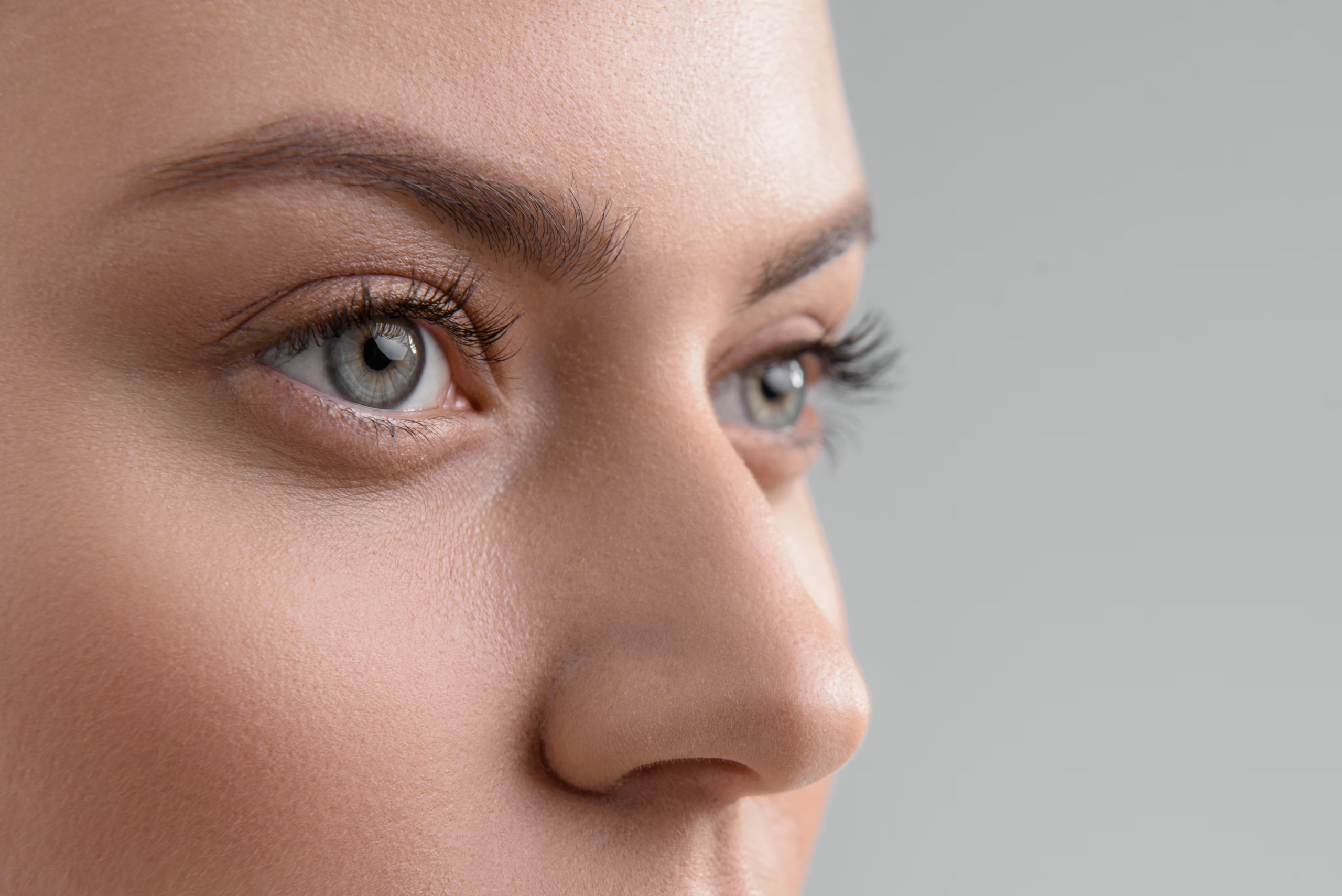
How to Care for Rhinoplasty Stitches
Taking care of rhinoplasty stitches following nose surgery is critical to achieve the best-possible treatment results. Fortunately, proper care of rhinoplasty stitches can be simple.
Proper Care of Rhinoplasty Stitches After Surgery: Here's What You Need to Know
A rhinoplasty patient must keep his or her external stitches clean and dry following treatment. This helps limit the risk of infection following nose surgery.
Hydrogen peroxide and antibiotic ointment often help dissolve rhinoplasty stitches inside the nose. A rhinoplasty patient should apply hydrogen peroxide to the suture lines inside the nose once a day with a Q-tip. Also, a rhinoplasty patient should apply antibiotic ointment to the nostrils and incision area twice a day.
We recommend using a humidifier to keep moisture in the air while you heal. Although a rhinoplasty patient can shower as long as they cover their nose with a piece of plastic, baths prove to be a better option to keep the nose dry in the days following nose surgery.
External rhinoplasty stitches are typically removed within one week of treatment. However, if persistent bleeding, redness, fever, infection or other problems occur near a patient's rhinoplasty stitches, this individual should notify his or her facial plastic surgeon immediately. That way, a rhinoplasty patient can quickly address these issues.
Long-Term Rhinoplasty Care Tips

A rhinoplasty may require only a few hours to complete, but a patient who wants to get the best nose job results requires a long-term commitment to nose care and maintenance. There are several ways a patient can take care of his or her nose after a rhinoplasty surgery, and these include:
- Use cold compresses on the eyes and cheeks for the first three days following surgery; after the first three days, use a warm compress on facial areas where persistent bruising is present.
- Keep the head elevated for at least one to two weeks following surgery.
- Avoid strenuous activity for at least three weeks following a rhinoplasty surgery.
- Protect the nose from excessive sun exposure for at least three months after surgery; a rhinoplasty patient should wear a brimmed hat and use sunblock with a sun protection factor (SPF) of 15 or higher.
At the CENTER for Advanced Facial Plastic Surgery, patient satisfaction is key. Dr. Babak Azizzadeh, a globally renowned facial plastic and reconstructive surgeon and nose surgery expert, works with patients throughout their rhinoplasty recovery to ensure they can enjoy the best-possible treatment results.
Dr. Azizzadeh's goal is to help a rhinoplasty patient achieve a beautiful, natural-looking nose that complements his or her facial features. To accomplish this goal, Dr. Azzizadeh provides rhinoplasty patients with in-depth instructions about how to care for rhinoplasty stitches and address bruising, swelling and other post-rhinoplasty symptoms.
Rhinoplasty is a complex procedure, and it may take at least a year until a patient enjoys the full results of his or her nose job. Dr. Azizzadeh strives to ensure a rhinoplasty patient's recovery remains on track, and he requests periodic appointments to monitor a patient's progress. These appointments allow Dr. Azizzadeh to identify any potential rhinoplasty recovery issues before they escalate.
Rhinoplasty Care FAQ
What types of nose job stitches are used during surgery?
There are two types of nose job stitches: dissolvable and non-dissolvable. Dr. Azizzadeh can determine if one or both types of stitches are necessary based on the type of nose job, extent of treatment, and other factors.
Dissolvable rhinoplasty stitches are used inside the nose, and the length of time required for these stitches to disappear varies. Some nose job stitches can dissolve within seven to 10 days of surgery, while others require up to three months to disappear.
Non-dissolvable stitches are used on the outside of the nose. Dr. Azizzadeh typically removes non-dissolvable stitches within seven to 10 days of rhinoplasty surgery.
Will treating stitches after surgery cause bleeding?
Patients who try to remove rhinoplasty stitches on their own may inadvertently do more harm than good. In these instances, patients can cause bleeding or nose pain. They can also hamper the results of nose surgery and increase the risk of infection.
When it comes to treating stitches after surgery, meeting with Dr. Azizzadeh is key. Dr. Azizzadeh can safely remove non-dissolvable stitches and limit bleeding and nose pain.
Will Wounds reopen when stitches are removed after nose surgery?
There is a risk that wounds will reopen if rhinoplasty stitches are removed too soon after surgery. Wounds can also reopen if too much force is applied to the treatment area following a rhinoplasty.
Conversely, leaving stitches in place for an extended period of time after a rhinoplasty can be problematic. In these cases, a patient is susceptible to extreme scarring.
Dr. Azizzadeh follows up with a rhinoplasty patient and evaluates their stitches shortly after surgery. This allows Dr. Azizzadeh to determine if it is safe to remove sutures from the nose.
Can you breathe after rhinoplasty surgery?
Yes, but patients sometimes experience breathing issues following rhinoplasty surgery. Nose job patients may experience difficulty breathing through the nose after surgery due to soft tissue swelling that occurs in the nose. However, this issue usually gets better within about one week after a rhinoplasty procedure.
What do you do after nose surgery?
The initial days after rhinoplasty surgery can be difficult for a patient, and it is vital for this individual to prepare accordingly. Nose surgery patients often experience pain and discomfort immediately after treatment. Therefore, a nose surgery patient should must arrangements for a friend or family member to drive him or her home following a rhinoplasty procedure. A nose surgery patient also should have someone stay with him or her for at least the first night after treatment.
Alternatively, many of our rhinoplasty patients choose to reserve a room at Pearl Recovery Retreat, the best surgical aftercare center in the area. At Pearl, patients will have a team of compassionate nurses looking after them 24/7 to ensure they are healing from their rhinoplasty properly.
Dr. Azizzadeh provides full details about what a patient should expect in the initial days after nose surgery. By doing so, a patient can pick up any pain medications before a rhinoplasty procedure and prepare for all aspects of the nose surgery recovery cycle.
 How long do you have to wear a bandage after a nose job?
Typically, a rhinoplasty patient is required to wear a nose bandage for one to seven days following surgery. This patient may also need to take baths instead of showers while he or she has bandages inside the nose. Dr. Azizzadeh will notify a patient about how long he or she is expected to wear a bandage after a rhinoplasty surgery.
Is it painful to get a nose job?
Rhinoplasty surgery is commonly performed under general anesthesia to help reduce pain. Yet some patients may experience nose soreness, tenderness, bruising and swelling in the first few weeks after surgery. A patient's nose may be more sensitive to pressure in the weeks following a rhinoplasty procedure, too.
Dr. Azizzadeh strives to provide each rhinoplasty patient with a safe, comfortable and effective treatment experience. He does everything possible to help minimize pain and discomfort during a rhinoplasty procedure. Plus, Dr. Azizzadeh offers in-depth postoperative rhinoplasty surgery recommendations to help a patient alleviate pain following treatment.
What is the fastest way to recover from a nose job?
Most rhinoplasty patients achieve the full results of surgery within about two years. For those who want to speed up the rhinoplasty recovery process, it is important to follow Dr. Azizzadeh's post-surgery instructions.
Dr. Azizzadeh develops a comprehensive rhinoplasty patient treatment plan that is tailored to the individual. Each patient recovers from rhinoplasty surgery at his or her own pace, but Dr. Azizzadeh remains in touch with a patient throughout the treatment recovery cycle. Dr. Azizzadeh requests follow-up appointments so he can check a rhinoplasty patient's recovery. He also is prepared to respond to a nose job patient's concerns or questions throughout the recovery cycle.
When can I go back to work after rhinoplasty surgery?
Most rhinoplasty surgery patients can return to work and other everyday activities within about two weeks of treatment. If a patient works a job that requires heavy lifting, additional time off may be required. Or, this individual may need to return to work with an activity restriction for the first few weeks following rhinoplasty surgery.
Schedule a Nose Surgery Treatment Consultation with Dr. Azizzadeh Today
Dr. Azizzadeh is happy to teach patients about all aspects of rhinoplasty surgery and help them achieve their desired nose job results. To find out more, please contact the CENTER today at 310-657-2203 to schedule a consultation with Dr. Azizzadeh.
Before choosing a surgeon, reading real patient feedback matters. View verified reviews for Dr. Azizzadeh on Google and RealSelf.

How to Care for Post-Rhinoplasty Swelling
If you want to get the best results from your rhinoplasty, you need to pay special attention to your nose and the surrounding area after the surgery. Rhinoplasty swelling is common post-surgery, and if you don’t take care of it, your recovery and healing could be delayed or impaired.
It’s important to closely follow all the directions your surgeon gives you for your post-operative care, and to call the surgeon’s office immediately if you notice any problems. Here is some basic information that you should know to effectively deal with rhinoplasty swelling.
Don’t be alarmed by the swelling.
It is part of the process, and the amount of swelling can vary depending on each individual. Treating it properly may reduce the period of time it takes for the swelling to go down, but it will require some patience. Initial swelling may go away after a few weeks, but it can take up to an entire year for all of the swelling to completely disappear.
Keep your head up.
You will be resting during the days immediately following the procedure. Make sure to keep your head elevated above chest level; not only can that help reduce swelling, it may also cut the risk of any bleeding that may occur and can help with drainage.
Watch your diet.
Focus on the foods that promote healing, such as fresh produce, whole grains, and the good fats in nuts and seeds, while avoiding processed foods. A low-sodium diet can help keep swelling down, and drinking plenty of water allows you to stay healthy and hydrated.
Ask your doctor about cold compresses.
It may be helpful to use cold packs in the immediate aftermath of surgery to reduce swelling. It’s important to note that the compresses should never be placed directly on your nose because that could cause damage to the surgical work; instead, put the packs farther away on your cheeks.
Take good care of your dressings.
Your surgeon will apply splints and bandages to your nose to support the area and to reduce swelling. Take care not to bump or move them so they don’t become dislodged. Most dressings stay in place for about a week after surgery; if you need to change any of the dressings, make sure you get instructions from your surgeon on how to do it properly.
Don’t overdo it on exercise.
Once the bandages are off and the initial swelling goes down, you may be tempted to get back to your normal workout routine. However, too much vigorous activity can exacerbate swelling in the weeks and months after surgery. Skip the heavy cardio and ask your physician for any suggestions for exercise substitutions while you heal.
Don’t hesitate to see your doctor.
If you’ve reached the three-month mark post-surgery and you think there is still too much swelling in and around the nose, schedule an appointment with your physician. Persistent swelling may require special dressings or steroids to help the problem.

What Are the Latest Trends in Facial Reshaping Surgery?
Don't expect the demand for facial reshaping surgery to slow down any time soon. In fact, there are several trends that could transform facial reshaping surgery in 2018 and beyond, and these trends include:
- Selfie Awareness
A recent American Academy of Facial Plastic and Reconstructive Surgery (AAFPRS) survey showed 42% of AAFPRS members said they are seeing people who request facial plastic surgery so they can look better on Facebook, Twitter, Instagram and other social networks. As more people strive to enhance their facial appearance for selfies, the push for non-invasive facial plastic surgeries may increase accordingly.
There is no shortage of non-surgical facial reshaping treatments available. Botox, for example, is a non-surgical cosmetic treatment that temporarily reduces fine lines, wrinkles and furrows caused by excessive muscle movements in the face. Dermal fillers like Voluma, Belotero and Sculptra help individuals rejuvenate their facial appearance, too.
- Millennial 'Man'-tenance
More men than ever before are choosing facial reshaping surgery. In an AAFPRS survey, 31% of men said they are "extremely likely" to consider a non-surgical or surgical facial reshaping treatment. Among these men, 58% were between the ages of 25 and 34 years old, and 34% were between the ages of 18 and 24.
In addition to Botox, dermal fillers and other non-surgical facial rejuvenation procedures, men can reap the benefits of various surgical treatments as well. For instance, male rhinoplasty helps men reshape their nose, resulting in an improved facial aesthetic. Other male facial reshaping surgeries like facelifts, neck lifts and chin augmentation frequently help men achieve a harmonious facial appearance.
- Non-Surgical Eyelid Lifts
Blepharoplasty, also known as eyelid surgery, is commonly used to eliminate bags from the lower eyelids or excess skin from the upper eyelids. The procedure offers a safe, effective option for those who want to treat volume loss in and around the eyes. Yet many people would prefer to avoid going under the knife as part of an eyelid lift.
Non-surgical eyelid procedures are now available that enable individuals to use injectable treatments to reduce hollowness of the lower eyes and laxity of the upper eyes. Injectable treatments like Restylane and Juvederm provide proven alternatives to traditional eyelid surgery. Going forward, these treatments may help people revitalize the appearance of their eyes without surgery.
Clearly, facial reshaping surgery is a promising field that continues to evolve. For those who are considering facial reshaping treatments, it is important to select a facial plastic and reconstructive surgeon who keeps pace with the latest facial reshaping surgery trends. That way, an individual can take advantage of the latest facial plastic and reconstructive surgery innovations to bolster his or her facial appearance.
Dr. Babak Azizzadeh of the CENTER for Advanced Facial Plastic Surgery in Beverly Hills is a globally recognized facial plastic and reconstructive surgeon who is dedicated to his craft. Dr. Azizzadeh's goal is to help each patient enjoy a beautiful facial appearance, and he uses the latest facial plastic and reconstructive surgery techniques to achieve the best-possible patient outcomes.
Additionally, Dr. Azizzadeh follows a tried-and-true approach to help patients get the most out of a facial rejuvenation surgery. Dr. Azizzadeh's holistic approach to patient care involves learning about a patient and developing a personalized treatment plan. The approach enables Dr. Azizzadeh to work hand-in-hand with a patient. Together, both Dr. Azizzadeh and a patient can reap the benefits of a successful facial rejuvenation treatment.
Dr. Azizzadeh is happy to meet with a patient and help this individual determine which facial rejuvenation treatment will enable him or her achieve the optimal results. To find out more about all of our facial rejuvenation surgery options, please contact us today at 310-657-2203 to set up a consultation with Dr. Azizzadeh.
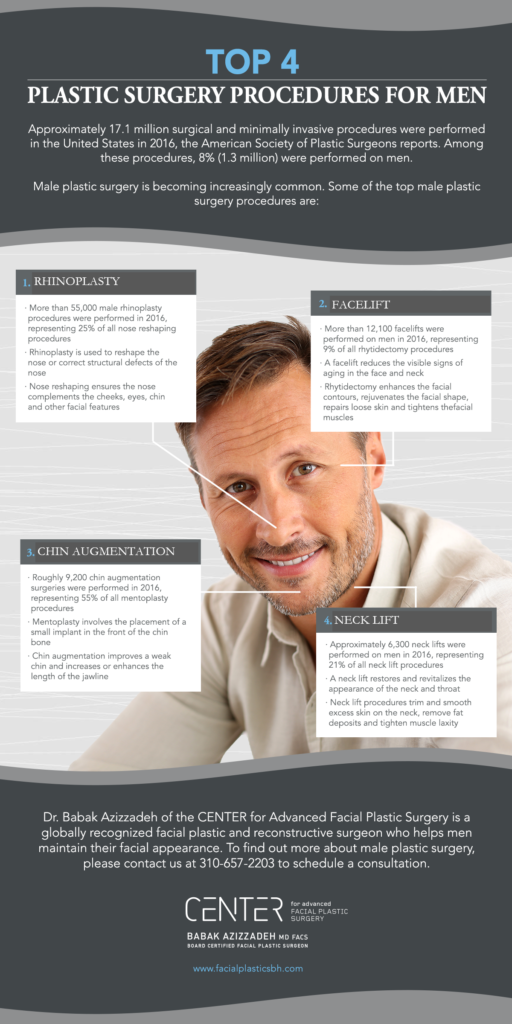
Top 4 Plastic Surgery Procedures for Men [Infographic]
Approximately 17.1 million surgical and minimally invasive procedures were performed in the United States in 2016, the American Society of Plastic Surgeons reports. Among these procedures, 8% (1.3 million) were performed on men.
Male plastic surgery is becoming increasingly common. Some of the top male plastic surgery procedures are:
Share this Image On Your Site
- Rhinoplasty (Nose Reshaping)
- More than 55,000 male rhinoplasty procedures were performed in 2016, representing 25% of all nose reshaping procedures
- Rhinoplasty is used to reshape the nose or correct structural defects of the nose
- Nose reshaping ensures the nose complements the cheeks, eyes, chin and other facial features
- Facelift (Rhytidectomy)
- More than 12,102 facelifts were performed on men in 2016, representing 9% of all rhytidectomy procedures
- A facelift reduces the visible signs of aging in the face and neck
- Rhytidectomy enhances the facial contours, rejuvenates the facial shape, repairs loose skin and tightens the facial muscles
- Mentoplasty (Chin Augmentation)
- Roughly 9,200 chin augmentation surgeries were performed in 2016, representing 55% of all mentoplasty procedures
- Mentoplasty involves the placement of a small implant in the front of the chin bone
- Chin augmentation improves a weak chin and increases or enhances the length of the jawline
- Neck Lift
- Approximately 6,300 neck lifts were performed on men in 2016, representing 21% of all neck lift procedures
- A neck lift restores and revitalizes the appearance of the neck and throat
- Neck lift procedures trim and smooth excess skin on the neck, remove fat deposits and tighten muscle laxity
Dr. Babak Azizzadeh of the CENTER for Advanced Facial Plastic Surgery is a globally recognized facial plastic and reconstructive surgeon who helps men bolster their facial appearance. To find out more about male plastic surgery, please contact us at 310-657-2203 to schedule a consultation.
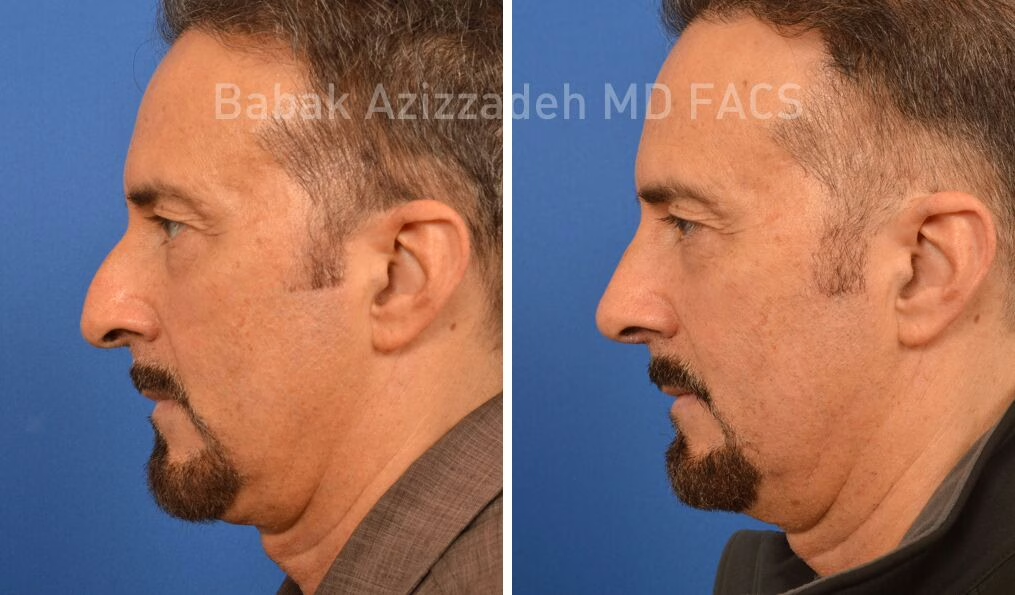
Why Rhinoplasty Is Becoming More Popular Among Men
Rhinoplasty is one of the most popular facial plastic surgeries, and it is easy to understand why. Nose surgery enables an individual to reshape the nose, leading to a more balanced and symmetrical facial appearance. Also, rhinoplasty helps correct structural and functional issues in the nose, enabling a person to restore the nasal function.
Male rhinoplasty also is gaining popularity. This procedure is designed specifically for men and allows them to enhance the facial aesthetic and address structural defects in the nose.
In 2016, nose reshaping ranked first among the top cosmetic surgical procedures for men in the United States, according to the American Society of Plastic Surgeons (ASPS). Additionally, 55,000 male rhinoplasty treatments were performed in 2016, up 3% year over year, ASPS reported. The aforementioned statistics show that men are becoming more aware of rhinoplasty and its benefits. If this trend continues, more men may undergo nose surgeries in the years to come.
What Are the Benefits of Male Rhinoplasty?
Male rhinoplasty is a comprehensive facial surgery designed to help men enhance their facial appearance and resolve breathing issues, such as a deviated septum and other structural problems in the nose. The procedure offers many benefits, including:
- Enhanced Nose Symmetry: Each male rhinoplasty is tailored to a patient. As such, the procedure ensures a patient can achieve a nose that matches his face.
- Repair of Structural Defects in the Nose: Male nose surgery has been shown to provide long-lasting repair of structural defects in the nose.
- Increased Self-Confidence: With a natural-looking and symmetric nose, a patient can improve his facial appearance and boost his self-confidence.
Dr. Babak Azizzadeh of The CENTER for Advanced Facial Plastic Surgery is a world-renowned facial plastic and reconstructive surgeon with many years of experience. He has performed male rhinoplasty procedures on dozens of patients, ensuring these individuals can reap the benefits of an enhanced facial appearance and improved nasal function.
Unlike many traditional facial plastic surgeons, Dr. Azizzadeh understands the needs of one patient may vary from those of another. To help a patient achieve the best-possible male nose surgery results, Dr. Azizzadeh dedicates the necessary time and resources to educate a patient. That way, each patient can learn about male rhinoplasty and determine whether the surgery is the right treatment based on his individual needs.
Are You a Candidate for Male Rhinoplasty?
Ultimately, the decision to undergo male nose surgery can be a difficult one to make. Dr. Azizzadeh typically recommends male rhinoplasty for men who display one or more of the following characteristics:
- Alar pinching
- Asymmetrical, crooked, droopy, long or under-projected nose
- Bulbous nose tip
- Disproportionate nostrils
- Dorsal hump (hump on nose)
- Hanging columella (skin and cartilage bridge between the nostrils)
- Nasal bridge that is too high or too low
- Nose that is too wide or too narrow
- Short, upturned nose
- Wide or flaring nostrils
Before conducting a male rhinoplasty procedure, Dr. Azizzadeh will perform an extensive patient evaluation. At this time, Dr. Azizzadeh will examine several aspects of the patient's facial appearance, including:
- Breathing system
- Frontal appearance of the nose
- Nasal tip and base
- Relationship between the nose and lips
- Relationship between the nose and cheeks, chin, forehead and eyebrows
To learn more about male rhinoplasty, please call us at 310-657-2203 to schedule a consultation.