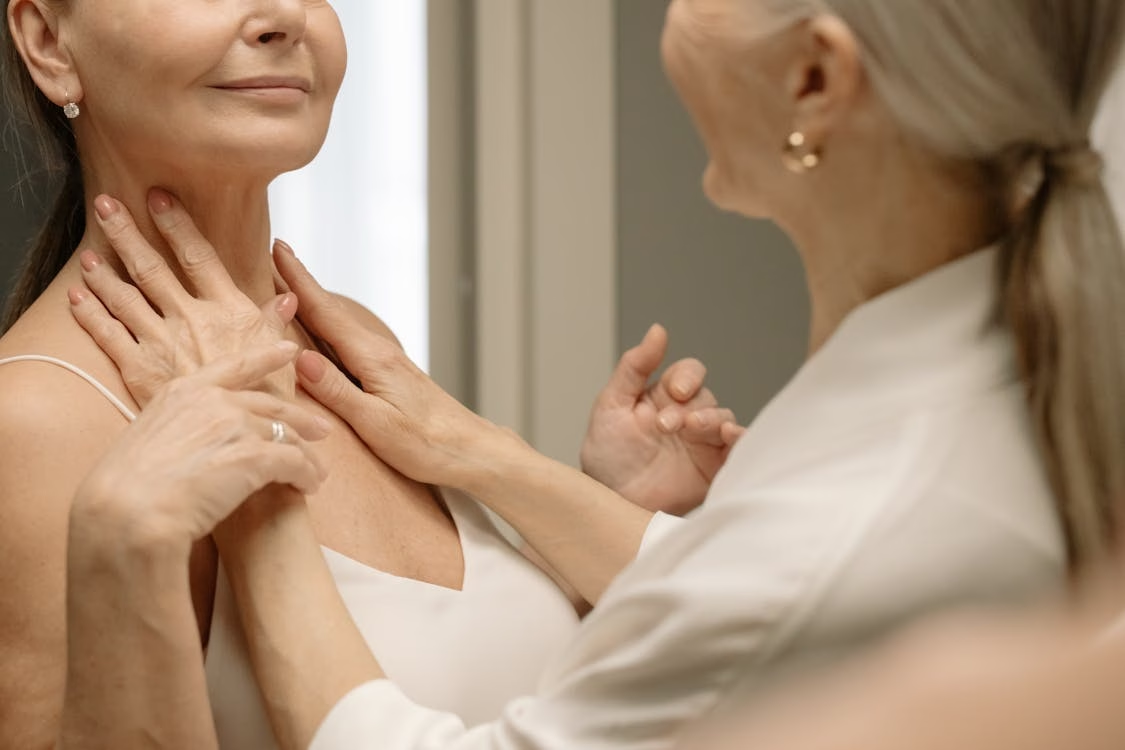
Revision Facelift: Why Some Patients Need More Than a Redo
A facelift can create meaningful facial rejuvenation when performed with precision and a clear understanding of facial anatomy. It can restore definition to the jawline, improve neck contour, and create a refreshed appearance that still looks natural. However, not every patient remains satisfied long term. Some experience recurrent laxity over time, while others feel their original results looked too tight, incomplete, or unlike themselves. That is where revision facelift surgery comes in.
A revision facelift is not just a repeat procedure. It is a more advanced operation that requires careful planning, especially when scar tissue, altered anatomy, and prior surgical changes are involved. It often demands a higher level of surgical judgment than a first-time facelift. Dr. Babak Azizzadeh, a Beverly Hills facial plastic surgeon known for his work in facial rejuvenation and facial nerve surgery, approaches revision facelift surgery with a focus on natural movement, facial balance, and long-term harmony.
Why Patients Consider Revision Facelift Surgery
Not every revision facelift means the first surgery was unsuccessful. Many patients were happy with their original results for years before new signs of aging appeared. Others simply want additional refinement as facial structure changes over time.
Common reasons patients explore revision facelift include:
- Recurrent jowling or neck laxity
- A result that looks overly tight, swept, or pulled
- Poor jawline or neck definition
- Persistent fullness beneath the chin
- Visible, widened, or poorly positioned scars
- Distorted earlobes, pixie ear deformity, or hairline changes
- Asymmetry of the face, jawline, neck, or smile
- Hollowing, flattening, or facial imbalance after surgery
- Facial volume loss after significant weight loss or GLP-1 treatment
- Early tissue relaxation related to connective tissue disorders
- Concerns about facial movement or possible nerve-related symptoms
- Dissatisfaction after a mini facelift, short-scar facelift, SMAS facelift, or prior deep plane facelift
Weight loss can be another reason patients explore revision surgery. Significant facial volume loss may create hollowness or loose skin that changes the overall result. In these situations, a thoughtful revision plan may combine lifting, contouring, or volume restoration.
According to the American Society of Plastic Surgeons, facelift surgery remains one of the most requested facial cosmetic procedures in the United States. This reflects continued interest in long-lasting facial rejuvenation solutions.
Healing vs. A True Problem: Knowing the Difference
Many patients worry too soon after facelift surgery because healing takes time. Swelling, firmness, numbness, and temporary asymmetry are common during recovery. These changes can make early results look different from the final outcome.
Dr. Azizzadeh was featured in Town & Country discussing whether a facelift can “slip.” In that feature, he explained that post-operative swelling and tissue settling can affect how results appear during the first several months. What looks concerning early on may simply be part of the normal healing process. Read the feature here.
This distinction is important because not every early concern requires revision surgery. Many patients benefit most from patience, observation, and follow-up care. A qualified surgeon can determine when healing is normal and when further treatment should be considered.
Why Revision Facelift Is More Complex Than a Primary Facelift
 A first facelift is performed on tissue that has not been surgically altered before. Revision facelift surgery is different because prior procedures may leave scar tissue and change normal tissue planes. These changes can make surgery more technically demanding.
Previous skin removal, deeper tissue tightening, or filler treatments may all influence how a revision must be planned. Blood supply and healing quality also become more important in secondary procedures. Because of this, revision surgery should never be approached as a routine touch-up.
Facial nerve safety is another key factor. The facial nerve controls smiling, blinking, and natural expression. In revision surgery, altered anatomy can make nerve preservation even more important.
What Makes a Facelift Look Overdone?
Patients often describe unsatisfactory facelift results in simple and personal terms. They may say they look pulled, too tight, or unlike themselves. These comments usually reflect balance issues rather than one isolated problem.
An overdone appearance can happen when too much tension is placed on the skin. It may also result from poor lift direction, incomplete neck treatment, or volume loss in the cheeks and midface. When these elements are not balanced, the result may appear unnatural.
A natural facelift should restore youthful structure without changing identity. The face should look refreshed rather than obviously operated on. Good revision planning focuses on proportion, softness, and facial harmony.
Related: How Do You Fix a Bad Facelift?
Why the Neck Is Often the Key to Revision Surgery
Many patients focus on the face when discussing facelift concerns, but the neck often tells the real story. A heavy or poorly defined neck can make the entire lower face appear older. Even when the cheeks look improved, unresolved neck issues may leave patients dissatisfied.
Persistent fullness may come from platysmal banding, deep neck fat, or submandibular gland prominence. Weak jawline support or a poor chin-to-neck angle can also affect the final appearance. In these cases, tightening skin alone may not create the desired improvement.
A successful revision often requires treating the face and neck as one connected unit. Better neck contour can dramatically improve jawline definition and facial balance. That is why neck analysis is a central part of advanced revision planning.
When Is the Right Time for Revision Facelift?

Timing matters greatly when considering revision surgery. In most non-urgent cases, patients should wait six to twelve months after their original facelift. This gives tissues enough time to heal and settle fully. Swelling must resolve before the true result can be evaluated. Scar tissue also softens over time, which helps with accurate surgical planning. Temporary tightness or asymmetry may improve naturally during this period.
There are exceptions that require faster evaluation. Infection, wound healing issues, facial weakness, severe pain, or hematoma symptoms should be assessed promptly. When medical concerns arise, waiting is not always appropriate.
Related: Different Types Of Facelifts Explained
Who Is a Good Candidate?
Good candidates for revision facelift are patients who have healed from a previous procedure but remain unhappy with the result. Others may have been satisfied initially and now want improvement years later due to aging changes. Each motivation should be carefully reviewed during consultation.
Candidates should be healthy enough for surgery and have realistic expectations. Revision procedures can create significant improvement, but no surgery can guarantee perfection. Understanding benefits and limitations is essential.
Some patients are better served by non-surgical treatments or by waiting longer before making a decision. Others may need additional procedures such as neck contouring, laser resurfacing, or volume restoration. Proper evaluation helps identify the most appropriate path forward.
👉 Request a private consultation with Dr. Azizzadeh to discuss your concerns and treatment options.
Why Experience Matters
Revision facelift surgery is one of the most demanding areas of facial plastic surgery. The surgeon must understand what was done previously, how tissues healed, and what can now be safely improved. This requires both technical skill and sound judgment.
Experience also matters because revision cases are rarely identical. Some involve scar management, while others require contour correction or deeper structural support. A personalized strategy is essential for achieving natural-looking results. The goal is not simply a tighter face. The goal is a balanced, refreshed appearance that still looks like the patient. Strong revision results respect both anatomy and identity.
About Dr. Babak Azizzadeh
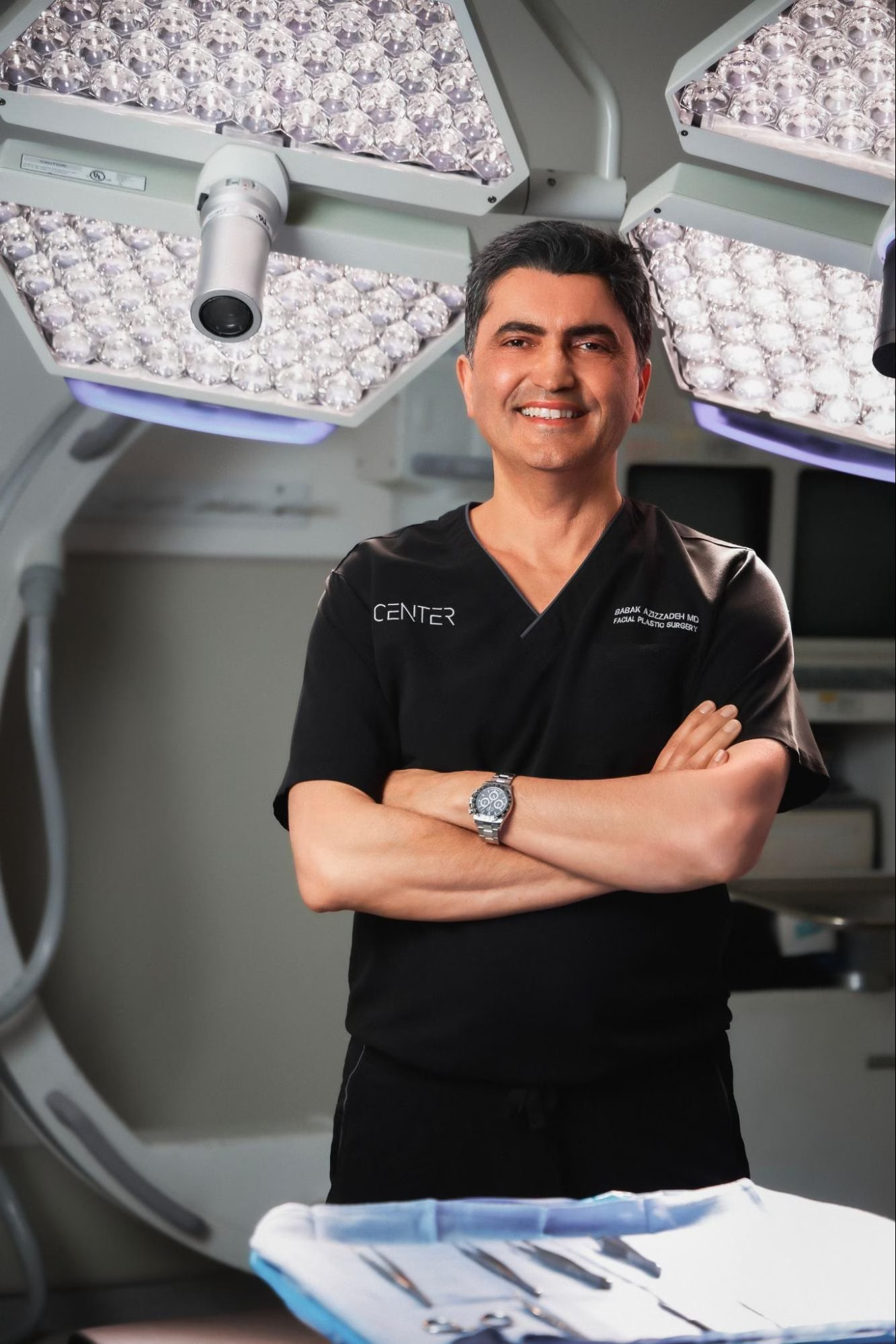 Dr. Babak Azizzadeh is a Beverly Hills facial plastic surgeon specializing in facelift surgery, revision facelift, facial rejuvenation, and facial nerve procedures. His approach emphasizes natural movement, facial harmony, and personalized treatment planning. Patients seek his care for both cosmetic refinement and complex revision concerns.
FAQ
What is a revision facelift?
A revision facelift is a secondary facelift performed after a previous facelift. It may address recurrent aging, visible scarring, asymmetry, or dissatisfaction with prior results. Each case requires an individualized treatment plan.
Is revision facelift harder than a first facelift?
Yes, revision facelift surgery is usually more complex than a primary facelift. Scar tissue and altered anatomy can make surgery more technically demanding. This is why surgeon experience is especially important.
Can a bad facelift be corrected?
Many concerns after an unsatisfactory facelift can be improved. These may include neck laxity, visible scars, pixie ear deformity, or a pulled appearance. However, every revision case has limitations and must be carefully evaluated.
How long should I wait?
Most patients should wait six to twelve months after surgery before considering revision. This allows swelling to resolve and tissues to settle. Exceptions may apply when there is a medical complication.
Does needing a second facelift mean the first failed?
No, not necessarily. Aging continues naturally even after a successful facelift. Some patients pursue another procedure years later for maintenance or additional rejuvenation.


