


The diagnosis of Bell’s palsy specifically denotes idiopathic facial paralysis with no known cause. In a letter to BMJ Case Reports, Dr. Babak Azizzadeh and Dr. Richard J. Lu advocate for more precise nomenclature, especially when causes like birth trauma are evident. They emphasize that accurate language is essential for patient understanding and proper clinical management.
Publication Details
- Journal: BMJ Case Reports
- Authors: Richard J. Lu, MD (NewYork-Presbyterian Hospital) and Babak Azizzadeh, MD, FACS (The CENTER for Advanced Facial Plastic Surgery, Beverly Hills)
- Publication Date: February 20, 2026
- Response Type: Letter to the Editor
Research Objective
Dr. Azizzadeh and Dr. Lu challenged a case report that mislabeled birth-related facial weakness as Bell’s palsy, arguing it likely resulted from birth trauma. They emphasized that precise nomenclature in facial paralysis cases is vital for accurate care.
Key Findings
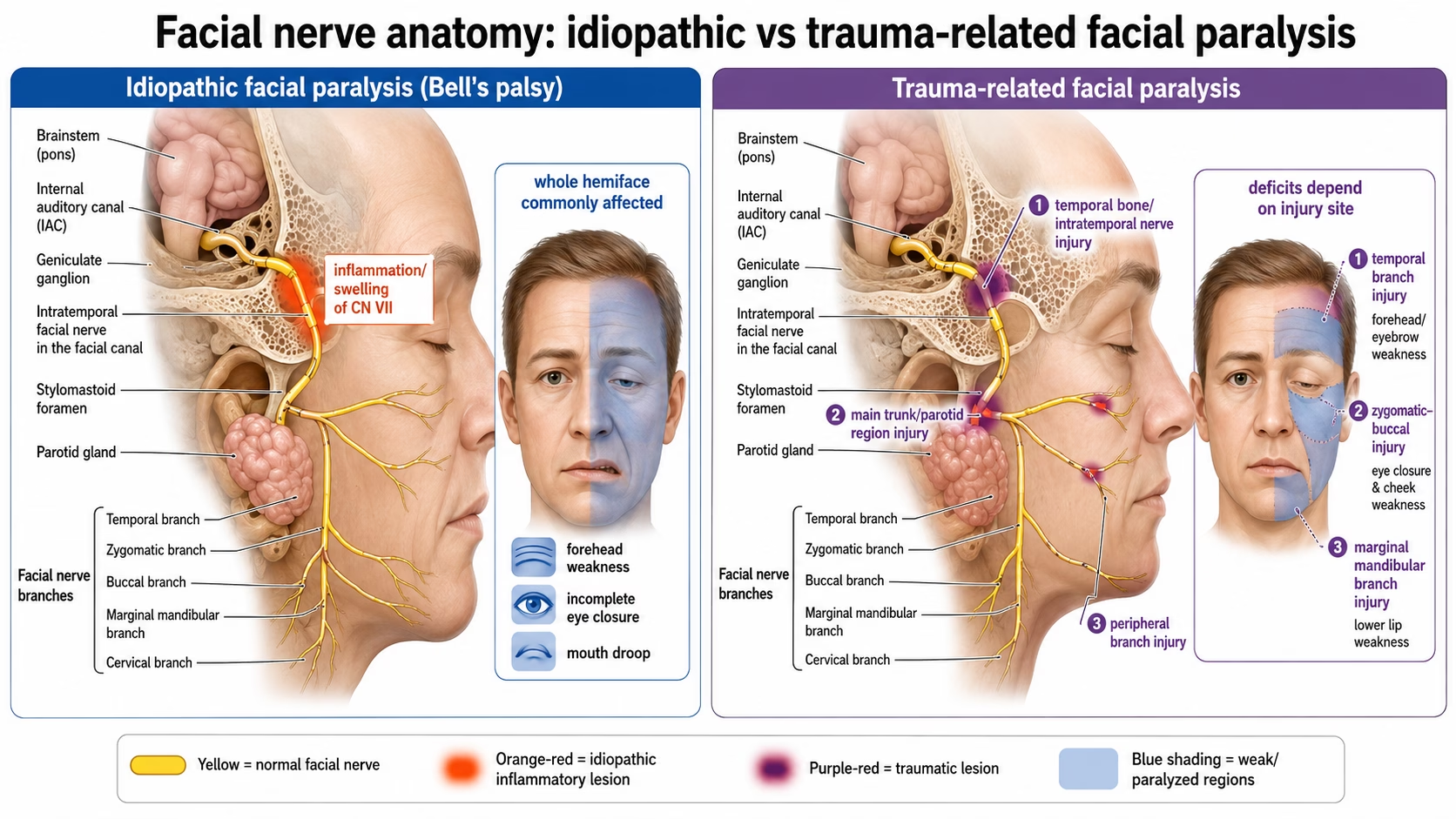
- The letter distinguishes Bell’s palsy from trauma-related facial nerve dysfunction.
- Per standardized definitions for Bell’s palsy, this diagnosis applies only when no underlying cause is identified.
- Conditions with identifiable causes (traumatic, infectious, structural) fall into distinct clinical categories.
- Dr. Azizzadeh and Dr. Lu proposed the term “transient facial nerve palsy” to more accurately reflect the neonatal case.
- Precise terminology is vital for determining the best treatment for Bell’s palsy versus other forms of paralysis.
- The letter references expert consensus on facial nerve disorders to support the need for standardized definitions.
Related: Best Treatment for Bell’s Palsy
 Why This Matters to Patients
Mislabeling facial paralysis results in inappropriate treatments and skewed expectations. For instance, neonatal recovery varies significantly between trauma-related palsy and Bell’s palsy. Precise nomenclature is critical for patient education and high-quality clinical outcomes.
If you or someone you know has been diagnosed with facial paralysis and you want a specialist’s perspective, you can reach Dr. Azizzadeh’s team to discuss your concerns.
The authors of the original case report responded constructively, acknowledging that “transient facial nerve palsy” may be more accurate. Dr. Azizzadeh’s broader work in scarless facial reanimation reflects the same commitment to precision that informed this academic exchange.
Related: Scarless Facial Reanimation
Read the Full Publication
The full letter is available on the BMJ Case Reports website. View the letter to the editor on BMJ Case Reports. Whether you’re navigating a Bell’s palsy diagnosis or another type of facial paralysis, getting the right evaluation matters. Request a consultation at The CENTER for Advanced Facial Plastic Surgery to speak directly with Dr. Azizzadeh.
About Dr. Babak Azizzadeh
Dr. Babak Azizzadeh is a dual board-certified facial plastic and reconstructive surgeon at The CENTER for Advanced Facial Plastic Surgery in Beverly Hills. His facial nerve expertise includes published contributions to peer-reviewed journals and recognized leadership in facial reanimation. His work has been featured by The New York Times, CNN, and Oprah.
Frequently Asked Questions
What is the difference between Bell’s palsy and traumatic facial paralysis?
Bell’s palsy is idiopathic (unknown cause), while traumatic facial paralysis has a known origin. They require different diagnostic and treatment paths.
Why does precise language matter in facial paralysis cases?
Precise terminology ensures patients receive accurate expectations and appropriate treatment. Incorrect labeling can lead to a misunderstanding of one’s condition and suboptimal care.
How do I know if my facial weakness is Bell’s palsy or something else?
Only a specialist can confirm the diagnosis by ruling out other causes. If you have concerns, a second opinion from a facial nerve specialist is recommended.