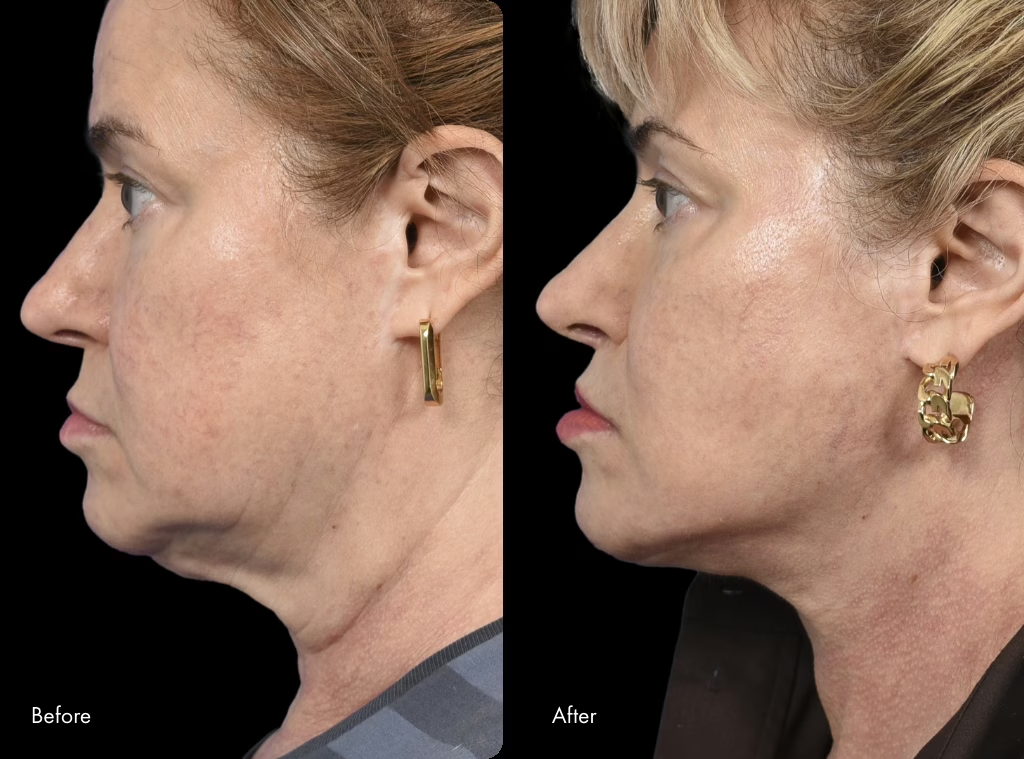
Understanding Buccal Fat Modification in Facial Plastic Surgery
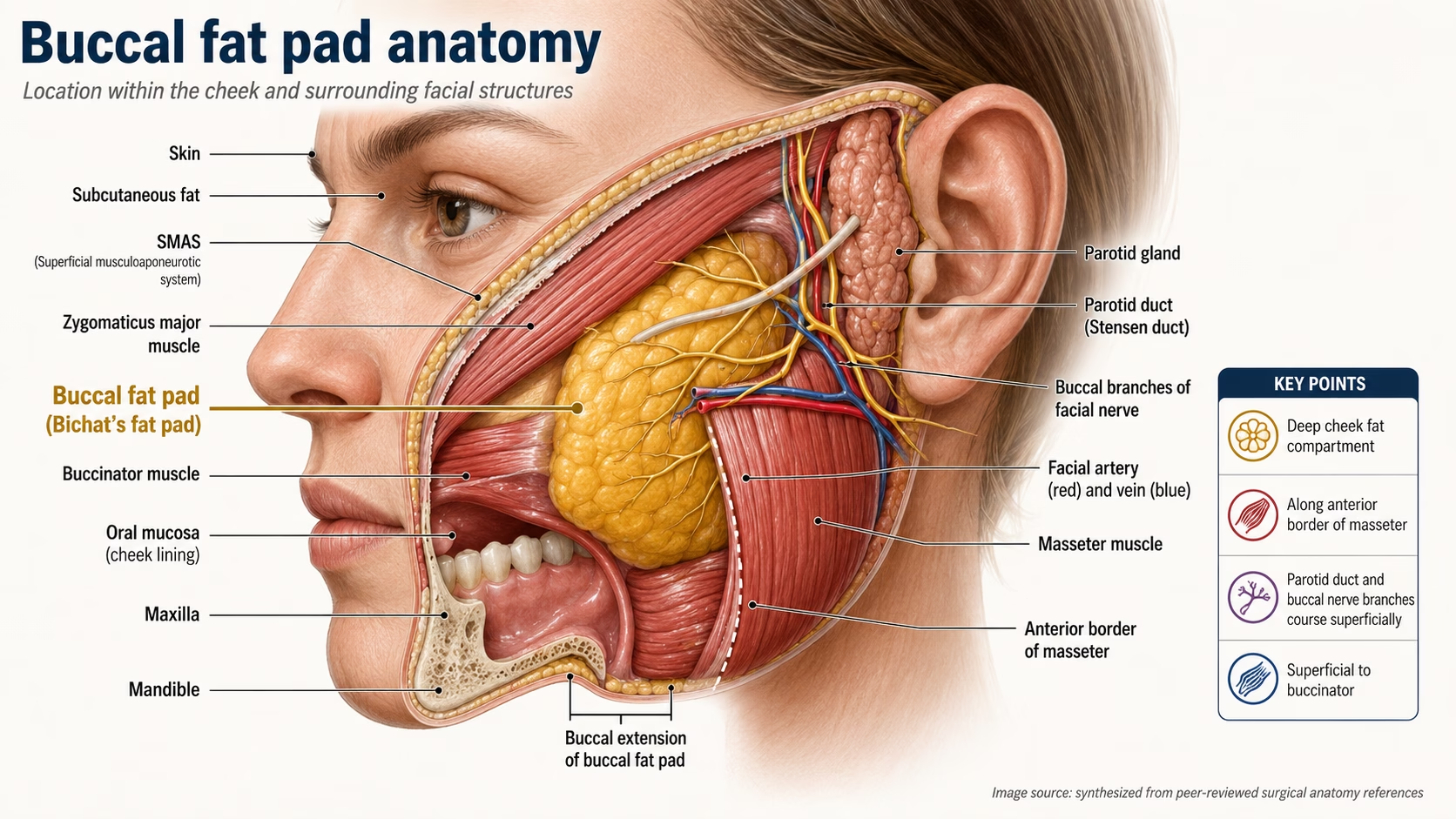
The buccal fat pad, a deep cheek structure influencing facial fullness and aging, is the focus of a new review co-authored by Dr. Babak Azizzadeh. Published in Facial Plastic Surgery Clinics of North America, the paper analyzes its anatomy and surgical options including excision, repositioning, and grafting.
Publication Details
- Journal: Facial Plastic Surgery Clinics of North America, Vol. 34, Issue 1, pp. 51-54
- Authors: Lexie Lulu Wang, MD; Babak Azizzadeh, MD, FACS
- Publication Date: February 2026 (Epub September 9, 2025)
- DOI: 10.1016/j.fsc.2025.08.008
Research Objective
This research examines buccal fat pad anatomy, its role in aging, and the efficacy of various surgical techniques. It also reviews buccal fat pad reduction for facial contouring to improve clinical decision-making.
If you're considering a facial contouring procedure, scheduling a consultation at The CENTER can help you identify the right approach for your anatomy.
Key Findings
The review emphasizes that buccal fat pad anatomy varies, making surgical planning patient-specific. Crucially, a systematic review of buccal fat pad excision cautions against over-resection, as excessive removal in younger patients can lead to a gaunt appearance over time. Alternatively, surgeons may use repositioning techniques to volumize areas like the nasolabial folds.
 Related: The Difference Between Buccal Fat Pad Removal and Cheek Liposuction
Why This Matters to Patients
Patients exploring facial contouring must recognize that candidacy varies; while younger patients with naturally full cheeks may benefit from buccal fat pad removal, those with existing volume loss are often better served by repositioning.
Understanding these nuances alongside other options like liposuction is critical for a tailored surgical plan, as the wide range of buccal fat pad removal indications and techniques highlights the importance of patient-specific care.
To explore your options with an experienced facial plastic surgeon, reach out to The CENTER for Advanced Facial Plastic Surgery today.
Related: Buccal Fat Removal Before and After
Read the Full Publication
The complete paper is available via PubMed (PMID: 41203330) and published in Facial Plastic Surgery Clinics of North America.
About Dr. Babak Azizzadeh
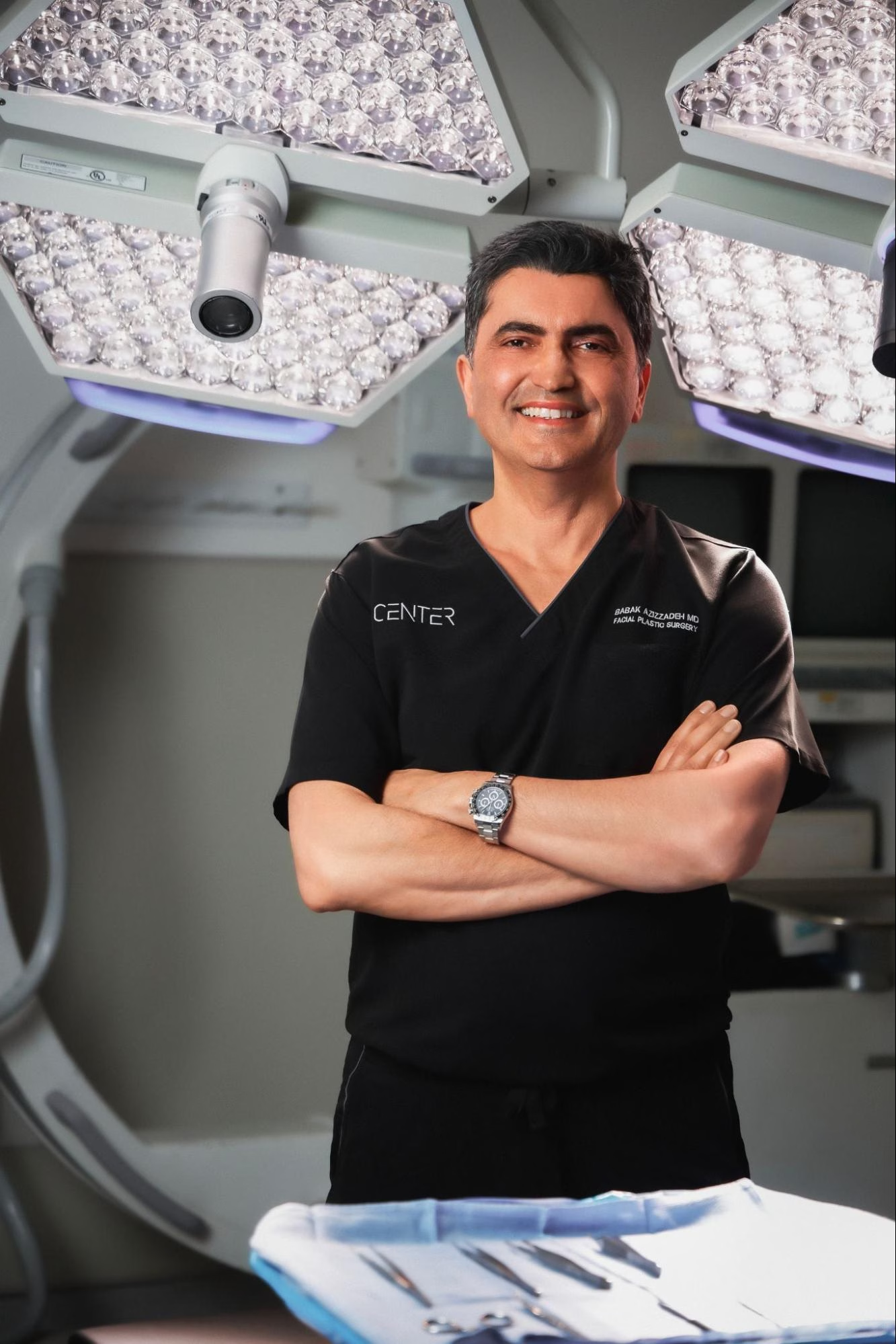
Dr. Babak Azizzadeh is a dual board-certified facial plastic and reconstructive surgeon, Director of the CENTER for Advanced Facial Plastic Surgery in Beverly Hills, and a co-author of this publication. He holds a faculty appointment at Cedars Sinai Medical Center and specializes in deep plane facelifts, rhinoplasty, and facial reanimation.
Frequently Asked Questions
What is the buccal fat pad?
It's a naturally occurring pocket of fat deep in the cheek that contributes to facial fullness and changes shape as the face ages.
Who is a good candidate for buccal fat removal?
Patients with naturally full or round faces seeking more definition are typically good candidates. Those with existing volume loss may not be.
Can the buccal fat pad be repositioned instead of removed?
Yes. Repositioning uses the tissue to restore volume in areas like the nasolabial folds rather than simply reducing fullness, which suits older patients or those with early volume loss.
What happens if too much buccal fat is removed?
Over-resection can cause a hollow or gaunt look over time, particularly as the face naturally loses volume with age. Conservative removal is considered best practice.
How do I know which approach is right for me?
A thorough consultation with a board-certified facial plastic surgeon is the only reliable way to determine the best technique for your anatomy and long-term goals.


Dr. Babak Azizzadeh Contributes to Ongoing Discussion on Bell's Palsy Nomenclature
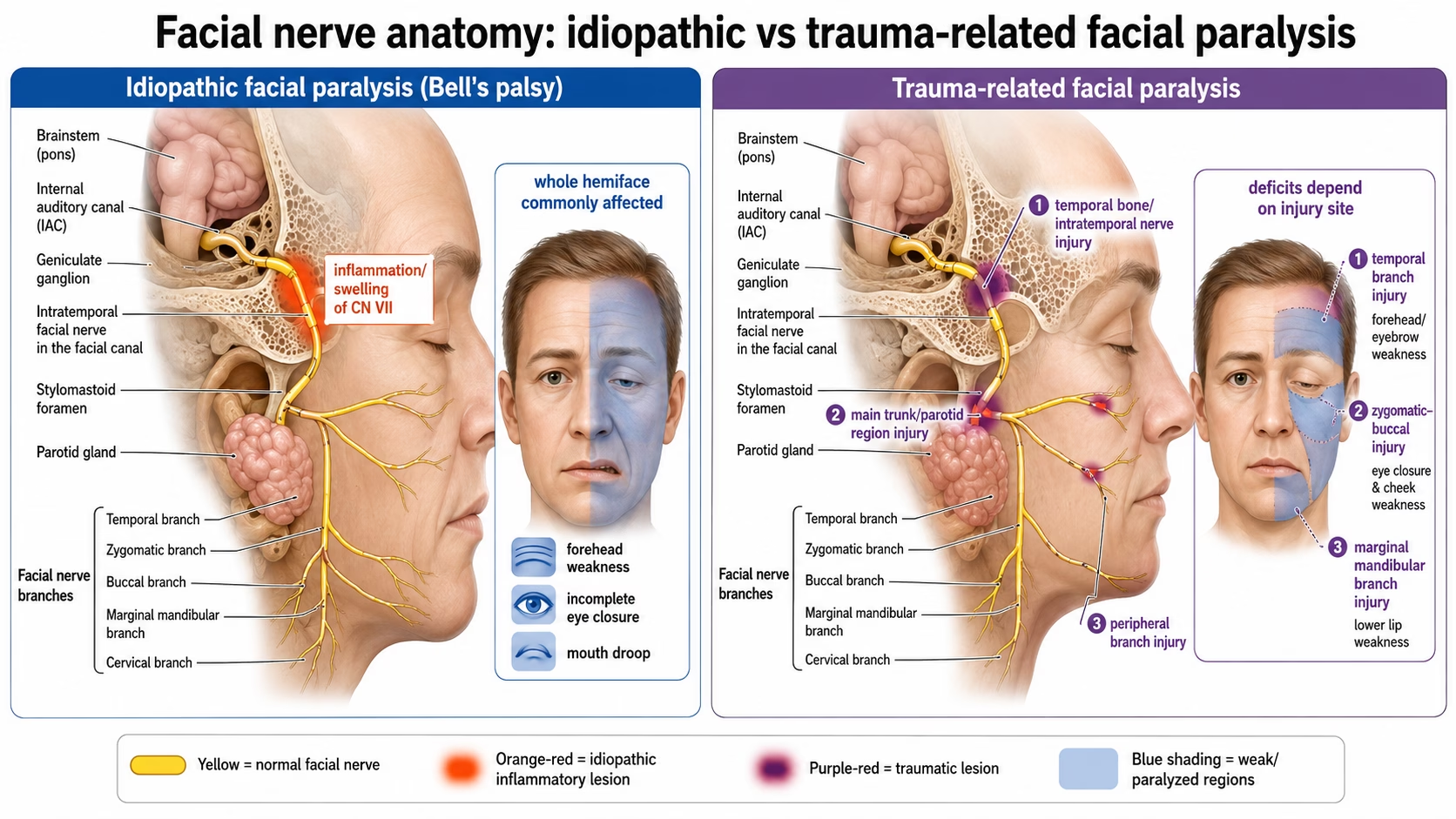
The diagnosis of Bell's palsy specifically denotes idiopathic facial paralysis with no known cause. In a letter to BMJ Case Reports, Dr. Babak Azizzadeh and Dr. Richard J. Lu advocate for more precise nomenclature, especially when causes like birth trauma are evident. They emphasize that accurate language is essential for patient understanding and proper clinical management.
Publication Details
- Journal: BMJ Case Reports
- Authors: Richard J. Lu, MD (NewYork-Presbyterian Hospital) and Babak Azizzadeh, MD, FACS (The CENTER for Advanced Facial Plastic Surgery, Beverly Hills)
- Publication Date: February 20, 2026
- Response Type: Letter to the Editor
Research Objective
Dr. Azizzadeh and Dr. Lu challenged a case report that mislabeled birth-related facial weakness as Bell's palsy, arguing it likely resulted from birth trauma. They emphasized that precise nomenclature in facial paralysis cases is vital for accurate care.
Key Findings
- The letter distinguishes Bell's palsy from trauma-related facial nerve dysfunction.
- Per standardized definitions for Bell's palsy, this diagnosis applies only when no underlying cause is identified.
- Conditions with identifiable causes (traumatic, infectious, structural) fall into distinct clinical categories.
- Dr. Azizzadeh and Dr. Lu proposed the term "transient facial nerve palsy" to more accurately reflect the neonatal case.
- Precise terminology is vital for determining the best treatment for Bell's palsy versus other forms of paralysis.
- The letter references expert consensus on facial nerve disorders to support the need for standardized definitions.
Related: Best Treatment for Bell's Palsy
 Why This Matters to Patients
Mislabeling facial paralysis results in inappropriate treatments and skewed expectations. For instance, neonatal recovery varies significantly between trauma-related palsy and Bell's palsy. Precise nomenclature is critical for patient education and high-quality clinical outcomes.
If you or someone you know has been diagnosed with facial paralysis and you want a specialist's perspective, you can reach Dr. Azizzadeh's team to discuss your concerns.
The authors of the original case report responded constructively, acknowledging that "transient facial nerve palsy" may be more accurate. Dr. Azizzadeh's broader work in scarless facial reanimation reflects the same commitment to precision that informed this academic exchange.
Related: Scarless Facial Reanimation
Read the Full Publication
The full letter is available on the BMJ Case Reports website. View the letter to the editor on BMJ Case Reports. Whether you're navigating a Bell's palsy diagnosis or another type of facial paralysis, getting the right evaluation matters. Request a consultation at The CENTER for Advanced Facial Plastic Surgery to speak directly with Dr. Azizzadeh.
About Dr. Babak Azizzadeh
Dr. Babak Azizzadeh is a dual board-certified facial plastic and reconstructive surgeon at The CENTER for Advanced Facial Plastic Surgery in Beverly Hills. His facial nerve expertise includes published contributions to peer-reviewed journals and recognized leadership in facial reanimation. His work has been featured by The New York Times, CNN, and Oprah.
Frequently Asked Questions
What is the difference between Bell's palsy and traumatic facial paralysis?
Bell's palsy is idiopathic (unknown cause), while traumatic facial paralysis has a known origin. They require different diagnostic and treatment paths.
Why does precise language matter in facial paralysis cases?
Precise terminology ensures patients receive accurate expectations and appropriate treatment. Incorrect labeling can lead to a misunderstanding of one's condition and suboptimal care.
How do I know if my facial weakness is Bell's palsy or something else?
Only a specialist can confirm the diagnosis by ruling out other causes. If you have concerns, a second opinion from a facial nerve specialist is recommended.
Published Research on Facial Nerve Safety in Deep Plane Facelift Surgery
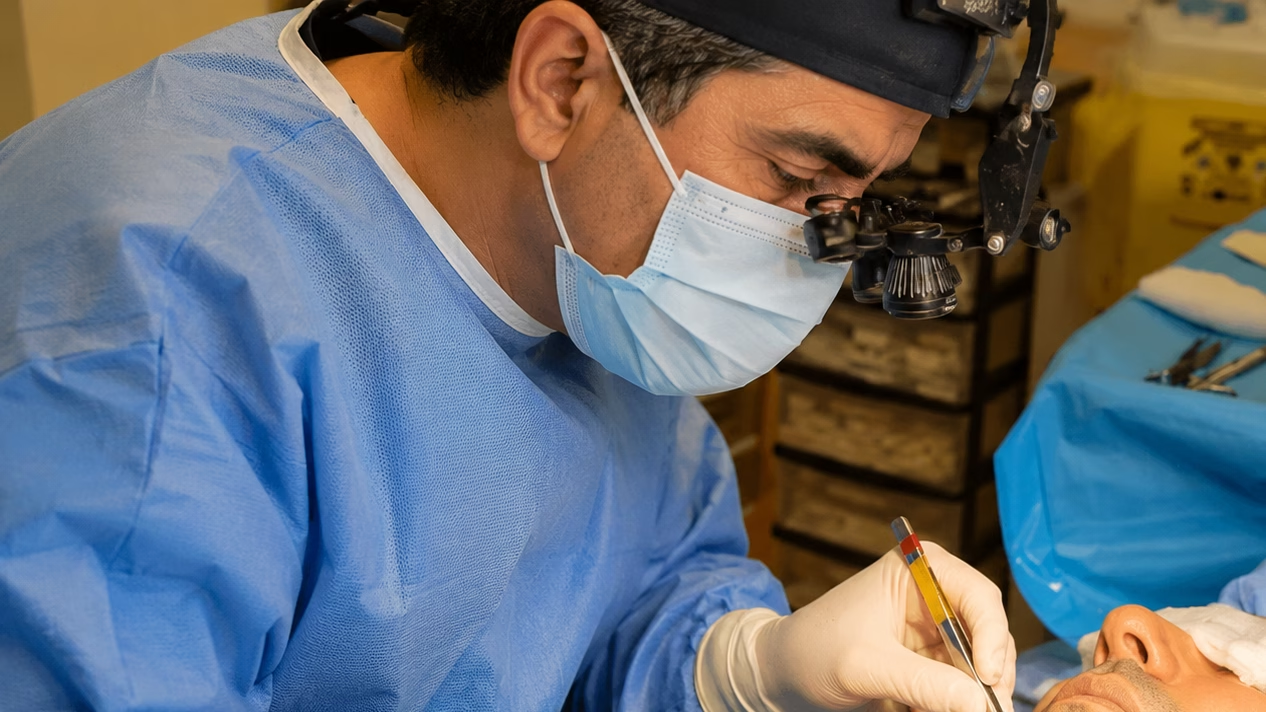
When considering deep plane facelift surgery, understanding deep plane facelift safety is essential to making an informed decision about protecting the facial nerve.
Publication Details
- Journal: Facial Plastic Surgery Authors: Babak Azizzadeh, MD, FACS; Richard J. Lu, MD
- Publication Date: Published online January 10, 2024; print December 2024
- DOI: 10.1055/s-0043-1777801
Research Objective
The study details how surgeons achieve natural-looking facelift results while prioritizing facial nerve considerations and preserving nerve integrity during deep tissue dissection.
Related: Deep Plane Facelift Beverly Hills
Key Findings
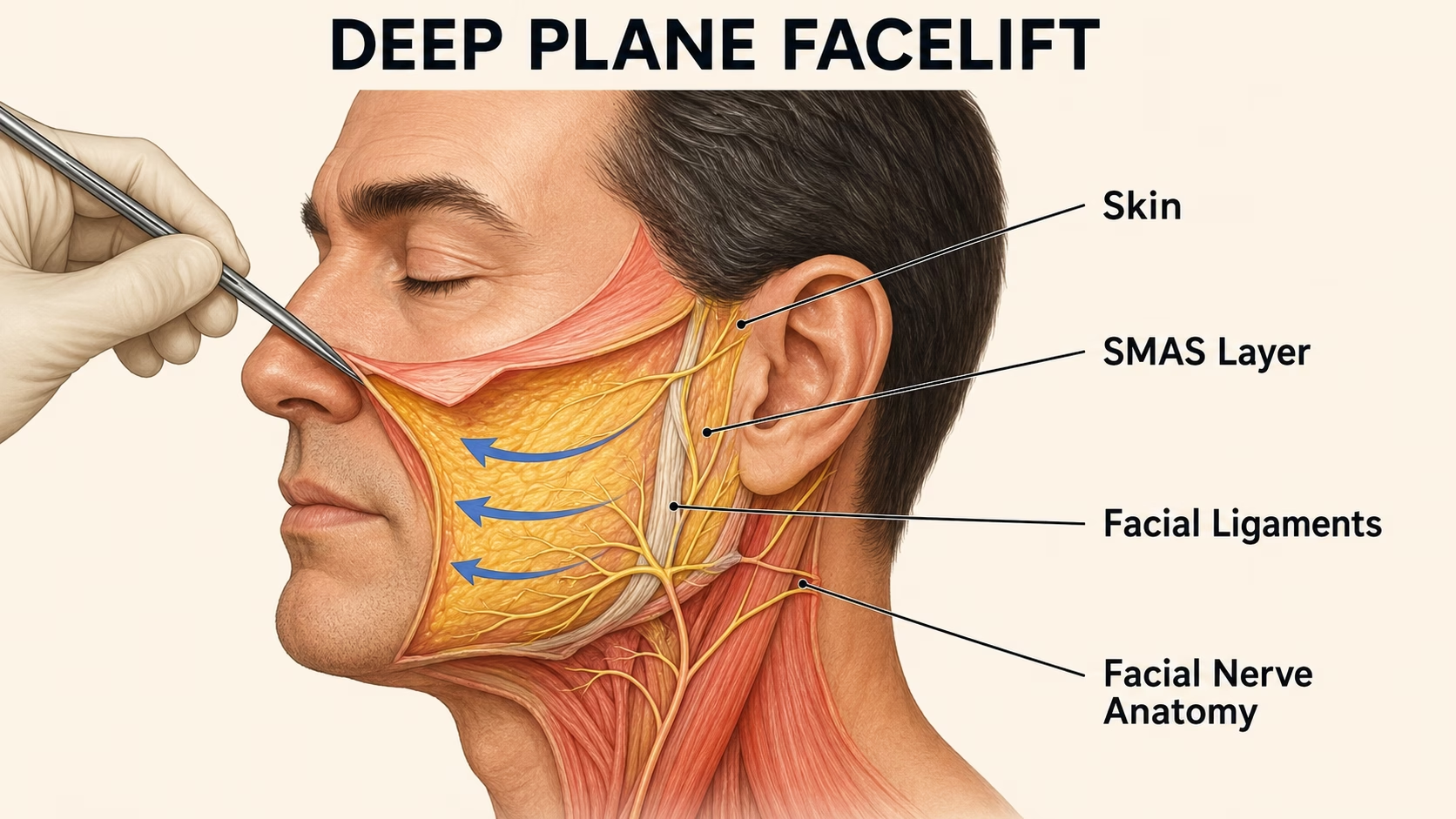
The study details how to manage facial nerve risks, balancing natural, long-lasting rejuvenation with the precision required for deeper tissue manipulation. Research on low rates of facial nerve injury in deep plane techniques highlights that success depends on a surgeon's deep anatomical knowledge. Meticulous surgical sequencing, from neck contouring to SMAS suspension, is vital for nerve protection.
Why This Matters to Patients
This peer-reviewed publication provides reassuring evidence that deep plane facelifts are safe when performed by surgeons with an expert understanding of nerve anatomy, distinguishing this level of care from generic cosmetic procedures.
The study on facial nerve considerations for deep plane facelifts notes that while temporary facial weakness is rare, it underscores the need for surgeons with documented anatomical expertise. Techniques like scarless facial reanimation reflect this commitment to safety.
Dr. Babak Azizzadeh is an internationally renowned Beverly Hills facial plastic surgeon specializing in deep plane facelifts and facial nerve surgery. His published research focuses on improving surgical techniques while prioritizing patient safety. He is known for delivering precise, natural, and long-lasting results for patients globally.
Related: Why the Facial Nerve Is More Important Than You Think
Read the Full Publication
The full study is indexed on PubMed and available through Thieme. You can also access evaluating facelift outcomes and nerve safety trends for broader context on facelift safety research.
Access the full publication: Facial Nerve Considerations for the Deep Plane Facelift and Neck Lift.
To speak with a member of our team about your candidacy for a deep plane facelift, reach out to The CENTER for Advanced Facial Plastic Surgery and we'll help you take the next step with confidence.
Frequently Asked Questions
Is facial nerve damage a common risk with deep plane facelifts?
Permanent facial nerve injury is rare when performed by an experienced surgeon. Temporary weakness can occur but typically resolves; Dr. Azizzadeh’s research outlines specific techniques to minimize these risks.
How does the deep plane approach differ from more superficial facelift techniques?
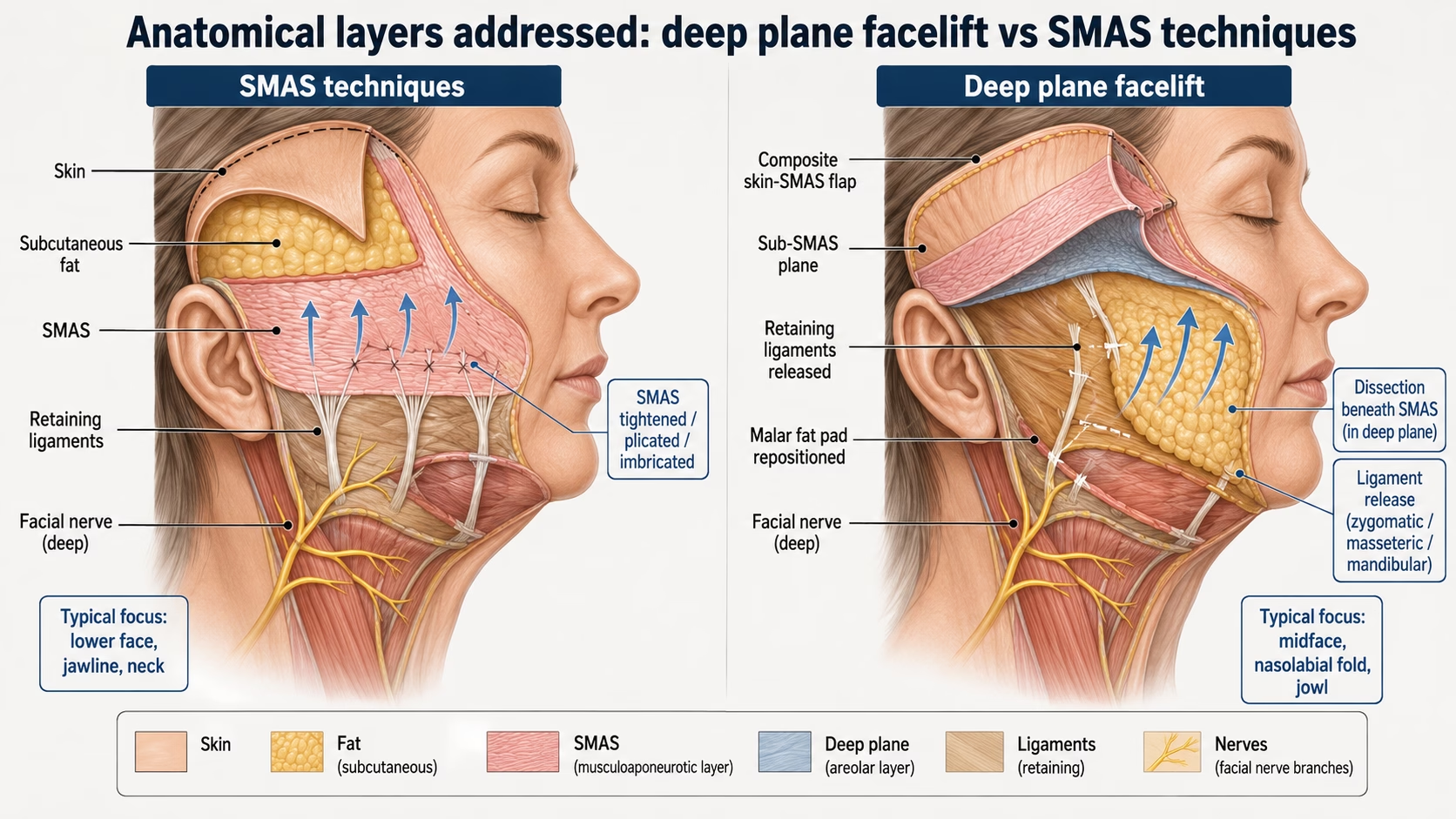
Unlike superficial methods that only pull skin, deep plane facelifts reposition deeper structural layers for more natural, lasting results. This demands high surgical precision, particularly near facial nerve branches.
Why is the SMAS layer so important in facelift surgery?
The SMAS connects skin to facial muscles. Manipulating it is key to lifting the face, but because it lies near the facial nerve, careful handling is critical for both aesthetic results and nerve safety.
How do I choose a surgeon for a deep plane facelift?
Prioritize surgeons with documented deep plane experience, specialized facial nerve expertise, board certification, and a strong record of peer-reviewed research in facelift safety.
Does Dr. Azizzadeh perform deep plane facelifts for international patients?
Yes. The CENTER in Beverly Hills regularly treats international patients seeking Dr. Azizzadeh’s expertise in precise, safe facial rejuvenation.

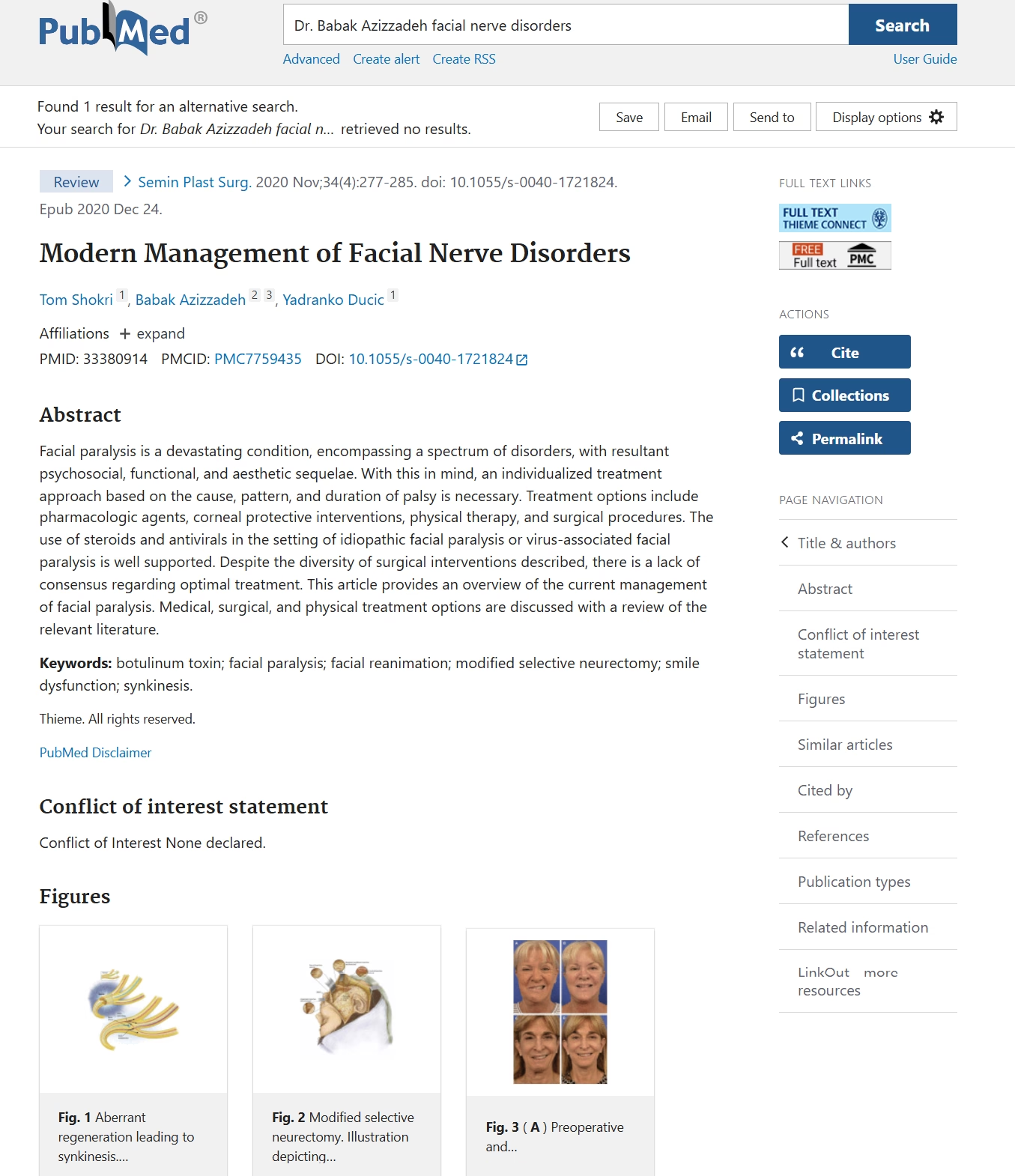
Dr. Babak Azizzadeh's Research Publications on PubMed
Dr. Babak Azizzadeh has authored and co-authored numerous peer-reviewed publications on facial plastic and reconstructive surgery. Spanning over two decades, his research on facial paralysis and rejuvenation is publicly accessible via PubMed, a premier medical literature database.
About This Research Profile
PubMed, a free database of peer-reviewed biomedical literature maintained by the U.S. National Institutes of Health, indexes articles that have passed independent expert evaluation. By browsing Dr. Azizzadeh's research publications, patients can gain insight into the evidence supporting the clinical practice of this dual board-certified Beverly Hills surgeon, who is internationally recognized for his expertise in deep plane facelifts, facial reanimation, and rhinoplasty.
Related: Dr. Babak Azizzadeh Research Publications
Research Areas
Deep Plane Facelift
Dr. Azizzadeh has published on anatomy, patient selection, and long-term outcomes for the deep plane facelift techniques he performs. His published findings inform how he plans and executes this procedure for each patient.
Facial Paralysis and Reanimation
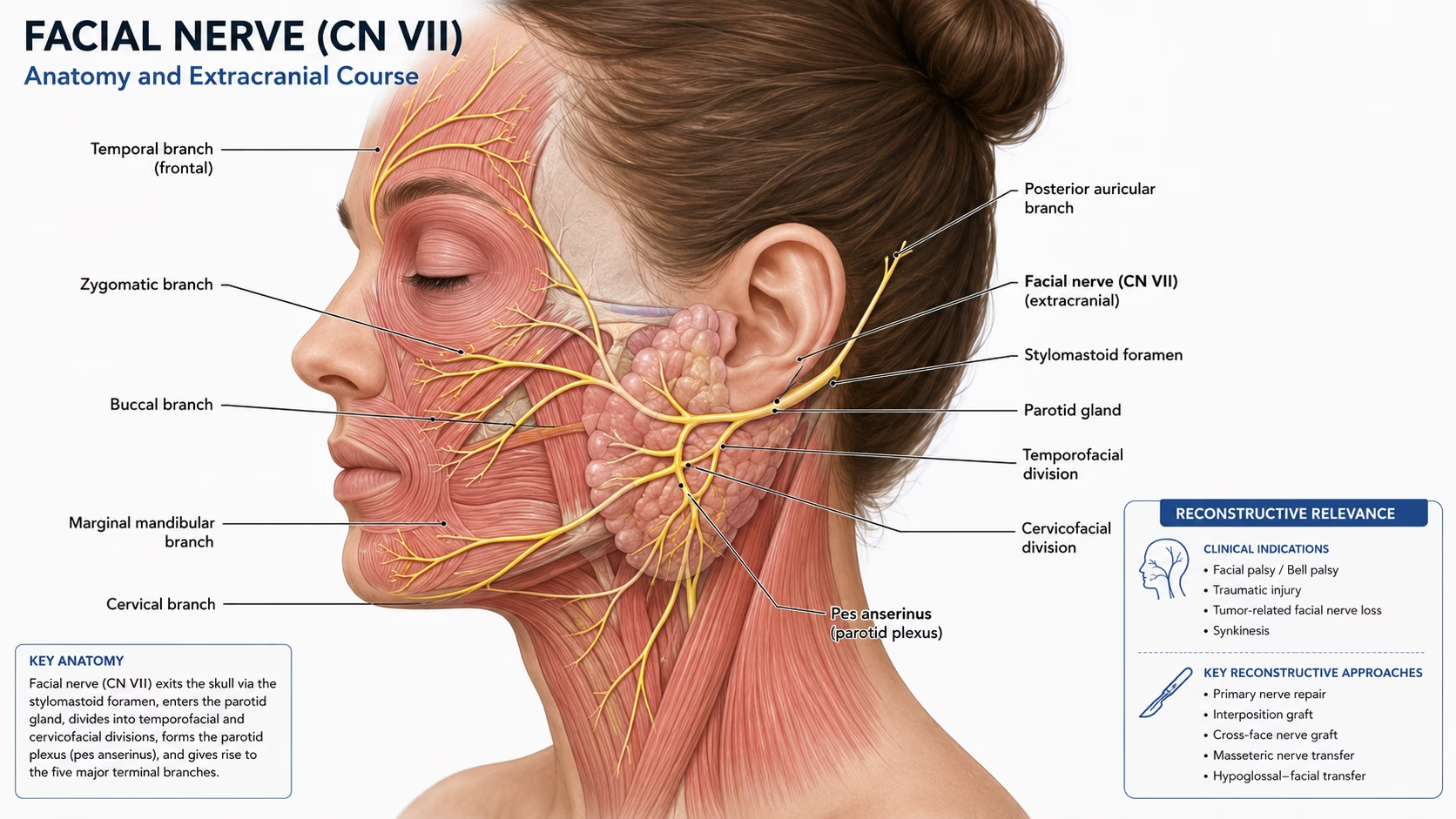
His published work on facial reanimation expertise covers surgical interventions, nerve repair, and reanimation strategies for patients dealing with facial paralysis, synkinesis, and Bell's palsy sequelae.
Patients and referring clinicians can review the full collection of Dr. Azizzadeh's research publications on the practice website.
Rhinoplasty
His rhinoplasty research addresses surgical approaches, revision considerations, and the balance between form and function, reflecting the same precision he brings to each procedure.
Facial Nerve Disorders
His co-authored peer-reviewed publications on facial nerve disorders address synkinesis, nerve repair, and reconstructive intervention for patients with complex facial nerve conditions.
 View the Full Research Library
You can view Dr. Azizzadeh's complete publication history here. His work is also documented through advances in facial plastic surgery research on ResearchGate and his scholarly contributions to facial rejuvenation on Google Scholar.
Related: About Dr. Babak Azizzadeh
Why Research Matters for Patients
Peer-reviewed publications signify that a surgeon’s clinical methods have been validated by independent experts. For patients pursuing procedures like deep plane facelifts, rhinoplasty, or facial reanimation, this evidence-based approach fosters trust and ensures realistic expectations.
Dr. Babak Azizzadeh is a Beverly Hills-based facial plastic and reconstructive surgeon whose practice integrates surgical precision with an active academic commitment. Patients who choose Dr. Azizzadeh benefit from a surgical philosophy tested, documented, and validated through peer-reviewed publication.
To learn more about Dr. Azizzadeh's background or to schedule a consultation, reach out to the CENTER for Advanced Facial Plastic Surgery directly.
Frequently Asked Questions
What is PubMed and why does it matter for choosing a surgeon?
PubMed is a free NIH-maintained database of peer-reviewed biomedical research, verifying that a surgeon's work has undergone independent expert evaluation.
How many publications does Dr. Azizzadeh have on PubMed?
Dr. Azizzadeh has over 94 PubMed-indexed publications covering facial plastics, nerve disorders, and reanimation.
Can I access Dr. Azizzadeh's publications for free?
Yes. His PubMed, Google Scholar, and ResearchGate profiles are publicly accessible at no cost.
How does his research connect to patient outcomes?
His research directly informs his surgical techniques, ensuring procedures are tested, refined, and validated for better patient outcomes.

The Rise of the Deep Plane Facelift: Insights From Published Research
The deep plane facelift has become the dominant technique in facial plastic surgery, and a new study in The Journal of Craniofacial Surgery now documents exactly how widespread that shift has become.
Publication Details
- Journal: The Journal of Craniofacial Surgery
- Authors: Kaitlynne Y. Pak, Parsa P. Salehi, and Babak Azizzadeh, MD
- Publication Date: May 1, 2026 (epub: November 18, 2025)
- DOI: 10.1097/SCS.0000000000012210
Research Objective
The study surveyed 150 AAFPRS members to capture current U.S. facelift technique patterns, complication rates, and how experience shapes surgical choices.
Related: Deep Plane Facelift Beverly Hills
Key Findings
Ninety percent of respondents perform deep plane facelifts. Those favoring other methods most commonly use SMAS application and imbrication. This overview of different types of facelifts covers how these approaches compare.
Surgeons with fewer than 20 years in practice were significantly more likely to use deep plane methods (P=0.04). See deep plane facelift techniques for a detailed breakdown of the procedure.
No significant association was found between deep plane surgery and longer-lasting results (P=0.3), and research on long term outcomes of deep plane facelifts is still evolving.
Transient nerve injuries occurred in 1% to 5% of cases. Higher rates were linked to deep plane surgery and gland reduction. A systematic approach to deep plane facelift surgery emphasizes anatomy as the core risk-management factor.
Patients can schedule a personalized consultation with Dr. Azizzadeh to discuss which approach fits their goals.
 Why This Matters to Patients
This study confirms the deep plane facelift is the most widely used technique among experienced U.S. facial plastic surgeons, which matters when assessing what current best practice looks like.
No single technique suits everyone. Browsing before and after photos of deep plane facelifts from a specific surgeon gives a clearer picture of real results, and surgeon skill ultimately drives outcomes more than technique alone.
Complication rates were low overall. A comparison of deep plane versus SMAS facelifts explains how the two approaches differ in risk profile.
Dr. Babak Azizzadeh is a dual board-certified facial plastic surgeon in Beverly Hills. He co-authored this study with Cedars-Sinai colleagues, specializing in advanced facelifts, facial reanimation, and rhinoplasty.
To speak with a surgeon involved in advancing facelift research, reach out to the Center for Advanced Facial Plastic Surgery.
Related: Deep Plane Facelift Before and After
Read the Full Publication
The complete study, Evaluating Facelift Outcomes and Technique Trends in the United States, is available via the National Library of Medicine. View the full publication on PubMed.
About Dr. Babak Azizzadeh
Dr. Babak Azizzadeh, MD, FACS, founded the CENTER for Advanced Facial Plastic Surgery in Beverly Hills. Recognized by The New York Times, CNN, and Oprah, he holds dual board certification and an international practice grounded in published research.
Frequently Asked Questions
How widely used is the deep plane facelift today?
Ninety percent of 150 surveyed surgeons now perform deep plane facelifts, and younger surgeons are more likely to use this approach, reflecting a shift in training.
Does the deep plane facelift carry more risk than other techniques?
Transient nerve injuries occurred in 1% to 5% of deep plane cases, slightly higher than shallower approaches. These were temporary, and outcomes depend heavily on surgeon skill and anatomy.