How Long Does Botox Actually Last?
Botox longevity varies individually, typically lasting between three to six months. No single timeframe applies to everyone. Botox duration is influenced by biological factors, lifestyle, and treatment consistency. Understanding these variables helps optimize your results.
Key Takeaways
- Botox typically lasts three to four months, though results vary by individual and treatment area.
- Your metabolism, muscle activity, and lifestyle all affect how quickly Botox wears off.
- Regular treatments over time often lead to longer-lasting results as muscle activity gradually decreases.
- Sun exposure, stress, and high-intensity exercise can shorten the life of your Botox results.
- Working with an experienced, board-certified surgeon is the most reliable way to get consistent, long-lasting outcomes.
What Botox Actually Does
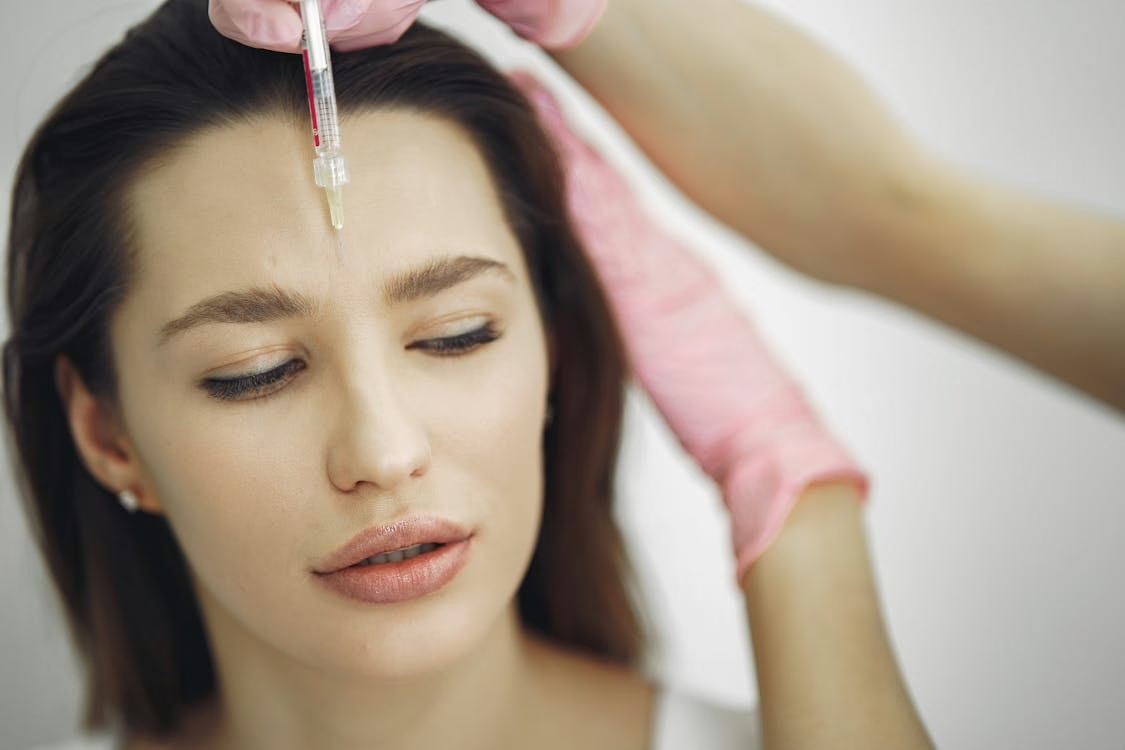
Botox (onobotulinumtoxinA) is a neurotoxin that smooths wrinkles by temporarily blocking nerve signals to facial muscles, preventing them from contracting. These botulinum toxin effects are temporary as nerves eventually regenerate, allowing muscle movement and wrinkles to return.
Four FDA-approved neurotoxins, Botox, Dysport, Xeomin, and Jeuveau, share this mechanism but vary in onset, duration, and formulation. Providers select the best option based on your anatomy and goals.
https://facialplasticsbh.com/juvederm-vs-botox-which-is-better/
How Long Does Botox Last on Average?
Botox results typically last three to four months, though some patients see effects for up to six months in areas with minimal movement. Because physiology varies and evolves, the botox duration is not a fixed timeframe.
Consistent treatment cycles often extend longevity. As muscles are repeatedly relaxed over time, they become less active, leading to slower toxin breakdown and longer-lasting results between sessions.

What Makes Botox Wear Off Faster?
This is where things get personal. Several factors affect how quickly your body processes Botox, and some of them are within your control.
Metabolism
Higher metabolic rates accelerate Botox breakdown. Consequently, active individuals or those with lean muscle mass may see results fade faster than those with slower metabolisms, as their bodies process proteins more quickly.
Muscle Strength and Frequency of Use
Larger, active muscles metabolize Botox more quickly. Stronger muscles, like the masseters used for chewing, require more frequent maintenance compared to smaller, lighter-use areas like those around the eyes.
Sun Exposure
UV damage can break down Botox results more quickly. Non-surgical facial rejuvenation outcomes last longer for patients who use SPF and limit sun exposure.
Stress and Lifestyle
Chronic stress raises cortisol, accelerating cell turnover and potentially shortening Botox longevity. Factors like intense exercise, smoking, and poor sleep also contribute. While these aren't reasons to avoid treatment, they may explain why some results feel short-lived.
If you're not sure whether your lifestyle factors are affecting your results, schedule a personalized Botox consultation at our Beverly Hills practice to discuss your goals with Dr. Azizzadeh directly.
https://facialplasticsbh.com/using-botox-for-neck-wrinkles/
Results by Treatment Area
Different areas of the face respond to Botox differently. Facial injectables longevity depends on how much movement that area gets on a daily basis. Here's a general breakdown:
- Forehead and between the brows: typically three to four months.
- Crow's feet (outer eye area): often three to four months, sometimes longer.
- Bunny lines (nose): generally three months.
- Lip flip or lip lines: closer to two to three months due to high lip movement.
- Neck bands (platysmal bands): typically three to four months.
- Jaw slimming (masseter): four to six months because the muscle activity decreases noticeably over time.

The Case for Starting Early
Botox is more effective as a preventative measure. Starting preventative botox treatments stops wrinkles from becoming permanent static lines, which are much harder to treat later. Early treatment simplifies maintenance, often requiring less product. Over time, consistent sessions can even help stretch the time between appointments as muscles adapt.
How to Get the Most Out of Your Botox
Getting consistent results isn't just about the product. It's about how well the treatment is tailored to your anatomy and how you care for your skin between appointments. A few things make a real difference:
- Choose a board-certified facial plastic surgeon with experience in facial anatomy, not just a general injector.
- Protect your skin from the sun with SPF 30 or higher every day, especially after treatment.
- Avoid strenuous exercise, saunas, and lying down for several hours immediately after your appointment.
- Don't wait until your Botox is completely worn off to schedule your next session. Treating before full muscle activity returns can extend your long-term results.
- Communicate with your provider. If your results are fading faster than expected, that's useful clinical information for adjusting your dosage or timing.
To talk through your treatment timeline and what results are realistic for your anatomy, reach out to our team at the CENTER for Advanced Facial Plastic Surgery and let us help you build a plan that actually works for you.

Why Expertise Matters
Expertise is vital because facial anatomy is complex. Achieving a natural result requires precise placement and dosing based on how muscles interact.
Dual board-certified surgeon Dr. Babak Azizzadeh uses his decades of experience in Beverly Hills to provide anatomical, personalized Botox treatments. He prioritizes patient education to ensure clear expectations.
The Bottom Line
Botox lasts three to four months for most patients, with variation based on your metabolism, muscle strength, lifestyle, and treatment area. Consistent treatments over time tend to produce longer-lasting results, and starting earlier generally makes maintenance easier. The most important variable in all of this is the quality of care you receive from the beginning.
 Frequently Asked Questions
How long does Botox take to work?
Most patients start noticing results within three to five days, but the full effect typically shows up after seven to ten days. Providers generally recommend waiting a full two weeks before evaluating whether a touch-up is needed.
Can Botox last longer than six months?
It's uncommon but possible, particularly in areas with minimal muscle movement or in patients who have received regular treatments over several years. For most people, expecting three to four months is the most realistic baseline.
Does Botox wear off all at once?
No. Results fade gradually as nerve signals slowly return to the treated muscles. You'll likely notice subtle movement returning before the full effect is gone.
Will I need more Botox over time?
Not necessarily. Many long-term patients find they need less product per session as the underlying muscles become less active with consistent treatment. Your provider can adjust your dose accordingly over time.
Does sun exposure affect Botox?
While sun exposure does not directly deactivate Botox, UV damage accelerates skin aging by breaking down collagen and elastin. This can make fine lines reappear sooner, making daily SPF essential for maintaining your results.
How soon can I get a Botox touch-up?
If results aren't where you expected them after two weeks, a touch-up can be performed at that point. Routine touch-ups are typically spaced at least three months apart to allow your provider to accurately assess what's needed and avoid overtreatment.
See why patients across the U.S. choose Dr. Azizzadeh for natural, high-end results. Read reviews on Google and RealSelf.

Botox and Facelifts: How They Work Hand in Hand
There's a question that comes up in almost every cosmetic consultation: do I need Botox treatments, a facelift, or both? On the surface, it feels like a straightforward comparison. In reality, these two procedures work on completely different levels, and for many patients, the most effective approach involves using both together rather than choosing one over the other.
Key Takeaways
- Botox treats dynamic wrinkles, while a facelift surgically repositions tissues for long-term structural changes.
- Combining both procedures often provides better results than choosing just one.
- Liquid facelifts use fillers to restore volume in younger patients not yet ready for surgery.
- Microneedling improves skin texture but cannot replicate the structural results of surgery.
- Ongoing Botox remains beneficial after a facelift to address continuous muscle movement.
Two Different Mechanisms, One Goal
Botox reduces dynamic wrinkles by temporarily relaxing facial muscles, while a deep plane facelift addresses aging by lifting and repositioning deeper structural tissues for long-lasting results. While Botox offers a quick, non-surgical entry point, surgical intervention focuses on restoring anatomy and removing excess skin to achieve a naturally refreshed appearance.
Comparing the two directly is, as Dr. Azizzadeh explains, a bit of an apples-to-oranges situation. Botox is fundamentally muscular in its effect. A facelift repositions tissues. Both reduce signs of aging, but they do it at different levels of the face and for different reasons. That's exactly why they complement each other so well.
Related: Juvederm Vs Botox Which Is Better
What Dr. Azizzadeh Says About the Modern Anti-Aging Market
"The modern anti-aging market spans an unusually wide spectrum. At one end are non-invasive procedures such as Botox and other neuromodulators, which have become mainstream due to their predictability, reversibility, and minimal downtime. At the other are surgical interventions, including deep-plane facelifts and blepharoplasty, increasingly reframed as longevity-focused investments rather than last-resort corrections."
Dr. Azizzadeh also points out a meaningful shift in how patients and surgeons approach surgery: "Procedures like the deep plane facelift are no longer about dramatic transformation. They're about restoring anatomy and aging gracefully, with results designed to last."
That reframing matters. Surgery, at this level, isn't about changing who you are. It's about preserving and restoring what time has gradually shifted. And for many patients, non-surgical facial rejuvenation plays an important maintenance role before, during, and after that surgical journey.
If you're weighing your options and want a clear, personalized answer on what combination of treatments would serve you best, reaching out to schedule a consultation at The CENTER for Advanced Facial Plastic Surgery is a strong first step toward making an informed decision.
Why Facelift Patients Still Need Botox
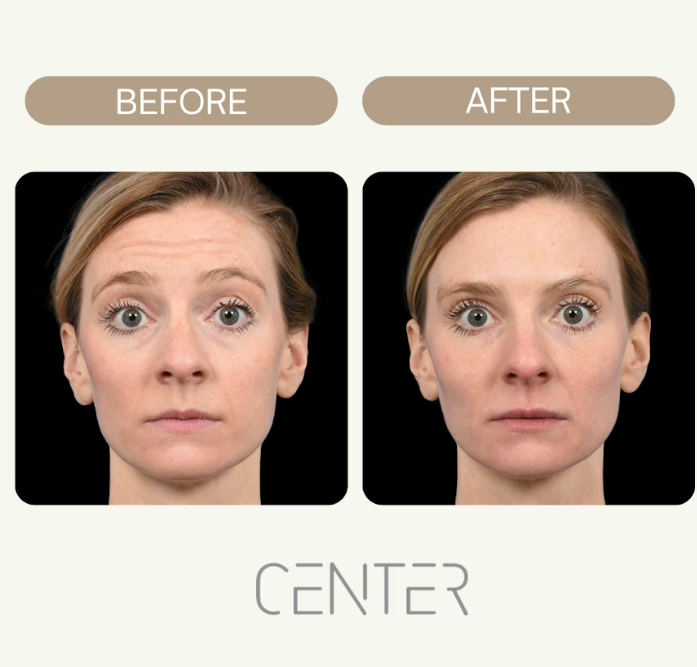
Surgery lifts and repositions tissues, but it doesn't change how your muscles move, which is why having a facelift doesn't eliminate the need for botulinum toxin injections. Expressive lines caused by repeated muscle movement will return post-surgery, so most patients continue treatments to address different aging concerns at different depths for a more cohesive result.
The Liquid Facelift for Younger Patients
Younger patients in their 30s and 40s who lack the structural aging required for surgery can opt for a liquid facelift. This non-surgical treatment uses dermal fillers to restore volume in the cheeks and temples. However, fillers cannot replace surgery for significant skin laxity, as over-filling can lead to an unnatural look.
Related: Different Types Of Facelifts Explained

Where Microneedling Fits In
Microneedling improves skin texture and tone by stimulating collagen through controlled micro-injuries. While effective for surface-level concerns, it cannot reposition tissue or address structural descent. A professional consultation is necessary to determine if a surgical approach is required for more advanced volume loss or laxity.
INSERT IMAGE HERE
Related: Different Types Of Facelifts Explained
Where Microneedling Fits In
Microneedling is a reputable skin-quality treatment that uses controlled micro-injuries to stimulate collagen. Over several sessions, it improves texture, pores, and skin tone, making it effective for fine surface-level concerns.
However, microneedling cannot reposition tissue or address structural aging. Like Botox, it has limits; significant laxity, volume loss, and tissue descent eventually require a surgical approach. A professional consultation helps determine which treatment tier is appropriate for your current needs.



Choosing the Right Combination
The most effective approach to facial rejuvenation isn't a single procedure, but a combination that addresses muscle activity, skin quality, volume, and structural support. While some start with Botox, others in their 50s or 60s may begin with a facelift, using facial rejuvenation procedures for maintenance. Additionally, Neck lift surgery is often performed simultaneously to ensure cohesive results across the neck and lower face.
A personalized consultation is the only way to know what's actually right for your face, your goals, and your timeline. Getting in touch with the team at The CENTER for Advanced Facial Plastic Surgery will give you a clear, honest picture of your best options.
The Bottom Line
Botox and facelifts complement rather than compete with each other. While Botox prevents muscle-driven lines, a facelift restores structural architecture. Together, they provide a more comprehensive solution to facial aging.
The ideal approach depends on individual aging patterns and goals, requiring a personalized consultation with a qualified surgeon.
Dr. Babak Azizzadeh and The CENTER for Advanced Facial Plastic Surgery offer the expertise to guide these decisions. Whether starting with Botox or exploring a facelift, the objective remains natural, refreshed results.
Frequently Asked Questions
Can I get Botox and a facelift at the same time?
It is best to keep them separate, typically waiting four to six weeks post-facelift before resuming Botox. Coordinate the timing with your surgeon to align with your specific healing process.
How long do facelift results last compared to Botox?
Botox lasts three to four months, while a facelift can last a decade or more. Longevity depends on your skin quality, lifestyle, and consistent maintenance.
What age is appropriate for a facelift?
Recommendation is based on tissue laxity rather than a specific age. While common in the 40s to 60s, younger patients may benefit more from non-surgical options like a liquid facelift.
Will a facelift make me look unnatural or “done”?
Modern techniques like the deep plane facelift focus on repositioning structures rather than pulling skin tight, ensuring a refreshed, natural appearance that avoids a "done" look.
Is Botox safe for long-term use?
Yes, Botox has a long safety record for long-term use. Consistent treatments can even train muscles to relax, potentially reducing the required frequency of injections over time.
See why patients across the U.S. choose Dr. Azizzadeh for natural, high-end results. Read reviews on Google and RealSelf.