


A facelift should never make you look like a different person or someone who has had work done. It should make you look rested, refined, and authentically yourself. That principle is at the core of every Dr. Azizzadeh deep plane facelift performed at the CENTER for Advanced Facial Plastic Surgery in Beverly Hills.
Over the years, patients have come in with the same concern expressed different ways: I don’t want to look pulled. I still want to look like me. Those concerns are valid. Most people aren’t trying to change their face. They’re trying to preserve the version of themselves that feels aligned with how they feel on the inside.
The deep plane facelift is one of the most advanced procedures in modern facial rejuvenation because it doesn’t rely on pulling the skin tighter. Instead, it works on the deeper structures of the face, the tissues that actually descend with age. When performed correctly and combined with the right supporting procedures, the result isn’t a tight face. It’s a naturally restored face.
Key Takeaways
- Dr. Babak Azizzadeh is a dual board-certified facial plastic surgeon recognized globally for his deep plane facelift expertise and facial nerve safety approach.
- Every deep plane facelift performed by Dr. Azizzadeh is built around the patient’s anatomy, not a one-size-fits-all technique.
- A deep plane facelift lifts the deeper layers of the face, not just the skin.
- It provides natural, long-lasting results without a pulled appearance.
- Recovery takes about two to four weeks, with improvements continuing over months.
- Ideal candidates have moderate to severe facial aging and good overall health.
- The procedure is more technically advanced than a traditional facelift, requiring a highly skilled surgeon.
What Is a Deep Plane Facelift?
A deep plane facelift is a surgical procedure that repositions the deeper layers of the face rather than simply tightening the skin. To understand why that matters, it helps to understand how the face actually ages. Aging isn’t just a skin problem. Over time, facial fat pads descend, ligaments lose their support, skin loses elasticity, the jawline softens, jowls develop, and the neck begins to lose definition. If you only tighten the skin, you’re treating the surface while ignoring the foundation.
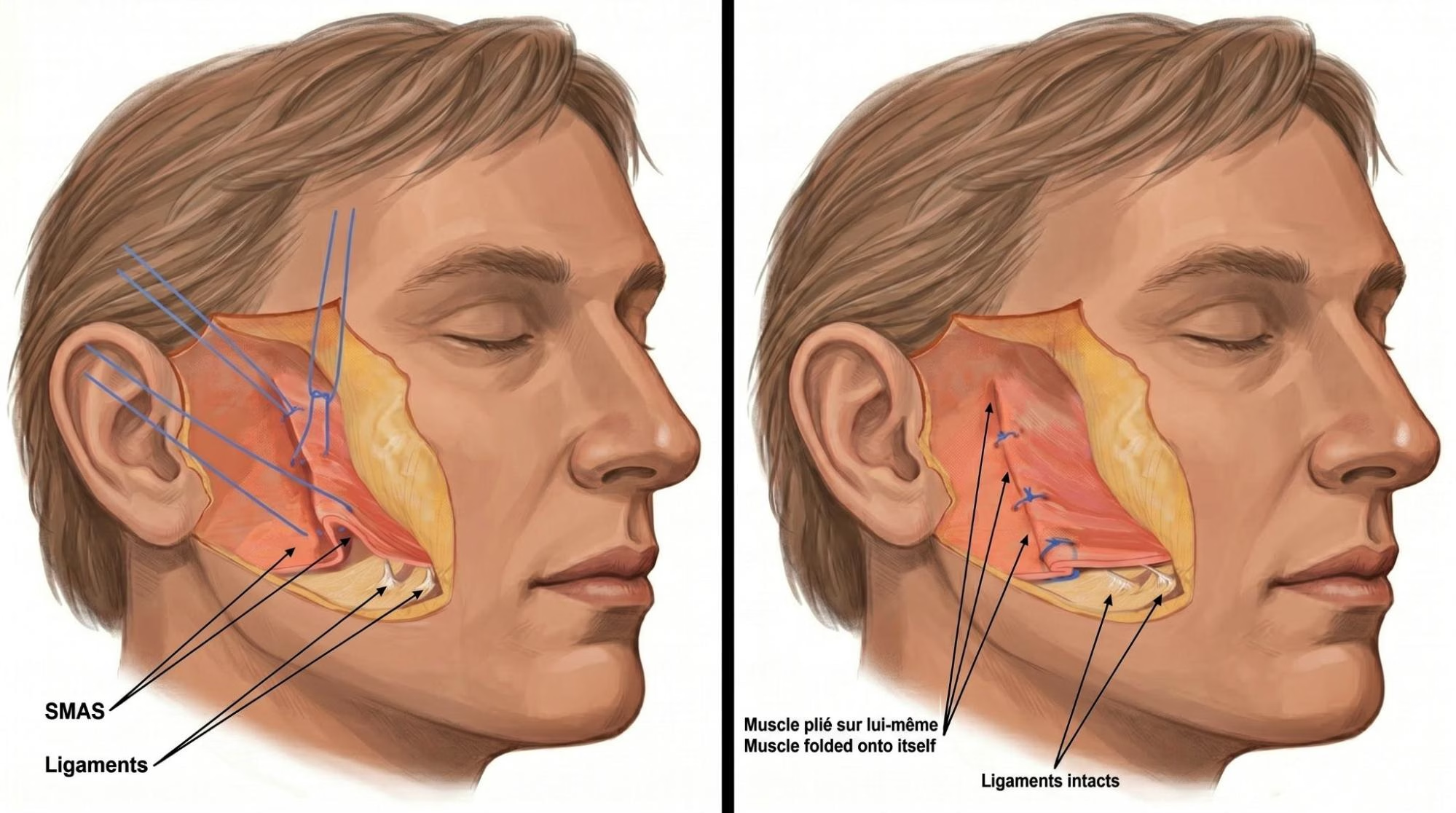
The deep plane facelift works beneath the SMAS layer, which stands for the superficial musculoaponeurotic system, and releases key retaining ligaments. This allows the deeper facial tissues to be repositioned more naturally as a unified structure, restoring the cheek, jawline, lower face, and often the neck together. The result is lifting and releasing rather than pulling.
It’s also worth knowing the difference between a standard deep plane facelift and an extended deep plane facelift. The extended version repositions both the platysma and SMAS, addressing the entire face and neck as one continuous unit. This significantly improves deep neck results as well, particularly when structural neck contouring is also performed.
How Does a Deep Plane Facelift Work?
Surgery begins with small incisions near the ears, sometimes extending into the hairline, depending on the patient’s anatomy and goals. From there, the surgeon accesses and adjusts the deeper facial layers rather than just the skin surface. By repositioning these underlying structures, the procedure smooths deep folds, lifts sagging jowls, and restores natural volume to the cheeks.
Unlike older facelift techniques that relied on pulling the skin tighter, the deep plane approach preserves facial volume and maintains a more youthful, natural-looking result. Because the work happens at a deeper level, results also tend to be more durable and long-lasting.
 What Does a Deep Plane Facelift Improve?
A deep plane facelift addresses many of the most common and frustrating signs of facial aging, especially in the midface, lower face, jawline, and neck. It can meaningfully improve:
- Sagging cheeks
- Jowls and loss of jawline definition
- Deep nasolabial folds
- Marionette heaviness
- Neck laxity and lower facial skin looseness
- Facial heaviness from descended soft tissue
- A tired or aged appearance that no longer responds well to injectables
The deep plane facelift is powerful because it treats the face in three dimensions. It doesn’t simply lift skin upward. It restores deeper soft tissue to a more youthful and anatomically appropriate position. A natural facelift isn’t created by tightening harder. It’s created by lifting the right structures in the right direction.
Deep Plane Facelift Before and After
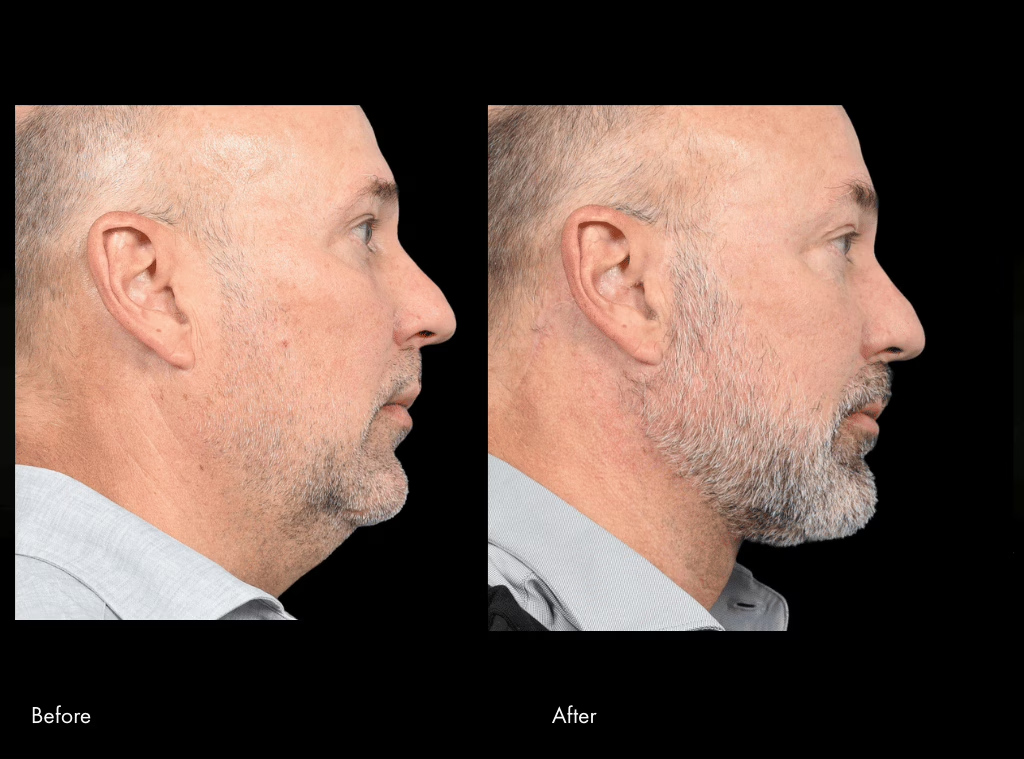
Before surgery, patients typically present with loose skin, deep folds, and hollowed or heavy cheeks. After a properly performed deep plane facelift, the most noticeable changes appear in the midface, jawline, and neck. The face looks lifted and refreshed without the artificial tightness associated with older techniques.


NOTE: You can view additional before and after results in the deep plane facelift before and after gallery and the full facial surgery gallery.
Why Dr. Azizzadeh Uses an Anatomy-Driven Approach
There is no single facelift that is right for everyone. Some patients need a deep plane facelift. Some need a deep plane facelift combined with structural neck contouring. Some need a more limited lower facelift. Some need fat grafting, eyelid surgery, brow refinement, or nonsurgical maintenance. And some patients aren’t ready for surgery yet.
Dr. Azizzadeh’s responsibility is to work with each patient to determine the actual cause of their aging pattern. Is it skin laxity? Is it cheek descent? Is it neck muscle banding or deeper structural neck issues? Is it volume loss or sun damage? Once the anatomy is clearly understood, the right treatment plan becomes much clearer.
This is why Dr. Azizzadeh doesn’t chase trends. The deep plane facelift is not better simply because it’s popular. It’s better suited to the right patient because it addresses the underlying structural causes of facial aging.
Dr. Babak Azizzadeh, MD, FACS is a dual board-certified facial plastic and reconstructive surgeon based in Beverly Hills. He is President-elect of the American Academy of Facial Plastic and Reconstructive Surgery and has trained surgeons from around the world in advanced deep plane techniques. His background in facial nerve surgery directly informs his approach to facelift safety, restraint, and natural results. You can find his published research on PubMed and his media features at facialplasticsbh.com/in-the-news.
Deep Plane Facelift vs. SMAS Facelift
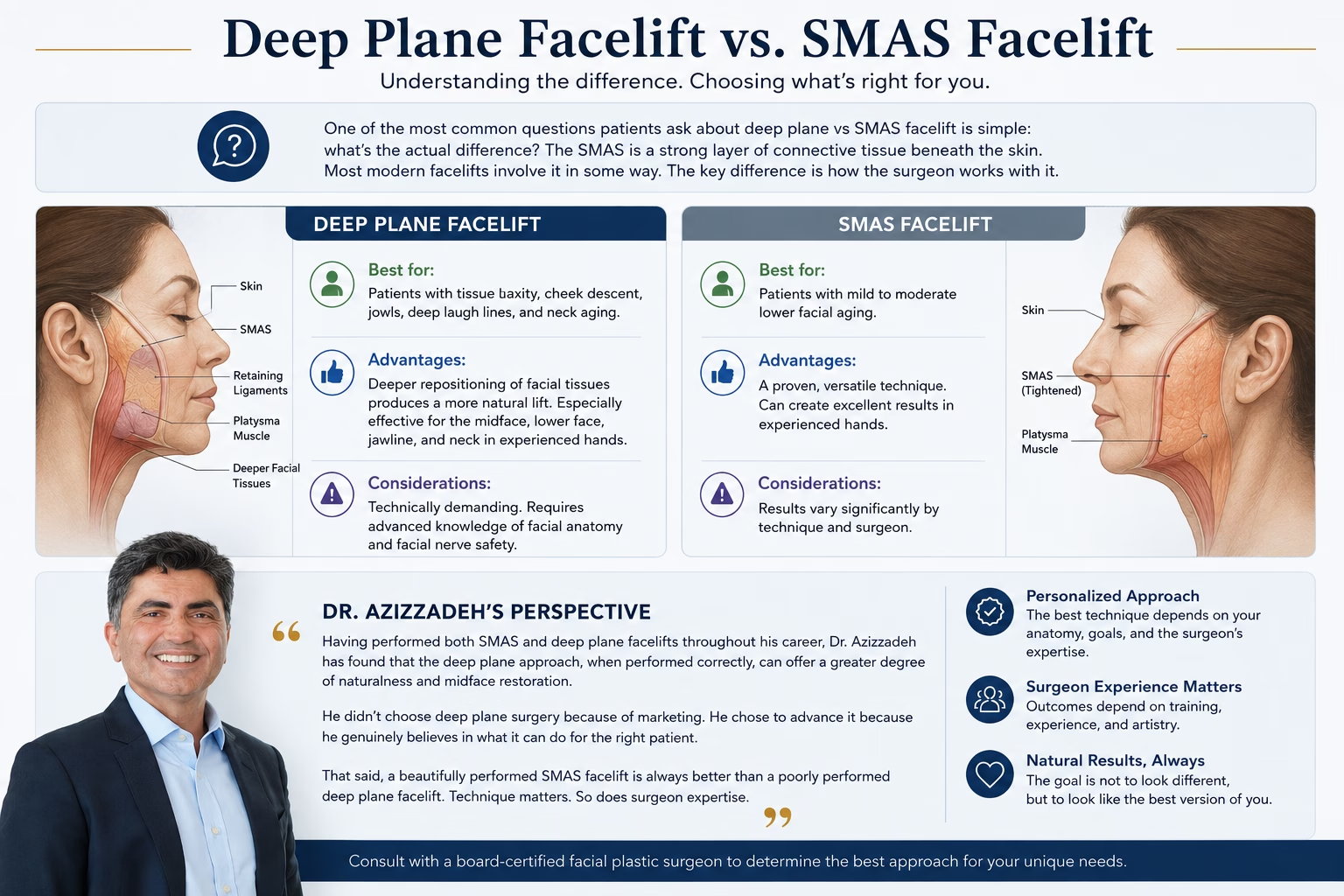
One of the most common questions patients ask about deep plane vs SMAS facelift is simple: what’s the actual difference? The SMAS is a strong layer of connective tissue beneath the skin. Most modern facelifts involve it in some way. The key difference is how the surgeon works with it.
In a traditional SMAS facelift, the surgeon separates the skin from the SMAS and tightens or folds it. In a deep plane facelift, the surgeon works beneath the SMAS and platysma muscle, releases the retaining ligaments, and repositions the deeper facial tissues more naturally as a composite unit. Both can be effective. The question is which technique best matches the patient’s anatomy and goals.
 Deep Plane Facelift
- Best for: Patients with tissue laxity, cheek descent, jowls, deep laugh lines, and neck aging.
- Advantages: Deeper repositioning of facial tissues produces a more natural lift. Especially effective for the midface, lower face, jawline, and neck in experienced hands.
- Considerations: Technically demanding. Requires advanced knowledge of facial anatomy and facial nerve safety.
SMAS Facelift
- Best for: Patients with mild to moderate lower facial aging.
- Advantages: A proven, versatile technique. Can create excellent results in experienced hands.
- Considerations: Results vary significantly by technique and surgeon.
Dr. Azizzadeh’s Perspective
Having performed both SMAS and deep plane facelifts throughout his career, Dr. Azizzadeh has found that the deep plane approach, when performed correctly, can offer a greater degree of naturalness and midface restoration. He didn’t choose deep plane surgery because of marketing. He chose to advance it because he genuinely believes in what it can do for the right patient. That said, a beautifully performed SMAS facelift is always better than a poorly performed deep plane facelift. Technique matters. So does surgeon expertise.
For a deeper overview of facelift options, see different types of facelifts explained.
Deep Plane Facelift vs. Mini Facelift
The term mini facelift is more of a marketing phrase than a clearly defined surgical technique. One surgeon’s mini facelift might involve a short incision and limited skin elevation. Others could include a meaningful SMAS modification. The phrase usually suggests something smaller, less invasive, and less costly. In reality, it can mean very different things depending on who’s performing it.
Dr. Azizzadeh advises patients to be careful with the mini facelift concept. If an incision is being made on your face, the right procedure needs to be chosen to actually achieve the desired result. The goal should never be to pick the smallest operation just because it sounds easier. All facelift procedures, whether labeled mini, SMAS, lower facelift, or deep plane, carry risks. Smaller doesn’t automatically mean safer, and less invasive doesn’t always mean better.
The best procedure is the least invasive one that can safely and beautifully achieve the result you actually need. Sometimes that means a comprehensive deep plane face and neck lift. Sometimes it means continuing nonsurgical treatment until the timing and anatomy are right.
Deep Plane Facelift vs. Endoscopic Facelift
Endoscopic facial rejuvenation uses small incisions and camera-assisted techniques. It can be very useful for the brow, temples, and sometimes the midface. For younger patients with early facial descent and minimal loose skin, an endoscopic approach may be appropriate.
That said, the endoscopic facelift typically uses a vertical vector, which limits customization, and may not allow full repositioning of lax tissues. That full repositioning is a hallmark of the deep plane face and neck lift.
Endoscopic Lift May Be Appropriate For:
- Early cheek, brow, or temple descent
- Mild midface flattening
- Minimal excess skin
- Younger patients with good skin elasticity
- Patients without significant jowls or neck laxity
Deep Plane Facelift Is Usually More Appropriate For:
- Jowling and lower face heaviness
- Neck laxity and loose skin
- Sagging cheeks
- Loss of jawline definition
- More advanced tissue descent
Smaller incisions are appealing, but they aren’t the most important part of the operation. What matters is whether the procedure can adequately correct the anatomy. If a patient has true jowling, loose neck skin, and lower facial descent, a purely endoscopic approach may not provide enough correction.
 Deep Plane Facelift vs. Neck Lift
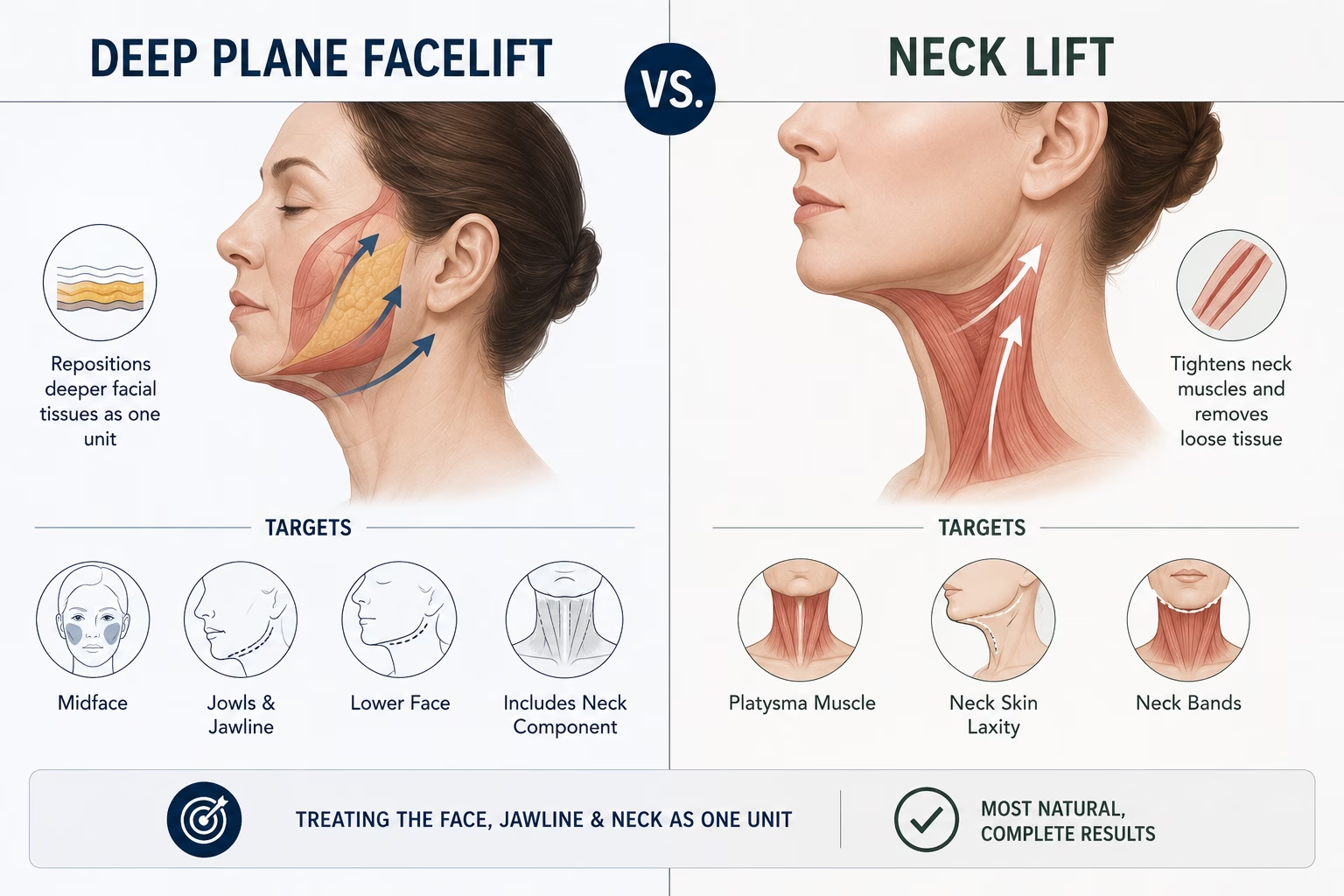
The face and neck age together, which is why most patients benefit from a combined approach. In Dr. Azizzadeh’s practice, a deep plane facelift always incorporates a neck lift component. The more important question isn’t what the procedure is called. It’s what anatomy is actually being treated.
Some patients also have deeper structural neck issues that go beyond what a standard platysmaplasty can address. These may include prominent or ptotic submandibular glands, deep subplatysmal fat, or unfavorable chin and skeletal anatomy. When appropriate, Dr. Azizzadeh performs structural neck contouring to address these deeper structures as part of a comprehensive facial rejuvenation plan.
A rejuvenated face with an untreated neck can look incomplete. Treating the face, jawline, and neck as one continuous aesthetic unit is what produces the most natural results.
Why Deep Neck Anatomy Matters as Much as the Facelift
A beautiful deep plane facelift can restore the cheek, soften the jowl, and reposition the lower face. But if the deeper structures of the neck aren’t addressed with the same level of precision, the result won’t look complete.
The neck determines how the jawline is seen. It creates the transition between the face and the body, defines the cervicomental angle, and determines how light moves across the lower face. This is why Dr. Azizzadeh uses the term structural neck contouring. The neck has to be treated structurally, not superficially.
This approach is detailed in his peer-reviewed publication Extended Deep Plane Facelift and Structural Neck Contouring: Technical Considerations for Comprehensive Surgical Facial Rejuvenation, which outlines the advanced anatomic knowledge and technical skill required to perform this combined procedure safely and optimally.
When evaluating a patient, Dr. Azizzadeh looks at the entire face-neck unit: the mandible, chin projection, hyoid position, platysma, submandibular glands, superficial and deep fat compartments, buccal fat pad, parotid region, jowls, and facial nerve anatomy. A facelift that treats only the face while ignoring the neck leaves the result unfinished.
The Submandibular Glands and Neck Aesthetics
The position and size of the submandibular glands matter more to neck results than most people realize. A prominent or ptotic gland creates fullness beneath the jawline and disrupts the contour that should define the transition between the mandible and upper neck.
When modification is indicated, the goal is almost never complete removal. It’s typically a reduction of the lower portion that contributes to visible fullness, with salivary function preserved. Not every patient needs this. The right approach is always anatomy-based.
The Buccal Fat Pad, Parotid Region, and Their Connection to the Neck
The buccal fat pad is one of the most misunderstood structures in facial aesthetics. It spans a large region of the face, from the temple and cheekbone area all the way to the lower face and upper jawline. Because of this, it can influence facial shape in younger patients and contribute to heaviness, jowling, and loss of definition as the face ages.
Dr. Azizzadeh has published extensively on this topic, including the paper Buccal Fat Pad Modification in Deep Plane Facelift: Technical and Facial Nerve Considerations. His view is that buccal fat should never be treated as a trend or a routine removal procedure. Its management must be individualized to each patient.
 Where Are Deep Plane Facelift Incisions Placed?
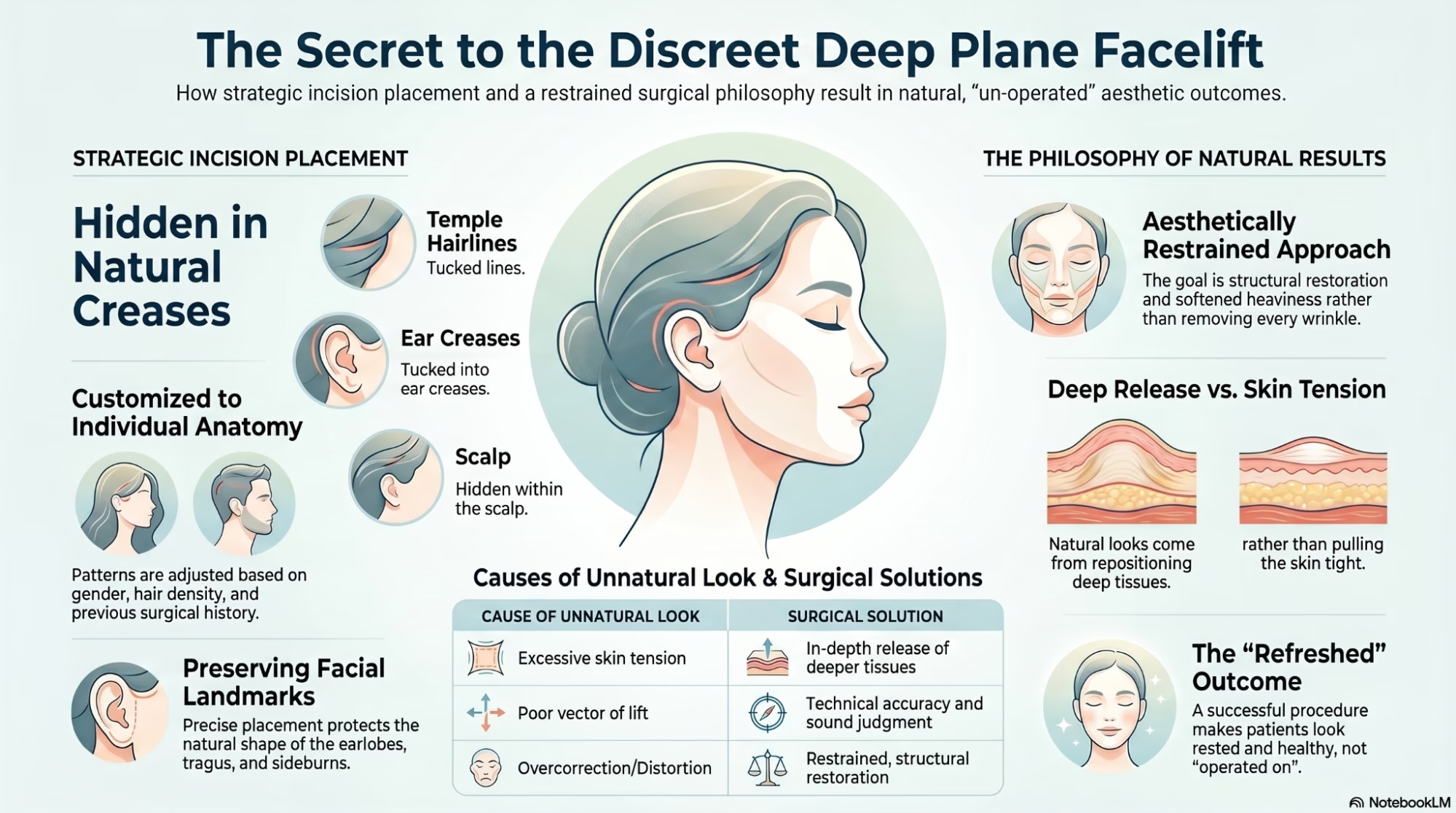
Facelift incisions are one of the most important parts of the entire procedure. A facelift scar shouldn’t announce itself. It should be placed thoughtfully in natural creases, around the ear, and in the hairline so it can heal as discreetly as possible.
A typical deep plane face and neck lift incision pattern includes placement in the temple hairline, around the sideburn area (depending on gender and hairline), in natural creases in front of the ear, around or behind the tragus, around the earlobe, behind the ear, into the scalp hairline, and sometimes beneath the chin for neck work.
The incision pattern must be customized. A patient with a high hairline, male beard growth, thin hair, or prior facelift scars requires a different strategy. The goal is not only to lift the face. It’s to preserve the hairline, sideburn, ear shape, tragus, earlobe, and natural frame of the face.
Will a Deep Plane Facelift Look Natural?
It should, when it’s performed with technical accuracy and sound surgical judgment. The unnatural facelift look usually comes from excessive skin tension, poor vector of lift, inadequate release of deeper tissues, overcorrection, distortion around the mouth or ear, or failure to treat the neck appropriately.
A natural facelift Beverly Hills patients consistently describe as their goal is one that’s aesthetically restrained. The aim isn’t to remove every sign of age. It’s to restore facial structure, improve definition, soften heaviness, and create a more refreshed appearance while preserving the face’s individuality. A successful facelift shouldn’t make people ask what you had done. It should make them think you look rested, healthy, and confident.
 Who Is a Good Candidate for a Deep Plane Facelift?
This procedure is best suited for individuals experiencing visible signs of aging that are structural rather than only surface-level. Good candidates typically have moderate to severe skin laxity, sagging jowls, and deep facial changes that can’t be meaningfully corrected with nonsurgical treatments. Healthy skin elasticity and realistic expectations also matter.
You may be a candidate if you have:
- Sagging cheeks or jowls
- Loose lower facial skin or loss of jawline definition
- Neck laxity or heavy fullness in the neck
- Deepened folds caused by tissue descent
- Frustration with temporary injectable treatments
- Good general health and realistic expectations
You may not be ready if your aging is very mild, your main concern is skin texture only, you smoke and aren’t willing to stop, or you’re not medically cleared for surgery. In those cases, nonsurgical treatment or observation is the more appropriate path, and Dr. Azizzadeh will say so directly during a consultation.
What a Deep Plane Facelift Can and Cannot Do
It Can:
- Lift sagging cheeks and improve jowls
- Define the jawline and restore lower facial structure
- Improve deep folds caused by tissue descent
- Improve the neck when combined with neck lifting
- Reduce the need for excessive filler
- Create a more refreshed and youthful facial contour
It Cannot:
- Stop aging
- Change your fundamental identity
- Remove fine lines or correct surface discolorations
- Replace laser resurfacing for skin quality
- Replace Botox for expression lines
- Correct eyelid aging unless eyelid surgery is also performed
- Address structural neck issues unless structural neck contouring is included
This is why Dr. Azizzadeh thinks in terms of comprehensive facial rejuvenation rather than one isolated procedure. The deep plane facelift restores structure. Other treatments may be needed to refine the eyes, skin, brow, lips, or facial volume.
 Should a Deep Plane Facelift Be Combined With Other Procedures?
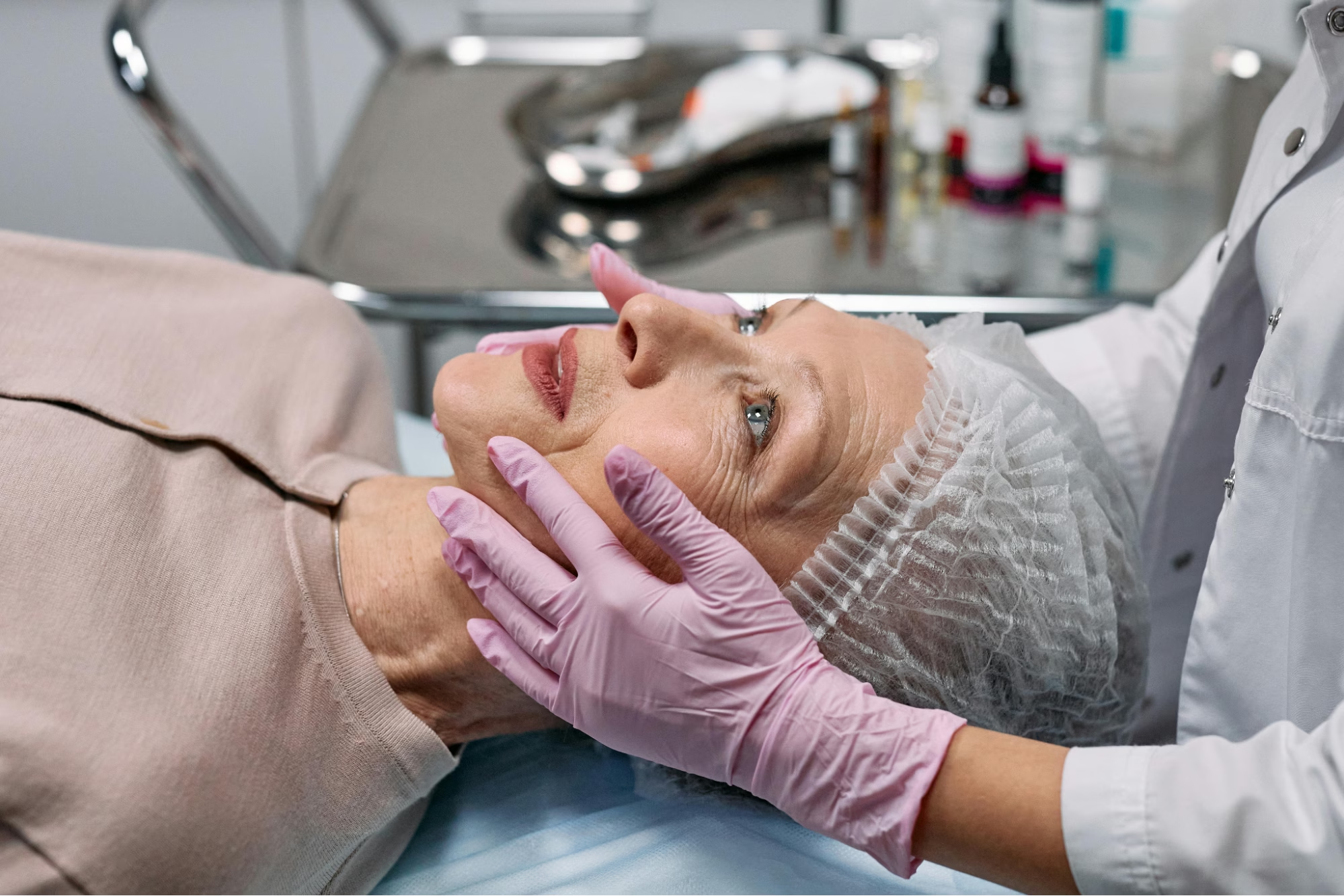
Often, yes, but only when the anatomy supports it. In Dr. Azizzadeh’s practice, a deep plane facelift is naturally combined with a neck lift. Depending on the patient’s goals and anatomy, it may also be combined with structural neck contouring, blepharoplasty, brow lift or refinement, facial fat grafting, chin augmentation, laser resurfacing, or buccal fat repositioning in selected cases.
The goal is not to do more procedures. The goal is to create balance. If the lower face is rejuvenated but the eyelids remain heavy, the result looks incomplete. A beautiful facelift is a complete understanding of facial harmony.
What Is the Best Age for a Deep Plane Facelift?
There’s no universal best age. Patients often ask what the best age for facelift surgery actually is, and the honest answer is that it depends entirely on anatomy. Some patients are candidates in their 30s and 40s due to genetics, weight loss, or early anatomic issues like prominent submandibular glands or poor neck definition. Others are better suited in their 50s, 60s, or beyond. Candidacy depends more on anatomy and degree of aging than on a number.
What matters most is whether the anatomy justifies surgery, whether you’re personally ready, and whether you’re medically and emotionally prepared for the procedure and recovery. Dr. Azizzadeh evaluates the face with your goals in mind, not just your birthdate.
Am I Too Young for a Facelift?
You’re too young for a deep plane facelift if your anatomy doesn’t justify surgery. That may sound obvious, but it matters. Surgery shouldn’t be performed because it’s trending or because someone on social media had one. If you have early jowling, genetic lower face heaviness, loose neck skin, or filler fatigue, you may be a younger candidate. The goal in those cases is structural correction that looks subtle and long-lasting.
Am I Too Old for a Facelift?
Age alone doesn’t determine candidacy. Health, anatomy, healing ability, skin quality, and realistic expectations matter more than age. Some patients in their 70s are excellent surgical candidates. Before surgery, Dr. Azizzadeh evaluates medical history, medications, smoking status, blood pressure, healing risk, and overall health. Safety is always the first priority.
 How Long Does a Deep Plane Facelift Last?
Deep plane facelift results are often discussed in the 10- to 15-year range, though this varies based on skin quality, anatomy, genetics, lifestyle, sun exposure, weight stability, and the quality of the surgical technique. The procedure doesn’t stop aging. What it does is reset the facial foundation. After surgery, the face continues to age, but from a more restored starting point.
Factors that influence longevity include the surgeon who performed the procedure, skin elasticity, bone structure, facial volume, degree of preoperative aging, smoking history, sun damage, and weight changes over time. Patients who maintain a stable weight, protect their skin from sun exposure, and follow up with thoughtful nonsurgical maintenance tend to preserve their results longer.
What Is Recovery Like After a Deep Plane Facelift?
Recovery varies based on the patient and the extent of surgery. Most patients should expect swelling, bruising, temporary numbness around the ears, and some discomfort in the early days. These are normal parts of healing. The face gradually settles over weeks to months.
Week One
The first week is focused on rest, swelling control, wound care, and careful follow-up. Patients should keep the head elevated, avoid strenuous activity, and follow all postoperative instructions closely.
Weeks Two to Three
Bruising and swelling continue to improve. Many patients begin to feel more comfortable socially, though the face is still healing.
Weeks Three to Six
Patients often resume more normal activity depending on their healing and the specific procedure. Exercise and travel should be cleared by the surgical team.
Three Months and Beyond
The face continues to refine. Swelling decreases, incisions mature, and the result becomes more natural. Incision lines typically fade significantly over time, though healing varies from person to person.
Deep Plane Facelift vs. Nonsurgical Rejuvenation
Nonsurgical treatments have an important place in facial rejuvenation, and the question of nonsurgical facelift vs surgery is one Dr. Azizzadeh addresses frequently. Botox, Daxxify, fillers, biostimulators like Sculptra and Radiesse, laser resurfacing, chemical peels, and medical-grade skincare can all improve dynamic wrinkles, volume loss, skin texture, and early laxity. They’re excellent for maintenance, prevention, and minor refinement.
But nonsurgical treatments can’t do what surgery does. They can’t remove meaningful excess skin, release retaining ligaments, reposition descended facial tissues, or rebuild the jawline the way a deep plane facelift can. The distinction matters: nonsurgical treatments are for surface refinement, while surgery addresses structural aging.
Filler Fatigue: When Injectables Start Working Against You
There’s a point where repeated filler use can become less effective, and sometimes counterproductive. When filler is used repeatedly to compensate for tissue descent, the face may begin to look heavier, rounder, or less defined. The patient doesn’t necessarily look younger. They may just look fuller, and unnatural puffiness can set in.
This is what many people call filler fatigue. Filler works well when it’s used for the right reasons, but it can’t correct every aspect of aging. When the face needs lifting, adding volume isn’t always the answer. At that point, a surgical consultation can be genuinely clarifying, not because every patient needs surgery, but because it helps define what’s actually possible.
Pros and Cons: Surgery vs. Nonsurgical Treatment
Surgery can: reposition descended tissues, improve jowls, restore jawline definition, address loose skin, improve the neck, and provide longer-lasting structural correction.
Surgery requires: anesthesia, incisions, recovery time, and acceptance of surgical risks. It also requires a qualified surgeon with significant facelift expertise.
Nonsurgical treatment can: improve fine lines, restore mild volume loss, improve skin texture, and require little downtime. It can also maintain surgical results long-term.
Nonsurgical treatment cannot: remove significant loose skin, fully correct jowls, or reposition descended tissues. Overuse can also lead to an unnatural swollen appearance.
The best rejuvenation plans often combine surgical procedures for structure with nonsurgical treatments for refinement and maintenance. Surgery resets the foundation, and treatments like Botox, fillers, and laser resurfacing help preserve and extend those results over time.
 Nonsurgical Alternatives to a Deep Plane Facelift
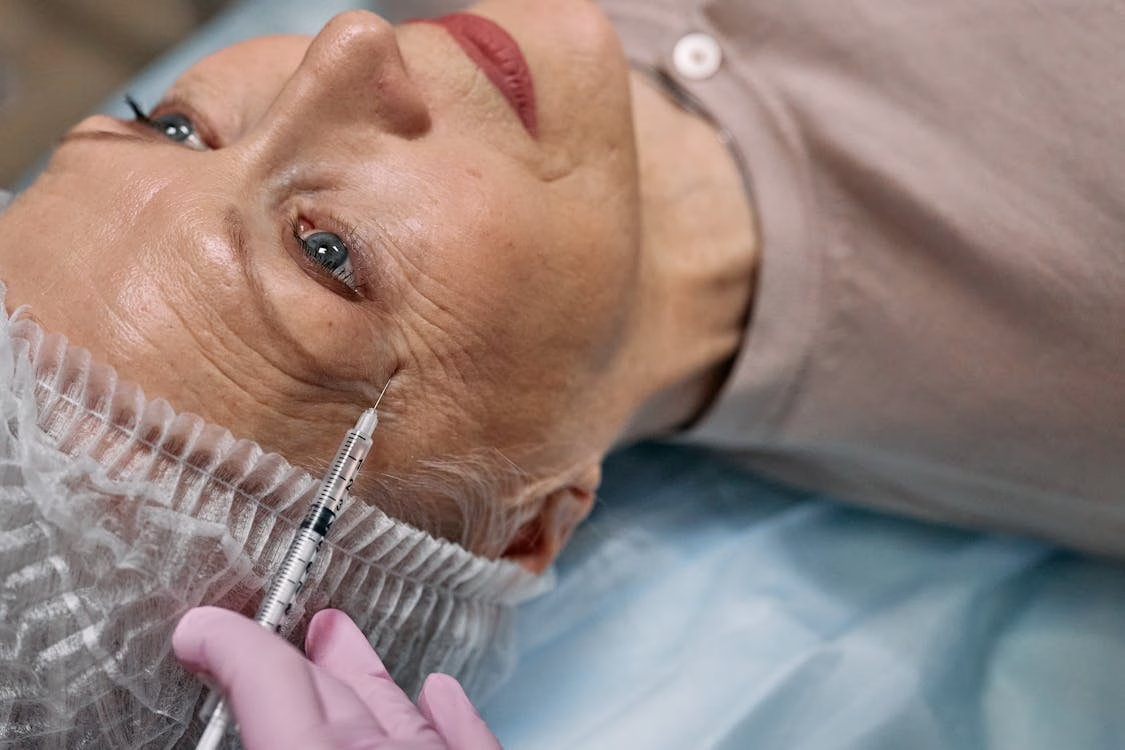
For those not ready for surgery, nonsurgical treatments can provide temporary improvements. The most common options include injectable fillers to restore lost volume in the cheeks and jawline, Botox to reduce wrinkles and slow further sagging, laser resurfacing and microneedling to improve skin tone and texture, and ultrasound or radiofrequency treatments to tighten the skin non-invasively.
These treatments offer subtle enhancements, but they don’t provide the lasting structural correction of a deep plane facelift. They’re best understood as a complement to surgery, not a replacement for it.
What Does a Deep Plane Facelift Cost?
The cost of a deep plane facelift varies depending on the surgeon’s expertise, location, and any additional procedures performed. Prices typically range from $15,000 to $50,000. While more expensive than a traditional facelift, the deep plane technique’s longer-lasting results reduce the need for repeated touch-ups over time.
Factors that influence cost include the surgeon’s experience and reputation, the geographic location of the practice, facility and anesthesia fees, and whether additional procedures such as fat grafting or neck lift are included. For many patients, the longer-lasting nature of the deep plane result makes it a more cost-effective choice compared to repeated nonsurgical treatments over the same period.
What Are the Risks of a Deep Plane Facelift?
Every surgical procedure carries risks. For facelift and neck lift surgery, these can include bleeding, hematoma, infection, scarring, skin healing issues, asymmetry, numbness, nerve injury, anesthesia risks, and the potential need for revision surgery.
The deep plane facelift requires particularly significant anatomic expertise because the surgeon is working near facial muscles, salivary glands, and critical nerve branches. If the surgeon doesn’t have the restraint and aesthetic judgment to control the degree of correction, the result can look unnatural. This is why surgeon selection matters as much as technique.
When searching for a deep plane facelift surgeon Beverly Hills patients can trust, board certification is the starting point. Look for certification from the American Board of Facial Plastic and Reconstructive Surgery, American Board of Plastic Surgery, or American Board of Otolaryngology with Facial Plastic Surgery Fellowship Training. Facial surgery specialization, extensive deep plane facelift experience, proven facial nerve knowledge, and natural-looking before-and-after results are also non-negotiable factors.

Why Patients Choose Dr. Azizzadeh for Deep Plane Facelift Surgery
At the CENTER for Advanced Facial Plastic Surgery, Dr. Azizzadeh offers deep plane facelift Beverly Hills patients a level of anatomic precision and facial nerve expertise that’s rare anywhere in the world. His work focuses exclusively on the face, with patient safety at the center of everything he does. Facelift surgery requires more than technical skill. It requires an understanding of identity, expression, anatomy, and restraint. His goal is always to improve the face in a way that looks natural, youthful, and appropriate, never artificial.
Dr. Azizzadeh’s background in facial nerve surgery and facial reanimation directly informs his facelift approach. The face is not static. It moves, expresses, and communicates. A facelift must respect that. The best result is not simply a younger face. It’s a face that still feels alive.
His published research and media appearances, including features in The New York Times, CNN, and Oprah, reflect his standing in the field. You can find recent press coverage at facialplasticsbh.com/in-the-news.
Schedule Your Consultation in Beverly Hills
Considering a deep plane facelift in Beverly Hills? Schedule a private consultation with Dr. Babak Azizzadeh at the CENTER for Advanced Facial Plastic Surgery. Dr. Azizzadeh will evaluate your anatomy, explain your options, and help you decide whether a deep plane facelift, neck lift, SMAS facelift, mini facelift, endoscopic approach, or nonsurgical plan is best suited to your goals.
Frequently Asked Questions
What is a deep plane facelift?
A deep plane facelift is an advanced technique that repositions the deeper layers of the face, including soft tissue and support structures beneath the SMAS layer. It’s designed to restore the cheeks, jawline, lower face, and neck more naturally than skin-tightening approaches.
How is a deep plane facelift different from a SMAS facelift?
A SMAS facelift tightens or folds the SMAS layer. A deep plane facelift works beneath it, releasing retaining ligaments and repositioning deeper facial tissues as a more unified structure. Both can be effective, and the right choice depends on the patient’s anatomy and goals.
How long does a deep plane facelift last?
Results are often discussed in the 10- to 15-year range, though this depends on the surgeon performing the procedure, skin quality, genetics, lifestyle, and postoperative care. The procedure doesn’t stop aging, but it resets the facial foundation.
What is the best age for a deep plane facelift?
There’s no single best age. Some patients are candidates in their 30s and 40s due to genetics or early anatomic factors, while others are better suited in their 50s, 60s, or beyond. Candidacy depends more on facial anatomy and degree of aging than on chronological age.
Is a deep plane facelift better than a mini facelift?
When comparing a mini facelift vs deep plane facelift, the right choice comes down to the degree of aging and what the anatomy actually requires. For patients with true cheek descent, jowling, jawline aging, and neck laxity, the deep plane approach is typically more appropriate. A mini facelift may be suitable for very limited concerns, but the term covers a wide range of techniques and should be evaluated carefully with a qualified surgeon.
Are deep plane facelift scars visible?
All facelifts create scars, but careful incision design conceals them around the hairline, ear, and natural creases. Placement should be customized to the patient’s anatomy, hairline, gender, and prior surgical history.
Does a deep plane facelift include the neck?
In Dr. Azizzadeh’s practice, yes. A deep plane facelift is always combined with a neck lift. Patients with deeper structural neck issues may also benefit from structural neck contouring. Treating the face and neck together consistently produces the most balanced result.
Can a deep plane facelift replace Botox or fillers?
No. A facelift repositions sagging tissue, while Botox treats dynamic expression lines and fillers restore volume. After surgery, nonsurgical treatments may still be used for refinement and ongoing maintenance.
Is nonsurgical treatment better than a facelift?
Nonsurgical treatments and facelifts serve different purposes and are often complementary. Nonsurgical options work well for surface refinement and early aging. Surgery addresses structural changes that injectables and devices simply can’t correct.
Will I look like myself after a deep plane facelift?
That’s the goal. A properly performed deep plane facelift should restore your facial structure while preserving your identity, expression, and natural character. The result should make you look like a rested, refreshed version of yourself, not a different person.
How do I choose the best deep plane facelift surgeon?
Look for board certification in facial plastic and reconstructive surgery, specialized experience in deep plane facelift and revision procedures, documented facial nerve expertise, and a portfolio of natural-looking before and after results. How the surgeon speaks about your face during a consultation matters too. The plan should feel individualized and medically grounded.