Dr. Azizzadeh’s Revolutionary Facial Paralysis Procedure
A smile is something that we often take for granted. It’s a universal symbol for happiness and is used to express numerous emotions such as joy and pride. We also use our smiles to exhibit laughter and humor. Interactions that involve giving and receiving a smile all contribute towards self-esteem in a very important way. People who suffer with facial paralysis usually have trouble using their smile muscles in a normally which presents both physical and emotional challenges. Beverly Hills facial paralysis surgery expert, Dr. Babak Azizzadeh is dedicated to helping patients with varying forms of facial paralysis and has successfully helped countless children and adults regain their smile. Dr. Azizzadeh completed his fellowship in facial plastic and reconstructive surgery at Harvard University. He received extensive training in microsurgical facial reconstruction which is often required to treat patients who were born with facial paralysis. Dr. Azizzadeh is the founder of The Facial Paralysis Foundation which is an organization that offers support and information for people who have facial paralysis. Dr. Azizzadeh has established himself as a pioneer in the field of facial nerve paralysis and has become world renowned for his expertise. He has been recognized for his work on several occasions and has appeared on the Oprah Winfrey Show and countless other media outlets. Most recently, Dr. Azizzadeh has been asked to host the International Facial Nerve Symposium in Los Angeles in 2017 which is considered to be the highest honor in his field. Dr. Azizzadeh’s training in facial plastic and reconstructive surgery as well as head and neck surgery give him a unique insight into both the aesthetics of the face and the function of the facial nerve.
What is Facial Paralysis?
People are commonly unfamiliar with facial paralysis unless they have a family member or friend that has been affected by it. Facial paralysis is considered to be a condition where the patient is suffering from either temporary or permanent loss of facial muscle control on at least one side of their face. Facial paralysis can be caused many different factors including trauma, tumors, strokes, and most commonly Bell’s Palsy. Depending on the type of facial paralysis a patient has, Dr. Azizzadeh and his team at The Facial Paralysis Institute have a variety of treatment options available. Patients usually get the best result when combining different kinds of treatment including surgery, Botox injections, and facial physical therapy.
Revolutionary Treatment: Masseter to Facial Nerve Transfer
When patients come to see Dr. Azizzadeh for facial paralysis there are many different surgical and non-surgical options to consider. Dr. Azizzadeh spends time examining and getting to know every patient in order to create a completely customized treatment plan. For patients who are good candidates and are suffering with permanent facial paralysis, the Masseter to Facial Nerve Transfer is something that Dr. Azizzadeh may recommend. This is a cutting-edge surgical procedure that has a very high success rate for helping patients regain facial movement on the paralyzed side of their face. During a Masseter for Facial Nerve Transfer, Dr. Azizzadeh makes an incision in the front of the patient’s ear in order to identify the facial and masseteric nerves. The two nerves are sewn together using microscopic magnification. The masseteric nerve helps provide neural input into the paralyzed facial nerve which helps to restore facial movement and the ability to smile. 6-7 months after the procedure the paralyzed side of the face should regain function and start to resemble the unaffected side. The strength and control of the patients reconstructed smile will improve over the next few years, and can be improved through facial physical therapy.
Schedule a Consultation with Facial Nerve Expert Dr. Azizzadeh
Facial paralysis can be devastating to live with. If you or a loved one is considering treatment to improve the effects of facial paralysis, call The Facial Paralysis Institute to schedule a consultation with world renowned physician Dr. Babak Azizzadeh.


Revision Rhinoplasty Recovery
Patients who have undergone a rhinoplasty procedure and are not satisfied with the results may be a good candidate for a revision rhinoplasty surgery. This procedure requires an expert who has the knowledge and experience necessary to operate on an area that has already been through a previous surgery. Just as the procedure requires extra care the second time, so does the recovery. Dr. Babak Azizzadeh, leading expert in revision rhinoplasty procedures, has compiled a list of the most important parts of recovering from a revision rhinoplasty. Dr. Azizzadeh is a Harvard trained specialist in nasal and facial plastic surgery. He has authored five best-selling books including the definitive rhinoplasty textbook Master Techniques in Rhinoplasty. Dr. Azizzadeh is a leading expert in the field of primary, revision, and ethnic rhinoplasy and has become widely recognized for his emphasis on creating the most natural result possible. He has been named a Top Doctor by the US News & World Report for rhinoplasty and has been featured in numerous media outlets including the Oprah Winfrey Show due to his expertise. Dr. Azizzadeh is double board certified in both facial plastic surgery and otolaryngology which gives him a unique insight into both the aesthetics and function of the nose.
What Is A Revision Rhinoplasty?
After having a rhinoplasty for the first time, expectations are high for a fantastic result. Unfortunately that isn’t always the case, and sometimes patients are left disappointed. Sometimes their cosmetic expectations were not met during the initial surgery, and other times their breathing problems were not properly corrected. Although this can be devastating, there are experts like Dr. Azizzadeh who specialize in revision rhinoplasty surgery. During a revision rhinoplasty, Dr. Azizzadeh addresses any concerns that the patient was left with after their primary rhinoplasty. If a patient decided to undergo a revision rhinoplasty, Dr. Azizzadeh puts an emphasis on making sure that the patient has realistic expectations on what can be achieved. Dr. Azizzadeh has very open and honest conversations with his revision rhinoplasty patients so that they truly understand the complexity of their second surgery and understand what results are realistic. This honesty and expectation setting really helps patients feel comfortable before and after their revision rhinoplasty.
What Makes Revision Rhinoplasty Recovery Different?
Sometimes, patients who have a revision rhinoplasty think that they know exactly what their recovery will be like (since they have already been through it once). Although the recovery process after a revision rhinoplasty is similar to the first surgery, there are some differences to be aware of as well.
What Elements of Recovery are the Same?
After a primary or revision rhinoplasty:
- The nose will have a cast on for the first week after surgery.
- The nose may be bruised or swollen. A cold compress can help reduce these symptoms.
- Dr. Azizzadeh will prescribe pain medication to help control discomfort for the first few days.
- Follow up with Dr. Azizzadeh one day and one week after surgery.
- Wait at least 3 weeks before performing any type of exercise or strenuous physical activity.
What Elements of Recovery are Different?
After a revision rhinoplasty:
The most important thing to do while recovering from a revision rhinoplasty is to keep in mind that your nose has already been through the trauma of the first surgery, and now a second one. Revision rhinoplasty procedures can be very complex, and Dr. Azizzadeh often has to work around scar tissue and other things left over from the primary surgery. As a result, the nose can take longer to heal the second time around. It can take up to two years after a revision rhinoplasty for the internal swelling to completely subside. Practicing patience is an important factory in recovering from any surgery, particularly a revision rhinoplasty. Dr. Azizzadeh’s patients will attest that it is always worth the wait, and are ecstatic to finally get the result that they were looking for.
Schedule a Revision Rhinoplasty Consultation with Dr. Azizzadeh
Revision rhinoplasty procedures require an expert who has the experience and knowledge necessary to complete these complicated surgeries successfully. If you are considering a revision rhinoplasty, call The CENTER for Facial Plastic Surgery today to schedule a consultation with world renowned surgeon Dr. Babak Azizzadeh.
New Age Rhinoplasty Consultations
Finding the right doctor for a rhinoplasty is no easy task. There are many considerations when making a decision about who should operate on your nose.
One of the most important things is to feel confident and comfortable with the surgeon who you choose. The physician should have extensive experience performing rhinoplasty procedures and should be a true specialist in the field.
After starting to research different surgeons, you might come to realize that a doctor that you are interested in practices in a different state or even a different country.
Skype consultations
Fear not, world renowned, Beverly Hills rhinoplasty expert Dr. Babak Azizzadeh offers consultations via Skype to accommodate patients who don’t live in the Los Angeles area. Dr. Azizzadeh is Harvard trained and has gone on to become a leader in the field of facial plastic and nasal surgery, specializing in primary, revision, and ethnic rhinoplasty.
Not only is he surgeon to the stars, but he is also the doctor who other plastic surgeons refer their friends and families to. He is the author of five best-selling textbooks including the widely recognized Master Techniques in Rhinoplasty and most recently Rhinoplasty: A Multispecialty Approach.
Dr. Azizzadeh has been named a Top Doctor by US News and World Report for rhinoplasty and has been featured in various media outlets including Entertainment Tonight, The Doctors, The Oprah Winfrey Show,the LA Times, and NY Times. Dr. Azizzadeh is double board certified in both facial plastic surgery and otolaryngology which gives him a unique insight into both the aesthetics and function of the nose.
Don’t Let Location Determine What Surgeon You Choose
There are so many things to consider when pursuing a rhinoplasty. It can seem overwhelming to spend time researching doctors, and as a result, many people limit themselves to looking into physicians who have offices close by.
Instead of letting location be a determining factor, you should look for the doctor who you feel will be able to provide you with the best possible surgical outcome. Success rates of rhinoplasty procedures are not only based on the patient’s anatomy but also the surgeon’s artistic and technical skills, which makes seeing a specialist extremely important, regardless of where you live in the country. Dr. Azizzadeh understands that it’s not easy for most out of town patients to make a trip to Beverly Hills for their initial consultation, so he has come up with a way to make it more convenient. You can have a rhinoplasty consultation with Dr. Azizzadeh from the comfort of your own home via Skype!
If you decide to proceed with surgery, his staff can even arrange your follow up appointments (one month and later) via Skype after your rhinoplasty procedure. The main goal of Skype consultations is to provide patients with the highest level of care while making it as convenient as possible.
How do Skype Consultations Work?
Skype consultations are a large part of Dr. Azizzadeh’s practice, so although it might sound like a new concept, it’s something that he does almost daily. After scheduling your Skype consultation, our office will contact you about a week in advance of your appointment with instructions on how to complete new patient paperwork and send over some specific photographs.
Dr. Azizzadeh asks that his Skype patients send this information 48 hours prior to their consultation so that he can spend time reviewing everything on paper before meeting face-to-face via Skype. The paperwork consists of two forms; a medical history summary and a questionnaire specific to rhinoplasty patients. We also make sure to get your Skype ID ahead of time so that we can add you as a contact and ensure that everything is in order for your consultation.
On the day and time of your consultation Dr. Azizzadeh places the Skype call to you. Patients have plenty of time to get to know Dr. Azizzadeh and ask any questions that they may have. Dr. Azizzadeh will examine you and make his recommendation for creating a customized treatment plan. After your Skype appointment Dr. Azizzadeh’s surgical consultant will follow up with you to go over the financial quote and will be your liaison for any of the logistical details of booking surgery if you decide to proceed.
Schedule your Skype Appointment Today
If you live outside of the Los Angeles area and are considering a rhinoplasty, call The CENTER for Facial Plastic Surgery to schedule your Skype consultation with Dr. Azizzadeh today.

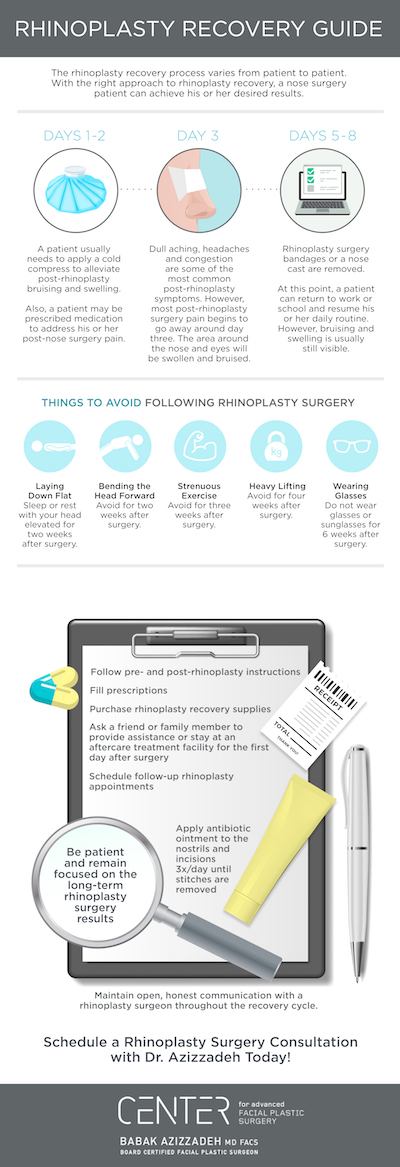
Rhinoplasty Recovery Guide
“What is the recovery like after rhinoplasty?” is one of the first questions many patients ask rhinoplasty expert, Dr. Babak Azizzadeh, in Beverly Hills.
To many patients’ delight, rhinoplasty recovery is often much easier than they ever imagined!
First, Dr. Azizzadeh explains that every patient heals differently and the healing process can vary based on the extent of surgery needed. Before you even undergo surgery, there are a few things you can do to prepare your body to heal at its optimal level including avoiding seafood and discontinuing the use of vitamins or supplements 2 weeks prior to surgery.
On average, the initial recovery for rhinoplasty takes about 7 to 10 days. At this point most patients are able to return to work or school and resume their normal social life.
At around 3 to 4 weeks, the patient will be ready to show off their new nose at a big event (such as a wedding, red carpet event, high school reunion, etc.).

Rhinoplasty Recovery Day by Day
The first day of recovery is the most uncomfortable – medication will be prescribed to help manage the pain. You should apply a cold compress to your nose on an hourly basis when awake for the first 72 hours following surgery.
After 3 days, most of the pain will be gone and your comfort level will improve dramatically. Many patients say that the first few days of recovery are not as much painful as they are uncomfortable. The most common types of discomfort felt include dull aching, headaches, and congestion.
Your bandages or nose cast will be removed 7 days after rhinoplasty surgery. Once the bandages/cast are removed, most patients feel comfortable and confident enough to go back to work or school and resume their daily routine. However, many patients are feeling great before the cast is removed and go back to their regular daily activities then.
Although you can resume daily activities 1 week following surgery, you need to continue to limit your physical activity for up to 4 weeks. We recommend getting clearance from Dr. Azizzadeh to resume your regular workout routine, but some general guidelines include:
- Do not bend down with your head forward for 2 weeks following surgery.
- No heavy exercise or yoga for 3 weeks following surgery.
- No heavy lifting of 10 pounds for 4 weeks following surgery.
Bruising and Swelling After Rhinoplasty
The extent of swelling and bruising depends on your body and what was done to the nose. For most patients, the bruising dissipates around the 7-day mark. We advise most of our patients to take Arnica Forte supplements to help speed up the recovery process so that your bruising and swelling go away quicker. This is our preferred treatment for swelling and bruising because it is the only product that combines Arnica Montana and Bromelain. You should start taking the pills the morning of surgery and continue for 6 days after surgery. Arnica Forte can ber purchased out our office during your pre-op appointment.
The longest component of rhinoplasty recovery is the swelling. At about 3 to 4 weeks, approximately 70% of the swelling is gone and you can begin to appreciate your new nose more and more.
At 6 weeks, about 80% to 85% of the swelling has gone down.
Typically, at 2 years post surgery you will see the final results of your rhinoplasty, although the nose will finish its primary healing in the first few months. Dr. Azizzadeh tells his patients from the beginning that they must be very patient during the rhinoplasty recovery process.
As mentioned before, the extent of recovery varies based on the type of rhinoplasty performed. Every patient’s needs are unique; therefore the amount of bone manipulation as well as the amount of work done on the internal structures is different for each patient. During your consultation with Dr. Azizzadeh, after he examines your nose and determines the best surgical plan, he will be able to give you a better idea of exactly what to expect during your recovery.
Dr. Azizzadeh is a Harvard trained facial plastic surgeon and is recognized internationally for his expertise rhinoplasty. As such, he always uses the most advanced and minimally invasive surgical techniques. His cutting approach to rhinoplasty provides not only beautiful and natural looking results, but also yields a quicker and easier recovery process.
Tips To Improve Your Rhinoplasty Recovery
Below are some recommendations to help improve your rhinoplasty recovery experience.
- Follow all of Dr. Azizzadeh’s pre-rhinoplasty instructions very carefully. We will provide you with Rhinoplasty Guidelines at your pre-op appointment.
- Fill any prescriptions and buy any recovery supplies you need prior to your surgery. We will give you your prescriptions and recommend other recovery supplies at your pre-op appointment.
- Follow all of Dr. Azizzadeh’s post-rhinoplasty instructions completely and carefully. We will provide you with Rhinoplasty Guidelines at your pre-op appointment.
- Have a friend or family member stay with you for the first 24 hours following surgery. Some patients opt to stay at an after care facility.
- Make it to all follow-up appointments with Dr. Azizzadeh. Even if you think you feel fine, it is still very important to see Dr. Azizzadeh for all follow-up appointments so he can examine you and make sure everything is healing properly.
- Be very open and honest with Dr. Azizzadeh about how you are feeling. If something does not feel right, do not hesitate to contact our office.
- Be patient during the recovery process. We know it can be frustrating while you are waiting for the bruising and swelling to go down, but it will! And once it does, you will know it was worth the wait.
Rhinoplasty Recovery FAQ
How long does it take to recover from a nose job?
Initially, a rhinoplasty patient will experience swelling and bruising around the eyes after surgery; these issues typically start to improve about three days following treatment and may persist for up to two weeks. A rhinoplasty patient may also experience minimal swelling for up to six months after a nose job. Once post-surgery swelling stops, a rhinoplasty patient can enjoy the full results of his or her nose job procedure.
Is rhinoplasty recovery painful?
A rhinoplasty patient may experience some pain during the nose job recovery process. However, post-rhinoplasty surgery pain is temporary.
In the first few days after surgery, a rhinoplasty patient's nose will be swollen and bruised. A nose job patient may also experience pain in the nose, as well as a headache.
Sometimes, rhinoplasty patients experience a stuffy nose and have trouble breathing following a nose surgery. And if bones were broken during a nose job procedure, a patient may need to take extra precautions to avoid a nose injury for up to three months after treatment. That way, a patient can ensure that his or her nose heals properly after surgery.
What is the fastest way to recover from a nose job?
The fastest way to recover from a nose job is to follow Dr. Azizzadeh's post-surgery instructions. Generally, Dr. Azizzadeh recommends a nose surgery patient get plenty of rest during the recovery period. He also recommends a rhinoplasty patient keep his or her head raised for the first few days following treatment and avoid strenuous activities for roughly two to three weeks after surgery.
Dr. Azizzadeh provides a rhinoplasty patient with a comprehensive list of post-treatment instructions to ensure that this individual can recover from surgery as quickly as possible. Furthermore, if a nose job patient has concerns or questions during the recovery period, Dr. Azizzadeh is available to respond to them.
Many of Dr. Azizzadeh’s rhinoplasty patients choose to recover at Pearl Recovery Retreat, an luxurious surgical aftercare center that provides around the clock nursing care. When a patient stays at Pearl, they can rest assured they are in the care of nurses who will make the recovery process as relaxing and expedient as possible.
How long do you have to sleep upright after a rhinoplasty?
A rhinoplasty patient should try to sleep with his or her head elevated on two or more pillows for up to one week after surgery. By doing so, a rhinoplasty patient can limit post-surgery swelling. In some instances, a rhinoplasty patient may need to continue to sleep with his or her head elevated for more than one week to prevent damage to the nasal tissues.
Dr. Azizzadeh offers a personalized post-surgery plan for each rhinoplasty patient. This plan outlines all aspects of the recovery process, including how long a patient will need to sleep upright following a nose job procedure.
Can you sneeze after a rhinoplasty?
Sneezing and blowing the nose are common concerns for rhinoplasty patients following surgery, and they sometimes contribute to post-rhinoplasty bruising, swelling and bleeding. If a rhinoplasty patient needs to sneeze after surgery, he or she should try to do so with the mouth open. Meanwhile, a rhinoplasty should try to avoid blowing the nose whenever possible post-surgery.
What are the side effects of a rhinoplasty?
Common side effects associated with a rhinoplasty procedure include:
- Nosebleeds
- Infection
- Poor wound healing
- Trouble breathing through the nose
- Scarring
- Numbness in and around the nose
- Septal perforation (hole in the septum)
- Pain
- Bruising
- Swelling
- Nose discoloration
Dr. Azizzadeh discusses the side effects of rhinoplasty surgery with a patient prior to treatment. He also takes a holistic approach to patient care to minimize the risk of rhinoplasty surgery complications.
How long does it take for a rhinoplasty to fully heal?
Post-rhinoplasty swelling usually disappears within about four to six weeks after surgery. For rhinoplasty patients with thick skin on the nose, post-surgery swelling may last up to eight weeks.
Ultimately, the full results of a rhinoplasty procedure may start to become visible within about three months of treatment. But it also is important to note that each rhinoplasty patient is different, and the time it takes to heal from a nose surgery sometimes varies.
Dr. Azizzadeh requests follow-up appointments with a rhinoplasty patient in the weeks and months after surgery. These appointments enable Dr. Azizzadeh to track a patient's post-rhinoplasty progress. Plus, Dr. Azizzadeh uses follow-up appointments to ensure that a rhinoplasty patient can achieve the optimal treatment results.
Is a nose job safe?
A rhinoplasty is a complex surgical procedure. Like any surgery, there are risks associated with a nose job. If the risks of a nose surgery outweigh the procedure's benefits, an individual should explore alternative treatment options to achieve his or her desired facial rejuvenation treatment results.
Dr. Azizzadeh is a globally recognized facial plastic and reconstructive surgeon who prioritizes patient safety. He understands the complexities associated with rhinoplasty surgery and performs an in-depth patient analysis before treatment. If Dr. Azizzadeh believes a nose job is safe for a patient, he offers a custom treatment plan designed to limit risk. Or, if Dr. Azizzadeh believes a nose job could compromise a patient's safety, he will try to offer safe, effective rhinoplasty surgery alternatives.
Learn More About Rhinoplasty with Dr. Azizzadeh
If you have been considering a rhinoplasty, contact the CENTER for Advanced Facial Plastic Surgery in Beverly Hills to schedule a consultation with Dr. Azizzadeh. We offer phone and Video (Zoom) consultations for out-of-town patients.
Preparing for an Ethnic Rhinoplasty
Rhinoplasty is one of the most requested facial surgeries so it’s no surprise that it attracts people of all different backgrounds. Ethnic rhinoplasty is the term used to describe a rhinoplasty procedure where careful consideration is taken to preserve the patient’s natural ethnic appearance. Many ethnic descents have distinguishing characteristics that contribute to a person’s identity. When a rhinoplasty is performed, it’s important to maintain these characteristics to provide the most natural result possible. Not every physician specializes in ethnic rhinoplasty, so if you are considering the procedure, it’s important to find an expert surgeon who is extremely experienced in preserving your unique features. Dr. Azizzadeh is world renowned for his expertise with ethnic rhinoplasty. Since his training at Harvard in nasal and facial plastic surgery, Dr. Azizzadeh has gone on to become an international authority in the field and has been recognized as a Top Doctor by the US News and World Report for rhinoplasty. He is the author of five best-selling textbooks including the definitive rhinoplasty textbook entitled Master Techniques in Rhinoplasty. Dr. Azizzadeh is double board certified in both facial plastic surgery and otolaryngology, which gives him an ultra-specialized insight into both the aesthetics and function of the nose. He is a leading expert in the fields of primary, revision, and ethnic rhinoplasty.
Why is an Ethnic Rhinoplasty Different?
Any time you begin looking for a surgeon to perform a rhinoplasty, it’s important to find a physician who values giving patients a natural result. This becomes even more important when pursing an ethnic rhinoplasty. No two faces are alike, and it’s important for the operating surgeon to know just how to preserve the traits that make you who you are. Often times, these special traits have to do with your ethnic background. Unlike a traditional rhinoplasty procedure, the goal of an ethnic rhinoplasty is to keep cultural identity in tact by creating a completely customized treatment plan. Dr. Azizzadeh specializes in ethnic rhinoplasty and performs this surgery on people from a variety of ethnic descents including:
- Asian
- Middle Eastern
- African American
- Hispanic or Latino
Ethnic Rhinoplasty Recovery
As with any rhinoplasty procedure, it’s important to consider the recovery time. After surgery Dr. Azizzadeh checks on all of his patients the next day to make sure that they are comfortable and see how they did overnight. The nose will most likely be swollen and bruising may be evident. One week after surgery, the cast and sutures will be removed. This is an exciting appointment for patients, but it’s important to consider that there is usually still significant swelling at this time. Throughout the first month, great strides are made with regard to healing, and patients are able to return to their normal routines during this time. As the external swelling goes down, which will be evident when looking in the mirror, there is quite a bit of internal swelling that takes about a year to fully resolve. The more that patient’s research what to expect after surgery, the more prepared they will be for the recovery involved after an ethic rhinoplasty procedure.
Things to Look for in an Ethnic Rhinoplasty Surgeon
It’s important to select a surgeon who values giving patients the most natural result possible. The physician should be detail oriented and spend a great deal of time with their patients during the consultation to discuss and listen to their surgical goals. Dr. Azizzadeh treats every patient as an individual and tailors each ethnic rhinoplasty to their specific needs. He values achieving facial harmony in which the facial features work together to complement one another. Dr. Azizzadeh takes great care to preserve his patient’s ethnic backgrounds and provide a result that looks appropriate and natural.
Schedule your Ethnic Rhinoplasty Consultation in Los Angeles Today
At The CENTER for Facial Plastic Surgery in the heart of Beverly Hills, expert surgeon Dr. Azizzadeh helps patients achieve an aesthetically pleasing nose while maintaining ethnic features and correcting functionality. Call to schedule your consultation and begin working with Dr. Azizzadeh to customize a treatment plan aimed to meet your specific needs.
Best Treatment for Bell’s Palsy
Bell’s palsy is a virus that comes on suddenly and causes facial paralysis. Due to its quick onset, many people aren’t prepared and don’t know what to do. Bell’s palsy treatment should happen in two stages; immediate action and if necessary, long term treatment. Facial Nerve expert Dr. Babak Azizzadeh is world renowned for his expertise when it comes to treating Bell’s palsy. After his extensive training at Harvard where he specialized in facial nerve paralysis, Dr. Azizzadeh started the Bell’s Palsy Foundation which offers information and support to people affected by paralysis. He has become a leading figure in the field of facial nerve damage and has been featured on many media outlets including the Oprah Winfrey Show. Dr. Azizzadeh is trained in Facial Plastic and Reconstructive Surgery, as well as head and neck surgery which gives him a unique insight into facial nerve function and facial aesthetics. Dr. Azizzadeh will be hosting the International Facial Nerve Symposium in 2017 which is one of the highest honors in the field.
Bell’s Palsy Diagnosis
Most of the time, people with Bell’s palsy wake up and have trouble moving one side of their face. When this happens, it’s important to go to the doctor or emergency room quickly to determine what’s causing the facial paralysis. Unfortunately very few physicians know a lot about Bell’s palsy which makes it a tricky diagnosis. Doctors should perform a variety of tests to rule out other reasons for the paralysis such as a tumor or stroke. The most important aspect of the evaluation is to perform an excellent neurologic and head & neck examination. This will usually allow the experienced doctor to determine that there are no neurologic deficits. At the initial visit other tests are usually not needed other than lyme test if an individual has had potential exposure. Other tests such as MRI or CT scan or electrical testing such EMG and ENoG are rarely needed unless the physician determines that it is necessary. It is crucial to have a follow up with an experienced facial paralysis expert within one to three months after being diagnosed with Bell's palsy. Your diagnosis of Bell's palsy is only valid if your face has some return of function and all other evaluations are negative. If your face has not regained its tone and you have not noticed any return of function, a full workup with MRI and other lab tests is necessary to make sure that you do not have a more pressing issue.
Immediate Bell’s Palsy Treatment
After it’s been determined that Bell’s palsy is causing the facial paralysis, the doctor needs to prescribe a high dose of steroids as well as an anti-viral medication such as Valtrex. Time is of the essence, so getting to the doctor and starting the proper medications quickly is of the upmost importance. After taking the medication for recommended amount of time, patients need to wait a full year from the onset before exploring other treatment options. Many people who get Bell’s palsy make a full recovery in the first 12 months. Therefore by pursuing more invasive treatments before a year, you could potentially hinder your body’s ability to heal. Patients should follow up with a facial nerve expert like Dr. Azizzadeh during this time, to monitor progress and make any necessary recommendations.
Long Term Bell’s Palsy Treatment Options
Unfortunately not all Bell’s palsy patients get a full recovery in the first year. Patients who have waited the appropriate amount of time and are left with residual symptoms often want to learn about what options they have to improve their facial function and aesthetics. There are various treatment options available to Bell’s palsy patients ranging from non-invasive to surgical procedures. Patients need to be evaluated by a facial nerve expert like Dr. Azizzadeh in order to find out what options are appropriate to consider. The least invasive treatment option available is facial physical therapy. Dr. Azizzadeh often refers patients to highly specialized facial physical therapists who help patients regain coordination and strength of their facial muscles. Botox has also proven to be an effective treatment for sykinesis (an extreme tightening and mis-coordination of the facial muscles). Injectable fillers can be used to help patients with the aesthetic side effects that often come with Bell’s palsy by improving facial symmetry. There are a variety of surgical options such as selective neurolysis, cross facial nerve grafts, gracilis flaps and others that are available for patients who want the best possible smile and functional outcome. Dr. Azizzadeh spends a great deal of time and creates a completely customized surgical plan based on each patient’s individual needs.
Do Bell's Palsy Symptoms Go Away?
Bell's palsy results in sudden weakness of the facial muscles. It can affect individuals at any age, but the condition usually disappears on its own. Oftentimes, Bell's palsy symptoms improve a few weeks following onset, and these symptoms go away on their own within about six months.
It is important to go to the emergency room immediately at the first sign of weakness on one side of the face, facial drooping and other Bell's palsy symptoms. If Bell's palsy symptoms persist for an extended period of time, an individual should consult with a facial plastic and reconstructive surgeon like Dr. Azizzadeh for further evaluation and treatment.
Can Bell's Palsy Be Permanent?
Although most Bell's palsy cases are temporary, in a small percentage of the population the facial paralysis from Bell’s palsy becomes permanent. In very rare cases, Bell's palsy symptoms sometimes may recur several times.
What Triggers Bell's Palsy?
There is no exact reason why Bell's palsy occurs, but the condition is often linked to a viral infection. Some of the viruses linked to Bell's palsy symptoms include:
- Herpes Simplex: Causes cold sores and genital herpes.
- Coxsackievirus: Causes hand-foot-and-mouth disease.
- Epstein-Barr: Causes infectious mononucleosis.
Ultimately, if the nerve that controls the facial muscles becomes infected or irritated, an individual may be susceptible to Bell's palsy symptoms. In this scenario, the facial nerve becomes inflamed and swollen, and these issues may be linked to a viral infection.
How Long Does It Take to Recover from Bell's Palsy?
Recovery time varies based on the patient and his or her Bell's palsy treatment. Generally, the recovery process requires a long-term commitment, and Dr. Azizzadeh does everything possible to help a Bell's palsy patient prepare for this process.
Additionally, research indicates that approximately 85 percent of Bell's palsy patients fully recover without any long-term health issues following treatment. Research also shows that approximately 10 percent of Bell's palsy patients suffer synkinesis and partial facial paralysis after treatment. Meanwhile, about 5 percent of Bell's palsy patients suffer complete facial paralysis; in this instance, patients require additional facial paralysis treatment.
Can Massage Help Alleviate Bell's Palsy Symptoms?
Massage is one of several alternative therapies that some Bell's palsy patient use to help alleviate their symptoms. Yet there is limited scientific evidence to support the use of massage to fully treat Bell's palsy symptoms. For those who are considering massage or any other alternative therapies for Bell's palsy, it is paramount to consult with a doctor.
What Is the Fastest Way to Get Rid of Bell's Palsy?
There is no one-size-fits-all Bell's palsy treatment for all patients, at all times. Fortunately, an individual who consults with a doctor can receive a proper Bell's palsy diagnosis. This individual also can work with a doctor to treat his or her Bell's palsy symptoms.
If Bell's palsy symptoms persist after several months, Dr. Azizzadeh can help, too. At this point, Dr. Azizzadeh performs a full patient evaluation to identify the root cause of a patient's Bell's palsy symptoms. He then offers a personalized treatment recommendation to help a Bell's palsy patient achieve long-lasting treatment results.
How Can I Treat Bell's Palsy at Home?
Home remedies are sometimes recommended as part of a Bell's palsy treatment program. These remedies may include:
- Using eye protection. If a Bell's palsy patient cannot fully close his or her eye, lubricating eyedrops and/or an eye ointment may be prescribed to help keep the eye moist. A Bell's palsy patient may be required to wear an eye patch or glasses to protect the eye against scratches as well.
- Taking over-the-counter medications. Ibuprofen, acetaminophen or other over-the-counter medications may be used to help address pain associated with Bell's palsy symptoms.
- Performing physical therapy exercises. A Bell's palsy patient may be required to work with a physical therapist during treatment. This therapist can teach a Bell's palsy patient how to perform various exercises at home to help relax his or her facial muscles.
Dr. Azizzadeh offers full details about any at-home Bell's palsy treatments. He also responds to a patient's Bell's palsy treatment program questions and concerns and works with this individual to ensure that he or she can achieve the best-possible results.
Schedule your Bell’s Palsy Consultation Today!
So, what is the best treatment for Bell's palsy and the best treatment for facial paralysis? If you are interested in finding out more about the different treatment options available for Bell’s palsy, call The Facial Paralysis Institute to schedule an appointment with leading expert Dr. Azizzadeh.
Moebius Syndrome
Facial Paralysis is not an easy thing to deal with at any age. Unfortunately, many children worldwide suffer from Moebius syndrome, a rare neurological condition that affects the muscles that control facial expression and eye movement. The symptoms of Moebius syndrome are present at birth, which makes growing up with this condition a challenge both physically and emotionally, for the child and their parents. Facial nerve specialist Dr. Babak Azizzadeh has helped countless children with Moebius syndrome through a variety of surgical options. Since his extensive and prestigious training at Harvard Medical School, Dr. Azizzadeh has helped hundreds of patients with varying forms of facial paralysis. Dr. Azizzadeh founded The Facial Paralysis Foundation in 2003 which offers support and education to people affected by facial paralysis. Dr. Azizzadeh has become world-renowned for his facial nerve expertise and has been featured in various media outlets including the Oprah Winfrey Show. Dr. Azizzadeh is widely recognized for his results with microsurgical facial reconstruction which is often required for patients who are born with facial paralysis. Most recently, Dr. Azizzadeh has been asked to host the International Facial Nerve Symposium in 2017 which is considered one of the biggest honors in the field of facial paralysis.
What is Moebius Syndrome?
Moebius syndrome is a rare genetic disorder that is present at birth. It most prominently affects the 6th and 7th cranial nerve which results in difficulty moving facial and eye muscles. Patients with Moebius syndrome typically have trouble smiling, frowning, sucking, grimacing, and blinking their eyes. It can also be a challenge to move their eyes laterally. Additionally, Moebius syndrome can affect other cranial nerves that can cause skeletal, respiratory, and speech problems, just to name a few.
Moebius Syndrome Symptoms
The most prominent symptom of Moebius syndrome is facial paralysis. Unfortunately, children with Moebius syndrome can’t make standard facial expressions. They are unable to smile, frown, and raise their eyebrows. Aside from the physical difficulty caused by Moebius Syndrome, facial paralysis often creates extremely challenging psychological challenges as well. As children born with Moebius syndrome begin to grow up, they realize that their face works differently than those around them. Treatment options should be explored before the child enters school to help minimize the psychological ramifications that come along with this disorder.
Treatment for Moebius Syndrome
There are a variety of surgical procedures that Dr. Azizzadeh performs to help patients with Moebius syndrome. Most patients require a procedure called microsurgical trigeminal-gracilis muscle transfer. This procedure involves transfer of the gracilis muscle from the inner thigh to the face. It is attached to the trigeminal nerve which controls the muscles for chewing. This muscle and nerve transfer allows the children to control the movement of the face voluntarily. For this procedure, each side of the face must be performed in separate stages.
Typically, the first operation is performed when the child is 6 years old, and the second stage of the surgery is completed a year later. There are other surgical procedures that can be performed like a static suspension with tensor fascia lata, temporalis transfer, or eyelid reconstruction. A facial nerve specialist like Dr. Azizzadeh would need to assess the patient to determine what procedure would be most beneficial for them, given their medical history and type of facial paralysis.
Schedule a Consultation with Facial Nerve Specialist Dr. Azizzadeh
If your child was born with Moebius syndrome and you would like to explore treatment options, contact The Facial Paralysis Institute to schedule a consultation with world-renowned facial nerve surgeon Dr. Babak Azizzadeh.
Summer Skincare Secrets
Summer is the time for long, sun-filled days and tan skin. Before you pack your beach bag and head to the coast, there are a few factors to consider in terms of caring for your skin throughout this season. Gone are the days of tanning beds, and baking in the sun. The latest beauty trend in getting summer-ready skin is educating yourself on products that will help you achieve a golden glow in a responsible way. At The CENTER for Advanced Facial Plastic and Reconstructive Surgery in the heart of Beverly Hills, leading specialist Dr. Azizzadeh creates a customized treatment plan for each of his patients looking to rejuvenate their skin and protect it from summer’s harsh elements. Dr. Azizzadeh is the author of five bestselling books including the popular consumer guidebook Beverly Hills Beauty Secrets. He has been featured in the media on Entertainment Tonight, The Doctors, LA Times and NY Times. He is internationally renowned as a leader in the field of facial rejuvenation.
Sunscreen, Sunscreen, Sunscreen
Sun protection is crucial when trying to maintain healthy skin throughout the summer. A hat or umbrella aren’t enough to protect your skin from the sun’s harmful UV rays. Skin damage begins after only 2 or 3 minutes of sun exposure. The two main structural proteins of the skin, collagen and elastin, start to break down, which is what creates wrinkles. Don’t worry, your skin has the amazing ability to heal itself, but prolonged sun exposure can lead to permanent damage. One way to combat the aging process caused by the sun is wearing sunscreen all 365 days of the year. It’s especially important to apply daily sunscreen during the summer months, when the sun is the strongest. Dr. Azizzadeh recommends using either TiZo or Elta Md to provide the daily protection that your skin needs. For those of us who live in sunny Los Angeles, making sunscreen application a part of your daily morning skincare routine is the best way to protect your skin!
Choosing the Right Summer Skincare Products
At The CENTER for Facial Plastic and Reconstructive Surgery in the heart of Beverly Hills, Dr. Azizzadeh recommends for patients to use the ZO Medical product line. While this skincare line has an extensive variety of products, it’s important to trust your face to an expert who can select the right products for you. Although products containing a retinol are fabulous for overall facial rejuvenation and anti-aging, they can actually make your skin more sensitive to the negative effects of the sun. It’s best to adopt a non-hydroquinone regimen for summer to avoid developing hyperpigmentation. Dr. Azizzadeh often recommends substituting retinol products with ZO Brightenex and ZO C-Bright. Brightenex safely helps treat hyperpigmentation and works to even skin tone and color. C-Bright offers your skin a mega dose of vitamin c that is formulated and stabilized to help brighten and re-texture the skin. The best part is that both of these products are completely safe to use all summer long.
How to fix sun damaged skin
Dr. Azizzadeh, uses the state of the art Dot Deka laser treatments to correct skin that has already been sun damaged. The Dot Deka Laser uses cutting edge technology to offer patients a completely customizable laser experience. This is important because each patient’s skin damage is unique. Dr. Azizzadeh can tailor each treatment by selecting the ablation depth and the thermal coagulation zone. This treatment works to correct hyperpigmentation and mellasma that can be caused by sun exposure.
Call our office today to schedule a skincare consultation and get Dr. Azizzadeh’s expert advice on how to keep your skin healthy and protected all summer long.

Why Is Preventative Botox So Popular?
Preventative Botox is becoming exceedingly popular among Millennials, i.e. men and women born after 1980. It involves the use of injectable treatments to stop excessive facial muscle movements. As a result, preventative Botox treatments can reduce the risk of fine lines and wrinkles and other visible signs of aging in the face.
For people who are considering Botox, a clear understanding of the treatment is a must. Those who know how the treatment works can determine if it can deliver their desired facial rejuvenation results.
What Is Botox?
Botox is an FDA-approved medication used to treat a variety of issues. It first received FDA approval in 1989 for use in treating the eye disorders blepharospasm and strabismus in adults. To date, Botox has been FDA-approved for 11 therapeutic indications.
Over the years, Botox has been increasingly used as a cosmetic facial rejuvenation treatment. It can soften facial lines and wrinkles. And, it can correct crow's feet, frown lines, and other blemishes that can otherwise damage an individual's facial appearance. It can even be used to treat neck wrinkles.
The results of Botox are temporary. A typical treatment delivers results that last up to six months. Ultimately, patients can undergo periodic treatment sessions to get the best results out of Botox.
What Is Preventative Botox?
Botox has been used to treat facial blemishes that range from mild to severe. Now, preventative Botox allows people to treat faint lines in the face before they develop into deep wrinkles.
People in their 20s and 30s can get preventative Botox injections. The effectiveness of these injections vary. Regardless, the injections may help young patients treat minor facial blemishes before they cause long-lasting damage.
Is Preventative Botox Considered a Cosmetic Surgery?
Botox is a cosmetic procedure that does require the use of a scalpel or stitches. The procedure requires the use of injections into different areas of the face. These injections can be used to reduce the appearance of facial lines and wrinkles and other blemishes.
Is Botox Actually Preventative?
With preventative Botox treatments, people in their 20s and 30s can take a proactive approach to stop wrinkles and other facial blemishes before they develop. Yet, Botox – like most facial rejuvenation treatments – offers no guarantees. Even if Millennials receive regular Botox injections, they may still be susceptible to crow’s feet, frown lines, and other facial blemishes.
How Does Botox Prevent Wrinkles?
Botox is derived from the onabotulinumtoxinA toxin, which restricts muscle movement. It blocks various chemical signals that cause muscles to contract. In doing so, the injectable temporarily relaxes facial muscle movement.
With Botox, patients can receive injections into the forehead and around the eyes. Botox injections can limit muscle movement in these treatment areas. As such, the injections can reduce the appearance of wrinkles or prevent them from forming.
How Popular Is Botox?
Botox ranked first among cosmetic medically invasive procedures performed in the United States in 2020, according to the American Society of Plastic Surgeons. More than 4.4 million Botox procedures were administered during this time frame. With preventative Botox on the rise, the number of people to receive Botox treatments may continue to increase in the years to come, too.
Why Is Botox So Popular?
There are many reasons why Botox is a top cosmetic procedure, including:
-
- Proven Results: The treatment is clinically proven to treat facial wrinkles.
- No Surgery Required: Since the treatment involves the use of injections, patients don’t have to go under the knife.
- Fast Treatment: A treatment can be administered in only minutes.
- No Downtime: Patients won’t have to worry about downtime after injections; instead, they can resume their normal activities immediately following treatment.
Perhaps it is easy to understand why Botox popularity continues to rise. However, those who are considering preventative Botox must consider all of their facial rejuvenation treatment options closely. This ensures that people can determine if Botox or other treatment options can help them accomplish their facial rejuvenation goals.
How Much Does Preventative Botox Cost?
The cost of preventative Botox depends on the amount of Botox injected into different areas of the face, where the treatment is performed, and other factors. It is not covered by insurance, since the treatment is considered a cosmetic procedure.
What Preventative Botox Alternatives Are Available?
Botox is one of several non-surgical treatment options available to help people combat facial wrinkles. Along with Botox, other non-surgical cosmetic treatment options for facial wrinkles include:
-
- Juvederm: The Juvederm family of dermal fillers consists of gel-like injectables that have a high concentration of cross-linked hyaluronic acid. Juvederm can help people correct facial wrinkles, nasolabial folds, and volume loss.
- Microneedling: During a microneedling procedure, tiny needles are inserted into a patient’s face. These needles stimulate the growth of collagen and elastin in the skin and rejuvenate its appearance.
- Laser Skin Resurfacing: DOT Deka laser skin resurfacing can be used to treat facial wrinkles, scars, and other blemishes.
For people who want to reduce facial wrinkles for an extended period of time, facelift surgery can be ideal. Unlike Botox or other minimally invasive cosmetic treatments, a facelift can deliver facial rejuvenation results that remain intact for many years.
Is Preventative Botox Right for Me?
There is no shortage of treatment options to people who want to reduce or prevent facial wrinkles. It helps to examine these options, weigh their pros and cons, and consider all factors relating to treatment. This allows people to determine which treatment option can deliver the optimal results.
For those who are considering treatments to correct facial flaws, it is important to work with an expert facial plastic and reconstructive surgeon. Together, the surgeon and their patient can develop a safe, effective plan to address facial blemishes both now and in the future. Perhaps best of all, the surgeon can tailor a treatment plan to their patient, so he or she can achieve the optimal results.
Why Should You Choose Dr. Azizzadeh for Preventative Botox in Los Angeles?
Although preventative Botox is generating interest from many Millennials, it won’t necessarily help all individuals combat the visible signs of aging in the face. In some instances, individuals can benefit from Botox treatments to address facial blemishes. Or, in other cases, a combination of Botox and other non-surgical or surgical facial rejuvenation treatments can be ideal.
At the CENTER for Advanced Facial Plastic Surgery in Los Angeles, Dr. Babak Azizzadeh takes a personalized approach to facial rejuvenation. Dr. Azizzadeh’s goal is to help a patient achieve a balanced, natural-looking, and youthful facial appearance. To accomplish this goal, Dr. Azizzadeh works closely with a patient, develops a custom treatment plan, and implements this strategy over time. That way, Dr. Azizzadeh helps his patient limit the risk of facial blemishes that otherwise affect their facial appearance long into the future.
Thanks to Dr. Azizzadeh, an individual can determine if Botox is the right choice based on their facial rejuvenation treatment goals. Dr. Azizzadeh first meets with a patient and performs a comprehensive evaluation prior to administering treatment. He learns about a patient, understands their treatment goals, and plans accordingly. By doing so, Dr. Azizzadeh enables a patient to receive a personalized facial rejuvenation treatment.
If Dr. Azizzadeh determines Botox is the best course of action for a patient, he will next explain how the treatment works. Dr. Azizzadeh describes what a patient should expect during a typical treatment session, how long a session takes to complete, and when he or she will start to see the results of treatment. He responds to his patient’s concerns and questions to help him or her make an informed treatment decision, too.
Additionally, Dr. Azizzadeh offers post-treatment guidelines to Botox patients. The side effects of treatment vary based on the patient and can last up to one week following a procedure. Common side effects include:
-
- Stinging: Can occur at the injection site for about 10 to 15 minutes after treatment.
- Swelling: Can occur at the injection site and linger for a few days after treatment.
- Redness: Can occur at the injection site; generally, makeup can be applied to minimize redness after treatment.
Dr. Azizzadeh also provides skin care tips to Botox patients. He recommends patients avoid excess sun exposure and heat until any swelling or redness disappears. Dr. Azizzadeh requests Botox patients apply sunscreen with a sun protection factor (SPF) of 30 or more before going outside after treatment as well. With these skin care measures, a patient can increase the likelihood of achieving the best-possible treatment results.
Schedule a Preventative Botox Treatment Consultation with Dr. Azizzadeh
Preventative Botox can be beneficial. But, it is paramount to evaluate Botox in relation to other facial rejuvenation treatment options. This allows a patient to determine which treatment is the best option to correct fine lines and wrinkles and other visible signs of aging in the face.
When it comes to facial rejuvenation treatments, it is always a good idea to work with an expert facial plastic and reconstructive surgeon. Fortunately, Dr. Azizzadeh is available to provide each of his patients with a personalized facial rejuvenation treatment.
To find out more about preventative Botox and other facial rejuvenation treatment options, please contact us online or call us today at 310-657-2203 to schedule an in-person or virtual consultation with Dr. Azizzadeh.