


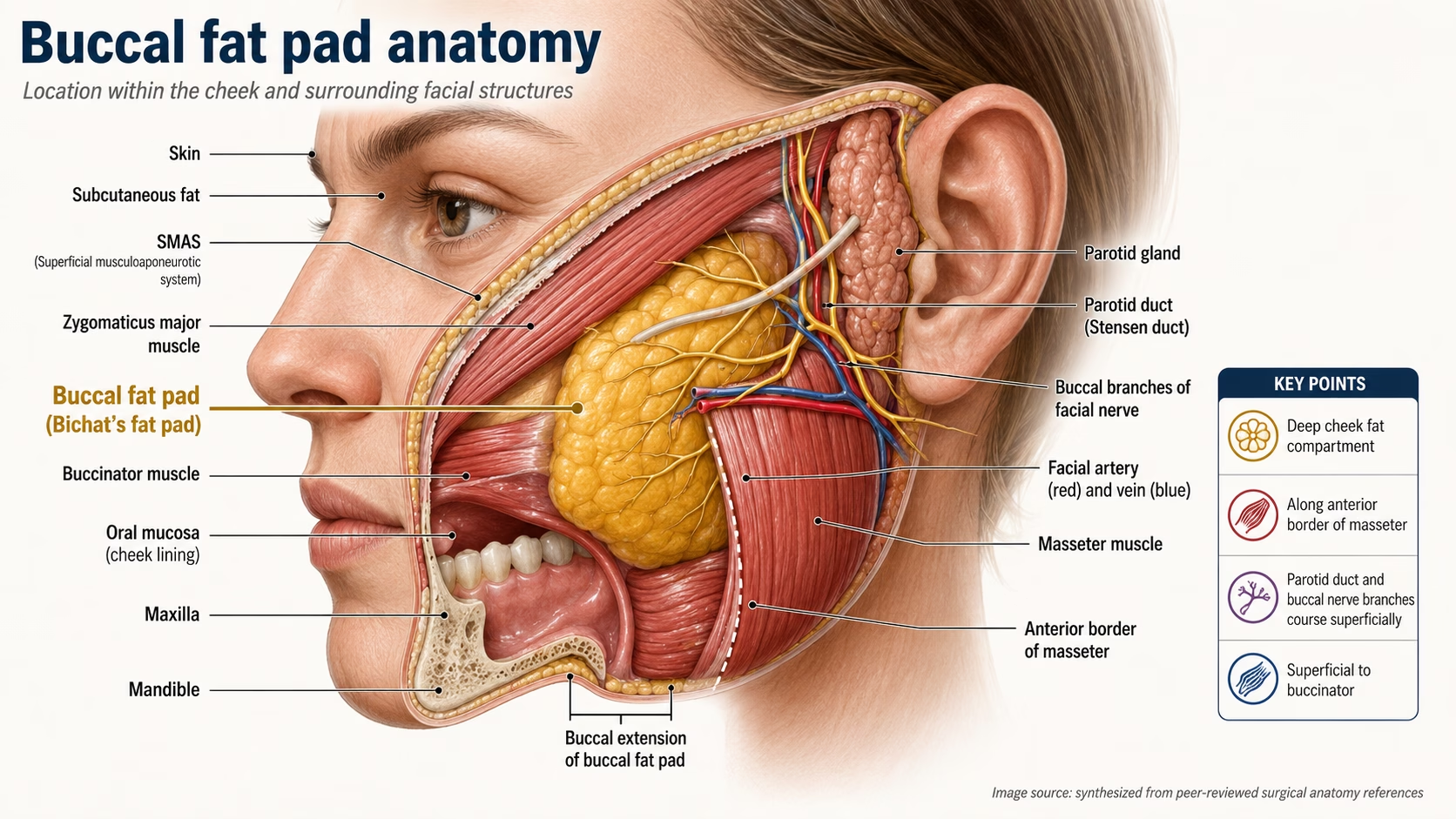
The buccal fat pad, a deep cheek structure influencing facial fullness and aging, is the focus of a new review co-authored by Dr. Babak Azizzadeh. Published in Facial Plastic Surgery Clinics of North America, the paper analyzes its anatomy and surgical options including excision, repositioning, and grafting.
Publication Details
- Journal: Facial Plastic Surgery Clinics of North America, Vol. 34, Issue 1, pp. 51-54
- Authors: Lexie Lulu Wang, MD; Babak Azizzadeh, MD, FACS
- Publication Date: February 2026 (Epub September 9, 2025)
- DOI: 10.1016/j.fsc.2025.08.008
Research Objective
This research examines buccal fat pad anatomy, its role in aging, and the efficacy of various surgical techniques. It also reviews buccal fat pad reduction for facial contouring to improve clinical decision-making.
If you’re considering a facial contouring procedure, scheduling a consultation at The CENTER can help you identify the right approach for your anatomy.
Key Findings
The review emphasizes that buccal fat pad anatomy varies, making surgical planning patient-specific. Crucially, a systematic review of buccal fat pad excision cautions against over-resection, as excessive removal in younger patients can lead to a gaunt appearance over time. Alternatively, surgeons may use repositioning techniques to volumize areas like the nasolabial folds.
 Related: The Difference Between Buccal Fat Pad Removal and Cheek Liposuction
Why This Matters to Patients
Patients exploring facial contouring must recognize that candidacy varies; while younger patients with naturally full cheeks may benefit from buccal fat pad removal, those with existing volume loss are often better served by repositioning.
Understanding these nuances alongside other options like liposuction is critical for a tailored surgical plan, as the wide range of buccal fat pad removal indications and techniques highlights the importance of patient-specific care.
To explore your options with an experienced facial plastic surgeon, reach out to The CENTER for Advanced Facial Plastic Surgery today.
Related: Buccal Fat Removal Before and After
Read the Full Publication
The complete paper is available via PubMed (PMID: 41203330) and published in Facial Plastic Surgery Clinics of North America.
About Dr. Babak Azizzadeh

Dr. Babak Azizzadeh is a dual board-certified facial plastic and reconstructive surgeon, Director of the CENTER for Advanced Facial Plastic Surgery in Beverly Hills, and a co-author of this publication. He holds a faculty appointment at Cedars Sinai Medical Center and specializes in deep plane facelifts, rhinoplasty, and facial reanimation.
Frequently Asked Questions
What is the buccal fat pad?
It’s a naturally occurring pocket of fat deep in the cheek that contributes to facial fullness and changes shape as the face ages.
Who is a good candidate for buccal fat removal?
Patients with naturally full or round faces seeking more definition are typically good candidates. Those with existing volume loss may not be.
Can the buccal fat pad be repositioned instead of removed?
Yes. Repositioning uses the tissue to restore volume in areas like the nasolabial folds rather than simply reducing fullness, which suits older patients or those with early volume loss.
What happens if too much buccal fat is removed?
Over-resection can cause a hollow or gaunt look over time, particularly as the face naturally loses volume with age. Conservative removal is considered best practice.
How do I know which approach is right for me?
A thorough consultation with a board-certified facial plastic surgeon is the only reliable way to determine the best technique for your anatomy and long-term goals.