


Upper eyelid surgery, or blepharoplasty, typically yields refreshing results when performed with precision. However, poor outcomes cause functional issues, discomfort, and aesthetic distress. If your procedure has led to these complications, concrete steps are available to address them.
Key Takeaways
- Botched upper eyelid surgery can result from over-removal of skin or fat, poor technique, or inadequate surgical planning.
- Common complications include inability to fully close the eyes, hollowness, asymmetry, and irregular scarring.
- Revision blepharoplasty is highly specialized and requires a surgeon with specific experience in secondary eyelid cases.
- Dr. Azizzadeh emphasizes conservative tissue removal, especially for men, to avoid dramatic and hard-to-reverse changes.
- Seeking a qualified second opinion early is always appropriate when results feel functionally or aesthetically wrong.
What Can Go Wrong With Upper Eyelid Surgery
Upper eyelid anatomy comprises skin, muscle, fat, and the levator mechanism. Imprecise surgery causes complications: over-resecting skin can impede eye closure and cause irritation, while excessive fat removal results in a hollow, aged appearance. Additionally, poorly positioned incisions can leave visible scars or unnatural creases.
Dr. Azizzadeh warns that aggressive tissue removal can cause irreversible hollowing and recommends conservative techniques, especially for men. Poor outcomes often occur when surgeons ignore the periorbital area’s three-dimensional structure or view the eyelids in isolation from the rest of the face.
Untreated ptosis also leads to sagging if the levator muscle isn’t corrected. Asymmetry frequently results from failing to account for unique anatomical differences. These issues are typically due to inadequate planning rather than rare chance.
If your results don’t look or feel right, schedule a consultation with Dr. Azizzadeh to get an honest evaluation of what’s happening and what revision options are available.
What To Do If Your Results Are Not What You Expected
While results often stabilize within 3 to 6 months, functional issues like incomplete eye closure or severe asymmetry require immediate attention. If you lose confidence in your surgeon, consult a revision blepharoplasty specialist for an objective assessment and to discuss corrective options.
Patients considering complex revision procedures often find it helpful to review the top 5 things to consider when choosing a rhinoplasty surgeon, since those same criteria apply when selecting someone to manage a revision.
Maintain a detailed record of your outcomes. Regular, well-lit photos provide vital context for a consulting surgeon. Additionally, preserve your original surgical plan and all consultation or post-op records. Comprehensive documentation allows revision specialists to more effectively plan your corrective treatment.
What Revision Surgery Involves
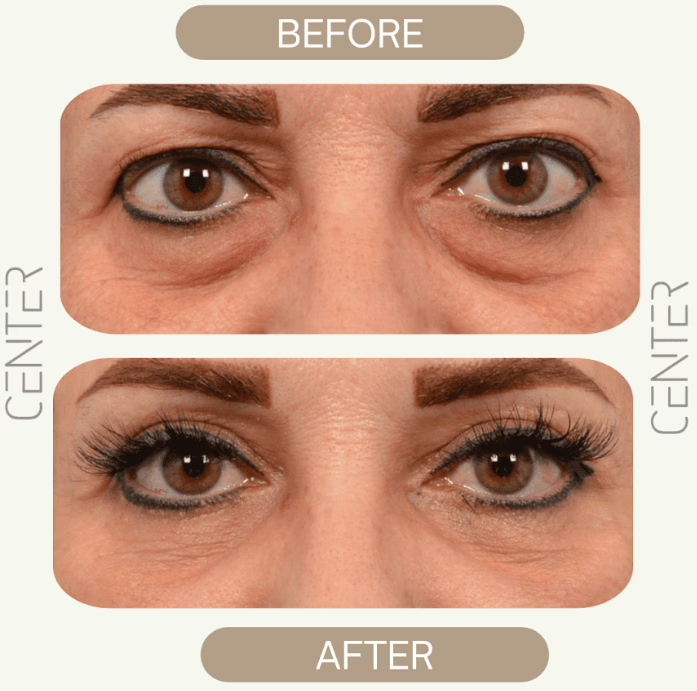
Revision blepharoplasty is more complex than the original procedure due to scar tissue and limited skin, often requiring fat grafting or scar revision to restore function and aesthetics. Surgeons who perform rhinoplasty apply similar structural thinking to eyelid revisions, considering how the brows and midface influence results. Whether opting for awake plastic surgery or traditional methods, specialized techniques informed by local anesthesia in rhinoplasty ensure a highly individualized approach to corrective treatment.
Dr. Babak Azizzadeh is a dual board-certified facial plastic and reconstructive surgeon based in Beverly Hills, recognized for his expertise in revision procedures and complex periorbital cases. His approach centers on restoring both function and natural appearance, with attention to how the eyelids relate to the surrounding facial structures. Patients from around the world seek his evaluation after outcomes that didn’t meet expectations.
To take the next step toward correction, contact the CENTER for Advanced Facial Plastic Surgery and request a personalized evaluation with Dr. Azizzadeh’s team.
 Choosing the Right Surgeon for Your Revision
Vetting for revision surgery must be rigorous. Choose a fellowship-trained facial plastic surgeon with a proven track record in secondary blepharoplasty who provides an honest assessment of potential outcomes.Reviewing before-and-after cases in the gallery nose and other procedure galleries gives you a real sense of a surgeon’s aesthetic sensibility and consistency.
It’s also worth discussing anesthesia options upfront. Available rhinoplasty anesthesia options vary by case complexity, and the same is true for blepharoplasty revision. What’s appropriate for your procedure depends on factors your surgeon will walk you through during consultation. For those planning recovery, ensuring a smooth rhinoplasty recovery offers a useful framework for understanding what thoughtful post-op care looks like. And as dr azizzadeh featured in ny post on awake plastic surgery trend illustrates, how a surgeon communicates publicly about procedures is often a reliable signal of how they approach patient care.
Frequently Asked Questions
How do I know if my eyelid surgery results are abnormal or just part of healing?
Normal healing involves swelling, bruising, and some irregularity that improves over several weeks. Results typically stabilize around 3 to 6 months post-op. If you can’t fully close your eyes, experience persistent dryness, or notice asymmetry that isn’t improving, those signs warrant a specialist consultation, not just patience.
Can botched upper eyelid surgery be corrected?
In many cases, yes. Revision blepharoplasty can address hollowness from fat over-removal, poor scar placement, asymmetry, and incomplete lid closure. Success depends on what occurred in the original surgery, how much tissue remains, and the skill of the revision surgeon.
When is the right time to consider a revision?
Surgeons typically advise allowing about 6 to 12 months for healing to fully settle before pursuing corrective surgery. In cases where there are functional concerns, such as difficulty closing the eyes, earlier treatment may be necessary to prevent damage to the cornea. That said, scheduling a consultation can be done at any stage.
Is revision blepharoplasty riskier than the original procedure?
It’s more complex. Scar tissue and reduced available skin make the procedure more technically demanding. This is why revision cases specifically require a surgeon with experience in secondary blepharoplasty, not just high general cosmetic volume.
Do I have to go back to my original surgeon for a revision?
No. You have every right to seek a second opinion, and in many cases it’s the right move. A qualified revision specialist will evaluate your results objectively and advise you on what’s correctable and what realistic outcomes look like.
Before choosing a surgeon, reading real patient feedback matters. View verified reviews for Dr. Azizzadeh on Google and RealSelf.