


When considering deep plane facelift surgery, understanding deep plane facelift safety is essential to making an informed decision about protecting the facial nerve.
Publication Details
- Journal: Facial Plastic Surgery Authors: Babak Azizzadeh, MD, FACS; Richard J. Lu, MD
- Publication Date: Published online January 10, 2024; print December 2024
- DOI: 10.1055/s-0043-1777801
Research Objective
The study details how surgeons achieve natural-looking facelift results while prioritizing facial nerve considerations and preserving nerve integrity during deep tissue dissection.
Related: Deep Plane Facelift Beverly Hills
Key Findings
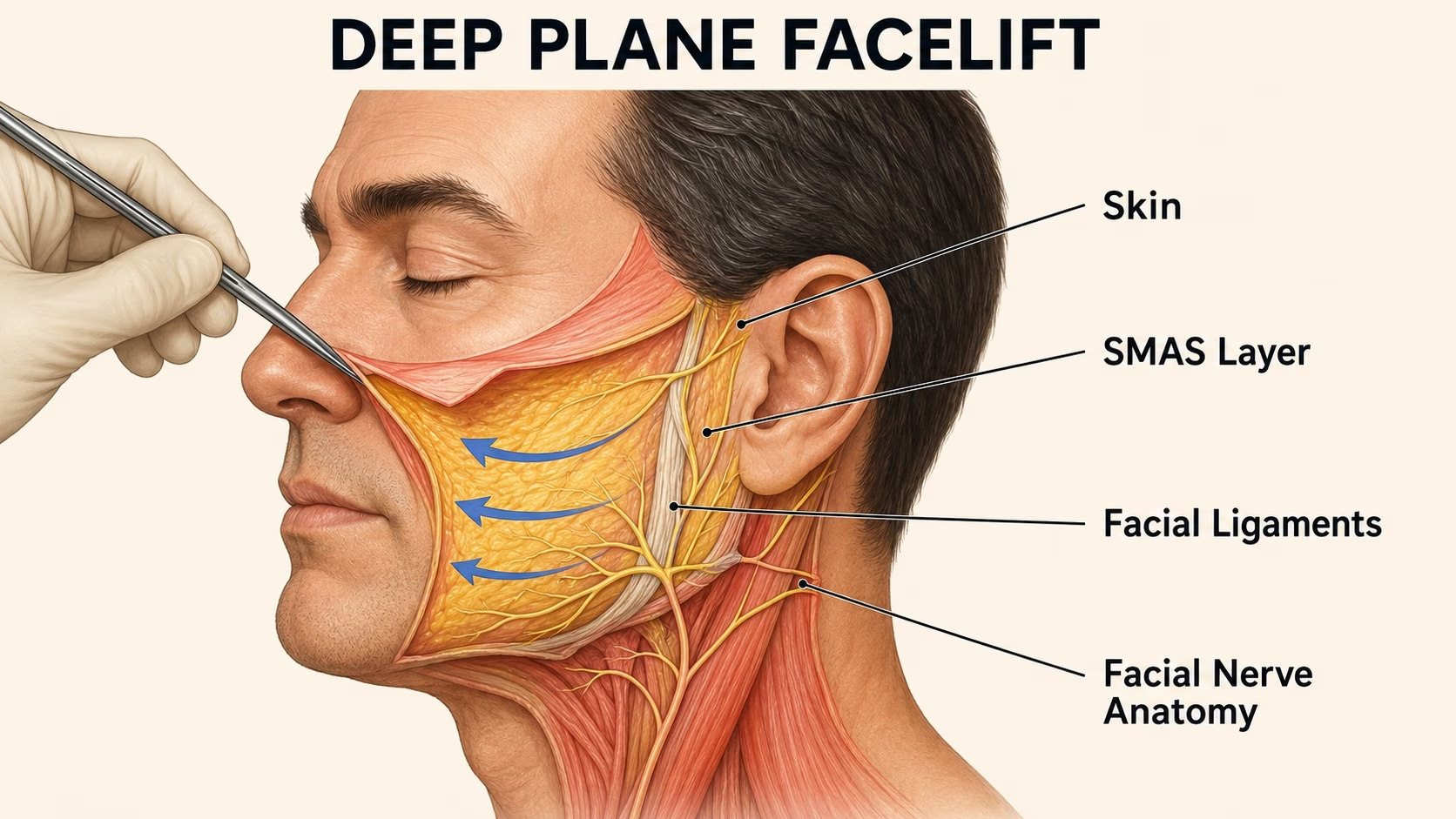
The study details how to manage facial nerve risks, balancing natural, long-lasting rejuvenation with the precision required for deeper tissue manipulation. Research on low rates of facial nerve injury in deep plane techniques highlights that success depends on a surgeon’s deep anatomical knowledge. Meticulous surgical sequencing, from neck contouring to SMAS suspension, is vital for nerve protection.
Why This Matters to Patients
This peer-reviewed publication provides reassuring evidence that deep plane facelifts are safe when performed by surgeons with an expert understanding of nerve anatomy, distinguishing this level of care from generic cosmetic procedures.
The study on facial nerve considerations for deep plane facelifts notes that while temporary facial weakness is rare, it underscores the need for surgeons with documented anatomical expertise. Techniques like scarless facial reanimation reflect this commitment to safety.
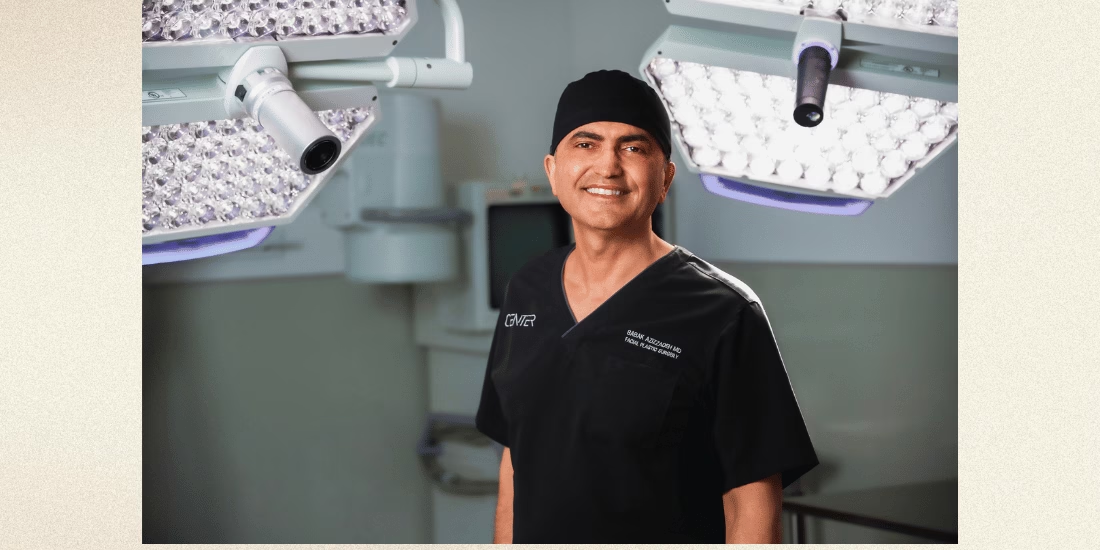
Dr. Babak Azizzadeh is an internationally renowned Beverly Hills facial plastic surgeon specializing in deep plane facelifts and facial nerve surgery. His published research focuses on improving surgical techniques while prioritizing patient safety. He is known for delivering precise, natural, and long-lasting results for patients globally.
Related: Why the Facial Nerve Is More Important Than You Think
Read the Full Publication
The full study is indexed on PubMed and available through Thieme. You can also access evaluating facelift outcomes and nerve safety trends for broader context on facelift safety research.
Access the full publication: Facial Nerve Considerations for the Deep Plane Facelift and Neck Lift.
To speak with a member of our team about your candidacy for a deep plane facelift, reach out to The CENTER for Advanced Facial Plastic Surgery and we’ll help you take the next step with confidence.
 Frequently Asked Questions
Is facial nerve damage a common risk with deep plane facelifts?
Permanent facial nerve injury is rare when performed by an experienced surgeon. Temporary weakness can occur but typically resolves; Dr. Azizzadeh’s research outlines specific techniques to minimize these risks.
How does the deep plane approach differ from more superficial facelift techniques?
Unlike superficial methods that only pull skin, deep plane facelifts reposition deeper structural layers for more natural, lasting results. This demands high surgical precision, particularly near facial nerve branches.
Why is the SMAS layer so important in facelift surgery?
The SMAS connects skin to facial muscles. Manipulating it is key to lifting the face, but because it lies near the facial nerve, careful handling is critical for both aesthetic results and nerve safety.
How do I choose a surgeon for a deep plane facelift?
Prioritize surgeons with documented deep plane experience, specialized facial nerve expertise, board certification, and a strong record of peer-reviewed research in facelift safety.
Does Dr. Azizzadeh perform deep plane facelifts for international patients?
Yes. The CENTER in Beverly Hills regularly treats international patients seeking Dr. Azizzadeh’s expertise in precise, safe facial rejuvenation.