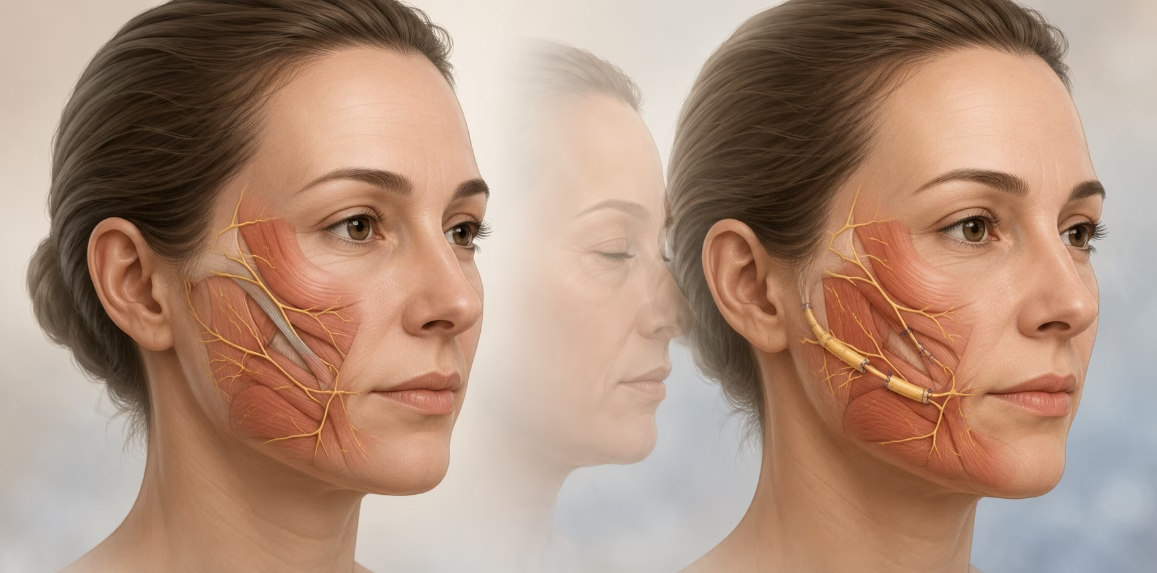
Primary Reanimation vs. Revision Facial Reanimation Explained
Facial paralysis affects far more than appearance. It can influence communication, eye protection, eating, and emotional expression, often impacting both function and quality of life in meaningful ways. Because facial movement plays such an essential role in everyday interactions, treatment planning typically focuses on restoring both functional control and natural aesthetic balance.
Modern facial reanimation techniques offer multiple pathways toward recovery, with timing playing an important role in determining which approach may be most appropriate. In some cases, reconstruction is performed during the same operation that affects the facial nerve, known as primary facial reanimation. In others, patients may benefit from a later, more refined approach such as revision facial reanimation, which is designed to address persistent asymmetry or enhance earlier results.
Each pathway reflects a different stage in the treatment journey, and understanding these distinctions is an important first step in developing a personalized plan for facial nerve restoration.
Key Takeaways
- Primary facial reanimation is typically performed during the same surgery in which the facial nerve is affected.
- Revision facial reanimation addresses paralysis or asymmetry that persists after earlier treatment.
- Both approaches share the goal of restoring natural movement, symmetry, and expression.
- The right approach depends on the cause, duration, and severity of the paralysis.
- Nerve grafting, nerve transfers, and muscle transfer may be used in either pathway.
- An evaluation by an experienced facial nerve specialist is the best starting point.
What Is Facial Reanimation Surgery?
Facial reanimation surgery refers to reconstructive techniques designed to restore movement, balance, and expression to a face affected by paralysis. Because facial paralysis can result from trauma, tumor removal, congenital conditions, or nerve disorders, facial reanimation is never a one size fits all process. Every plan begins with a close evaluation of the nerve pathways, facial muscles, and the patient's goals, allowing the approach to be tailored to each individual.
What Is Primary Facial Reanimation?
Primary facial reanimation refers to reconstructive techniques performed during the same operation in which the facial nerve is injured or expected to be sacrificed, such as during tumor removal involving the nerve. When the extent of nerve involvement is identified in advance, surgical facial reanimation performed at that time may allow direct nerve repair or nerve grafting to begin immediately. Addressing reconstruction at this stage can help shorten the overall treatment timeline and may help preserve facial muscle health before it goes without nerve input for an extended period.
What Is Revision Facial Reanimation?
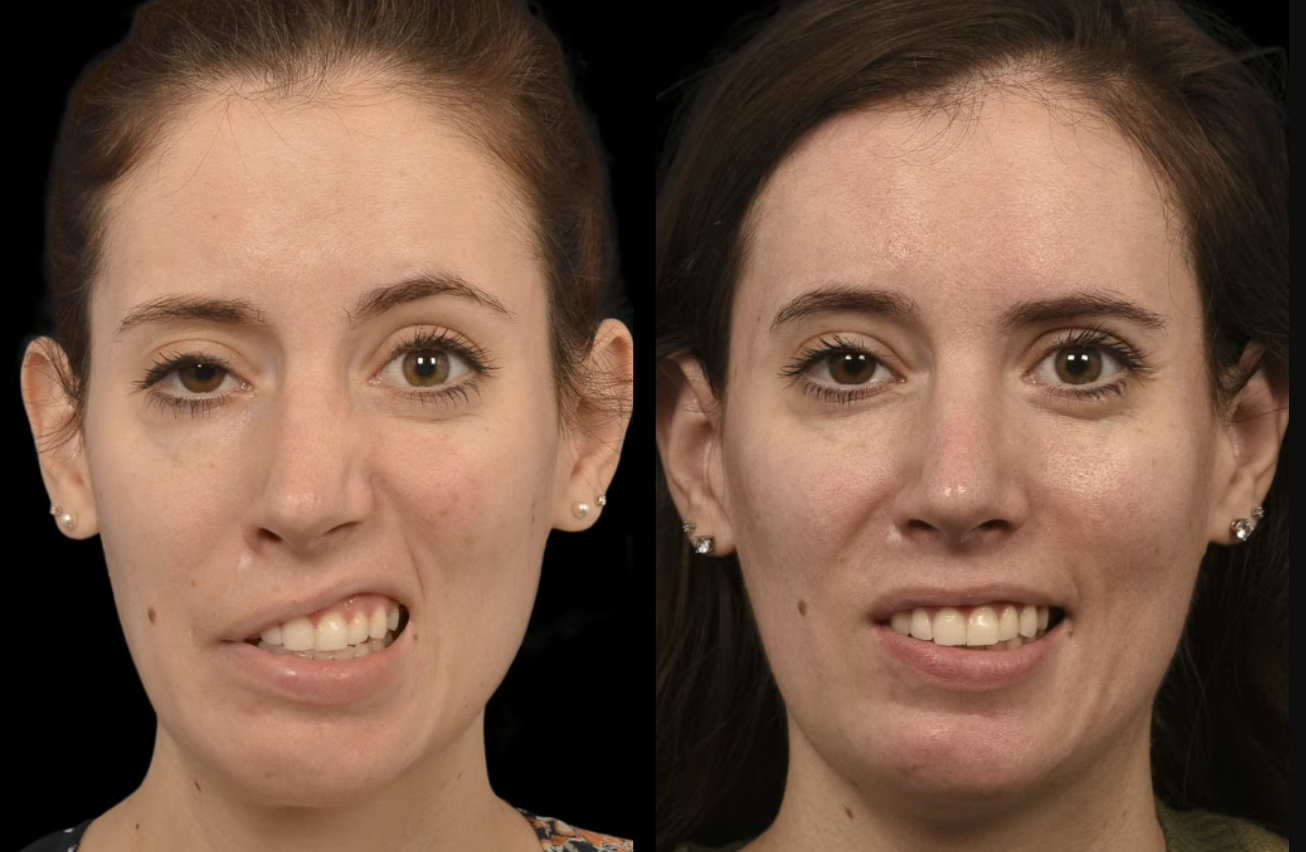
Revision facial reanimation refers to procedures performed after previous treatment, whether an earlier reanimation surgery or a period of observation following the onset of paralysis. Patients may pursue revision for reasons such as incomplete recovery, asymmetry that has changed over time, or movement that did not return as hoped. Depending on the case, revision treatment may involve nerve transfers, free muscle transfer, or refinements such as selective neurolysis to address unwanted muscle movement. The goal remains consistent: improving movement, function, and symmetry to reflect the patient's current anatomy and circumstances.
Primary vs. Revision Facial Reanimation: Key Differences
Timing of Surgery
Primary facial reanimation takes place during the original surgical event, often within the same operative session as the nerve injury. Revision facial reanimation occurs later, sometimes years afterward, once the long-term pattern of paralysis is clear.
Surgical Techniques
Primary cases often involve direct nerve repair or nerve grafting while the nerve pathway remains accessible and facial muscles stay responsive. Revision cases may call for more advanced techniques, including nerve transfers, free muscle transfer, or scarless facial reanimation methods, particularly when the original muscles are no longer viable. This occurs when muscles have gone without nerve stimulation long enough that they can no longer respond effectively.
Patient Eligibility
Eligibility for primary reanimation depends on whether nerve involvement is identified before or during the initial surgery. Revision candidates are evaluated based on the duration of paralysis, muscle condition, and prior treatment outcomes.
Recovery Considerations
Recovery after primary reanimation is often part of the original procedure's timeline. Revision surgery involving nerve or muscle transfer may take longer, as new connections form gradually. Research on facial nerve reconstruction outcomes notes that improvement can continue for many months.
Expected Outcomes
Outcomes vary based on anatomy, the extent of nerve involvement, and the techniques selected. A broad review of facial reanimation research highlights the wide range of reconstructive options available, each suited to different circumstances.
 Which Approach May Be Right for You?
Choosing between primary and revision facial reanimation, or a combination of both, begins with an evaluation by an experienced facial nerve specialist. Factors shaping this evaluation include the cause of paralysis, how long it has persisted, prior surgeries, the viability of the facial muscles, and the patient's personal goals. Ongoing research into facial nerve reconstruction continues to refine how these factors are weighed, which is why a universal recommendation is rarely appropriate.
Why Experience Matters in Facial Reanimation Surgery
Facial nerve reconstruction sits at the intersection of microsurgery, anatomy, and aesthetics. Whether a procedure falls into the primary or revision category, favorable results depend on a surgeon's ability to read subtle anatomical detail, select the right technique, and adapt the plan during surgery itself. Dr. Azizzadeh's focused experience in this specialized field allows each treatment plan to be developed around the individual patient rather than a standardized protocol.
This level of precision depends on true microsurgical expertise, since nerves and vessels are repaired on a scale measured in fractions of a millimeter. Individualized planning carries equal weight, as no two patients present with the same anatomy, history, or goals. Long-term follow-up further supports outcomes, since facial movement can continue to refine for months or years, allowing adjustments as recovery unfolds.
Conclusion
Primary and revision facial reanimation serve different moments in a patient's journey toward restored facial movement, yet both share the same objective: helping patients look and feel like themselves again. Whether reconstruction takes place during an initial surgery or as a later refinement, the right approach depends on individualized evaluation. To learn more, consider scheduling a consultation with Dr. Azizzadeh's team.
FAQ
What is the difference between primary and revision facial reanimation? Primary facial reanimation is performed during the surgery that affects the facial nerve, while revision facial reanimation addresses paralysis or asymmetry that persists after earlier treatment.
Can facial movement improve after revision facial reanimation? Yes. Many patients see improved movement, symmetry, and function after revision procedures, with results depending on individual anatomy and technique.
How long does recovery take after facial reanimation surgery? Recovery varies by technique. Many patients notice gradual improvement over several months, with progress continuing for a year or more.
Who is a candidate for revision facial reanimation? Patients who had previous facial nerve treatment but still experience paralysis, asymmetry, or limited movement may be candidates after a thorough evaluation.
Does facial reanimation restore a natural smile? For many patients, facial reanimation is designed to support natural, spontaneous movement, though results depend on the extent of nerve involvement and the approach chosen.
See why patients across the U.S. choose Dr. Azizzadeh for natural, high-end results. Read reviews on Google and RealSelf.


What To Know About Scarless Facial Reanimation
Living with synkinesis or facial tightness after Bell's palsy or Ramsay Hunt syndrome can feel isolating. Simple actions like smiling or blinking become frustrating reminders of what's changed. For years, surgical options came with visible incisions and lengthy recoveries. That's no longer the only path forward. Scarless Facial Reanimation restores natural facial movement without external incisions, offering hope to patients who want results without telltale signs of surgery.
Key Takeaways
- Scarless Facial Reanimation is a no-incision procedure performed through the mouth to treat synkinesis.
- This technique targets nerve miswiring rather than replacing facial muscles.
- Recovery tends to be faster than traditional facial reanimation procedures.
- Ideal candidates include those with synkinesis, post-paralysis asymmetry, or limited smile movement.
- Results develop gradually as nerve pathways stabilize over months.
Understanding Synkinesis and Facial Nerve Disorders
When the facial nerve is damaged from Bell's palsy, acoustic neuroma, Lyme disease, or trauma, healing doesn't always happen correctly. Sometimes nerve fibers regenerate and connect to the wrong muscles. This miswiring is called synkinesis, and it causes involuntary movements that can be both physically uncomfortable and emotionally challenging.
A person with synkinesis might find that their eye closes whenever they smile, or that their face feels tight and heavy on one side. Traditional facial paralysis treatment options have included physical therapy, Botox injections, and surgical interventions involving incisions and muscle transfers. While effective for many, these approaches don't work for everyone.
https://facialplasticsbh.com/history-of-facial-plastic-surgery-medieval-times-modern-day-infographic/
How Scarless Facial Reanimation Works
Unlike conventional facial reanimation surgery, which may require skin incisions and nerve grafts, Scarless Facial Reanimation takes a different approach. The procedure is performed entirely through the mouth using an endoscopic technique. By accessing facial structures transorally, the surgeon releases overactive nerve branches and tight muscle units without leaving visible scars.
The goal isn't to replace damaged nerves or transplant muscles. This technique corrects the miswiring causing synkinesis. When overactive connections are carefully released, the brain's natural emotional signals flow freely again. The result is a smile that feels spontaneous because it uses the patient's own facial muscles and nerve pathways.
The Center For Advanced Facial Plastic Surgery offers this procedure as part of a comprehensive approach to treating facial nerve disorders. Patients can explore results in the Facial Nerve Gallery.

Who Benefits From This Procedure
Scarless Facial Reanimation is designed for patients dealing with specific post-paralysis symptoms, including:
- Smile dysfunction or limited smile range
- Facial tightness, heaviness, or pulling
- Synkinesis causing involuntary movements
- Asymmetry persisting after Bell's palsy recovery
- Difficulty expressing emotions naturally
- Discomfort from previous reanimation procedures
This procedure is particularly valuable for patients who have tried other treatments without success. While some respond well to Botox or neuromuscular retraining, these don't address underlying nerve miswiring. For those wanting a permanent solution without visible scarring, Scarless Facial Reanimation fills an important gap.
https://facialplasticsbh.com/buccal-fat-pad-removal-what-is-it/
The Role of Expertise in Facial Nerve Surgery
Facial nerve procedures require deep understanding of anatomy and aesthetics. The facial nerve controls dozens of muscles responsible for expressions that communicate joy, concern, and surprise. Surgery in this area demands precision because even small errors can affect outcomes.
Dr. Babak Azizzadeh, a dual board-certified facial plastic and reconstructive surgeon in Beverly Hills, developed the Scarless Facial Reanimation technique. His expertise has earned recognition from The New York Times, CNN, and Oprah.
He serves as President of the Sir Charles Bell Society and President-Elect of the American Academy of Facial Plastic & Reconstructive Surgery. Surgeons and patients travel internationally for his expertise. Beyond technical skill, Dr. Azizzadeh brings genuine empathy for patients dealing with the emotional weight of facial paralysis.

What to Expect During Recovery
One advantage of Scarless Facial Reanimation is faster recovery compared to traditional approaches. Because the procedure is performed through the mouth with no external incisions, there's less tissue trauma and swelling.
During the first ten days, patients typically experience mild soreness inside the mouth. Early improvements in tightness and facial pulling often become noticeable. Light activity is recommended, along with prescribed oral rinses.
Between days ten and thirty, facial relaxation continues and symmetry gradually improves. Many patients return to normal routines. Full results develop over six months to two years as nerve pathways stabilize.
Non-Surgical Options Worth Considering
Not every patient needs surgery. Some may benefit from non-surgical treatments before or after Scarless Facial Reanimation. Nerve transfer procedures represent one surgical alternative for certain cases. Non-surgical options include Botulinum toxin injections to reduce tightness, neuromuscular retraining for muscle coordination, dermal fillers for volume balance, and physical therapy to release tight tissue.
The full range of Surgical Facial Procedures includes options for various degrees of facial nerve dysfunction. A thorough consultation determines which approach makes sense for each patient's situation.

Take the Next Step
If synkinesis or facial tightness has affected your quality of life, schedule a consultation to explore Scarless Facial Reanimation and find out whether this procedure could help restore natural expression.
Frequently Asked Questions
What conditions does Scarless Facial Reanimation treat?
This procedure treats synkinesis, facial tightness, smile dysfunction, and persistent asymmetry following Bell's palsy, Ramsay Hunt syndrome, acoustic neuroma, facial nerve trauma, Lyme disease, and congenital facial nerve disorders.
How is this different from traditional facial reanimation?
Traditional procedures often involve skin incisions, nerve grafts, or muscle transfers. Scarless Facial Reanimation works through the mouth to correct nerve miswiring without external cuts.
How long does recovery take?
Most patients heal quickly with minimal downtime. Initial improvements appear within days, while symmetry and smile refinement continue over weeks to months.
Will my smile look natural?
Yes. Because the procedure uses your existing facial muscles and nerve pathways, the resulting smile is emotionally driven and spontaneous.
Can this be combined with other treatments?
Many patients benefit from combining Scarless Facial Reanimation with Botox, neuromuscular retraining, or dermal fillers. Your surgeon will recommend the best approach for your needs.