


Thinking about a facelift? Or perhaps you’ve already scheduled one and are curious about ways to optimize healing and recovery. You may have come across PDRN, a compound derived from salmon or trout DNA, touted for its regenerative and skin-repairing properties. The promise of faster recovery and improved skin quality is alluring, but what does the evidence really say? Let’s break down the science, its medical applications, and what is—and isn’t—supported in the context of facelift recovery.
Key Takeaways
- PDRN is a DNA-derived compound, most often sourced from salmon or trout, studied for its role in tissue repair and regeneration.
- It works biologically by activating adenosine A2A receptors, which can reduce inflammation, support angiogenesis, and aid collagen renewal.
- The strongest evidence for PDRN exists in wound healing and scar modulation, rather than cosmetic skincare or standard facelift recovery.
- Topical PDRN may be beneficial when paired with delivery techniques like microneedling or laser-assisted channels, but research in aesthetic surgery is still emerging.
- While PDRN is promising as an adjunct for tissue repair, it should be viewed as supportive rather than a proven method for reducing post-facelift swelling, bruising, or downtime.
Understanding PDRN: The Science Behind the Hype

Have you heard the buzz about PDRN? It might sound unconventional at first—DNA from salmon or trout—but it has a credible history in medical and surgical applications. Polydeoxyribonucleotide (PDRN) is composed of DNA fragments that our skin and tissues can use as building blocks for repair. When applied or injected, it interacts with specific cellular receptors, helping modulate inflammation, stimulate blood vessel growth, and support collagen and elastin production.
In clinical settings, PDRN has been studied for over two decades, particularly in chronic wound management, diabetic ulcers, and surgical tissue repair. Its biological activity is well-established in these contexts, creating the foundation for interest in aesthetic medicine. However, translating these results directly to facelift recovery requires caution, as the controlled surgical environment differs from chronic wound scenarios.
How PDRN Works in Tissue Repair
The primary mechanism of PDRN involves activating adenosine A2A receptors on cells. This interaction helps reduce inflammatory responses, improve microvascular circulation, and stimulate fibroblasts—the cells responsible for collagen and elastin production. Together, these effects support tissue regeneration and enhance the skin’s natural repair processes.
Because of its compatibility with human cellular systems, PDRN can promote faster and more organized wound healing in medical contexts. It is thought to create an environment conducive to skin recovery, which is why some surgeons and researchers are exploring its potential in postoperative care. Yet, it is critical to note that most of the robust data comes from non-cosmetic surgical and wound-healing studies rather than elective facelift procedures.
PDRN and Facelift Recovery: What the Evidence Shows
Many patients are curious if PDRN can accelerate recovery after a facelift. While the concept is biologically appealing, the current scientific evidence in aesthetic surgery is limited. To date, there are no large-scale, peer-reviewed clinical trials showing that topical PDRN significantly reduces swelling, bruising, or scarring following a facelift.
That said, the rationale for its potential use is grounded in sound biology. PDRN’s ability to modulate inflammation and promote angiogenesis could theoretically support postoperative skin perfusion and tissue repair. Surgeons are attentive to these mechanisms, particularly in advanced procedures like deep plane facelifts, where tissue viability and vascular integrity are crucial for optimal outcomes.
Delivery Methods Matter: Topical vs. Injectable PDRN
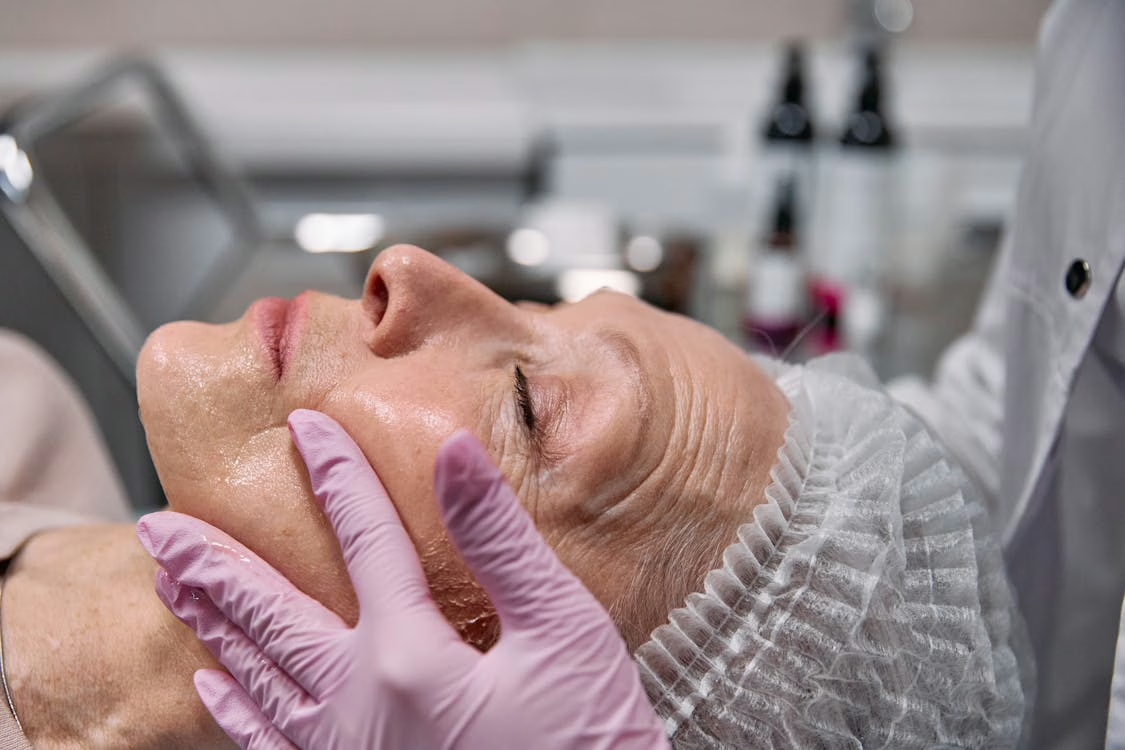
Not all PDRN applications are created equal. Injectable PDRN, used peri-incisionally or in medical-grade formulations, is where the compound’s wound-healing benefits are most strongly supported. These methods allow direct interaction with deeper tissues, which is vital for stimulating repair processes.
Topical PDRN shows promise when paired with enhanced delivery techniques such as microneedling or laser-assisted channels. These methods help the DNA fragments reach deeper layers of skin, where they may influence fibroblast activity and tissue regeneration. However, while conceptually promising, these applications remain investigational, and definitive clinical proof in facelift recovery is not yet available.
Potential Benefits of PDRN in Facial Rejuvenation
Even though strong clinical evidence is limited, PDRN may offer several theoretical advantages for patients undergoing facelift surgery or other facial procedures:
Supporting Collagen and Elastin Production
Collagen and elastin provide structural support, elasticity, and firmness to the skin. PDRN may stimulate fibroblasts to produce these proteins, potentially enhancing tissue resilience during the recovery period. While this does not replace surgical precision, it could theoretically optimize the healing environment.
Modulating Inflammation
Postoperative inflammation is a natural part of recovery, but excessive swelling and redness can be uncomfortable and affect healing. By interacting with adenosine receptors, PDRN may help regulate inflammatory responses, creating a more favorable environment for tissue repair and possibly minimizing secondary complications.
Promoting Microcirculation
Angiogenesis is critical for delivering oxygen and nutrients to recovering tissues. PDRN has been shown to stimulate new blood vessel formation in experimental and clinical wound-healing studies, which could be advantageous in areas where perfusion is essential, such as after extensive facial surgery.
Practical Considerations for Patients
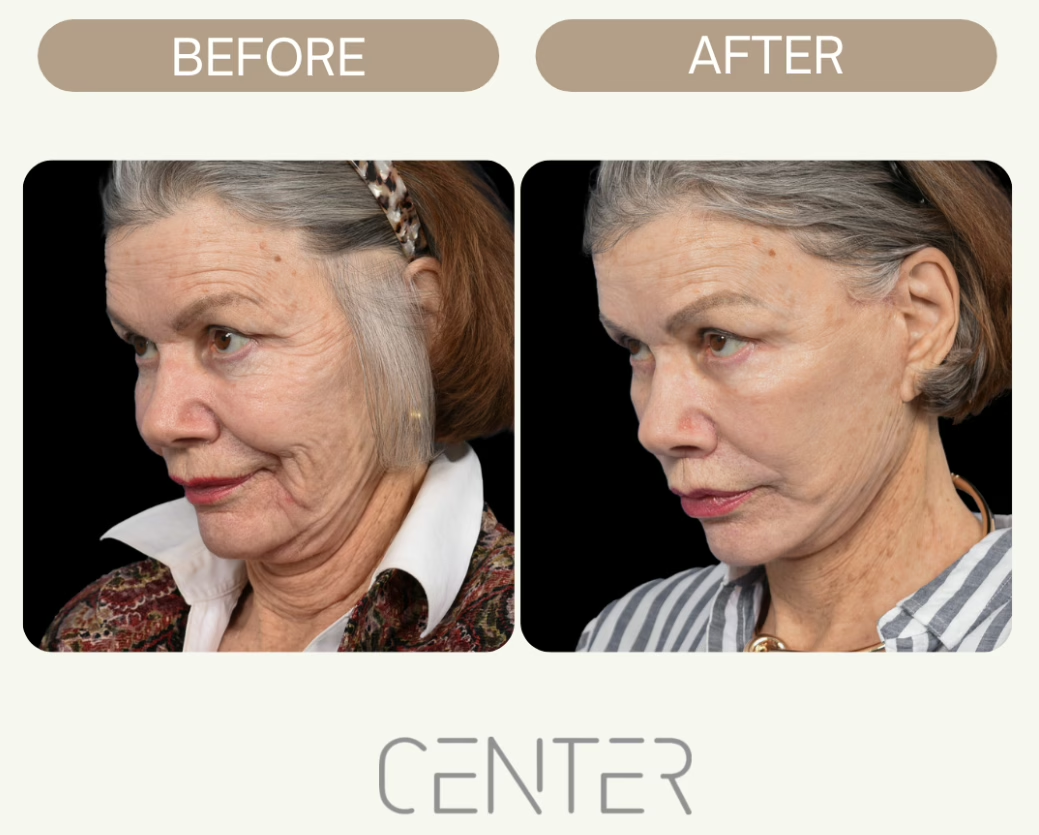
It’s important to approach PDRN with realistic expectations. While the compound has a sound biological rationale, it is not a magic solution for speeding up recovery after facelifts. Currently, its role is adjunctive, meaning it should complement—not replace—standard postoperative care, careful surgical technique, and evidence-based interventions.
Patients interested in PDRN should:
- Consult with a board-certified facial plastic surgeon or dermatologist experienced in regenerative therapies.
- Prioritize professional, medical-grade treatments over unregulated products sold online.
- Consider microneedling or laser-assisted delivery methods for topical PDRN to enhance absorption and efficacy.
- Be aware of potential allergies, especially fish-derived sensitivities.
 Beyond Recovery: PDRN’s Role in Skin Health
PDRN may also have applications in skin quality optimization outside the immediate postoperative window. By supporting fibroblast activity and microcirculation, it can contribute to improved hydration, texture, and overall skin resilience. Used in conjunction with microneedling or controlled topical delivery, it may help maintain or enhance skin quality over time.
While this does not substitute for surgical intervention, it highlights the versatility of PDRN as a regenerative adjunct. For patients considering multiple modalities to improve skin health, PDRN could be a scientifically grounded option when used responsibly.
Bottom Line: Evidence vs. Enthusiasm
PDRN is generating significant interest in aesthetic medicine, and for good reason. Its biologic mechanisms are compelling, and decades of wound-healing data support its potential in tissue repair. However, evidence in facelift recovery is still preliminary. Topical or injectable PDRN should be viewed as an adjunct to surgery, not a replacement for established postoperative protocols.
For patients seeking to enhance recovery, improve tissue resilience, or optimize skin quality, PDRN may be considered as part of a comprehensive, professionally supervised plan. Its greatest promise lies in supporting tissue repair in medically supervised contexts, particularly for patients with compromised perfusion or healing challenges.
The future of facial rejuvenation lies in evidence-based integration of regenerative compounds like PDRN with surgical expertise. As clinical studies continue to emerge, we anticipate a clearer understanding of its role in postoperative recovery and skin rejuvenation. Until then, thoughtful application under professional guidance remains the safest and most effective approach.
See why patients across the U.S. choose Dr. Azizzadeh for natural, high-end results. Read reviews on Google and RealSelf.