
Natural Beauty and Filler Reversal Trend Featured in ELLE (Expert Insight)
ELLE explores the growing shift toward natural beauty and filler reversal, highlighting a cultural move away from overdone aesthetics and toward more authentic, human-looking results. The article features expert insight from Dr. Babak Azizzadeh, known for his mastery of facial nerves and natural-looking facial rejuvenation.
The feature introduces what it calls the “Great Undoing”—a rising trend where patients are reversing fillers, reducing exaggerated features, and seeking a return to more balanced, natural appearances. Surgeons report a noticeable increase in revision procedures, as patients move away from overly contoured, artificial looks.
Dr. Azizzadeh notes that patients today are prioritizing authenticity, often expressing a desire to “look like my authentic self” rather than dramatically altered. He also highlights that many individuals are not fully reversing treatments, but instead dialing them back to a more subtle, refined version of their appearance.
The article also explores the cultural drivers behind this shift, including social media backlash against exaggerated aesthetics and a growing awareness of how over-treatment can distort natural facial harmony. As a result, both patients and providers are embracing a more conservative, individualized approach to cosmetic procedures.
The takeaway: the aesthetic industry is entering a new era where natural results, facial balance, and individuality are replacing the pursuit of perfection and uniform beauty standards.
👉 Read the full article:
Looking Human Is in Again



Facelift Longevity Explained: Can a Facelift “Slip”? (Town & Country Feature)
Town & Country explores the viral question of whether a facelift can “slip,” sparked by public discussion around Kris Jenner’s appearance one year after her widely discussed procedure. The feature includes expert insight from Dr. Babak Azizzadeh, known for his mastery of facial nerves and natural-looking facelifts.
The article explains that what many perceive as a facelift “slipping” is not a surgical failure, but rather a normal evolution of results over time. As highlighted in the feature, early post-surgical appearances—like Jenner’s initial reveal—often benefit from temporary swelling and added volume, which create a more lifted, wrinkle-free look.
Dr. Azizzadeh notes that post-operative swelling can last for several months, and as it resolves, the face settles into a more natural, long-term result. This transition can be misinterpreted as a loss of effect, when in reality it reflects the healing process.
The article emphasizes that true facelift “failure” or full slippage is extremely rare, particularly with modern surgical techniques. Instead, longevity depends on factors such as technique, anatomy, lifestyle, and the natural aging process.
It also highlights the ongoing deep plane vs. SMAS facelift debate, with deeper-plane techniques often associated with more durable and natural-looking outcomes when performed by highly experienced surgeons.
Dr. Azizzadeh adds that younger patients may experience longer-lasting results, reinforcing the importance of individualized treatment planning and realistic expectations.
👉 Read the full article:
Can Your Facelift Really “Slip”?

Starter Facelift Trend and Deep Plane vs. SMAS Debate Featured in goop
goop explores the rise of the “starter facelift” and evolving facelift techniques, featuring expert insight from Dr. Babak Azizzadeh, who is recognized as being “known for his mastery of facial nerves” and “natural-looking facelifts.”
The article highlights a major shift in aesthetic medicine: younger patients in their 40s are increasingly opting for facelifts earlier, viewing surgery as a proactive solution rather than a last resort. This trend is driven by factors such as social media visibility, dissatisfaction with overfilled appearances, and the limitations of non-surgical treatments over time.
Dr. Azizzadeh emphasizes that modern facial rejuvenation is no longer about simply tightening the skin, but about restoring harmony, balance, and youthful facial dynamics—a philosophy that aligns with today’s demand for subtle, undetectable results.
The feature also breaks down the widely discussed deep plane vs. SMAS facelift techniques, noting that while deep plane approaches allow for more comprehensive repositioning of deeper tissues, both methods can deliver excellent outcomes when performed by an expert surgeon. Ultimately, technique matters less than surgical skill, anatomical expertise, and aesthetic judgment.
Additionally, the article highlights a growing shift away from excessive filler and energy-based treatments, with patients increasingly seeking long-lasting, natural surgical results.
The takeaway: the modern facelift is more personalized, natural, and increasingly performed earlier—focused on refinement rather than transformation.
👉 Read the full article on goop:
The Rise of the Starter Facelift

Harper’s Bazaar Italy Covers Rhinoplasty Guide with Expert Insight
Harper’s Bazaar Italy featured Dr. Babak Azizzadeh in its comprehensive guide to rhinoplasty, “Una guida esaustiva alla rinoplastica,” highlighting key considerations for patients seeking nasal refinement.
This international feature—an extension of the earlier Town & Country rhinoplasty guide—explores how modern rhinoplasty has evolved into a highly sophisticated procedure focused on facial harmony rather than dramatic transformation.
The article emphasizes that while rhinoplasty can significantly enhance one’s appearance, the most successful outcomes are subtle and natural. Dr. Azizzadeh advises patients to carefully evaluate their motivations, noting that rhinoplasty is a complex procedure requiring both physical and emotional readiness. He cautions against pursuing surgery for the wrong reasons or attempting to replicate celebrity features.
He also highlights the importance of:
- Choosing a highly qualified, board-certified facial plastic surgeon
- Undergoing a thorough consultation process
- Understanding that digital imaging is a guidance tool—not a guarantee of results
- Recognizing that final outcomes can take up to several years to fully mature
The guide further underscores a broader shift in aesthetic philosophy: patients today are seeking to refine their own features rather than completely change their identity, aligning with a more natural, individualized approach to beauty.
The takeaway: modern rhinoplasty is about balance, precision, and personalization—requiring both expert surgical technique and thoughtful patient selection.
👉 Read the full article on Harper’s Bazaar Italy:
Una guida esaustiva alla rinoplastica
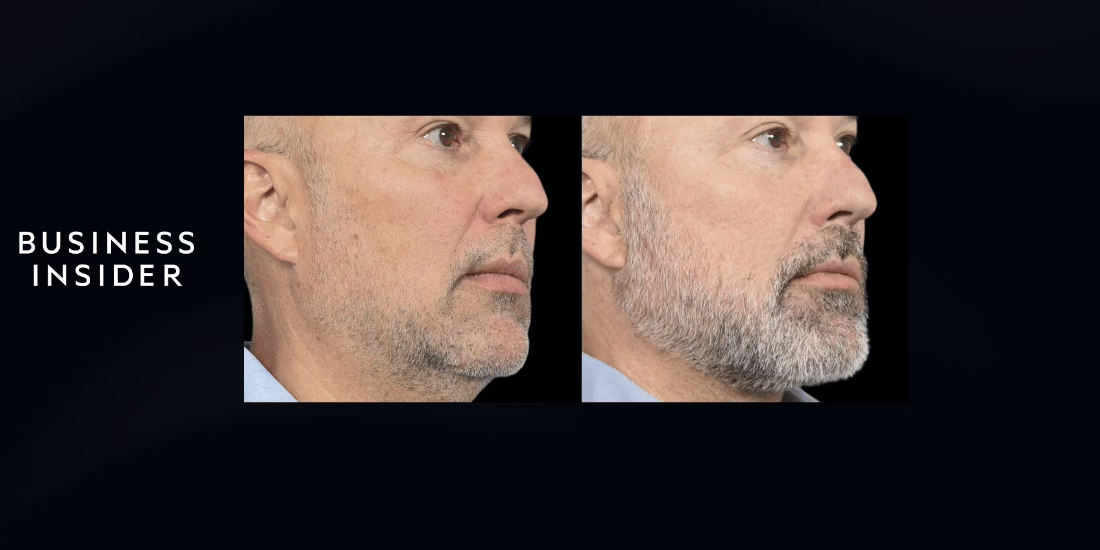
C-Suite Plastic Surgery Trends Featured in Business Insider
Business Insider featured Dr. Babak Azizzadeh in a report exploring the growing demand for cosmetic procedures among corporate executives seeking a more youthful, approachable appearance.
The article highlights a significant shift in workplace aesthetics, as C-suite leaders increasingly pursue subtle facial enhancements to maintain a competitive, energetic image. Rather than dramatic transformations, executives are opting for natural-looking procedures that help them appear refreshed without obvious signs of surgery.
Dr. Azizzadeh noted that facelifts and neck lifts are among the most requested procedures among his executive patients, with a sharp rise in demand over the past five years. He emphasized that many professionals today want to “age down, not change,” preserving their identity while restoring a more youthful version of themselves.
The feature also underscores broader cultural and professional trends, including:
- A younger average age among CEOs and leadership teams
- Increased pressure to appear energetic and relevant
- A decline in stigma surrounding aesthetic procedures
Dr. Azizzadeh further explained that in industries like tech, where leadership skews younger, there is growing pressure to maintain a youthful, vital appearance—without looking like work has been done.
The takeaway: aesthetic procedures are becoming a strategic investment for executives, with subtlety, authenticity, and longevity driving today’s approach to facial rejuvenation.
👉 Read the full article on Business Insider:
C-suite execs are paying surgeons big money to look fresh-faced, approachable, and less irritable

Dr. Azizzadeh Shares Insight on Peptide Stacking in Goop
Goop featured Dr. Babak Azizzadeh in its article “Peptide Stacking Is Everywhere—But Should You Be Doing It?” exploring the growing popularity of peptide-based therapies in longevity, performance, and aesthetic medicine.
The article examines “peptide stacking,” a trend involving the combination of multiple peptides to enhance outcomes such as muscle growth, recovery, skin quality, and metabolic function. Once limited to biohacking communities, this approach is now gaining traction in clinical and aesthetic settings.
Dr. Azizzadeh provided insight into the evolving landscape of peptide use, noting the distinction between FDA-approved peptides and unregulated performance-enhancing compounds used in longevity clinics. While acknowledging the scientific intrigue behind peptides as signaling molecules, he emphasized that robust clinical trials are still lacking, particularly regarding safety, dosing, and long-term effects.
The feature also highlights the role of peptides in aesthetic medicine, particularly in supporting healing and recovery around surgical procedures, as well as their emerging use alongside weight loss treatments. However, experts stress that peptide therapy should complement—not replace—foundational health practices like proper nutrition, exercise, and sleep.
The overall takeaway: while peptide stacking shows promise as part of regenerative and longevity-focused care, it remains an emerging area that requires further scientific validation before widespread adoption.
👉 Read the full article on goop:
Peptide Stacking Is Everywhere—But Should You Be Doing It?

The Hollywood Reporter Explores Red Carpet Beauty Timing
The Hollywood Reporter featured Dr. Babak Azizzadeh in its story on celebrity beauty preparation timelines, highlighting how proper timing is critical for achieving natural, camera-ready results ahead of major events.
The article explores how poorly timed cosmetic procedures can lead to noticeable swelling or unnatural results—often sparking public speculation—while well-planned treatments allow for subtle, refreshed appearances on the red carpet.
Dr. Azizzadeh contributed expert insight on facial fat transfer, describing it as a high-impact yet relatively low-downtime procedure that can restore volume, enhance skin quality, and create a more youthful, radiant appearance. He notes that when performed strategically, fat grafting can rejuvenate the midface and improve overall facial harmony without appearing overdone.
The feature outlines ideal timelines for various procedures—from facelifts and eyelid surgery months in advance to fillers, lasers, and facials closer to the event—emphasizing that successful aesthetic outcomes rely not just on the procedure itself, but on precise planning and recovery time.
The overarching message: in aesthetic medicine, timing is everything—and natural-looking results require both surgical expertise and strategic preparation.
👉 Read the full article on The Hollywood Reporter:
Sorry, It’s Too Late to Get Your Face Fixed Before the Oscars

Subtle Rhinoplasty Trends Driving Demand for Natural Nose Refinement
Bloomberg featured Dr. Babak Azizzadeh in the article “The Luxury of a Nose Job No One Notices,” highlighting a growing shift toward discreet, natural-looking nasal refinements.
The piece examines how today’s rhinoplasty patients—particularly those in their 40s and older—are increasingly choosing subtle procedures that enhance the nose without drawing attention. Rather than dramatic transformations, many are opting for tip-focused rhinoplasty, finesse adjustments, or minimally invasive contouring that allows them to return to work without obvious signs of surgery.
Dr. Azizzadeh explained that patients are seeking improvements that feel authentic and undetectable, noting that many do not want colleagues asking where they had surgery. The article also discusses the rise of filler-based “liquid rhinoplasty,” which, while faster and less expensive than surgery, is not FDA-approved for nasal use and carries potential vascular risks.
Bloomberg reports that demand for rhinoplasty continues to grow, fueled in part by post-pandemic video exposure and smartphone camera distortion. However, experts emphasize the importance of proper consultation, risk disclosure, and individualized treatment planning.
The overarching theme of the article is refinement over reinvention—where the true luxury lies in results that no one notices.
👉 Read the full Bloomberg article (FreeFlow version): The Luxury of a Nose Job No One Notices

Dr. Azizzadeh Named to Castle Connolly Top Doctors 2026 List
Castle Connolly has once again recognized Dr. Babak Azizzadeh as a 2026 Castle Connolly Top Doctor in the category of Facial Plastic Surgery / Otolaryngology—a distinction awarded to fewer than 1% of physicians nationwide and based entirely on peer nomination and rigorous vetting.
Dr. Azizzadeh has earned this honor for 15 consecutive years, underscoring a sustained level of excellence, leadership, and trust within the medical community. He is double board-certified in Facial Plastic & Reconstructive Surgery and Otolaryngology and is internationally recognized for his expertise in deep plane facelifts, revision facelifts, deep neck lifts, blepharoplasty, rhinoplasty, and facial reanimation surgery.
At his Beverly Hills practice, the CENTER for Advanced Facial Plastic Surgery, Dr. Azizzadeh combines advanced surgical technique with an unparalleled understanding of facial anatomy to deliver natural, long-lasting results that preserve each patient’s individuality. He also serves as Clinical Chief of Otolaryngology–Head & Neck Surgery at Cedars-Sinai, one of the nation’s top hospitals.
Beyond aesthetic surgery, Dr. Azizzadeh is globally regarded for pioneering work in facial paralysis and facial nerve reanimation, helping patients restore movement, expression, and confidence following conditions such as Bell’s palsy, Ramsay Hunt syndrome, acoustic neuroma, and facial trauma. Surgeons from around the world study his techniques in selective neurolysis and facial reanimation.
In addition to his clinical work, Dr. Azizzadeh is President-Elect of the American Academy of Facial Plastic & Reconstructive Surgery (AAFPRS), co-director of a prestigious fellowship program, lead editor of two definitive surgical textbooks, and a frequent expert source for major media outlets including The New York Times, Vogue, Town & Country, ELLE, ABC Nightline, and Allure.
👉 View Dr. Azizzadeh’s Castle Connolly profile:
https://www.castleconnolly.com/top-doctors/babak-azizzadeh-otolaryngology-facial-plastic-surgery-16cc003901

Goop Highlights NAD+ Skincare Trends in Anti-Aging Innovation
In a feature published by goop, Dr. Babak Azizzadeh offers expert insight on the science behind the brand’s latest skincare launch: the Youth-Boost NAD+ Peptide Rich Cream, hailed by Gwyneth Paltrow as her new “holy grail” moisturizer.
The article explores the growing interest in NAD+, a molecule long associated with longevity medicine for its role in cellular energy production, DNA repair, and aging pathways. While NAD+ has traditionally been used in supplements and IV therapies, researchers are now exploring how its precursors can be effectively delivered through topical skincare to support skin health and resilience.
Dr. Azizzadeh highlights niacinamide, one of the most extensively researched NAD+ precursors, as a key ingredient in goop’s Youth-Boost line. Rather than attempting to stabilize pure NAD+—which is notoriously difficult in topical formulations—the product uses advanced precursors such as NMN to help support the skin’s natural NAD+ production pathways.
Reviewing the formulation, Dr. Azizzadeh emphasizes the importance of a multi-layered approach to aging skin, particularly as the epidermal barrier becomes thinner, drier, and more reactive over time. He notes that the inclusion of postbiotics, ceramides, peptides, and plant-based retinol alternatives helps stabilize the skin barrier, reduce inflammation, and improve tolerance—allowing performance-driven actives to deliver results without irritation.
The article also cites clinical and consumer studies showing significant improvements in hydration, firmness, texture, and visible lines after consistent use, reinforcing the cream’s positioning as both a luxury and science-forward skincare innovation.
👉 Read the full article on goop.com:
Gwyneth Has a New “Holy Grail” Moisturizer—and You’re Definitely Going to Want to Try It