
Why Celebrities Credit Sleep and Skincare for Results Only Surgery Can Deliver
BEVERLY HILLS, CA - A recent Daily Mail feature asked plastic surgeons across the country about a growing trend in Hollywood: celebrities who undergo cosmetic procedures but credit their refreshed appearance to better sleep, skincare routines, or lifestyle changes. Several board-certified surgeons shared firsthand accounts of patients attributing surgical results to everything from face tape to spa retreats, raising new questions about transparency in the aesthetics industry.
Among the surgeons featured was Dr. Babak Azizzadeh, a world-renowned facial plastic and reconstructive surgeon based in Beverly Hills. Dr. Azizzadeh shared that he treated a celebrity patient who told people she had simply been on a restorative desert spa retreat after undergoing a deep plane facelift, neck lift, blepharoplasty, and CO2 laser resurfacing. Dr. Azizzadeh noted that he appreciated the fact that his patient felt her results were undetectable, allowing her to discuss her appearance on her own terms.
Surgeons noted that patients, including a well-known actor, falsely attributed facelift and eyelid rejuvenation results to lifestyle changes like better nutrition, sleep, or skincare. This reflects a trend of celebrities keeping cosmetic procedures private despite intense public speculation fueled by social media.
For patients considering facial rejuvenation, the best surgical results look natural. Procedures like the deep plane facelift and blepharoplasty restore a rested, youthful appearance without the telltale signs of surgery. When performed by a skilled, board-certified facial plastic surgeon, patients look like the best version of themselves.
Read the full Daily Mail feature here:
Related resources:
- Dr. Azizzadeh Featured in The Hollywood Reporter on the Deep Plane Facelift
- Blepharoplasty Before and After: What to Expect
- Getting a Mini Facelift at 35: What You Didn't Know


Dr. Babak Azizzadeh on the Rise of GLP-1 Microdosing and Its Impact on Facial Aesthetics
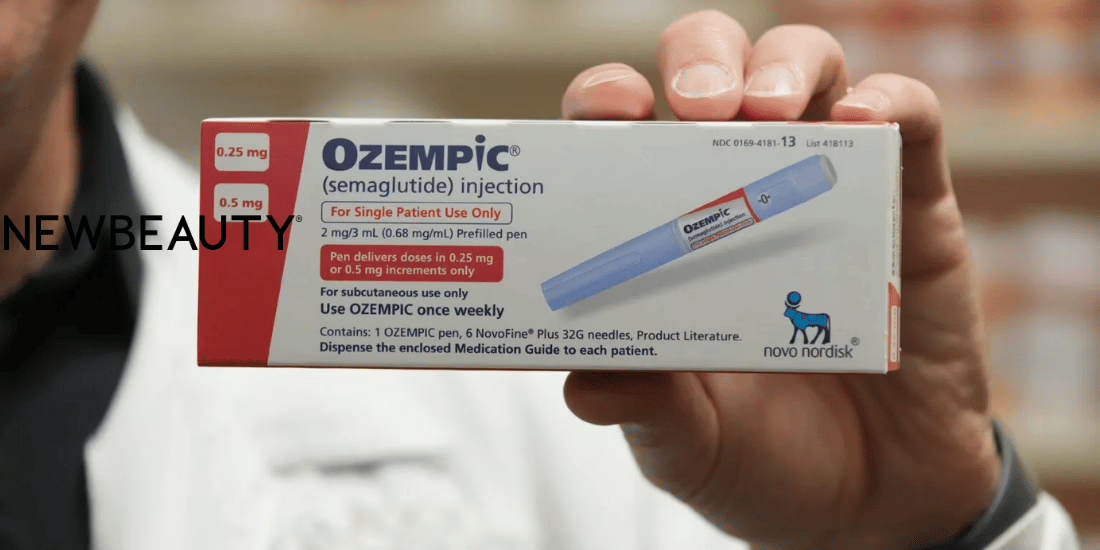
BEVERLY HILLS, CA - GLP-1 medications like semaglutide and tirzepatide have reshaped the conversation around weight management, but a growing number of patients are now exploring a different approach: microdosing. Rather than taking standard doses for significant weight loss, some individuals are turning to smaller, off-label amounts of these medications for targeted benefits like reduced inflammation, weight maintenance, and even longevity support. In a recent feature for NewBeauty, Beverly Hills facial plastic surgeon Dr. Babak Azizzadeh weighed in on this emerging trend and its potential effects on facial aesthetics.
Dr. Azizzadeh suggests smaller GLP-1 doses might lower inflammation, similar to standard doses, noting this practice often emerges in wellness centers like Los Angeles first. Though some clinicians accept reduced long-term dosing, microdosing lacks FDA approval and requires qualified medical oversight.
Dr. Azizzadeh warned that microdosing at a normal weight risks unexpected facial hollowness from even minor weight loss. He now prefers fat transfer over injectable fillers to restore volume, reflecting a broader aesthetic shift toward natural, lasting results.
As GLP-1 medications continue to expand beyond traditional weight loss, the link between these drugs and facial aging is becoming harder to ignore. Patients considering microdosing or currently using GLP-1 medications should consult with a qualified facial plastic surgeon to anticipate and address changes in facial volume.
Read the full article on NewBeauty:
Is Microdosing GLP-1s the Next Big Health Hack?
Related resources:
- Facial Fat Transfer Surgeon in Beverly Hills
- Fat Grafting and the "Baby Face" Comeback: Dr. Azizzadeh on 2026's Biggest Beauty Trend
- Non-Surgical Facial Fillers at the CENTER for Advanced Facial Plastic Surgery

Dr. Babak Azizzadeh on Why Botox May Seem to Wear Off Too Quickly
In a RealSelf feature, experts including board-certified facial plastic surgeon Dr. Babak Azizzadeh offered insight into a common concern among neurotoxin patients: why Botox and similar treatments sometimes appear to lose their effectiveness sooner than expected. Although most providers estimate Botox results last three to four months for many patients, individual experiences can differ significantly.
One factor discussed is the body’s potential to develop neutralizing antibodies over time. While all major neurotoxins rely on botulinum toxin, subtle differences in formulation can influence how the immune system responds. Dr. Azizzadeh notes that patients who have used the same product repeatedly for years may benefit from trying an alternative brand, such as Dysport, Xeomin, or newer options, to potentially restore longer-lasting effects.
Metabolic activity also plays a role. Individuals with high metabolic rates or low body fat may break down neuromodulators more rapidly, which can lead to a quicker return of muscle movement and wrinkles. Dr. Azizzadeh has seen this pattern particularly among long-distance runners and highly active patients.
Another contributor to perceived shorter duration is injection technique and dosage. If an insufficient amount of product is placed or if results aren’t fully assessed two weeks after treatment, patients may feel the effects wear off prematurely—even when the neurotoxin is working as intended.
Experts also note that aging skin and changes in elasticity can alter how results are perceived over time, even when neuromodulator activity is consistent.
Read the full New York Post feature here:
5 Reasons Your Botox Feels Like It Isn’t Lasting
Related Resources from The Facial Paralysis Institute:
- Facelifts in Their 30s: The Celebrity Trend of Reversing Fillers
- Botox Before Blepharoplasty?
- When Is the Best Time to Start Preventative Botox Treatments?

Dr. Azizzadeh Explores the Modern Surge in Facelift Popularity
In an expert commentary published by Plastic Surgery Practice, Dr. Babak Azizzadeh examines the renewed and rapidly growing interest in facelift surgery—and why today’s patients are embracing surgical rejuvenation more than ever before.
Dr. Azizzadeh explains that the surge in facelift popularity is largely driven by significant advancements in surgical techniques, improved outcomes, and widespread filler fatigue among patients seeking longer-lasting, more natural results. Unlike traditional facelift approaches that focused on pulling skin, modern techniques prioritize restoring facial structure and repositioning deeper tissues to achieve a refreshed, authentic appearance.
At the center of this evolution is the deep plane facelift, which Dr. Azizzadeh describes as the most advanced and effective approach for addressing facial aging. By lifting the deeper muscular and connective tissue layers—rather than just tightening the skin—the deep plane technique produces results that look natural, youthful, and durable. He emphasizes that this procedure requires an exceptional level of surgical expertise, advanced anatomical knowledge, and a refined aesthetic eye.
The article also highlights the importance of deep neck contouring as a critical complement to facelift surgery, allowing surgeons to achieve a cohesive and harmonious rejuvenation of both the face and neck. Additional procedures—such as blepharoplasty, brow reshaping, facial fat grafting, lip lifts, buccal fat repositioning, and chin augmentation—may be incorporated on a personalized basis to enhance overall balance.
Dr. Azizzadeh further addresses the growing trend of younger patients seeking surgical solutions. While non-surgical treatments remain valuable, certain individuals—due to genetics or accelerated aging—may benefit from earlier surgical intervention. He stresses that careful patient evaluation and individualized treatment planning are essential to achieving optimal, long-lasting results.
👉 Read the full article on PlasticSurgeryPractice.com:
https://plasticsurgerypractice.com/client-objectives/aesthetics/new-choices-fuel-surge-in-facelift-popularity/

Justin Bieber’s Recovery From Facial Paralysis Brings Attention to Ramsay Hunt Syndrome
In a Rolling Stone feature, global pop star Justin Bieber shared an encouraging update nearly nine months after being diagnosed with Ramsay Hunt Syndrome, a rare viral condition that can cause facial paralysis. In a recent Instagram Story, Bieber smiled on camera, signaling significant improvement after previously losing movement on one side of his face.
Ramsay Hunt Syndrome occurs when the varicella-zoster virus affects the facial nerve near the ear, often leading to facial weakness, impaired blinking, and asymmetry. Bieber first revealed his diagnosis in June 2022, explaining that the condition forced him to pause and eventually cancel his world tour in order to focus on recovery.
At the time of the diagnosis, Rolling Stone consulted two facial paralysis specialists, including Dr. Babak Azizzadeh, a world-renowned facial plastic and reconstructive surgeon. Dr. Azizzadeh noted that Bieber’s outlook was promising because his paralysis affected only one side of the face, suggesting that not all nerve fibers were permanently damaged.
According to Dr. Azizzadeh, recovery from facial paralysis can take weeks or months and, in some cases, up to a year. He emphasized that early treatment with high-dose steroids and antiviral medications significantly improves the likelihood of nerve recovery and restored facial movement.
Bieber’s gradual return to public appearances and surprise performances highlights both the physical and emotional challenges associated with facial paralysis. His experience has helped raise public awareness of Ramsay Hunt Syndrome and the importance of early intervention, expert evaluation, and patience throughout the recovery process.
Read the full feature here:
Justin Bieber Gets His Smile Back Nine Months After Facial Paralysis Diagnosis – Rolling Stone
For more expert insights and related procedures, explore:
- Understanding Facial Paralysis and Its Causes
- Facial Reanimation Surgery Options
- The Importance of Facial Nerve

Dr. Babak Azizzadeh Weighs In on Teen Rhinoplasty and Emotional Well-Being
In a New York Post feature, a Las Vegas mother shared her family’s deeply personal decision to pursue rhinoplasty for her teenage daughter after years of bullying and emotional distress. The story highlights the complex intersection of self-esteem, mental health, and cosmetic surgery in adolescents, with Dr. Babak Azizzadeh performing the procedure.
The article follows Asher, who experienced persistent bullying at school focused on the appearance of her nose. Over time, the harassment significantly impacted her confidence and emotional well-being, leading her to rely heavily on makeup to conceal her appearance and withdraw socially. Her mother, Loren Lahav, emphasized that the decision to pursue surgery was rooted not in vanity, but in concern for her daughter’s mental health and long-term self-image.
After careful consideration and two years of saving, the family traveled to Beverly Hills, where Asher underwent rhinoplasty with Dr. Babak Azizzadeh shortly after her 14th birthday. Dr. Azizzadeh, a board-certified facial plastic surgeon, is known for his emphasis on facial harmony, conservative surgical planning, and patient-specific evaluation—particularly in younger patients whose facial structures are still developing.
The feature also places the story within a broader cultural conversation, referencing similar scrutiny faced by public figures and their families when cosmetic surgery is performed at a young age. Loren Lahav pushed back against public judgment, stressing that each situation is unique and should be evaluated with empathy and professional guidance.
Following surgery, both mother and daughter reported significant improvements in Asher’s confidence, social comfort, and overall happiness. The story underscores the importance of individualized care, thorough consultation, and emotional readiness when considering facial procedures for adolescents.
Read the full New York Post feature here:
I Started Saving for My Daughter’s Nose Job When She Was 12 — and It Was Worth It
Related Resources from The Facial Paralysis Institute:
- Teenage Rhinoplasty: What To Know
- What Are Natural-Looking Nose Jobs?
- What Is A Revision Rhinoplasty?

Dr. Azizzadeh Featured in The New York Times on the Evolution of Rhinoplasty
The New York Times featured Dr. Babak Azizzadeh in its August 12, 2020 Style section article, “The New Nose: Is the Bump Back?” The story explores a major shift in modern rhinoplasty—away from cookie-cutter, ski-jump noses and toward artistic, individualized, and structurally sound nasal surgery.
The article highlights how today’s rhinoplasty patients are seeking subtle refinements rather than dramatic transformations, often choosing to preserve defining features such as a natural bridge or inherited characteristics. This evolution reflects broader cultural changes, including a growing appreciation for authenticity, ethnicity, and facial harmony.
Dr. Azizzadeh is cited for his innovative approach to structural rhinoplasty, particularly his use of fascia grafting—connective tissue taken from above the ear—to soften sharp angles and recreate the appearance of thicker, more youthful nasal skin. He describes the technique as a “game changer,” noting its ability to restore softness, durability, and natural aging to the nose without erasing a patient’s identity.
The article also addresses the rise of nonsurgical rhinoplasty using injectable fillers, while emphasizing the importance of experience and caution due to the nose’s complex vascular anatomy. Throughout the piece, experts agree that long-term safety, structure, and personalization—not trends—should guide nasal surgery decisions.
Dr. Azizzadeh’s inclusion reinforces his reputation as a leader in natural, anatomy-driven rhinoplasty, and underscores why he is frequently sought out by major national publications to comment on the future of facial plastic surgery.
👉 Read the full article in The New York Times:
https://www.nytimes.com/2020/08/12/style/rhinoplasty-the-new-nose-is-the-bump-back.html

Dr. Babak Azizzadeh Discusses Changing Attitudes Toward Rhinoplasty and Cultural Identity
In a Tablet Magazine feature, shifting beauty standards and evolving cultural attitudes are explored through the lens of declining rhinoplasty rates, particularly among Jewish patients. Once considered a common rite of passage, nose jobs have become less prevalent as definitions of beauty broaden and ethnic identity is increasingly embraced.
Citing data from the American Society of Plastic Surgeons, the article notes a significant decline in rhinoplasty procedures over the past decade, even as cosmetic surgery overall has remained popular among other demographic groups. While economic factors played a role, the trend also reflects deeper social changes regarding self-acceptance and representation.
Dr. Babak Azizzadeh, a Beverly Hills–based facial plastic surgeon, shared insight on how motivations for rhinoplasty have evolved. He explained that he no longer sees the same pressure from families for teenage patients to undergo nose surgery, a contrast to earlier generations when conformity to narrow beauty standards was more common.
According to Dr. Azizzadeh, patients today are increasingly focused on preserving their natural features rather than erasing them. Many individuals seeking rhinoplasty are interested in subtle refinements or revision procedures that restore balance while maintaining ethnic characteristics. This marks a departure from the “cookie-cutter” aesthetic that dominated cosmetic surgery in previous decades.
The article places these changes within a broader cultural context, noting increased diversity in media representation and a growing rejection of assimilation-driven beauty ideals. As society becomes more inclusive, patients are redefining what it means to look—and feel—beautiful.
Dr. Azizzadeh emphasized that modern rhinoplasty prioritizes facial harmony, individuality, and self-confidence. Rather than chasing a singular ideal, today’s approach recognizes that beauty is diverse and deeply personal.
Read the full Tablet Magazine feature here:
A Nose Dive for Nose Jobs – Tablet Magazine
Related Resources from The Facial Paralysis Institute:
- Rhinoplasty and Ethnic Preservation
- Ensuring a Smooth Rhinoplasty Recovery
- Bulbous Nose Tip After Rhinoplasty? Here's What To Know