
Should a Teenager Get a Nose Job? The Pros and Cons of Teen Rhinoplasty
Teenage rhinoplasty is a nose surgery designed exclusively for teen girls and boys. The procedure is used to reshape a teen's nose, and it is generally available to teen girls as early as 15 or 16 years old and teen boys as early as 16 or 17 years old.
The decision to undergo a teen rhinoplasty procedure is rarely straightforward. Instead, teens and their parents must weigh the pros and cons of rhinoplasty surgery carefully. This ensures teens and their parents understand the short- and long-term effects of nose surgery, along with potential treatment complications.
There are many pros and cons for teens and their parents to evaluate prior to nose surgery. Now, let's examine the pros and cons of teen rhinoplasty, as well as factors to consider to help a teen and his or her parents make the best-possible treatment decision.
What Are the Pros of Teen Rhinoplasty?
Teenage rhinoplasty enables a teen to enhance his or her facial appearance. In fact, teen rhinoplasty is commonly used to address one or more of the following nasal issues:
- Large nasal hump
- Deformed nasal bridge
- Wide nostrils
- Drooping nasal tip
Teen rhinoplasty helps a teen improve his or her facial symmetry, too. The nose is the face's focal point, but it sometimes fails to complement the cheeks, chin, lips and other parts of the face. With rhinoplasty surgery, a teen can reshape his or her nose, resulting in a balanced, natural-looking facial appearance.
A teen rhinoplasty procedure may help a teenager boost his or her self-esteem as well. Research indicates there is often a direct correlation between low self-esteem and violence, teen pregnancy and low academic performance. By undergoing a rhinoplasty procedure, a teen may start to feel more confident in his or her facial appearance. The end result: increased self-esteem that helps a teen be the person he or she wants to be every day.
Additionally, teen rhinoplasty surgery is typically considered safe and effective. The surgery is performed by a facial plastic and reconstructive surgeon who works diligently to help his or her patient achieve the best-possible results. Plus, following a teen rhinoplasty, a surgeon tracks his or her patient's progress to minimize the risk of potential post-surgery complications.
What Are the Cons of Teen Rhinoplasty?
Like any surgery, teen rhinoplasty offers no guarantees. In certain instances, a teen may undergo rhinoplasty surgery but fail to achieve his or her desired results.
Also, various risks are associated with teen rhinoplasty surgery. These risks include:
- Nosebleeds
- Swelling
- Numbness
- Scarring
- Nerve damage
When it comes to teen rhinoplasty surgery, it helps to work with an expert facial plastic and reconstructive surgeon. By choosing a surgeon who specializes in teen rhinoplasty surgery, a teenage boy or girl can limit risk.
Is a Teen Rhinoplasty Surgery Right for You?
The decision to undergo a teen rhinoplasty procedure should not be taken lightly. Since teen nose job results last for an extended period of time, it is crucial for teens and their parents to evaluate the treatment's pros and cons. Teens and their parents should also consider the following factors as they evaluate teen rhinoplasty surgery:
- Age: A teen must be anatomically ready before he or she is eligible to undergo rhinoplasty surgery. Therefore, it is crucial to meet with a facial plastic and reconstructive surgeon who can evaluate a teen and determine if he or she is a good candidate for a rhinoplasty procedure.
- Communication: A teen must understand the ramifications of rhinoplasty surgery. Meanwhile, a facial plastic and reconstructive surgeon can explain how teen rhinoplasty surgery is performed, what the recovery process is like and other aspects of treatment. This ensures a teen and his or her parents know exactly what to expect throughout all treatment phases.
- Time Frame: A teen must consider how long it will take to rebound from rhinoplasty surgery. Oftentimes, teens schedule rhinoplasty surgery during summer; this enables teens to heal from rhinoplasty surgery during summer vacation.
Dr. Babak Azizzadeh of the CENTER for Advanced Facial Plastic Surgery is a teen rhinoplasty expert. He is Harvard-trained and globally recognized for his facial plastic and reconstructive surgery expertise and takes the guesswork out of teen nose surgery.
Before a teen rhinoplasty is performed, Dr. Azizzadeh requests a consultation with a teen and his or her parents. The consultation enables Dr. Azizzadeh to learn about a teen and why he or she wants rhinoplasty surgery. It also allows Dr. Azizzadeh to address rhinoplasty concerns and questions from a teen and his or her parents.
If Dr. Azizzadeh believes a teen can benefit from rhinoplasty surgery, he develops a custom treatment plan. Dr. Azizzadeh explains the teen rhinoplasty treatment plan to a teen and his or her parents. If all parties agree teen rhinoplasty is the best treatment option, Dr. Azizzadeh then executes this strategy.
For a teen who is considering rhinoplasty surgery, meeting with Dr. Azizzadeh provides a great learning experience. To schedule a teen rhinoplasty consultation with Dr. Azizzadeh, please call us today at 310-657-2203.


Laser Skin Resurfacing vs. Microneedling: Which Is Better?
Laser skin resurfacing and microneedling are two of the most popular non-surgical facial rejuvenation treatments. Yet there are many differences between laser skin resurfacing and microneedling. As such, it is important for an individual to understand these differences so he or she can determine which treatment delivers the best-possible results.
For those who are considering laser skin resurfacing and microneedling, there are many factors to consider. To better understand these factors, let's look at laser skin resurfacing and microneedling, how each procedure is performed and each treatment's benefits.
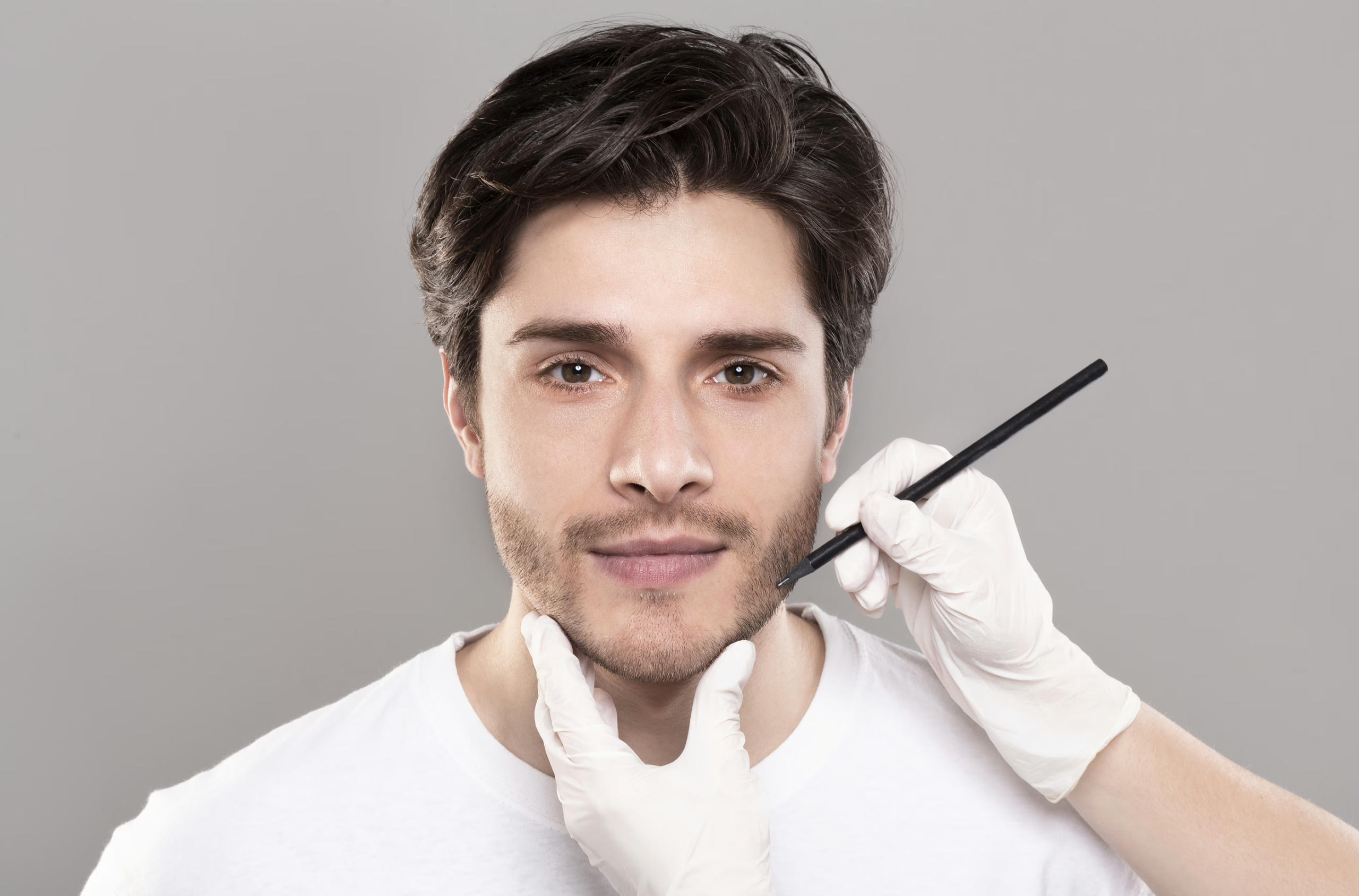
Trending Facial Procedures for Men in 2019
Body image is a hot topic among men, which is reflected in research from the American Society of Plastic Surgeons (ASPS). In fact, ASPS reported cosmetic surgeries were performed on approximately 1.7 million men in 2017. As men search for ways to enhance their appearance and boost their self-confidence, this figure may increase in the foreseeable future.
There is no shortage of cosmetic surgery options available to men. Now, let's take a look at five of the most-popular facial procedures for men.
1. Rhinoplasty
Rhinoplasty, also referred to as a nose job or nose surgery, improves facial harmony. It addresses nasal symmetry, ensuring a man can achieve a balanced, natural-looking facial appearance.
A nose job allows a man to reshape the nose if it appears too big or too small in relation to other facial features. Or, if a man is dealing with a bulbous nasal tip or bump on the bridge of the nose, a rhinoplasty can correct this issue.
Additionally, nose surgery is sometimes used to treat functional issues of the nose. If a man is dealing with a structural nasal defect that causes breathing difficulties, rhinoplasty may be used to treat this problem.
There is no one-size-fits-all nose surgery for men, either. Each rhinoplasty procedure must be tailored to a man's distinct facial features; otherwise, the surgery is unlikely to result in a nose that appears in perfect harmony with a man's cheeks, chin, eyes and other facial features.
2. Blepharoplasty
Blepharoplasty surgery eliminates bags from a man's lower eyelids and excess skin from the upper eyelids. The procedure may be performed on either the lower or upper eyelids. In some instances, blepharoplasty is used to treat both areas.
A man can undergo blepharoplasty surgery to rejuvenate the appearance of the eyes, i.e. the "windows to the soul." If a man's eyes make him appear worn-out and older than his actual age, eyelid surgery offers a great choice to address such issues.
Like nose surgery, each blepharoplasty must be tailored to a patient. Eyelid surgery is complex, and as such, must be performed by an expert facial plastic and reconstructive surgeon. That way, a man can use eyelid surgery to remove excess fat deposits and loose or sagging skin in the eyelids and revitalize the appearance of the eyes.
3. Neck Lift
Men who are dealing with droopy skin, a double chin or other visible signs of aging in the neck and jawline may benefit from neck lift surgery. Thanks to this procedure, men can improve the appearance of the neck, jawline and throat.
Neck lift surgery eliminates excess skin and fat from under the chin and tightens the facial muscles. It also enhances the jawline, allowing a man to achieve a more youthful-looking facial appearance.
The best candidates for male neck lift surgery usually have a buildup of fat under the chin and around the jowls. They may be dealing with muscle banding and loose, sagging skin in the neck, too. By consulting with a facial plastic and reconstructive surgeon, a man can find out if he qualifies for neck lift surgery.
4. Non-Surgical Treatments – Dermal Fillers and Botox
Non-surgical treatments are terrific alternatives to traditional cosmetic surgery options for men. They allow men to quickly enhance their facial appearance without going under the knife.
Common non-surgical treatments for males include:
- Botox: Addresses crow's feet, frown lines and other visible signs of aging in the face.
- Juvederm: Corrects facial lines and wrinkles.
- Sculptra: Treats chin wrinkles, smile lines and various signs of aging between the nose and mouth.
Non-surgical procedures involve injectables that are used to treat different areas of the face. Each treatment usually requires only minutes to complete. However, it is important to note that dermal fillers and Botox deliver temporary results, and a typical treatment program may require injections every few months to maintain results.
5. Chin Augmentation
Chin augmentation involves the insertion of a small implant into a man's chin bone. The procedure allows a man to increase the length of the jawline to correct a weak chin.
If the chin appears out of proportion relative to other facial features, chin augmentation may be used to alleviate this issue. Chin augmentation often requires an implant made of autologous bone collected from a patient's pelvis or rib. Sometimes, chin augmentation is performed with an implant that consists of synthetic materials as well.
In certain instances, chin augmentation is performed in combination with rhinoplasty surgery or other cosmetic procedures for men. The goal of cosmetic surgery for men is to help a patient achieve a harmonious facial appearance. And if chin augmentation is completed at the same time as another facial procedure, a man can maximize his cosmetic surgery results.
Choose The CENTER for Advanced Facial Plastic Surgery for a Male Cosmetic Procedure
Dr. Babak Azizzadeh of The CENTER for Advanced Facial Plastic Surgery is a globally recognized facial and plastic reconstructive surgeon. He performs male cosmetic surgery procedures to help men treat a variety of facial issues. To schedule a male cosmetic surgery treatment consultation with Dr. Azizzadeh, please call us today at 310-657-2203.
Sources:
https://www.zwivel.com/blog/top-plastic-surgery-procedures-men/
https://www.plasticsurgery.org/news/blog/most-commonly-requested-plastic-surgery-for-men
https://www.verywellhealth.com/male-cosmetic-surgery-2328548
What Is Facial Fat Transfer?
Facial fat transfer, also referred to as facial fat grafting, is a facial rejuvenation procedure unlike any other. The procedure involves the use of fat from the abdomen, flanks, hips and other parts of a patient's body. This fat is then transferred to a patient's face to enhance volume and fullness.
A facial fat transfer commonly helps patients address visible signs of aging in the face, including:
- Volume loss in the cheeks and midface
- Hollows below the eyes
- Tear troughs
- Cheek folds near the mouth
- Contour depressions in the face
- Pitted acne scars
- Thin lips
Facial fat grafting is similar to injectable filler treatments, as both facial fat transfer and dermal filler treatments enable patients to revitalize their facial appearance. The procedures differ, however, in that a facial fat transfer is a surgical procedure that involves the use of a patient's own body tissue. As such, facial fat grafting eliminates the risk of an allergic reaction. It also tends to deliver treatment results that last longer than those associated with injectable fillers.
A facial fat transfer usually takes about one to five hours to complete. The length of time required for the procedure varies based on the areas of a patient's body where fat is being harvested. Also, additional time may be required if facial fat grafting is completed in combination with other facial rejuvenation procedures.
Facial fat grafting must be performed by an expert facial plastic and reconstructive surgeon. During the procedure, fat is generally harvested from a patient via a small incision in his or her abdomen. The fat is then cleansed, concentrated and injected into a patient's face, resulting in a rejuvenated facial appearance.
It generally takes at least a few months to fully recover from a facial fat transfer procedure. Facial fat grafting patients typically need to keep the head elevated as much as possible in the initial days after treatment. They may also need to apply antibiotic ointment to their surgical incisions during this time.
Mild pain is common in the first few days after a facial fat transfer procedure, but it often disappears on its own. Meanwhile, some patients experience facial swelling that lasts a few months after a facial fat grafting procedure.
Is Facial Fat Transfer Right for You?
A facial fat transfer often proves a viable alternative to injectable filler treatments. However, facial fat grafting is not ideal for all patients, at all times, and it is essential to consult with a facial plastic and reconstructive surgeon prior to treatment.
By consulting with a facial plastic and reconstructive surgeon, an individual can learn about all aspects of facial fat grafting. He or she can also ask questions about the procedure and establish realistic treatment expectations.
Additionally, a patient consultation provides a facial plastic and reconstructive surgeon with valuable insights. The consultation allows the surgeon to find out why a patient is considering facial fat grafting and understand this individual's treatment goals. It enables the surgeon to conduct a patient evaluation to determine if he or she is a good candidate for a facial fat transfer procedure, too.
Dr. Azizzadeh's Approach to Facial Fat Grafting
Dr. Babak Azizzadeh of The CENTER for Advanced Facial Plastic Surgery takes a holistic approach to facial fat grafting. He is a Harvard-trained and globally recognized facial plastic and reconstructive surgeon who dedicates the necessary time and resources to educate his patients about facial fat grafting. Dr. Azizzadeh then develops a personalized treatment plan to help each of his patients achieve the best-possible facial fat transfer results.
Dr. Azizzadeh requests a patient consultation before he performs facial fat grafting. Although there is no minimum weight requirement for a facial fat transfer, each patient must have sufficient fat on his or her body to harvest and graft.
With a patient consultation, Dr. Azizzadeh evaluates a patient, learns about his or her facial fat grafting goals and conducts a medical assessment. If Dr. Azizzadeh believes facial fat grafting poses significant risks, he offers alternative treatment options. Or, if Dr. Azizzadeh believes a patient is a good candidate for a facial fat transfer, he next develops a personalized treatment plan for him or her.
Sometimes, Dr. Azizzadeh recommends facial fat grafting be performed in combination with other facial rejuvenation treatments. His goal is to help a facial fat grafting patient achieve a balanced, natural-looking facial appearance in which the facial features appear in perfect harmony. By performing facial fat grafting in conjunction with other facial rejuvenation procedures, Dr. Azizzadeh helps his patients accomplish this goal.
Dr. Azizzadeh monitors his patients' progress after facial fat grafting procedures as well. He requests follow-up appointments to confirm a patient's facial fat transfer recovery stays on track. Dr. Azizzadeh also remains available to respond to patients' concerns and questions during the facial fat grafting recovery period.
Schedule a Facial Fat Grafting Treatment Consultation with Dr. Azizzadeh
Dr. Azizzadeh is happy to teach patients about facial fat grafting, how the procedure is performed and the treatment's long-term benefits. That way, a patient can weigh the pros and cons of a facial fat transfer and make an informed treatment decision.
For those who are considering facial fat grafting, Dr. Azizzadeh is available for a patient consultation. To schedule a facial fat transfer consultation with Dr. Azizzadeh, please call us today at 310-657-2203.
Sources:
https://www.isaps.org/procedures/facial-plastic-surgery/fat-transfer-facial/
https://www.realself.com/facial-fat-transfer
Biggest Trends in Cosmetic Surgery
New cosmetic surgery trends are emerging in 2019. Now, let's take a look at five of the biggest cosmetic surgery trends to watch this year.
1. Cosmetic Surgery Is Used to Deliver a Natural-Looking Facial Appearance.
In the past, some cosmetic surgery patients may have wanted to achieve a facial appearance that matched their favorite celebrity's. Today's cosmetic surgery patients, however, often prioritize natural-looking treatment results.
For example, facial reshaping is generating interest from men and women who want to achieve a natural-looking facial appearance. Facial reshaping helps patients address an aging face and eyes, as well as enhance facial harmony, facial contours and shape.
A facial reshaping procedure may require a customized SMAS facelift in conjunction with the following treatments:
- Autologous fat grafting
- Facial fillers
- Conservative transconjunctival lower blepharoplasty
- Preauricular volume adjustment
The ideal candidates for facial reshaping are individuals who display moderate-to-severe signs of facial aging. They tend to fall between the ages of 45 and 65 years old, but younger individuals with significant congenital jowls or a round or rectangular facial shape may also qualify for facial reshaping.
Cosmetic surgery treatment results vary based on the patient, his or her facial features and other factors. Therefore, it is crucial to work with a facial plastic and reconstructive surgeon who understands exactly what a patient wants to achieve during a cosmetic procedure.
With the right facial plastic and reconstructive surgeon at his or her disposal, a cosmetic surgery patient can achieve a natural-looking facial appearance. This surgeon will analyze a patient's facial appearance and develop a cosmetic surgery treatment plan accordingly. Finally, a facial plastic and reconstructive surgeon can put this plan into action to help a patient improve his or her facial appearance.
2. Botox Injections Lead the Way Among Minimally Invasive Cosmetic Procedures
Botox consistently ranks among the top non-surgical cosmetic procedures, and the same likely will hold true in 2019 and beyond. In fact, the American Society of Plastic Surgeons (ASPS) indicated Botox was one of the most-requested minimally invasive cosmetic procedures last year. As more people search for ways to quickly and safely enhance their facial appearance, the number of Botox procedures performed in the United States could increase in the foreseeable future.
During a Botox treatment, injections are made into a patient's facial muscles. Botox then relaxes the facial muscles that otherwise cause dynamic wrinkles to appear due to repetitive facial expressions. Botox treats crow's feet, frown lines and other visible signs of aging in the face and is often performed on both men and women.
Although Botox has been shown to deliver consistent facial rejuvenation results, a single treatment is only temporary. The initial results of Botox become visible within a few days of treatment, and these results generally last up to four months. Thus, individuals who rely on Botox for facial rejuvenation may need to schedule regular treatments throughout the year to optimize their facial rejuvenation results.
3. Lip Fillers Are Gaining Momentum
For those who want plump, full lips, cosmetic surgeries are available that deliver the desired results. These procedures restore volume to thin lips, address symmetry between the upper and lower lips and enhance the shape of the lips. They also smooth vertical lip lines.
Dermal filler injections like Juvederm and Restylane offer non-surgical options to increase lip fullness. They only require a few minutes to complete, with little to no downtime. Plus, a dermal filler treatment is tailored to a patient, ensuring this individual can receive the proper amount of a lip filler to produce natural-looking lips that complement the facial appearance.
4. Demand for Skin Resurfacing Is on the Rise
Skin resurfacing procedures enable patients to revitalize their facial appearance without having to go under the knife. They also allow patients to treat multiple areas of the face and neck in a fraction of the time commonly associated with traditional cosmetic surgeries.
Laser skin resurfacing is becoming a popular non-surgical facial rejuvenation procedure. It involves the use of DOT Deka laser treatments to enhance the skin on the face and neck. In doing so, laser skin resurfacing improves skin texture and pigmentation.
Laser skin resurfacing is often a great option for individuals dealing with virtually any dermatologically condition. With laser skin resurfacing, individuals can address sun-damaged skin, acne scars and skin texture and tone issues, among other dermatological problems.
5. Liquid Facelifts Provide Viable Alternatives to Traditional Facelifts
Facelift surgery has been a popular cosmetic surgery for many years. Conversely, for those who want to revitalize their facial appearance without a traditional facelift, a liquid facelift may prove to be a viable alternative.
A liquid facelift involves the use of various injectable treatments to address visible signs of aging in the face. It usually requires 30 to 45 minutes to complete, and after the procedure is done, enables a patient to achieve a youthful-looking facial appearance.
Liquid facelift procedures should always be performed by an expert facial plastic and reconstructive surgeon, too. An expert facial plastic and reconstructive surgeon evaluates a liquid facelift patient prior to treatment and determines which injectables will produce the optimal results. He or she then crafts a custom liquid facelift treatment plan to accommodate a patient's requests.
Schedule a Cosmetic Surgery Treatment Consultation with Dr. Azizzadeh Today
Dr. Babak Azizzadeh of The CENTER for Advanced Facial Plastic Surgery is a world-renowned facial plastic and reconstructive surgeon. He stays up to date on the latest cosmetic surgery trends and is happy to help patients find the best way to rejuvenate their facial appearance.
Dr. Azizzadeh is available to perform a patient evaluation and discuss cosmetic surgery options. To schedule a consultation with Dr. Azizzadeh, please contact us today at 310-657-2203.
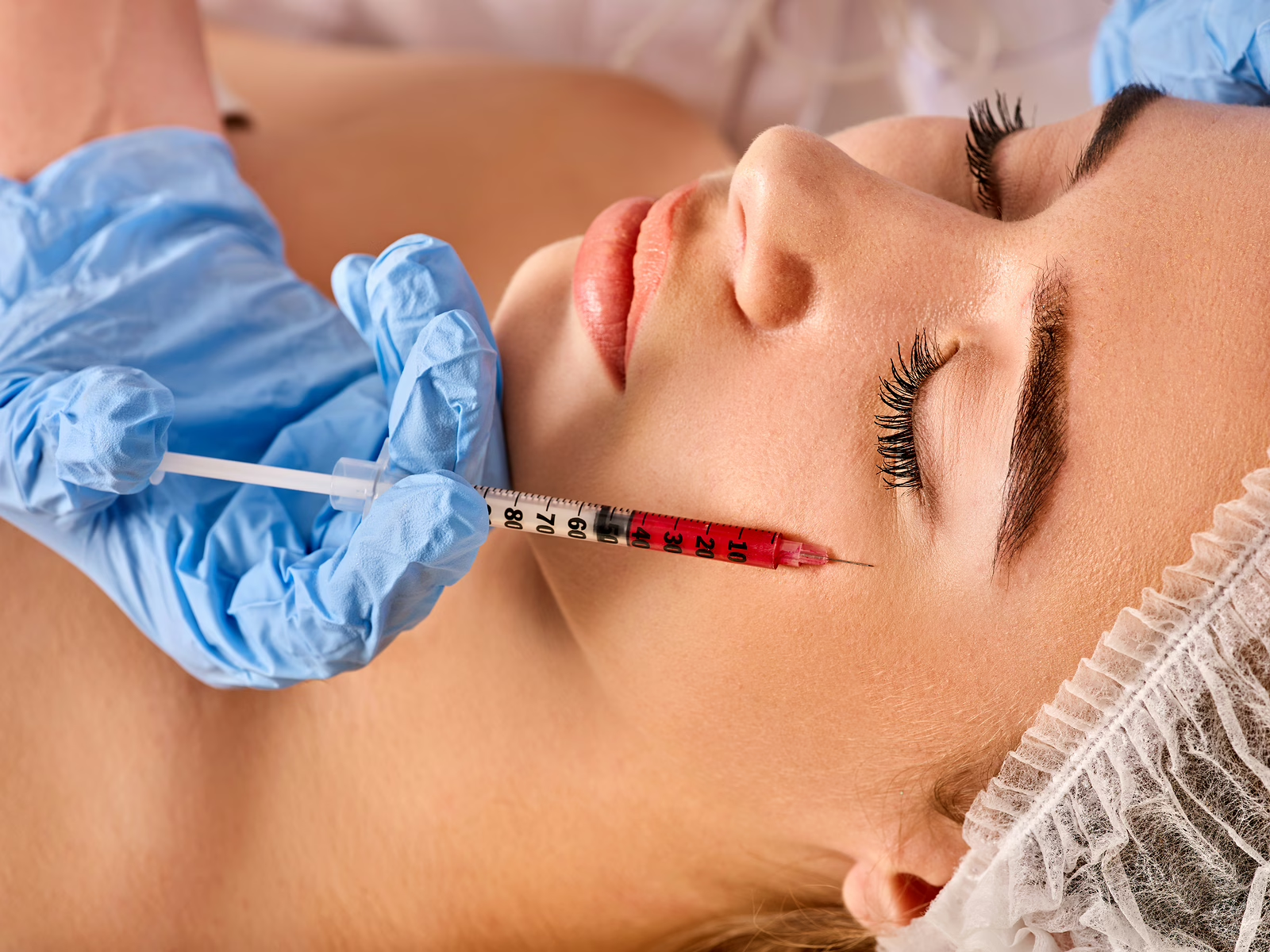
What to Watch Out for With Mainstream Facial Injectables
Men and women use facial injectables to enhance their facial appearance without surgery. Yet there is a lot to consider before undergoing a facial injection procedure. Because if a person fails to account for all aspects of a facial filler treatment, he or she is unlikely to achieve the best-possible facial rejuvenation results.
Now, let's take a look at five factors to consider prior to a facial injectable treatment.
1. Your Facial Rejuvenation Treatment Goals
Facial fillers serve different purposes, so it is important for an individual to select a facial injectable that corresponds to his or her facial rejuvenation treatment goals. Common facial fillers include:
- Juvederm XC: Corrects moderate to severe facial lines and wrinkles.
- Restylane: Improves facial volume and fullness and lip fullness.
- Sculptra: Treats facial folds, wrinkles and other visible signs of aging in the face.
Dr. Babak Azizzadeh, a globally recognized facial plastic and reconstructive surgeon, tailors a facial injectable treatment to his patient. He understands facial injectables can help patients in different ways, and he wants each of his patients to accomplish their desired facial rejuvenation results. As such, Dr. Azizzadeh learns about a patient's facial rejuvenation treatment goals and evaluates his or her facial appearance. Dr. Azizzadeh then crafts a custom treatment so each of his patients can get the most out of a facial injectable procedure.
2. Facial Filler Composition
Facial fillers consist of different substances to rejuvenate the skin. These substances include:
- Hyaluronic Acid: This naturally occurring substance helps plump and hydrate the skin.
- Calcium Hydroxylapatite (CaHA): Like hyaluronic acid, CaHA is a naturally occurring substance. It helps stimulate collagen production, as well as treat deep facial lines and wrinkles.
- Poly-L-lactic Acid: This biodegradable, synthetic substance promotes collagen growth and smooths fine lines and wrinkles.
Dr. Azizzadeh analyzes a patient's medical history before he performs a facial injectable procedure. That way, Dr. Azizzadeh can identify the right facial filler based on a patient's medical history. And as a result, Dr. Azizzadeh can use a facial injectable to help his patient safely revitalize his or her facial appearance.
3. Facial Injectables Treatment Provider
When it comes to choosing a facial injectables treatment provider, it is often a good idea to err on the side of caution. By selecting an expert facial plastic and reconstructive surgeon like Dr. Azizzadeh, an individual can realize the full benefits of a facial injectable procedure.
Dr. Azizzadeh has performed facial injectable procedures and other cosmetic treatments for executives, celebrities and other prominent patients. He dedicates significant time and resources to create a custom treatment plan for each of his patients. This ensures Dr. Azizzadeh can help his patients avoid complications and enjoy superior treatment results.
Also, Dr. Azizzadeh is committed to patient education. He teaches each of his patients about facial injectables and explains the treatment process prior to performing a facial filler procedure. Dr. Azizzadeh is ready to respond to a patient's facial injectables concerns and questions, too. Then, each of Dr. Azizzadeh's patients can make an informed facial filler treatment decision.
4. Facial Injections Treatment Results
Facial injectables are safe, effective facial rejuvenation treatments, but results may vary. In most instances, facial injectable treatment results become visible within a few days of a procedure. Meanwhile, treatment results are temporary, and they often last several months.
Dr. Azizzadeh helps his patients establish realistic facial filler treatment expectations. He outlines facial injectable procedures during a patient consultation to ensure his patients understand what to expect in the days, weeks and months after treatment.
5. Facial Injectables Side Effects
A typical facial filler treatment requires just minutes to perform, and most patients can return home shortly after a facial injectable procedure is completed. Yet some patients experience side effects in the first few days after a facial filler procedure, and these side effects include:
- Bruising
- Itching
- Swelling
- Redness
- Pain
In rare instances, facial injectables may also cause one or more of the following severe side effects:
- Infection
- Filler leakage through the injection site
- Movement of a filler from one area of the face to another
- Blocked blood flow that leads to tissue death
Dr. Azizzadeh does everything possible to minimize risk during a facial injectable procedure. He works diligently to customize a facial injectable treatment to his patient and performs each procedure with care and attention. Additionally, Dr. Azizzadeh monitors his patient's progress following a facial injectable treatment. And if a patient has concerns or questions after a facial filler procedure, Dr. Azizzadeh is happy to respond to them.
Schedule a Facial Injectable Treatment Consultation with Dr. Azizzadeh Today
Facial filler treatments can deliver exceptional results if they are performed by an expert facial plastic and reconstructive surgeon. Dr. Azizzadeh has many years of experience with facial injectables and constantly searches for ways to provide his patients with the best care possible. By scheduling a consultation with Dr. Azizzadeh, an individual can learn about facial injectables and determine if now is the right time for a facial filler treatment.
Dr. Azizzadeh is available for a facial filler treatment consultation. To schedule a consultation with Dr. Azizzadeh, please call us today at 310-657-2203.
Sources:
https://www.healthline.com/health/facial-fillers-side-effects
https://www.plasticsurgery.org/cosmetic-procedures/dermal-fillers
Summertime Lip and Face Cosmetic Surgery Trends
Summertime is often a popular season for lip and face cosmetic surgeries. For men and women who are planning to undergo a lip or face procedure this summer, it helps to know summertime cosmetic surgery trends, too. Summertime cosmetic surgery trends to watch this summer include:
1. Botox Injections
Botox consistently ranks among the top non-invasive cosmetic procedures. It temporarily smooths fine lines and wrinkles caused by excessive muscle movements in the face. Botox is also performed via a series of small, subcutaneous injections, making it a simple procedure that requires only minutes to complete.
Botox treatments may be ideal for people who want to address crow's feet, bunny lines and other visible signs of aging in the face. A typical Botox treatment delivers results that last about four months – roughly the length of the entire summer. Plus, the side effects associated with Botox injections are generally minimal, and there is little to no downtime after a Botox procedure.
2. Juvederm Lip Fillers
Juvederm injectable lip fillers have been shown to improve lip volume and fullness. They are intended for people dealing with thin lips, as well as individuals who are struggling with vertical lip lines.
This summer, individuals who want to achieve beautiful, natural-looking lips may want to undergo Juvederm treatments. Juvederm injections offer terrific alternatives to traditional cosmetic surgeries. They also contain Lidocaine, a local anesthetic that makes a Juvederm procedure virtually pain-free.
Juvederm patients usually won't have to wait long before they see the results of their treatments, either. In fact, Juvederm treatment results often become visible within about 24 hours of a procedure. The results of a Juvederm procedure may last up to 18 months as well.
3. Laser Skin Resurfacing
Laser skin resurfacing involves the use of DOT Deka laser treatments to correct facial wrinkles, scars, sun-damaged skin and other skin issues. It resurfaces the skin on the face and neck, ensuring an individual can improve skin tone and pigmentation.
Laser skin resurfacing is available to individuals dealing with virtually any dermatological condition. It is commonly used to treat mild signs of aging like acne scars and facial lines and wrinkles. In some instances, laser skin resurfacing treats melasma (brown patches on the face), sunspots and hyperpigmentation (dark spots), too.
4. Custom Facelift Surgery
The days of a traditional facelift are coming to an end. Now, an individual can receive a custom facelift surgery to ensure his or her facial features appear in harmony with one another.
A custom facelift surgery delivers long-lasting results. Prior to a facelift procedure, an individual will meet with a facial plastic and reconstructive surgeon who learns about his or her treatment goals. Then, this individual and his or her facial plastic and reconstructive surgeon can work together to accomplish the best-possible facelift surgery results.
When it comes to summertime facelift surgery, it is paramount to work with an expert facial plastic and reconstructive surgeon. That way, an individual can get the support that he or she needs to achieve a natural-looking facial appearance in which the nose, chin, cheeks and other facial features perfectly complement each other.
5. Facial Fat Grafting
Facial fat grafting helps an individual restore a youthful facial appearance. With facial fat grafting, fat is transferred into a patient's face; this fat comes from a patient's abdomen, flanks, hips or other parts of the body. The procedure involves harvesting fat via a small incision in a patient's abdomen or legs. Next, the fat is cleansed, concentrated and injected into a patient's face, resulting in a rejuvenated facial appearance.
Facial fat grafting allows a patient to simultaneously treat volume loss in the mid-face and thinning lips. It usually takes several months to recover from a facial fat grafting procedure. As a result, individuals who are eligible for time off from work or school and want to rejuvenate their facial appearance may want to undergo this procedure in summertime.
Set Up a Lip and Face Cosmetic Surgery Treatment Consultation with Dr. Azizzadeh
Dr. Babak Azizzadeh of the CENTER for Advanced Facial Plastic Surgery is a leading facial plastic and reconstructive surgeon with many years of industry experience. He stays up to date on the latest lip and face cosmetic surgery trends and is happy to help patients evaluate different treatments. Dr. Azizzadeh also takes a holistic approach to lip and face cosmetic surgeries. He understands that no two patients are exactly alike and tailors each lip and face procedure to his patient. In doing so, Dr. Azizzadeh helps his lip and face cosmetic surgery patients quickly and safely revitalize their facial appearance.
Dr. Azizzadeh is available to meet with a patient, discuss different lip and face cosmetic surgeries and offer a personalized treatment recommendation. To schedule a cosmetic surgery treatment consultation with Dr. Azizzadeh, please call us today at 310-657-2203.
Facial Aging: An In-depth Analysis Of How The Face Changes With Age
Click PDF image below to download

Introduction
Facial skin is impacted by intrinsic and extrinsic factors. Collagen and elastin fibers in the facial skin gradually degrade, and the quality of hyaluronic acid in the body deteriorates as well. The end result: facial aging.
Facial aging involves visible changes in the cheeks, chin and other facial areas. Although there is no-one-size-fits all solution to prevent the facial aging process, treatments are available to help people reduce or eliminate facial aging symptoms.
At the CENTER for Advanced Facial Plastic Surgery in Los Angeles, we want to educate our patients about all aspects of facial aging. Now, let's take a look at facial aging, its side effects and how it can be treated.
What Is Facial Aging?
Facial aging affects both men and women. As a person gets older, his or her facial skin loses elasticity and tone, resulting in fine and coarse wrinkles. Additionally, a person's facial skin sometimes becomes rough and dry, and the outer layer of his or her skin may become thinner.
Facial aging occurs at the cellular level. Research indicates the production of fibroblasts, cells that produce collagen and other fibers that promote healthy facial skin, decreases over time. Langerhans cells of the skin also undergo morphologic and functional changes as a person ages. This results in reduced production of Langerhans cells, as well as increased risk of photoaged skin.
The facial aging process is ongoing. The first signs of facial aging may appear in a person's 20s. Without proper facial skin care and protection, an individual's facial aging symptoms may escalate quickly.
Individuals who understand the causes of facial aging are well-equipped to minimize its impact. These individuals can take the necessary steps to alleviate facial aging symptoms and maintain a healthy, youthful-looking facial appearance for years to come.
What Causes Facial Aging?
Facial aging is complex, and there are many factors that impact the facial aging process. These factors include:

1. Genetics
Research indicates up to 60% of skin aging takes place due to genetics. Also, studies have shown that individuals with longer telomere sequences in their DNA tend to maintain healthier-looking skin longer than people with shorter telomere sequences.

2. Stress
Stress puts additional pressure on the body and hinders a person's sebum production, microcirculation and hydration levels, all of which put a person's facial skin in danger. Stress may cause free radical damage that further accelerates the facial aging process, too.

3. Sun Exposure
Excess sun exposure may cause pre-cancerous and cancerous facial skin lesions. It may also result in freckles and irregular facial skin pigmentation.

4. Smoking
Smoking deprives facial tissue of oxygen, leading to sallow, lined skin. It also damages capillaries that carry away free radicals.

5. Loss of Facial Fat
Facial deflation and volume changes are common in facial soft tissue and fat compartments during the natural aging process. They increase skin laxity, along with cause folds around the face's nasolabial and periorbital regions and jowl.

6. Repeated Facial Expressions
Muscle contractions associated with smiling, frowning and other repeated facial expressions may cause facial skin changes. In some cases, repeated facial expressions may accelerate the facial aging cycle.

7. Reduced Bone Volume
Research shows the facial bones serve as "scaffolding" for facial skin and tissue. Yet facial bones recede as a person gets older. When this occurs, the bones around an individual's eye sockets may widen, and his or her brow bone may shrink. In this scenario, a person's jawbone may also appear less defined than ever before.
The facial aging process varies based on the individual. If a person can identify the early warning signs of facial aging, however, he or she can address these issues before they get out of hand.
What Are the Warning Signs of Facial Aging?
The initial warning signs of facial aging may appear without notice, and facial aging may result in one or more of the following symptoms:

1. Dry Skin
A person may be prone to dry facial skin based on his or her location, the amount of time that he or she spends outdoors and other factors. Dry skin occurs when a person's skin loses moisture; this makes the skin tight and rough. If dry skin goes untreated, the skin may also become itchy, scaly and chapped.

2. Fine Lines and Wrinkles
Fine lines and wrinkles occur naturally. As the facial skin becomes thinner, drier and less elastic over time, a person's risk of fine lines and wrinkles increases accordingly. Meanwhile, repeated facial expressions may increase a person's risk of experiencing fine lines and wrinkles at a young age.

3. Dull Skin
Dead skin cells accumulate on a person's facial skin, making a person susceptible to dull facial skin. Although skin renewal occurs every 10 years, research shows the skin renewal process slows down as a person ages. Thus, as a person gets older, it becomes increasingly difficult for him or her to produce new skin cells and minimize the risk of dull skin.

4. Sagging Skin
As underlying tissue in the skin wears down, the cheeks and jawline sag, resulting in wrinkles. Also, loss of fatty tissue or muscle mass in the face may result in lax skin in the cheeks and jawline.

5. Sunspots
Sunspots, also referred to as liver spots, are common in individuals older than 40. They develop due to excess sun exposure; in this instance, the sun's ultraviolet (UV) rays cause pigmented skin cells to multiply, resulting in flat, brown spots on the face. The size and shape of sunspots varies, and they are usually not cancerous.

6. Crow's Feet
Crow's feet refer to wrinkles that form at the outer corner of a person's eyes, and they sometimes start to appear in a person's mid-to-late 20s. Since the skin around the eyes is extremely thin, it tends to lose collagen and elasticity faster than skin in other portions of the face. In this case, crow's feet may form around the eyes.

7. Weak Skin
Blood vessels in the face become weaker and thinner due to the natural aging process. This increases the risk that a person's blood vessel walls will break. In this scenario, an individual may be susceptible to facial skin bruising.

8. Loss of Skin Firmness
Facial skin loses collagen over time. This leads to reduced facial skin firmness, as well as loose, sagging facial skin.

9. Drooping Eyelids
Loss of collagen and elasticity in the face sometimes causes skin to sag near the upper eyelids. Drooping eyelids may result in wrinkles. Plus, they may impair a person's vision.

10. Dark Eye Circles
Dark eye circles often occur due to a combination of stress, dehydration and exhaustion. They are sometimes linked to loss of fat, collagen and bone deterioration in the eye socket that takes place as a person ages.
Facial aging impacts different parts of the face as well. If a person understands the immediate and long-term effects of facial aging, he or she can determine the best way to treat various facial aging symptoms.
How Does Aging Affect The Different Areas of the Face?
How the natural aging process affects a person's face varies depending on the individual. Ultimately, aging may impact one or more of the following areas of a person's face:
1. Cheeks
A person's cheeks may begin to droop as he or she grows older. When this happens, smile lines and jowls may form.
2. Eyelids
The facial aging process often affects the eyes before other parts of the face. It may cause upper eyelid fat and associated skin laxity, as well as eyelid skin wrinkles. Sometimes, facial aging causes the upper eyelid skin to fall, leading to folds. Fat pockets and puffiness around the eyelids may also occur due to facial aging.
3. Eyebrows and Forehead
Deep wrinkles sometimes form between the eyebrows and in the forehead due to the natural aging process. Also, as a person's hairline diminishes, his or her forehead may expand.
4. Lips
Collagen production declines as a person ages, and as a result, an individual's lips may start to appear thin and flat over time. Lip lines are also common signs of facial aging; these vertical wrinkles form around the mouth and may make a person appear older than his or her actual age.
5. Facial Volume
Generally, facial fat is evenly distributed throughout a person's face when he or she is young. Facial aging causes facial volume loss that results in loose, sagging skin. At the same time, facial aging sometimes leads to excess fat in the face.
Facial aging – regardless of how it affects the face – is treatable. If a person evaluates a wide range of facial aging treatments, this individual can find a safe, effective way to address his or her facial aging symptoms.
Non-Surgical Facial Aging Treatments
There is no shortage of non-surgical facial aging treatments available. Some of the most common facial aging treatments include:
1. Skin Care Products
Moisturizers commonly help people alleviate dry skin. They can also help make the skin less greasy, as well as temporarily treat facial wrinkles.
Prescription facial aging creams are available that often contain retinoids, compounds that promote collagen production. Avita, Avage and Renova are among the most popular prescription creams available to treat facial aging. These creams have been shown to reduce the appearance of wrinkles, sunspots and other visible signs of aging in the face.
2. Dermal Fillers
Dermal fillers, also called facial fillers, treat facial lines caused by lost fat or collagen. They simultaneously reduce common signs of aging in the face and revitalize the facial appearance. Dermal fillers also do not require surgery, and some of the most common dermal fillers used today include:
- Juvederm XC: Corrects moderate to severe facial lines and wrinkles.
- Juvederm Ultra Plus: Plumps the lips.
- Radiesse: Reduces or eliminates skin folds and wrinkles.
- Restylane: Boosts facial volume and fullness, treats moderate to severe facial folds and wrinkles and improves lip fullness.
- Belotero: Treats moderate to severe nasolabial folds.
- Sculptra: Drives collagen growth and minimizes the appearance of facial folds and wrinkles.
- Voluma: Addresses moderate to severe facial folds and wrinkles.
- Volbella: Improves lip volume and limits the appearance of vertical lip lines.
Facial fillers are injected into a person's face. They smooth out wrinkles and other facial aging symptoms and help a person achieve a youthful-looking facial appearance.
3. Botox
Research indicates Botox ranks as one of the most-popular non-surgical cosmetic procedures. Botox helps smooth fine lines, furrows and wrinkles caused by excess muscle movements in the face.
Botox is delivered via a series of subcutaneous injections into the face. A typical Botox procedure requires only a few minutes to complete, and the treatment results may last up to four months. Plus, a Botox patient can resume his or her normal activities immediately following treatment.
4. Laser Skin Resurfacing
Laser skin resurfacing is often available to individuals dealing with virtually any dermatologic condition. The procedure corrects sun-damaged skin, blemishes, wrinkles and other facial aging symptoms. In doing so, laser skin resurfacing helps a person improve his or her skin texture, tone and pigmentation.
5. Ultherapy
Ultherapy involves the use of ultrasound technology to lift and tighten facial skin. It stimulates collagen growth, as well as tightens loose skin.
Ultherapy can be performed on all planes of the face, and it requires no incisions, scars or downtime. Individuals can use ultherapy to eliminate forehead wrinkles and creases, correct a sagging jawline and reduce the appearance of a double chin. Ultherapy can also help a person tighten a loose neckline and address crow's feet and smoker's lines.
Surgery to Address Facial Aging
In addition to non-surgical treatments, surgical procedures are also available to treat facial aging symptoms. Facial aging surgeries include:
1. Facelift
Facelift surgery treats fold lines between the nose and mouth and the loss of youthful contours in the face. That way, a facelift tightens the facial muscles, repairs loose facial skin and improves an individual's facial contours.
2. Mid Facelift
A mid facelift revitalizes the face below the lower eyelids and cheeks. It treats sagging skin in the middle of the face, deep creases under the lower eyelids and along the nose and loose skin and excess fat under the chin and jaw.
3. Face Reshaping
Face reshaping restores facial volume. It is used to create soft transitions between different facial features. Each face reshaping procedure is also tailored to a patient, ensuring he or she can use the surgery to achieve a balanced, natural-looking facial appearance.
4. Brow Lift
A brow lift eliminates sagging forehead skin. It involves repositioning underlying forehead muscles and tissue, resulting in a smooth, youthful-looking upper face.
5. Neck Lift
Neck lift surgery, sometimes referred to as a lower rhytidectomy, treats facial aging symptoms in the neck and jawline. It addresses loose neck skin and muscle banding in the neck. A neck lift may also be used to correct excess fat under the chin or in the lower portion of the face.
6. Eyelid Lift
Two types of eyelid lifts are available: upper and lower. An upper eyelid lift removes excess skin from the upper eyelids. Comparatively, a lower eyelid lift treats bags that form under the eyes.
7. Buccal Fat Pad Removal
Buccal fat pad removal is used to reduce the appearance of chubby cheeks that occur due to genetics or weight gain. The procedure involves the removal of excess fat pads from the cheeks, resulting in a sculpted, symmetrical facial appearance.
8. Chin Augmentation
Chin augmentation requires the placement of a small implant in front of the cheekbone. The surgery allows a person to correct a weak chin by increasing the length his or her jawline.
For those who are considering non-surgical and surgical treatments to address facial aging symptoms, it is important to consult with an expert facial plastic and reconstructive surgeon like Dr. Babak Azizzadeh. During a consultation, Dr. Azizzadeh learns about a patient and evaluates his or her facial aging symptoms. Next, Dr. Azizzadeh crafts a custom treatment plan for a patient that may include one or more non-surgical or surgical treatments. Dr. Azizzadeh then shares his facial aging treatment plan with his patient and responds to any concerns or questions. Finally, Dr. Azizzadeh and his patient put a facial aging treatment plan into action, and Dr. Azizzadeh monitors a patient's progress to help this individual optimize his or her results.
Conclusion
Facial aging is unavoidable. Thankfully, treatments are available to help people address facial aging symptoms. With the right approach to facial aging, an individual can prevent his or her facial aging symptoms from becoming long-term problems.
Dr. Azizzadeh is Harvard-trained and possesses dual certification in facial plastic and reconstructive surgery and head and neck surgery. He understands facial aging and the problems associated with it, and he uses his unique expertise to develop a personalized facial aging treatment plan for each of his patients. This approach ensures each of Dr. Azizzadeh's patients can choose a facial aging treatment that delivers long-lasting results.
Dr. Azizzadeh is happy to meet with a patient and provide him or her with a personalized facial aging treatment recommendation. To schedule a facial aging treatment consultation with Dr. Azizzadeh, please contact us today at 310-657-2203.

Differences Between Rhinoplasty and Septoplasty: What You Need to Know
Rhinoplasty and septoplasty are both nasal procedures, but there are notable differences between them. To better understand rhinoplasty and septoplasty procedures, let's take a look at each type of surgery, how it is performed and each treatment's benefits.
What Is a Rhinoplasty?
A rhinoplasty, commonly referred to as a nose job, is a popular cosmetic surgery. It enables a patient to improve facial harmony and treat functional issues of the nose.
For some individuals, the nose appears out of proportion relative to other facial features. In these instances, the nose detracts from a person's overall facial appearance. But with a rhinoplasty procedure, an individual can bolster facial symmetry and improve the shape of the nose, resulting in an enhanced facial appearance. Nose surgery also allows an individual to treat a bulbous nasal tip, bump on the bridge of the nose and other nasal issues.
Nose surgery may be performed on individuals dealing with functional problems, too. For example, rhinoplasty surgery sometimes helps correct breathing issues associated with the nose.
Men and women may qualify for nose surgery, but the procedure is not right for everyone. The ideal candidates for rhinoplasty surgery usually display one or more of the following characteristics:
- Nose that is too wide or too narrow
- Wide or flaring nostrils
- Nasal bridge that is too high or too low
- Hanging columella (bridge of tissue that separates the nostrils at the nasal base)
- Upturned, droopy, crooked or long nose
- Asymmetrical nose
- Disproportionate nostrils
Additionally, several types of rhinoplasty procedures are available. The different types of rhinoplasty surgery include:
- Teenage Rhinoplasty: Addresses cosmetic or structural issues of the nose and is available to teenage patients. Teen rhinoplasty surgery may be completed on boys as early as 16 or 17 years old and on girls as early as 15 or 16 years old.
- Male Rhinoplasty: Reshapes the nose and corrects structural defects of the nose. Male rhinoplasty is tailored exclusively to men and ensures a man's nose naturally complements his other facial features.
- Ethnic Rhinoplasty: Accounts for the unique facial characteristics of patients from different ethnic backgrounds. An ethnic rhinoplasty surgery enables a patient to treat nasal issues and improve his or her facial appearance; at the same time, the procedure won't require a patient to sacrifice his or her distinct ethnic facial features.
Rhinoplasty is among the most-complex cosmetic surgeries, and it must be performed by an expert facial plastic and reconstructive surgeon. Common risks associated with nose surgery include:
- Chronic nosebleeds
- Numbness
- Scarring
- Difficulty breathing
- Perforated septum
An expert facial plastic and reconstructive surgeon first meets with a patient to determine if he or she is a good candidate for rhinoplasty surgery. Next, the surgeon crafts a custom rhinoplasty treatment plan for this individual. The surgeon then explains his or her rhinoplasty treatment plan to a patient. He or she also encourages a patient to ask rhinoplasty surgery questions and learn about all aspects of treatment.
What Is a Septoplasty?
A septoplasty is a nasal reconstruction procedure used to straighten or remove a portion of a deviated septum. If the nasal septum is damaged, an individual may suffer a nasal blockage. In this instance, an individual may experience headaches, sleep apnea, difficulty breathing and other health problems. Thanks to a septoplasty, this individual can correct his or her deviated septum and address these health issues.
Septoplasty and rhinoplasty surgeries are not interchangeable. To determine which procedure is the best option, an individual must consult with a facial plastic and reconstructive surgeon. During a consultation, a facial plastic and reconstructive surgeon evaluates a patient and his or her treatment goals. The surgeon also reviews a patient's medical history to identify any potential septoplasty or rhinoplasty surgery risks.
Following a consultation, a facial plastic and reconstructive surgeon offers an informed treatment recommendation. He or she may recommend a rhinoplasty or septoplasty. In some cases, a facial plastic and reconstructive surgeon may recommend both procedures be performed at the same time.
Together, septoplasty and rhinoplasty surgeries are sometimes used to treat a deviated septum and enhance the appearance of the nose. The procedures enable a patient to simultaneously address breathing issues associated with a deviated septum, as well as revitalize his or her facial appearance.
How Does Dr. Azizzadeh Approach Rhinoplasty and Septoplasty Surgeries?
Dr. Babak Azizzadeh is a Harvard-trained and globally recognized facial plastic and reconstructive surgeon. He takes a holistic approach to rhinoplasty and septoplasty surgeries, and in doing so, helps his patients achieve the best-possible results.
Each rhinoplasty and septoplasty patient is different, and Dr. Azizzadeh works closely with his patients to craft their treatment plans accordingly. Dr. Azizzadeh learns about a patient and finds out why this individual is considering a rhinoplasty or septoplasty procedure. He sometimes recommends rhinoplasty or septoplasty surgery – or both – and teaches his patients about the treatment process. Plus, Dr. Azizzadeh prioritizes long-term results, and he collaborates with his patients to help them accomplish their desired rhinoplasty or septoplasty treatment goals.
Dr. Azizzadeh is happy to meet with a patient and provide insights into rhinoplasty and septoplasty surgeries and other facial plastic and reconstructive procedures. To schedule a treatment consultation with Dr. Azizzadeh, please contact us today at 310-657-2203.
Using Botox for Neck Wrinkles
Botox is a non-surgical procedure used to treat forehead creases, frown lines and other visible signs of aging in the face. It also addresses neck wrinkles that occur for a number of reasons, including:
- Sun Exposure: The sun's ultraviolet (UV) rays break down collagen and elastin in the skin over time, resulting in neck lines and wrinkles.
- Weight Fluctuations: Weight loss or gain sometimes causes neck skin to expand, leading to sagging neck skin.
- Side Sleeping: When sleeping on his or her side, a person puts pressure on the skin against a pillow; this increases the risk of neck wrinkles.
- Genetics: Individuals who are genetically predisposed to skin laxity are more susceptible than others to neck wrinkles.
During a Botox procedure, small, subcutaneous injections are made into the neck skin. Botox temporarily paralyzes the neck muscles and tightens the neck skin. Then, the initial results of Botox for neck wrinkles become visible within about 3 – 7 days of treatment.
Is Botox for Neck Wrinkles Effective?
At the CENTER for Advanced Facial Plastic Surgery in Los Angeles, Dr. Babak Azizzadeh performs Botox procedures to treat neck wrinkles. Dr. Azizzadeh believes in customizing each Botox treatment for his patient. That way, a patient can use Botox injections to correct neck wrinkles and other visible signs of aging in his or her face.
Dr. Azizzadeh is dual-certified in facial plastic and reconstructive surgery and head and neck surgery (otolaryngology). His unique expertise allows him to tailor each Botox procedure to his patient, and ultimately, deliver the best-possible treatment results.
Dr. Azizzadeh's goal is to help a patient achieve facial harmony and a beautiful, natural-looking facial appearance. Before a Botox procedure, Dr. Azizzadeh evaluates each aspect of a patient's face. He then crafts a plan to erase neck wrinkles, sagging skin and other visible signs of aging.
In some instances, Dr. Azizzadeh recommends Botox to treat neck wrinkles. Or, Dr. Azizzadeh sometimes recommends using Botox in conjunction with facial fillers, such as:
- Restylane: Treats moderate to severe facial folds and enhances facial volume and fullness.
- Juvederm: Corrects moderate to severe facial lines and wrinkles.
- Sculptra: Promotes collagen growth and addresses facial folds and wrinkles.
Additionally, Dr. Azizzadeh prepares each patient for a Botox treatment. He educates a patient about Botox for neck wrinkles, explains how the procedure is performed and responds to a patient's treatment concerns and questions. He also monitors a patient's recovery after a Botox procedure to ensure this individual can maximize his or her treatment results.
How Does Botox for Neck Wrinkles Differ from a Neck Lift Procedure?
Botox and neck lift treatments are available to address neck wrinkles. Yet choosing between the two procedures is sometimes difficult.
With Botox, an individual can enjoy a short-term facial rejuvenation procedure. A Botox procedure usually requires just a few minutes to complete. Plus, Botox side effects are minimal, and treatment results generally last three to six months.
A neck lift is a surgical procedure that treats excess skin and muscle laxity on the neck. It is commonly used to address one or more of the following neck skin issues:
- Fat deposits and buildup
- Muscle laxity
- Skin laxity
- Sub-muscular laxity
Neck lift surgery simultaneously removes excess skin and fat from under the chin and tightens facial muscles. It also enhances the jawline and produces a revitalized facial appearance.
Like a Botox procedure, Dr. Azizzadeh crafts a personalized neck lift treatment plan for his patient. Dr. Azizzadeh conducts a comprehensive patient evaluation prior to performing a neck lift. Next, he uses one of the following techniques to complete a neck lift: skin-SMAS-platysma lift or platysmaplasty.
A skin-SMAS-platysma lift involves lifting and tightening the neck and throat skin. This produces a more toned appearance.
Comparatively, a platysmaplasty tightens the platysma muscles, i.e. underlying muscles in the neck. It corrects unwanted bands and repositions fat in the neck, leading to a more youthful-looking neckline.
Which Neck Wrinkle Treatment Is Right for You: Botox or a Neck Lift?
The right neck wrinkle treatment varies based on the patient. To help individuals decide between Botox or a neck lift, Dr. Azizzadeh offers a consultation.
A consultation provides a learning experience for both Dr. Azizzadeh and his patient. At this time, Dr. Azizzadeh analyzes a patient, reviews his or her medical history and finds out why this individual is considering a neck wrinkle treatment. At the same time, Dr. Azizzadeh teaches a patient about different neck wrinkle procedures. He then creates a neck wrinkle treatment plan and helps a patient establish realistic treatment goals.
Dr. Azizzadeh is committed to patient care, and he does everything possible to help each patient revitalize his or her facial appearance. He offers expert guidance at each stage of a Botox or neck lift procedure. Dr. Azizzadeh even requests follow-up appointments to ensure a Botox or neck lift patient seamlessly recovers after treatment.
For those who are considering a Botox or neck lift procedure to address neck wrinkles, Dr. Azizzadeh can provide insights into both treatments. To set up a consultation with Dr. Azizzadeh, please contact us today at 310-657-2203.
Sources:
https://facialplasticsbh.com/non-surgical/botox/
https://www.byrdie.com/neck-botox
https://www.siobeauty.com/blogs/news/neck-wrinkles
https://www.newbeauty.com/hottopic/slideshow/2310-ways-to-treat-wrinkles-on-your-neck/1/
https://www.zwivel.com/blog/how-long-does-botox-last-faqs/
https://fashionista.com/2017/12/how-to-get-rid-of-neck-wrinkles-best-treatment