
When Is the Best Time to Start Preventative Botox Treatments?
Preventative Botox treatments involve the use of injectable prescriptions to stop facial wrinkles from forming, and they are becoming increasingly popular among Millennials. In fact, the American Society of Plastic Surgeons (ASPS) reported a 28% increase from 2010 to 2017 in the number of Botox procedures performed on individuals between the ages of 20 and 29.
Botox to Prevent Wrinkles: Here's What You Need to Know
A preventative Botox procedure helps an individual minimize the risk of fine lines, furrows and other visible signs of aging in the face caused by excess muscle movement. It generally requires just minutes to complete and involves a series of small, subcutaneous injections. Additionally, a preventative Botox procedure is typically pain-free, and a patient can usually return to his or her normal activities immediately following treatment.
Preventative Botox may prove to be a safe, effective option to treat visible signs of aging in the face before they occur. To better understand why Millennials and others are choosing preventative Botox treatments, let's first consider the skin's natural aging process.
When Do the First Signs of Aging in the Skin Appear?
A person's skin may start to show signs of aging in his or her 20s. At this point, an individual's skin may display one or more of the following signs of aging:
- Upper eyelid drooping that makes the eyes appear smaller than ever before
- Fine lines around the nose
- Crow's feet
- Sunken upper lip
For people in their 30s, fine, vertical facial lines may form. Also, repetitive facial movements like smiling, frowning and squinting cause facial wrinkles, and these wrinkles become ingrained in the skin over time. As a result, facial wrinkles eventually become visible, even when the facial muscles are relaxed.
When people reach their 40s, the skin loses volume and elasticity. This leads to facial lines and folds that cause the skin to sag.
What Skin Changes Occur As a Person Ages?
A person may experience a variety of skin changes as he or she grows older. These include:
- Rough skin
- Development of benign tumors or other skin lesions
- "Slack" skin (occurs due to the loss of elastin and causes the skin to hang loosely)
- Loss of fat below the skin
- Bone loss around the mouth and chin
- Cartilage loss in the nose
Meanwhile, the skin's aging process varies based on a number of factors. These factors include:
- Diet
- Genetics
- Lifestyle
- Sleep
A lack of sun protection sometimes accelerates the skin's aging process, too. Excess exposure to the sun's ultraviolet (UV) rays causes an overproduction of melanin inside the skin. This leads to hyperpigmentation that makes the skin appear dark and uneven, along with the formation of dark circles under the eyes.
When to Start Preventative Botox
Using Botox to prevent wrinkles can be a viable option for patients 18 years of age and older. But, it is important to note that there is no ideal age to begin preventative Botox.
Millennials should keep an eye out for fine lines in the face. These lines may seem minor and have little to no impact on a Millennial's facial appearance. If left untreated, fine lines in the face can escalate, to the point where they lead to full-brown wrinkles.
Is Preventative Botox Right for You?
Preventative Botox often helps people in their late 20s and early 30s take a proactive approach to address facial wrinkles and other visible signs of aging in the face. However, preventative Botox is not necessarily the ideal facial rejuvenation treatment for all individuals, at all times. To determine if preventative Botox can deliver the desired results, it is important to meet with expert facial plastic and reconstructive surgeon Dr. Babak Azizzadeh.
Dr. Azizzadeh is a world-renowned facial plastic and reconstructive surgeon who has performed many Botox procedures over the years. He can assess a Millennial to determine if Botox or other treatments can be used to prevent wrinkles, nasolabial folds, and other visible signs of aging in the face.
What to Expect During a Preventative Botox Treatment Consultation with Dr. Azizzadeh
Dr. Babak Azizzadeh is happy to meet with individuals who are considering a preventative Botox treatment, and he requests a patient consultation before he administers a Botox treatment. This consultation allows Dr. Azizzadeh to learn about a patient and find out why he or she is considering preventative Botox. Plus, Dr. Azizzadeh analyzes a patient’s facial features and uses state-of-the-art tools like the Vectra imaging system to help determine if preventative Botox can help a patient combat visible signs of aging in the face.
If Dr. Azizzadeh believes a patient is a good candidate for preventative Botox, he develops a custom treatment plan. Dr. Azizzadeh determines how much Botox should be used, how often injections should be performed, and which areas of the face should be treated. He also discusses the treatment plan with his patient, so he or she knows exactly what to expect during Botox procedures.
What to Expect During a Preventative Botox Procedure
A typical preventative Botox treatment requires about 15 minutes to complete. During the procedure, Dr. Azizzadeh injects Botox into specific areas of a patient's face.
Following preventative Botox injections, a patient may experience redness, bruising, or swelling. These symptoms generally subside in the days following treatment.
A preventative Botox patient will begin to see the results of treatment within a few days of their procedure. The full results of Botox usually become visible within about two weeks of treatment, and these results last up to four months.
Preventative Botox Before and After
Before preventative Botox, Dr. Azizzadeh information about any medications or herbal supplements that a patient currently uses. Dr. Azizzadeh may recommend a patient temporarily stop taking certain medications or supplements if he believes they may affect the safety or efficacy of treatment.
Dr. Azizzadeh provides skin care instructions for preventative Botox patients. He recommends patients apply sunscreen with a sun protection factor (SPF) of 30 or greater any time they go outdoors in the days and weeks following a preventative Botox treatment. Dr. Azizzadeh also asks patients to wear a hat and other accessories to cover the treatment area.
If patients experience swelling or redness after preventative Botox injections, Dr. Azizzadeh recommends they avoid prolonged exposure to sunlight or heat until these symptoms have subsided. Patients who are concerned about ongoing swelling, redness, or other side effects that arise after preventative Botox are encouraged to reach out for additional assistance.
Dr. Azizzadeh tracks the results of a preventative Botox treatment plan. He requests follow-up appointments in the weeks after a patient receives their first Botox injections to ensure that the patient can reap the full benefits of treatment.
Schedule a Preventative Botox Treatment Consultation with Dr. Azizzadeh
For those who are weighing the pros and cons of a preventative Botox procedure, a consultation with Dr. Azizzadeh is ideal.
Dr. Azizzadeh is happy to discuss preventative Botox and help Millennials determine if it can help them stop frown lines, wrinkles, and other cosmetic issues before they cause long-lasting damage. To schedule an in-person or virtual consultation to discuss preventative Botox consultation with Dr. Azizzadeh, please contact us online or call us today at 310-657-2203.


The Complete Guide to Dermal Filler Injections
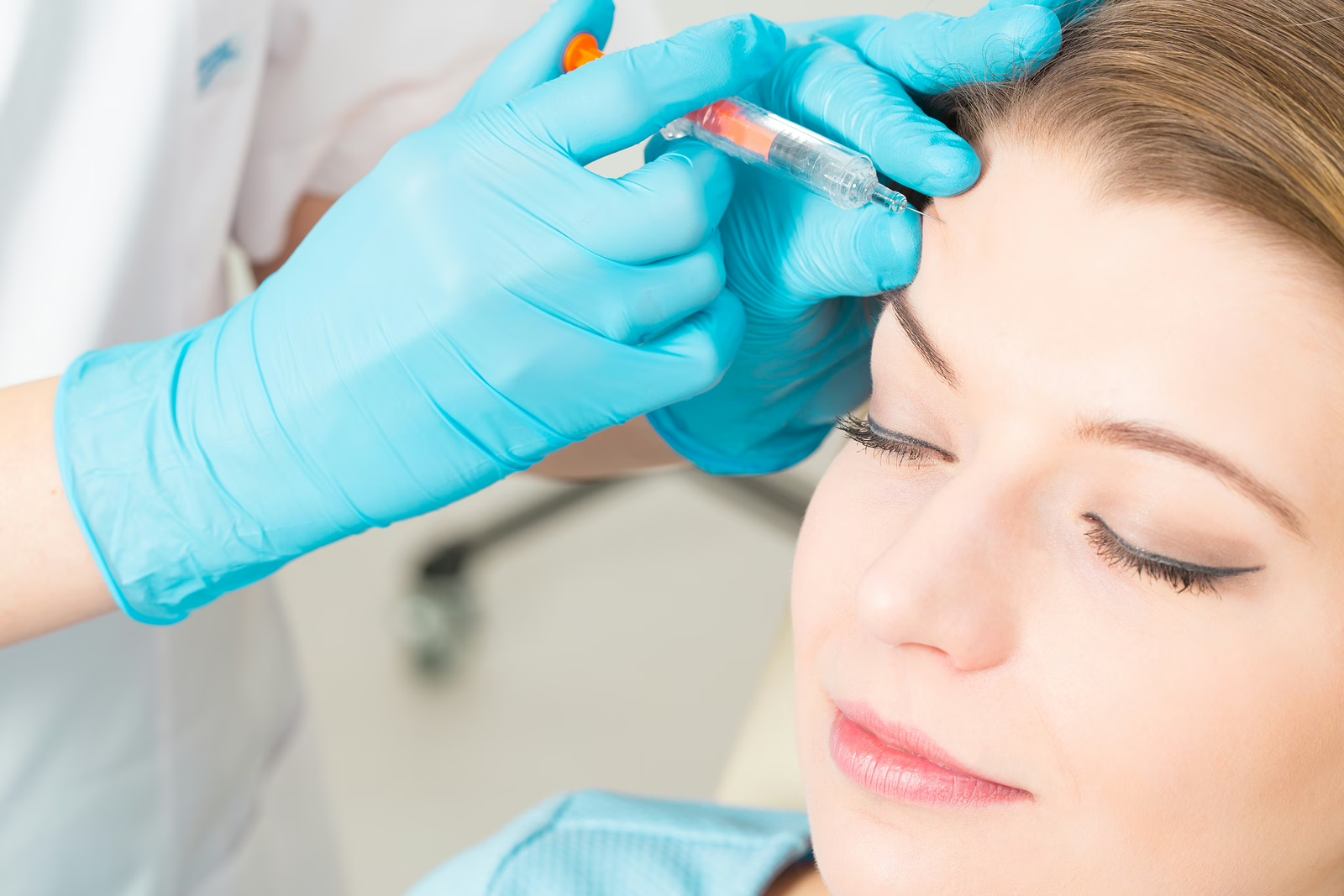
Facial fillers, also known as dermal fillers, help individuals rejuvenate and revitalize their facial appearance without surgery. Many facial fillers are available, and deciding which one to use sometimes can be difficult. Thankfully, there's the CENTER for Advanced Facial Plastic Surgery, a leading provider of facial filler treatments in Beverly Hills.
Dr. Babak Azizzadeh of the CENTER for Advanced Facial Plastic Surgery is internationally recognized for his facial plastic and reconstructive surgery expertise. He learns about his patients and helps them determine which facial filler treatment will enable them to achieve their desired facial rejuvenation results. Today, Dr. Azizzadeh performs the following facial filler treatments:
- Voluma
Voluma is an FDA-approved injectable gel that consists of hyaluronic acid, a substance that occurs naturally in the skin and helps heal wounds, burns and skin ulcers. It adds volume to the cheek area, resulting in a more youthful facial appearance.
- Juvederm XC
Juvederm XC is an injectable gel that smooths moderate to severe parentheses lines and wrinkles around the nose and mouth. It delivers safe, effective results that last up to one year.
- Juvederm Ultra Plus
Juvederm Ultra Plus is an injectable treatment that temporarily adds volume to facial tissue and smooths the facial appearance. It contains a small amount of local anesthetic (lidocaine) to improve the comfort of the injection and reduces the appearance of wrinkles and folds around the nose and mouth.
- Restylane
The Restylane line of hyaluronic acid facial fillers treat facial wrinkles and folds (Restylane and Restylane-L), enhance the plumpness and fullness of the lips (Restylane Silk), smooth lines around the mouth (Restylane Refyne) and add lift and volume to the cheeks (Restylane Defyne). To date, more than 30 million Restylane treatments have been administered globally.
- Radiesse
Radiesse is a wrinkle filler that plumps the skin, stimulates the body's natural collagen production and increases skin volume. It is injected via a small needle and placed under the skin and frequently delivers results that last one year or longer.
- Sculptra
Sculptra is an FDA-approved facial filler that replaces lost collagen that otherwise causes visible signs of aging in the face. It is used to correct shallow to deep facial wrinkles and folds and provides results that can last more than two years.
- Belotero
Belotero products smooth and fill wrinkles in the face. They are commonly used for lip augmentation, skin rehydration and restoration of facial volume.
- Volbella
Volbella is a Juvederm product that adds volume to the lips and smooths perioral lines above the upper lip and around the edge of the lips. It helps boost lip fullness and enhance the appearance of lines around the mouth.
What Is the Best Facial Filler for Cheeks?
Voluma represents a terrific option to restore volume lost in the cheeks. It is designed to fill and lift the cheeks and mid-face.
What Is the Best Facial Filler for Smile Lines?
Juvederm XC can be used to smooth smile lines and other visible signs of aging around the nose and mouth.
What Is the Best Facial Filler for Under the Eyes?
Restylane is the ideal facial filler for under the eyes, since it takes as little water as possible and minimizes the risk of a bluish tint developing under a patient's skin.
What Is the Best Facial Filler for the Lips?
Juvederm XC or Restylane can be used to boost fullness in the lips.
What Is the Best Facial Filler for the Jawline?
Juvederm XC or Restylane can help patients achieve a defined jawline that complements all other facial features.
What Is the Best Facial Filler for the Chin?
Voluma or Restylane are among the best facial fillers to inject into a patient's chin and improve their facial profile.
How to Identify the Right Facial Filler Treatment
Choosing a facial filler treatment can be challenging, but there are several things that patients can do to determine which filler can deliver the best-possible results. These include:
1. Create Treatment Goals
Identify any facial issues that can be addressed with a dermal filler treatment. This allows a patient to determine which areas of the face to treat with a dermal filler. Also, it enables a patient to narrow their search for the ideal facial filler treatment.
2. Understand the Pros and Cons of Facial Fillers
Learn as much as possible about facial fillers, how they work, and their advantages and disadvantages. Many dermal fillers are available, and each can help a patient revitalize their facial appearance. But, not every dermal filler delivers the same results for every patient. If a patient understands the different types of facial fillers, he or she can find one that aligns with their treatment goals.
3. Establish Realistic Treatment Expectations
Recognize that a facial filler is not a permanent facial rejuvenation treatment. Facial fillers deliver results that last several months or years, and the length of time these results remain visible depends on the filler. If a patient wants a long-term facial rejuvenation treatment option, he or she can pursue facelifts, nose jobs, and other surgeries. A patient may also benefit from a facial rejuvenation surgery performed in combination with a facial filler treatment.
4. Review the Cost of Treatment
Request information regarding the cost of a facial filler treatment. Dermal filler costs vary based on the injectable used, frequency of injections, and other factors. Once a patient knows the cost of a facial filler treatment, he or she can budget accordingly.
5. Meet with Dr. Azizzadeh
Schedule a consultation with Dr. Azizzadeh to discuss facial fillers and other facial rejuvenation treatments. Dr. Azizzadeh can meet with a patient and perform an evaluation to determine which facial fillers can be used to rejuvenate the patient's facial appearance. He can also respond to a patient's concerns or questions regarding facial fillers and other facial rejuvenation treatment options.
Which Facial Filler Is Right for Me?
The right facial filler varies from patient to patient. Fortunately, Dr. Azizzadeh takes a comprehensive approach to treat patients and help them get the most out of facial filler procedures.
Dr. Azizzadeh requests a patient consultation prior to performing a facial filler treatment. At this time, Dr. Azizzadeh learns about a patient's anti-aging goals.
A facial filler consultation with Dr. Azizzadeh is a unique experience. Dr. Azizzadeh's top priority is to help each patient get the best-possible facial filler treatment results. Before Dr. Azizzadeh treats patients, he allocates the necessary time and resources to fully grasp a patient's cosmetic goals. Dr. Azizzadeh then teaches patients about the underlying causes of their cosmetic complaints and explains how one or more facial fillers can help them address these issues. Finally, Dr. Azizzadeh answers any patient concerns or questions regarding facial fillers and does everything possible to help a patient make an informed treatment decision.
Additionally, Dr. Azizzadeh recognizes there is no such thing as a "standard" application of facial fillers and customizes each facial filler treatment to a patient's needs. Dr. Azizzadeh studies a patient's face and neck, and by doing so, identifies any issues that can be addressed during a facial filler treatment.
Schedule a Facial Filler Treatment Consultation with Dr. Azizzadeh
Dr. Azizzadeh is dual board-certified in facial plastic and reconstructive surgery and otolaryngology (head and neck surgery). He possesses deep knowledge of the underlying structures of the face and facial nerve, and this knowledge helps his patients achieve natural results from facial filler treatments. To find out more about facial fillers, please contact us today at 310-657-2203 to schedule an in-person or virtual consultation with Dr. Azizzadeh.
What Is a Non-Surgical Nose Job?
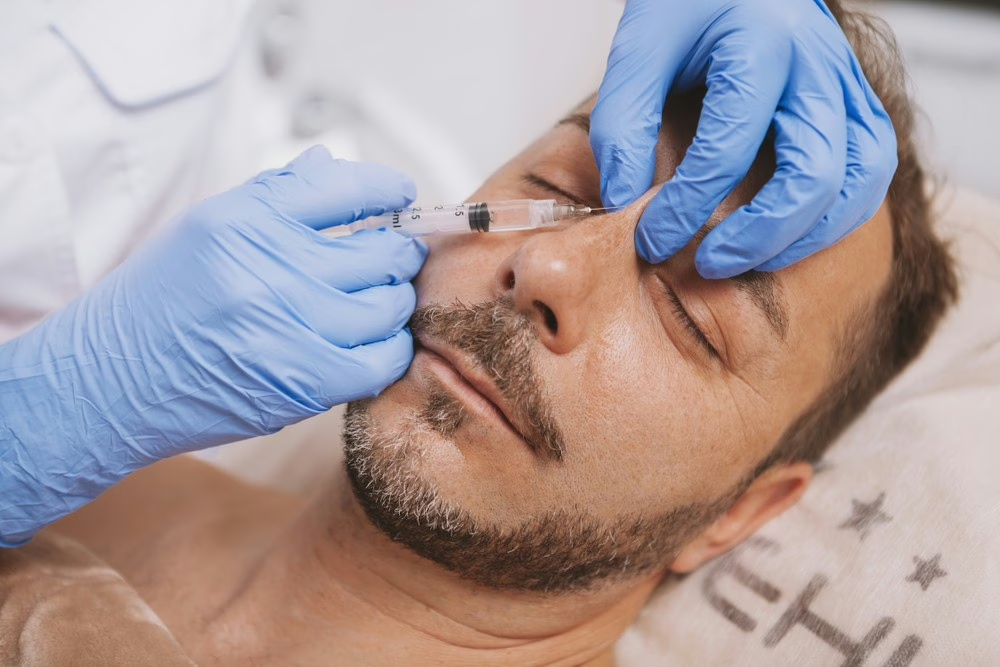
A non-surgical nose job can help a patient revitalize their facial appearance without going under the knife. As such, the treatment can provide a great alternative to a traditional rhinoplasty.
For patients who are considering a non-surgical or surgical nose job, it helps to learn as much as possible about both treatments. In doing so, a patient can conduct a thorough evaluation of the two nose job options and make an informed decision regarding treatment.
How Does a Non-Surgical Nose Job Differ from a Traditional Rhinoplasty?
Whereas rhinoplasty surgery is an outpatient procedure that requires the use of open or closed incisions, a non-surgical nose job involves the use of injectables. In addition, a non-surgical nose job can usually be completed in less time than rhinoplasty surgery. There are typically fewer risks associated with a non-surgical rhinoplasty than a traditional nose job, too.
What Injectables Are Used During a Non-Surgical Nose Job?
Restylane can be used to reshape the nose and ensure it looks proportional to the cheeks, chin, and other facial features. The dermal filler can also be used to improve lip fullness and treat furrows, frown lines, and other visible signs of aging in the face.
Along with Restylane, Belotero can be used as part of a non-surgical rhinoplasty. Belotero temporarily corrects moderate to severe nasolabial folds (wrinkles that extend from the side of the nose to the corner of the mouth) and treats fine lines around the eyes.
The ideal non-surgical nose job injectable varies based on the patient and their desired facial rejuvenation treatment results. To determine which injectable can deliver the best-possible results, a patient requires an evaluation prior to treatment. The evaluation enables a facial plastic surgeon to assess the patient's nose and other facial features, medical history, and facial rejuvenation goals and craft a personalized treatment plan.
Is There a Permanent Non-Surgical Nose Job Treatment Option?
Non-surgical nose job injectables do not deliver permanent results. They can provide results that last several years, but follow-up appointments are usually necessary to ensure that a patient can maintain a natural-looking nose that complements all other facial features.
Is a Non-Surgical Nose Job Worth It?
It can be tough to decide between a non-surgical and surgical nose job. However, patients who consider the following factors are well-equipped to decide if a non-surgical or surgical rhinoplasty meets their expectations:
1. Facial Appearance
A non-surgical nose job makes it simple for a patient to instantly treat minor nose blemishes that impact their facial appearance. Comparatively, rhinoplasty surgery can be used to correct a bulbous nose tip, disproportionate nostrils, and other nose structure issues.
2. Cost
A non-surgical rhinoplasty tends to be more affordable than a traditional nose job. Conversely, a non-surgical nose job requires follow-up treatments at regular intervals, while rhinoplasty surgery delivers permanent results.
3. Treatment Time
A non-surgical nose job can be completed in minutes, and downtime after treatment is minimal. Rhinoplasty surgery often requires two to three hours to complete, and it can take several weeks to recover from treatment.
4. Treatment Results
The final results of non-surgical rhinoplasty appear within a few hours or days of treatment. Traditional nose job patients may need to wait up to a year before their full treatment results become visible.
5. Risks
There are usually fewer risks associated with a non-surgical rhinoplasty in comparison to a surgical nose job. But, there are risks associated with both types of rhinoplasty procedures, and a patient should only pursue a nose job treatment that can be performed by an expert facial plastic surgeon.
Want a Nose Job in Los Angeles? Meet with Dr. Azizzadeh
Dr. Babak Azizzadeh of the CENTER for Advanced Facial Plastic Surgery in Los Angeles can help patients evaluate non-surgical and surgical nose job treatment options. As a world-renowned facial plastic and reconstructive surgeon with experience in non-surgical and surgical rhinoplasty, Dr. Azizzadeh is happy to teach patients about both types of nose jobs. To learn more about nose job treatments or to schedule an in-person or virtual consultation with Dr. Azizzadeh, please contact us online or call us today at 310-657-2203.

The Importance of Doing a Facelift and Neck Lift Together
On their own, a facelift and neck lift are great options to revitalize the appearance of the face, jawline, and neck. But, there may be instances when patients can benefit when both treatments are performed simultaneously.
Dr. Babak Azizzadeh of the CENTER for Advanced Facial Plastic Surgery understands the value of facelift and neck lift procedures. As a world-renowned facial plastic and reconstructive surgeon with many years of industry experience, Dr. Azizzadeh recognizes that a facelift or neck lift performed on its own may be insufficient for a patient. In these cases, Dr. Azizzadeh may craft a custom treatment plan that includes both a facelift and neck lift.
Why Should a Patient Consider a Face and Neck Life Procedure?
There are several reasons why a patient may consider a face and neck lift procedure. These include:
1. Improved Facial Harmony
Dr. Azizzadeh evaluates a patient before he offers a personalized facial rejuvenation treatment recommendation. The evaluation allows Dr. Azizzadeh to study a patient's facial features and identify any visible signs of aging. It also enables Dr. Azizzadeh to learn about a patient's medical history and find out why a facelift, neck lift, or other facial rejuvenation treatments are being considered.
A facelift reduces the appearance of lines, wrinkles, and other visible signs of aging on the face and neck. Comparatively, a neck lift treats excess fat in the lower portion of the face, muscle banding in the neck, and other issues that hamper the appearance of the neck and jawline.
For patients who want to undergo treatment to address signs of aging that negatively affect the appearance of the face, neck, and jawline, a face and neck lift procedure can be beneficial. When performed by Dr. Azizzadeh, patients can undergo a procedure that improves facial harmony. As a result, patients can reap the benefits of an all-in-one procedure that enhances facial symmetry and results in a vibrant, youthful-looking facial appearance.
2. Cost Savings
Combining a facelift and neck lift can provide cost savings in comparison to complete each procedure individually. This is due to the fact that a patient will only need to go under the knife twice to get a consolidated facelift and neck lift.
Dr. Azizzadeh explains the costs associated with a facelift, neck lift, or any other cosmetic procedure before treatment is administered. In addition to searching for ways to provide patients with exceptional results, Dr. Azizzadeh wants to keep each procedure as affordable as possible. Therefore, if Dr. Azizzadeh believes a patient can benefit from a facelift and neck lift, he may recommend a combined procedure. This allows a patient to undergo a simultaneous facelift and neck lift and get the best return on their facial rejuvenation treatment investment.
3. Seamless Procedure
When a facelift and neck lift are combined, patients can undergo a procedure that is both fast and effective.
A typical facelift requires two to six hours to perform, depending on the extent of treatment. Meanwhile, a neck lift usually takes up to three hours to complete, based on the issues that affect the appearance of the neck and jawline.
Dr. Azizzadeh can perform a facelift and neck lift together that requires less time to complete than if he were to complete each procedure separately. Furthermore, the results of a facelift and neck lift will become visible within months of their procedure, particularly for patients who understand how to properly recover from treatment.
What to Expect During Recovery from a Facelift and Neck Lift
The recovery from a facelift and neck lift procedure takes several months to complete. Initially, a patient will have bandages in place around the face and neck to minimize swelling, along with small tubes near the ears. A patient may require assistance from a family member or friend for at least the first 24 hours after their procedure as well; this ensures that the patient can safely return home following treatment.
Dr. Azizzadeh provides instructions to ensure a patient is well-equipped to limit the risk of complications during facelift and neck lift recovery. Post-treatment instructions provided by Dr. Azizzadeh include avoiding:
- Use of makeup immediately following treatment
- Strenuous activity for at least a few weeks after treatment
- Direct sun exposure to the incision site for at least three weeks after treatment; following this period, patients should apply sunblock with a sun protection factor (SPF) of 30 or higher to protect the skin in this area
Dr. Azizzadeh also requests follow-up appointments to monitor his patient's progress after a facelift and neck lift. If a patient experiences any pain or discomfort or has concerns or questions following treatment, Dr. Azizzadeh encourages him or her to reach out for assistance, too.
Is an Upper or Lower Face and Neck Lift Right for You?
A combined facelift and neck lift procedure can rejuvenate the appearance of the face, neck, and jawline, and it can deliver results that last 10 years or longer. However, the procedure is not intended for every patient. To determine if a facelift, neck lift, or both procedures can be beneficial, it is important to consult with Dr. Azizzadeh.
Dr. Azizzadeh can examine a patient and determine the best course of action to revitalize the facial appearance. If a patient is dealing with facial volume loss, facial expression lines, or other facial blemishes, Dr. Azizzadeh may recommend a facelift. On the other hand, if a patient is coping with a double chin, droopy neck skin, or fatty jowls, Dr. Azizzadeh may recommend a neck lift. If a patient is dealing with a combination of face, neck, and/or jawline issues, Dr. Azizzadeh may recommend both a facelift and neck lift.
Meeting with Dr. Azizzadeh offers a learning opportunity for patients who are considering facelifts, neck lifts, and other facial rejuvenation treatments. To find out more about these procedures or to request a consultation with Dr. Azizzadeh, please contact us online or call us today at 310-657-2203.
Juvederm vs Botox: Which Is Better?
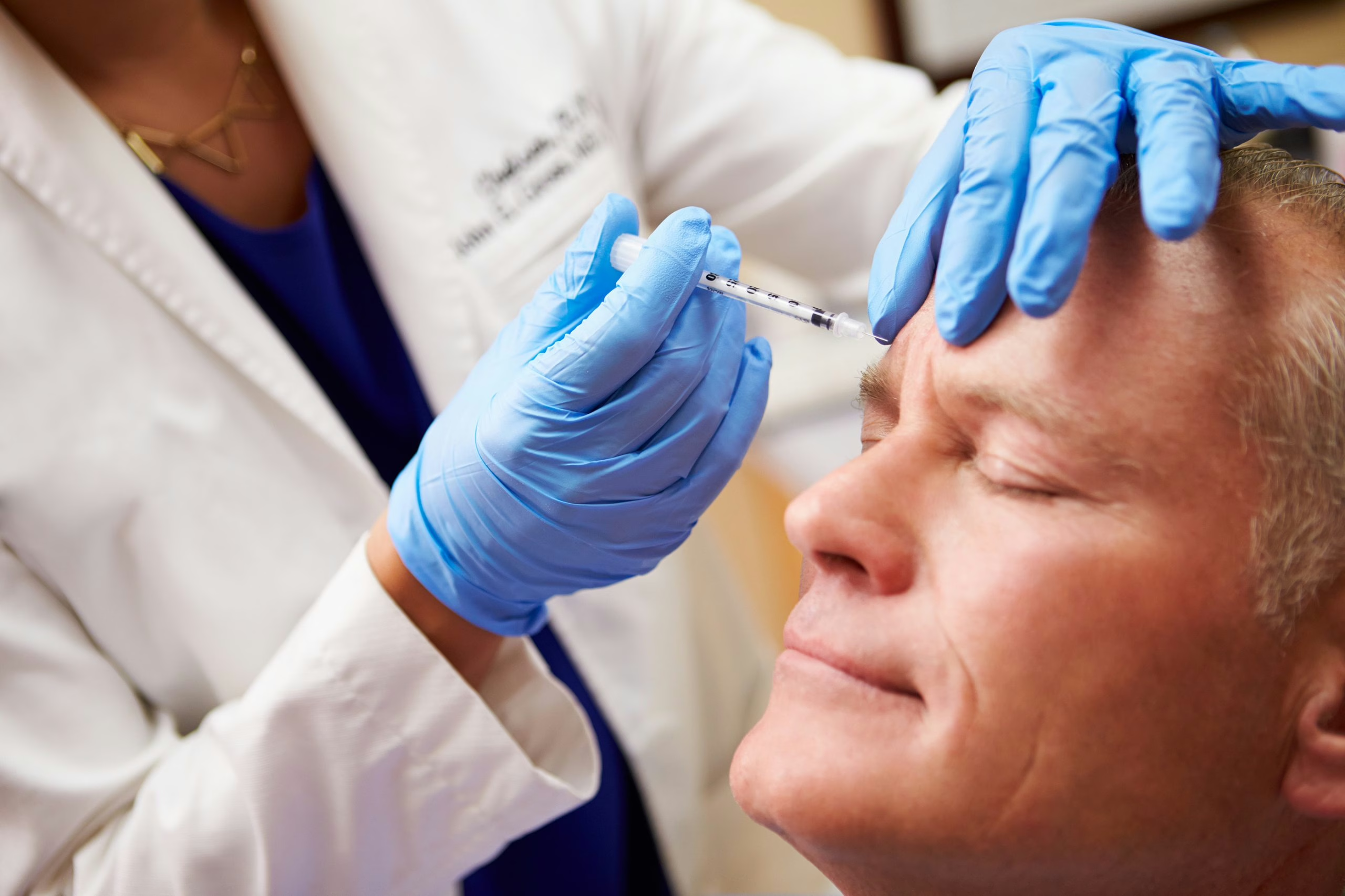
In terms of non-surgical facial rejuvenation treatments, Juvederm and Botox are two of the most-popular options available. Both treatments have been shown to enhance the facial appearance, and neither requires a patient to go under the knife. Plus, Juvederm and Botox can be safe and effective, particularly when either treatment is performed by globally recognized facial plastic and reconstructive surgeon Dr. Babak Azizzadeh of the CENTER for Advanced Facial Plastic Surgery in Los Angeles.
Dr. Azizzadeh is a Harvard-trained facial plastic and reconstructive surgeon who has performed many Juvederm and Botox treatments to date. He understands the challenges associated with deciding between Botox and Juvederm and strives to educate his patients about both treatment options. That way, a patient can weigh the pros and cons of Botox, Juvederm, and other non-surgical and surgical facial rejuvenation procedures and choose the right treatment option to accommodate their personal needs.
What Is the Difference Between Botox and Juvederm?
Botox is an injectable cosmetic treatment that consists of bacterium clostridium botulinum. It was first approved by the U.S. Food and Drug Administration (FDA) for therapeutic use in 1989 and was later approved for use as a temporary aesthetic treatment to correct moderate to severe frown lines. Additionally, the FDA made Botox its first cosmetic treatment approved to address crow's feet and forehead lines.
Research has shown that Botox can be used to treat facial wrinkles and other visible signs of aging in the face. Studies have also indicated that Botox injections can deliver reliable results that last up to four months.
Botox research is ongoing, and to date, at least 528 peer-reviewed scientific and medical journals have published articles about the use of this injectable to treat various medical conditions. Meanwhile, Botox is currently approved for use in 98 countries, and it consistently ranks among the top minimally invasive cosmetic procedures performed in the United States annually.
Like Botox, Juvederm is an injectable treatment that can revitalize the facial appearance. Juvederm works quickly to reduce or eliminate facial wrinkles, frown lines, and other issues that can make people look older than their actual age. The injectable has received FDA approval, too.
What separates Juvederm from Botox: Juvederm consists of a family of dermal fillers. Juvederm has the highest concentration of cross-linked hyaluronic acid, a naturally occurring substance that can heal burns, wounds, and skin ulcers, among all types of dermal fillers. It also delivers results that can last six months or longer.
Is Juvederm Better Than Botox? 3 Factors to Consider
People who are considering Juvederm or Botox should evaluate several factors before they make their final decision. Key factors to consider relative to both non-surgical facial rejuvenation treatments include:
1. Safety
Juvederm, Botox, or any cosmetic facial procedure should only be performed if it can be safely administered by an expert facial plastic and reconstructive surgeon. Otherwise, patients are susceptible to a wide range of side effects.
Following Juvederm injections, patients may experience redness and discoloration of the skin, itching, tenderness, and pain. These symptoms are usually temporary and subside on their own within a few days of treatment.
The side effects of Botox are similar to those associated with Juvederm. Botox injections can cause temporary skin redness, tenderness, and swelling that lasts up to a week after treatment.
Dr. Azizzadeh only recommends a cosmetic procedure if he believes the treatment can be safely performed. If Dr. Azizzadeh believes Juvederm, Botox, or any other cosmetic procedure is too risky, he recommends alternative treatment options.
2. Convenience
It generally won't take long to undergo a Juvederm or Botox treatment. Also, patients will typically notice the initial results of a Juvederm or Botox procedure shortly after treatment.
A Juvederm procedure requires up to one hour to complete; the amount of time necessary to perform the procedure depends on the areas of the face being treated. The results of a Juvederm procedure become visible within about two to three weeks of treatment; at this time, a patient's facial swelling has fully subsided.
Botox can be performed in minutes, with a typical procedure requiring 5 to 15 minutes to complete. The initial results of Botox often become visible within three to four days of treatment. Patients will see the full results of Botox within 10 to 14 days of their procedure.
Both Juvederm and Botox are convenient, but regardless of which non-surgical procedure a patient chooses, the treatment should always be performed by a highly trained facial plastic and reconstructive surgeon. This helps patients minimize the risk of complications and increase their chances of achieving their intended treatment results.
3. Cost
The cost of Juvederm and Botox varies, due to the fact that every patient has unique treatment goals. Dr. Azizzadeh explains the costs associated with Juvederm and Botox before he performs either treatment. He can also provide details about the frequency of follow-up Juvederm and Botox injections and their potential costs.
The Bottom Line on Juvederm vs. Botox
When it comes to facial rejuvenation procedures, there is no such thing as a "can't-miss" treatment. Instead, patients should evaluate Juvederm, Botox, and other cosmetic procedures. This allows patients to learn about different types of cosmetic procedures, how they are performed, and their associated benefits and risks.
It also helps to meet with Dr. Azizzadeh to discuss facial rejuvenation procedures. Dr. Azizzadeh is happy to examine a patient and offer a personalized facial rejuvenation treatment recommendation. He can respond to a patient's concerns or questions regarding facial rejuvenation procedures as well. To learn more about Juvederm, Botox, or other cosmetic procedures or to schedule a consultation with Dr. Azizzadeh, please contact us online or call us today at 310-657-2203.
Microneedling vs Chemical Peel: Which Is Better?
Microneedling and chemical peels are non-surgical cosmetic procedures designed to help patients correct facial lines and wrinkles. At first glance, both facial rejuvenation treatments may seem similar. But, upon close examination, there are several notable differences between them.
People who are considering microneedling or chemical peels should consult with an expert facial plastic and reconstructive surgeon like Dr. Babak Azizzadeh of the CENTER for Advanced Facial Plastic Surgery in Beverly Hills. Dr. Azizzadeh is world-renowned for his expertise in head and neck surgery and facial plastic and reconstructive surgery, and he can provide patients with comprehensive insights into microneedling, chemical peels, and other facial rejuvenation treatments. As a result, Dr. Azizzadeh can make it easy for a patient to determine if microneedling, a chemical peel, or any other cosmetic procedure can deliver their desired results.
Microneedling for Wrinkles: How Does It Work, and Is It Effective?
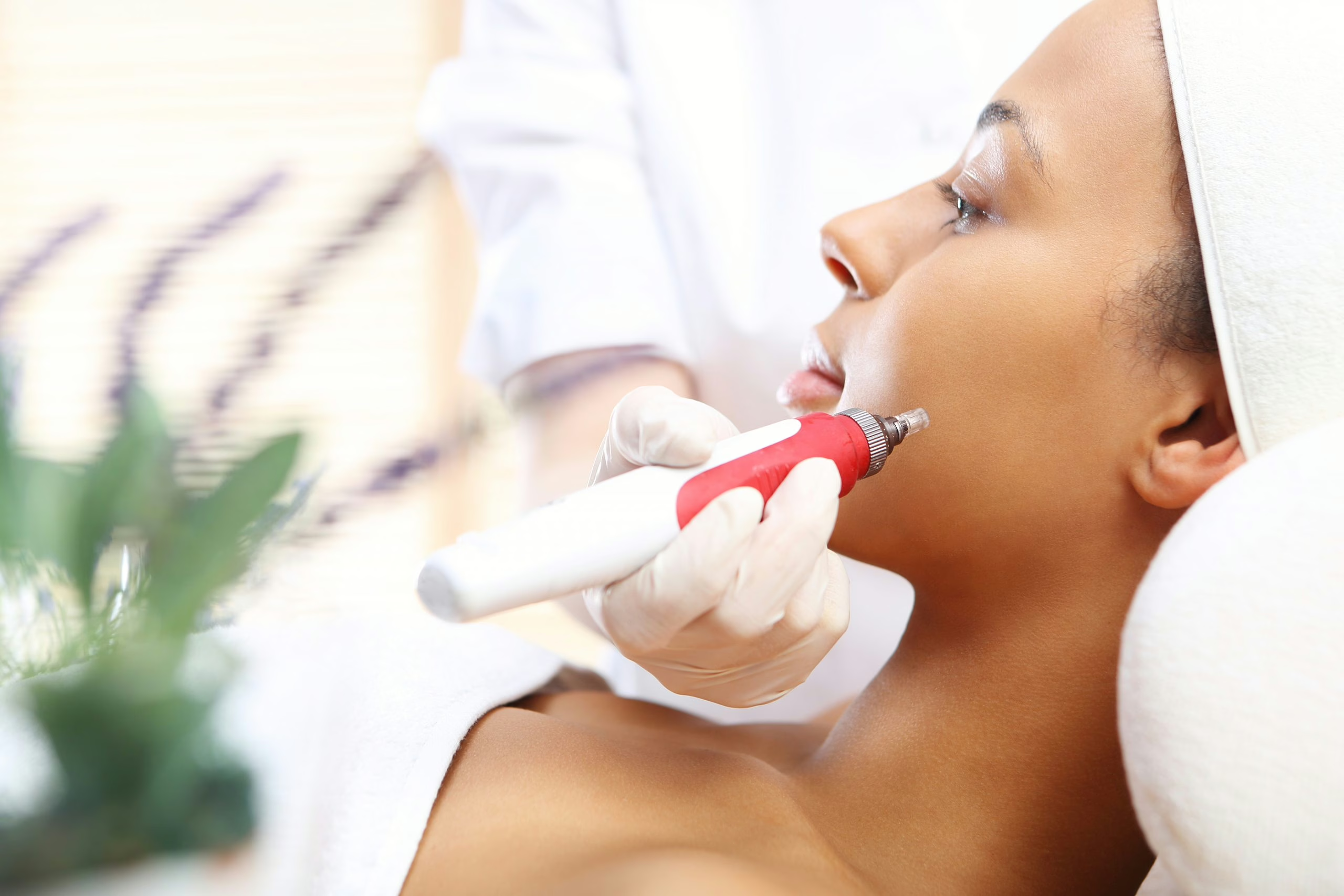
Microneedling, also referred to as collagen induction therapy, involves the insertion of tiny needles into different areas of the face. The needles create micro-perforations that range from 0.5 mm to 2.5 mm in size. These micro-perforations enable platelet-rich plasma (PRP) or other products to reach the deep layers of the skin and stimulate collagen and elastin growth. In doing so, microneedling can tighten and rejuvenate skin on the face and neck and reduce the appearance of scars and other skin blemishes.
The ideal candidate for microneedling is anyone who want to undergo a minimally invasive procedure to bolster their facial appearance. Research has shown that microneedling can be used to improve skin laxity and texture and correct facial lines and wrinkles. Microneedling also has minor side effects in comparison to laser ablation, radiofrequency, and other invasive facial rejuvenation treatments; in one study, researchers found that patients only experienced minimal pain and discomfort after a microneedling treatment.
Although microneedling can be beneficial, the procedure is not intended for all people who are considering non-surgical facial rejuvenation. Dr. Azizzadeh may rule a patient ineligible for microneedling if any of the following medical conditions are present:
Acne, cold sores, or another active bacterial or fungal infection
- Cardiac abnormalities
- Collagen vascular diseases
- Hemorrhagic disorders
- Hemostatic dysfunction
- Keloid scars
- Scleroderma
If Dr. Azizzadeh deems a patient to be a good candidate for microneedling, he may recommend the procedure be performed in combination with other treatments as well. For instance, Dr. Azizzadeh may recommend microneedling and laser skin resurfacing be completed at the same time to fully revitalize the facial appearance.
Chemical Peel for Scars and Other Skin Issues: Here's What You Need to Know
A chemical peel can be used to treat skin on the face, neck, and hands. During a chemical peel, a solution is applied to a patient's skin, which causes the skin to blister. Next, the solution is peeled off the skin. This results in new skin that is generally smoother and has fewer wrinkles.
Chemical peels can be used to treat mild scars, acne, sun-damaged skin, and fine lines around the eyes and mouth. The ideal candidate for a chemical peel usually has fair skin and light hair. However, people with dark skin can also benefit from chemical peels, depending on the nature of their skin issue.
Three types of chemical peels are available: light, medium, and deep. The right chemical peel treatment depends on the severity of a patient's skin issues. Furthermore, the recovery time associated with a chemical peel varies based on the type of peel performed.
The effectiveness of a chemical peel varies. Chemical peel results can include improved skin texture and tone and fewer fine lines and wrinkles. The results of a chemical peel are typically subtle but become more transparent in patients who undergo follow-up treatments.
Microneedling vs. Chemical Peel: How to Decide Which Treatment Is Right for You
It can be tough to determine if microneedling or a chemical peel is the best option to revitalize the facial appearance. Fortunately, there are several factors that can be evaluated to help people streamline their decision-making process. These factors include:
1. Risks
There are risks associated with microneedling, chemical peels, and other cosmetic procedures, and these dangers must be closely examined. With microneedling, potential treatment complications include bleeding, infection, bruising, and skin irritation. Comparatively, with a chemical peel, the risks include scarring, skin discoloration, infection, and heart, liver, or kidney damage.
2. Downtime
The downtime associated with microneedling and chemical peels is usually minimal. For microneedling patients, Dr. Azizzadeh recommends they take the remainder of the day off from work or avoid other strenuous activities after their procedure. These patients may experience skin sensitivity for a few days after a microneedling treatment, and they may require additional sunscreen when they go outdoors to limit the impact of this issue. Following a chemical peel, a patient may need up to two weeks to fully recover, depending on the type of peel administered.
3. Cost
The cost of a microneedling or chemical peel treatment depends on the patient. Microneedling patients may require three to six sessions to achieve the full results of treatment, and they are billed per session. Chemical peel costs can differ based on the type of peel.
Want to Explore Facial Rejuvenation Treatment Options? Schedule a Consultation with Dr. Azizzadeh
Dr. Azizzadeh can teach patients about microneedling, chemical peels, and other non-surgical and surgical facial rejuvenation treatments. He is a Harvard-trained and dual board-certified facial plastic and reconstructive surgeon, and he is happy to provide insights into a variety of cosmetic procedures. As such, Dr. Azizzadeh can help a patient decide if microneedling, a chemical peel, or another cosmetic procedure aligns with their facial rejuvenation treatment goals. To learn more about our cosmetic treatment options or to schedule a consultation with Dr. Azizzadeh, please contact us online or call us today at 310-657-2203.
How Long Does a Facelift Last?
Many patients believe a facelift delivers permanent results, but that is simply not the case. To understand how long a patient should expect their facelift results to last, it is important to consult with an expert facial plastic and reconstructive surgeon like Dr. Babak Azizzadeh of the CENTER for Advanced Facial Plastic Surgery in Los Angeles.
Dr. Azizzadeh is a highly trained and experienced facial plastic and reconstructive surgeon who knows the ins and outs of facelift surgery. He performs in-depth facelift procedures designed to help patients achieve the optimal results. Dr. Azizzadeh also provides tips and recommendations to ensure a patient can maintain their facelift surgery results long after treatment.
How Long Does a Regular Facelift Last?
A regular facelift delivers results that last about 10 years. The effectiveness of a regular facelift varies based on several factors, including:
1. Surgeon
A facial plastic and reconstructive surgeon should tailor a facelift to their patient. Otherwise, a patient cannot achieve the full results of treatment.
Dr. Azizzadeh crafts a custom facelift treatment plan to accommodate his patient. This plan accounts for his patient's facial features and ways to ensure these features bring balance to the facial appearance. With a plan in place, Dr. Azizzadeh can perform a facelift designed to ensure that his patient can enjoy the results of treatment for 10 years or longer.
2. Surgery Technique
During a facelift, a facial plastic and reconstructive surgeon may use an incision that extends from a patient's temples to the lower scalp. Or, other surgery techniques involve a small incision that begins around the hairline and wraps around the front of a patient's ear or a neck lift incision that runs from the front of the ear lobe to the lower scalp.
The surgery technique used during a facelift depends on the surgeon performing the procedure, and it can impact the overall results of treatment. But, an incision is required, as this enables the surgeon to elevate the facial skin, tighten the underlying tissue and muscles, and sculpt, remove, or redistribute fat accordingly.
Dr. Azizzadeh uses modern and advanced facelift surgery techniques. He understands the importance of personalizing a facelift to his patient, and as such, determines which technique can be used to safely perform the surgery and help the patient achieve their requested results.
3. Recovery
On average, facelift recovery takes a few weeks. During this time, a patient may experience bruising, swelling, and mild to moderate pain. These issues will eventually subside, to a point where a patient can resume work, school, and other everyday activities. Within about six to eight weeks of a facelift, a patient will fully heal.
Patients who follow the postoperative instructions provided by their facial plastic and reconstructive surgeon are well-equipped to prolong the results of their facelift. Dr. Azizzadeh typically recommends patients keep their head elevated, clean their incisions, and keep their incisions out of direct sunlight as much as possible immediately following a facelift. These represent only a few of the recommendations that Dr. Azizzadeh provides to help his patients lengthen their facelift surgery results.
How Long Does a Mini Facelift Last?
A mini facelift, i.e. a facelift procedure that tightens facial tissue and treats mild jowling and sagging skin, usually delivers results that last two to six years. This type of facelift surgery involves shorter incisions in comparison to those used during a regular facelift. As a result, a mini facelift often has a shorter recovery time in comparison to the recovery period associated with a traditional facelift.
To decide if a mini or regular facelift is the best facial rejuvenation treatment option, a patient should consult with Dr. Azizzadeh. This allows a patient to receive an evaluation in which Dr. Azizzadeh can learn about their facial rejuvenation treatment goals and review their medical history and facial appearance. Then, Dr. Azizzadeh can help a patient decide if a mini or regular facelift or other facial rejuvenation procedures can be beneficial.
How Long Does a Liquid Facelift Last?
A liquid facelift is a non-surgical alternative to a regular facelift, and it involves the use of injectables and other treatments to revitalize the facial appearance. In terms of how long a liquid facelift will last, the results vary based on the type of treatment performed.
For instance, Botox is among the most-popular injectables used during liquid facelifts, and it delivers results that generally last three to four months. Comparatively, facial fillers can provide liquid facelift results that last up to 18 months. Chemical peels can also be used during liquid facelifts, and they provide results that last an average of one to two months.
Regardless of which type of liquid facelift treatment is used, a patient must remember that all liquid facelifts deliver temporary results. Thus, patients will need to return for follow-up liquid facelift appointments, so they maintain a revitalized facial appearance.
Dr. Azizzadeh can help patients explore different liquid facelift treatment options. Since Dr. Azizzadeh customizes a treatment plan to his patient, he can ensure that each liquid facelift patient can undergo a treatment that delivers exceptional results.
Want to Learn More About Facelift Procedures? Schedule a Consultation with Dr. Azizzadeh
When it comes to getting long-lasting results from a facelift procedure, it is beneficial to partner with Dr. Azizzadeh. As a globally recognized, Harvard-trained, and dual board-certified facial plastic and reconstructive surgeon, Dr. Azizzadeh can perform a facelift procedure that helps a patient rejuvenate the eyes, cheeks, and other facial features. Dr. Azizzadeh can also help a facelift patient maximize their treatment results. To learn more about facelift procedures or to schedule a consultation with Dr. Azizzadeh, please contact us online or call us today at 310-657-2203.

Choosing the Right Facial Plastic Surgeon: Best Questions to Ask
Facial plastic surgeons possess a wide range of specializations and skills. For people who are looking to undergo facial plastic surgery, it is essential to choose a facial plastic surgeon who knows how to safely and effectively perform a desired procedure. This ensures a patient can work with an expert facial plastic surgeon to achieve his or her desired treatment results.
Are You Considering a Facial Plastic and Reconstructive Procedure? 15 Questions to Ask a Plastic Surgeon
When it comes to choosing the right facial plastic surgeon, there is no need to take shortcuts. Now, let's look at 15 questions to use to evaluate a facial plastic surgeon.
1. Are you a member of the American Board of Otolaryngology — Head and Neck Surgery (ABOHNS)?
ABOHNS is a founding member of the American Board of Medical Specialties. It offers continuing certification designed to help facial plastic surgeons reduce the risk of medical errors and improve patient outcomes.
Dr. Azizzadeh is ABOHNS-certified, and he continues to pursue new training opportunities and certifications. As one of the world's leading facial plastic and reconstructive surgeons, Dr. Azizzadeh constantly explores innovative ways to bolster his expertise and deliver outstanding patient results.
2. Are you a member of the American Board of Facial Plastic and Reconstructive Surgery (ABFPRS)?
ABFPRS is dedicated to enhancing the quality of medical and surgical treatment in the United States. The organization specializes in education, qualification, training, review, and certification for facial plastic and reconstructive surgeons.
Dr. Azizzadeh is an ABFPRS-certified facial plastic and reconstructive surgeon. He also continues to explore ways to provide his facial plastic surgery patients with exceptional care and support.
3. Are you board-certified by the American Board of Plastic Surgery (ABPS)?
ABPS promotes safe, ethical, and efficacious plastic surgery to the public — and only the best surgeons earn ABPS certification. To become ABPS-certified, a surgeon must meet training requirements, as well as pass surgery examinations. Additionally, a surgeon must use cosmetic surgical principles to help patients improve their overall appearance and optimize the results of reconstructive procedures.
Facial plastic and reconstructive surgeon Dr. Babak Azizzadeh of the CENTER for Advanced Facial Plastic Surgery in Beverly Hills is board-certified by ABPS. Dr. Azizzadeh has comprehensive facial plastic surgery expertise and works closely with patients to help them accomplish their treatment goals.
4. Are you a member of the American Society of Plastic Surgeons (ASPS)?
ASPS is the world's largest plastic surgery specialty organization. It was founded in 1931 and represents 93% of all U.S. board-certified plastic surgeons. Like ABPS, ASPS is committed to patient safety, and it promotes high standards of training and ethics among plastic surgeons. Dr. Azizzadeh is an ASPS member, and by choosing Dr. Azizzadeh for facial plastic surgery, an individual can work with a facial plastic and reconstructive surgeon who will take a safe, dependable approach to any procedure.
5. How many surgeries have you performed?
Professional experience is key, particularly when it comes to choosing the right surgeon for facial plastic surgery. A facial plastic surgeon who has performed many procedures over the years likely has perfected his or her surgery technique. Meanwhile, this surgeon understands the ins and outs of different facial plastic surgery procedures and knows what it takes to help his or her patient achieve the best results.
The best facial plastic surgeons understand what it takes to perform a procedure correctly, thanks in part to their comprehensive industry experience. These surgeons won't leave anything to chance when they perform facial plastic and reconstructive procedures, either. Instead, they learn as much as possible about patients and only administer treatment if they believe it can be both safe and effective.
6. Do you have hospital privileges to perform a surgical procedure?
A facial plastic surgeon performs procedures in an operating room. However, if complications arise during surgery, it is paramount that this surgeon can take his or her patient to the hospital. Most hospitals have strict requirements relating to facial plastic surgeon training and safety, and as such, will only grant operating privileges to surgeons who meet these mandates.
It is important to note that there are risks associated with every facial plastic and reconstructive surgery, regardless of the surgeon who performs the procedure. But, facial plastic surgeons who devote the time and resources necessary to obtain hospital privileges show they are willing to take additional precautions to help keep their patients safe.
7. Do you use anesthesia during facial plastic surgery?
Anesthesia helps limit pain and improve a patient's facial plastic surgery experience. It must be provided by a highly trained specialist who monitors its effects on a patient.
Two types of anesthesia may be used during facial plastic and reconstructive procedures: local and general varieties. Local anesthesia is typically used during minor procedures, and it helps numb a portion of the face. General anesthesia is usually administered via IV, and it puts a patient in a sleep-like state.
8. Can I see before and after photos of past patients?
Choosing the right facial plastic surgeon requires a person to evaluate a surgeon's prior work. By asking to see before and after photos of past patients, an individual can get a good idea about how a facial plastic surgeon helps a patient rejuvenate their facial appearance.
9. Can you provide patient references?
It often helps to speak directly to a facial plastic surgeon’s past clients before choosing him or her to perform a procedure. This provides insights into what it will be like to work with a facial plastic surgeon throughout the surgery process. Plus, it offers a glimpse into different aspects of the patient experience.
10. What is your complication rate associated with facial plastic surgery?
Both a facial plastic surgeon and his or her patient expect the best results from a procedure. At the same time, facial plastic surgery complications sometimes occur, and understanding the worst-case scenarios associated with a surgery helps an individual make an informed decision about a surgeon. Thus, it is essential to ask a facial plastic surgeon about his or her complication rate — that way, this individual can feel confident in his or her surgeon's ability to limit risk during treatment.
11. How much will it cost to undergo facial plastic surgery?
Anesthesia fees, operating room costs and other facial plastic surgery expenses add up quickly. In most instances, a facial plastic surgeon can provide a written breakdown of all costs associated with surgery. He or she can also explain facial surgery fees and respond to any billing concerns or questions.
Ask a facial plastic surgeon if a procedure is covered by insurance as well. There may be instances when a facial plastic and reconstructive procedure is deemed medically necessary. In these cases, an insurance provider may cover some of or all of the costs associated with treatment.
12. Is there any downtime after treatment?
The downtime associated with a facial plastic and reconstructive procedure varies. But, a facial plastic surgeon can explain how long it usually takes a patient to recover from treatment. This can help a patient prepare for the days and weeks following a procedure. The patient can request time off from work or school and make other preparations for their recovery period, too.
13. When should I expect to see the full results of treatment?
The length of time required before the results of a facial plastic and reconstructive procedure become transparent varies. A facial plastic surgeon will help a patient establish realistic expectations for treatment. The surgeon will also request follow-up appointments after a procedure to ensure that the patient can achieve the full results of treatment as quickly as possible.
14. What happens if a facial plastic and reconstructive procedure does not deliver the intended results?
Despite a facial plastic surgeon's best efforts, there may be times when a facial plastic and reconstructive procedure does not help a patient revitalize their facial appearance. Remember, there is no guarantee with facial plastic surgery. In the event that a facial plastic and reconstructive surgery does not deliver the intended results, the surgeon can evaluate the patient and create a new treatment plan.
15. Why should I choose you over other facial plastic surgeons?
The ideal facial plastic surgeon possesses the right combination of education, experience and expertise. This surgeon is also willing to talk to a patient and address his or her facial plastic surgery concerns and questions at any time. As a result, the ideal facial plastic surgeon goes the extra mile to support a patient at every stage of treatment.
Select Dr. Azizzadeh for Facial Plastic and Reconstructive Surgery in Los Angeles
Dr. Azizzadeh understands the challenges commonly associated with choosing the right surgeon. To address these challenges, Dr. Azizzadeh takes a holistic approach to patient care. Dr. Azizzadeh is globally recognized for his facial plastic and reconstructive surgery expertise, and he is happy to share his knowledge with patients. He also tailors each surgery to his patient to ensure every patient receives a personalized treatment.
Dr. Azizzadeh is available to meet with an individual and discuss facial plastic surgery options. To schedule a consultation with Dr. Azizzadeh, please contact us online or call us today at 310-657-2203.
Cosmetic Procedures for Men: Surgical & Non-Surgical
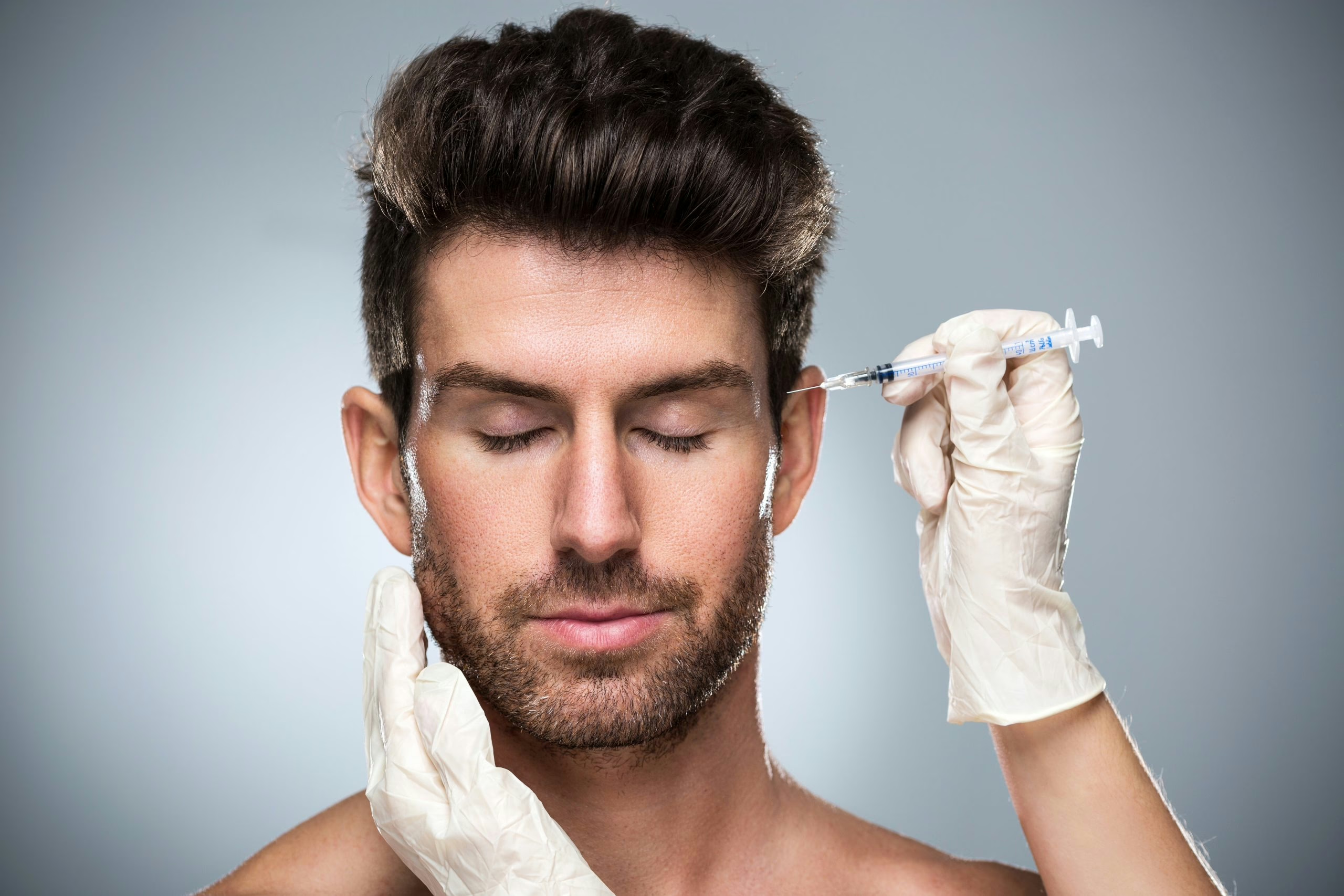
Men can undergo surgical and non-surgical procedures to revitalize facial appearance. Click on the image below to view the top cosmetic procedures for men.
Explore Surgical and Non-Surgical Cosmetic Procedures for Men Today
Dr. Babak Azizzadeh of the CENTER for Advanced Facial Plastic Surgery in Los Angeles is available to teach men about surgical and non-surgical cosmetic procedures. To learn more or to schedule a consultation with Dr. Azizzadeh, please contact us online or call us today at 310-657-2203.
How to Treat Sunspots and Age Marks
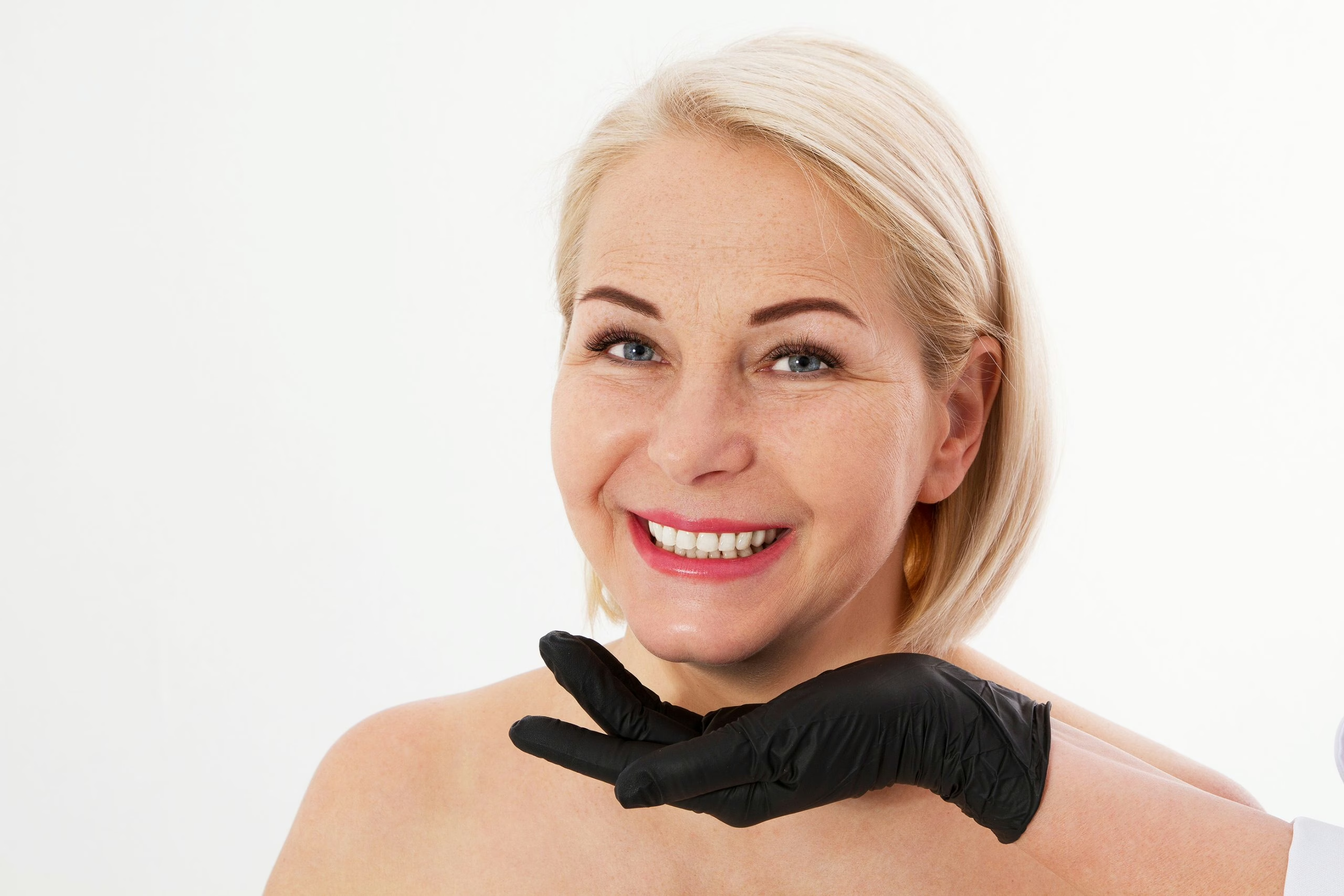
Sunspots, also referred to as age spots, are dark areas that form on the skin due to excess exposure to sunlight. They are generally harmless but can have a cosmetic impact on the facial appearance.
Dr. Babak Azizzadeh of the CENTER for Advanced Facial Plastic Surgery in Los Angeles is world-renowned for his expertise in treating sunspots. He is available to teach patients about sunspots and other cosmetic issues and identify ways to correct these problems.
What Are Sunspots?
Sunspots are age marks on the face and other areas of the body. They develop due to prolonged exposure to the sun's ultraviolet (UV) rays.
If people spend too much time in the sun without using sunscreen or other forms of sun protection, they may experience sunspots. In these instances, people are also increasingly susceptible to wrinkles, sunburns, and other forms of sun-damaged skin.
People with light skin are more likely to experience sunspots than others. Also, people who have a history of intense sun exposure or sunburns may notice age spots at different points in their lives.
Sunspots typically range from tan to dark brown, and people age 50 and older are more prone to age spots than others. Additionally, even though sunspots may look dangerous, they are usually not cancerous.
Oftentimes, a sunspot is flat and oval, and it ranges from about the size of a freckle to about ½ in. People may notice one sunspot or multiple sunspots, and they can form on the face, hands, shoulders, arms, and other parts of the body that are exposed to sunlight for an extended period of time.
Are Sunspots Preventable?
To prevent sunspots, people must limit their sun exposure. The sun's UV rays can penetrate the outer layer of the skin. When this happens, UV rays can enter the deep layers of the skin and destroy or damage skin cells. As such, UV rays can cause sunspots and other short- and long-term skin damage.
There are many things that people can do to minimize the risk of damage from UV rays, such as:
1. Avoid the Sun During Peak Hours
The sun's UV rays are strongest between 10 a.m. and 2 p.m. Therefore, people should try to stay in the shade or indoors as much as possible during this time frame to limit the risk of sun-damaged skin.
2. Apply Sunscreen Regularly
Use sunscreen that has a sun protection factor (SPF) of 15 or higher and apply it at least 15 minutes before going outdoors. Sunscreen should be used on the face and other parts of the body that will be exposed to sunlight. It should also be applied generously and reapplied at least every two hours.
3. Wear Appropriate Clothing and Accessories
A broad-brimmed hat, tightly woven clothing, and other apparel and accessories can help protect the skin against the sun's UV rays. Clothing and accessories with an UV protection factor (UPF) of 40 or higher is usually ideal.
There may be times when people do their part to prevent sunspots but still experience age spots and other skin problems. At these times, it is important to receive a proper diagnosis and pursue treatment options. This ensures that people can get the help they need to address any skin issues before they cause long-lasting damage.
How to Diagnose Sunspots
At the first sign of sunspots or any other skin changes, people should meet with a doctor. Then, a doctor can evaluate the patient and determine the best treatment option to correct any skin issues.
To diagnose sunspots, a doctor will visually inspect a patient. The doctor will examine the patient's age spots and any other skin issues. Furthermore, the doctor will review the patient's medical history to find out if he or she has previously dealt with any skin problems.
Along with a visual inspection of a patient, a doctor may request a skin biopsy to properly diagnose sunspots. The biopsy usually involves removing a small sample of a patient's skin and examining it in a lab. Thanks to the biopsy, the doctor can determine if the patient is coping with a sunspot or another skin issue.
How to Treat Sunspots on the Face
Laser skin resurfacing has become a top option to treat sunspots on the face and other areas of the body. In addition to reducing or eliminating age spots, laser skin resurfacing helps patients correct wrinkles, scars, and other skin blemishes.
Dr. Azizzadeh provides DOT Deka laser treatments to patients coping with sunspots. He first evaluates a patient to learn about their age spots and any other skin issues. If Dr. Azizzadeh believes his patient can benefit from laser skin resurfacing, he crafts a plan to perform a DOT Deka laser treatment.
Before a DOT Deka laser treatment is performed, Dr. Azizzadeh requests a patient stop using hydroquinone and any other retinol products. He asks his patients to stop using these products at least five days prior to a laser skin resurfacing procedure. Dr. Azizzadeh also provides other instructions to help patients prepare for DOT Deka laser treatments.
During a laser skin resurfacing procedure, Dr. Azizzadeh applies a local or topical anesthetic to the treatment area. Next, Dr. Azizzadeh carefully uses a laser to treat sunspots and other sun-damaged skin.
Laser skin resurfacing takes up to two hours to complete, and patients may experience some skin tenderness, discomfort, and redness for seven to 10 days after the procedure. Dr. Azizzadeh also shares postoperative care instructions to ensure his patient can maximize the results of treatment.
Schedule a Laser Skin Resurfacing Treatment Consultation with Dr. Azizzadeh
Dr. Azizzadeh is available to discuss laser skin resurfacing to address age spots and other visible signs of aging on the face and other parts of the body. To learn more or to schedule a consultation with Dr. Azizzadeh, please contact us online or call us today at 310-657-2203.