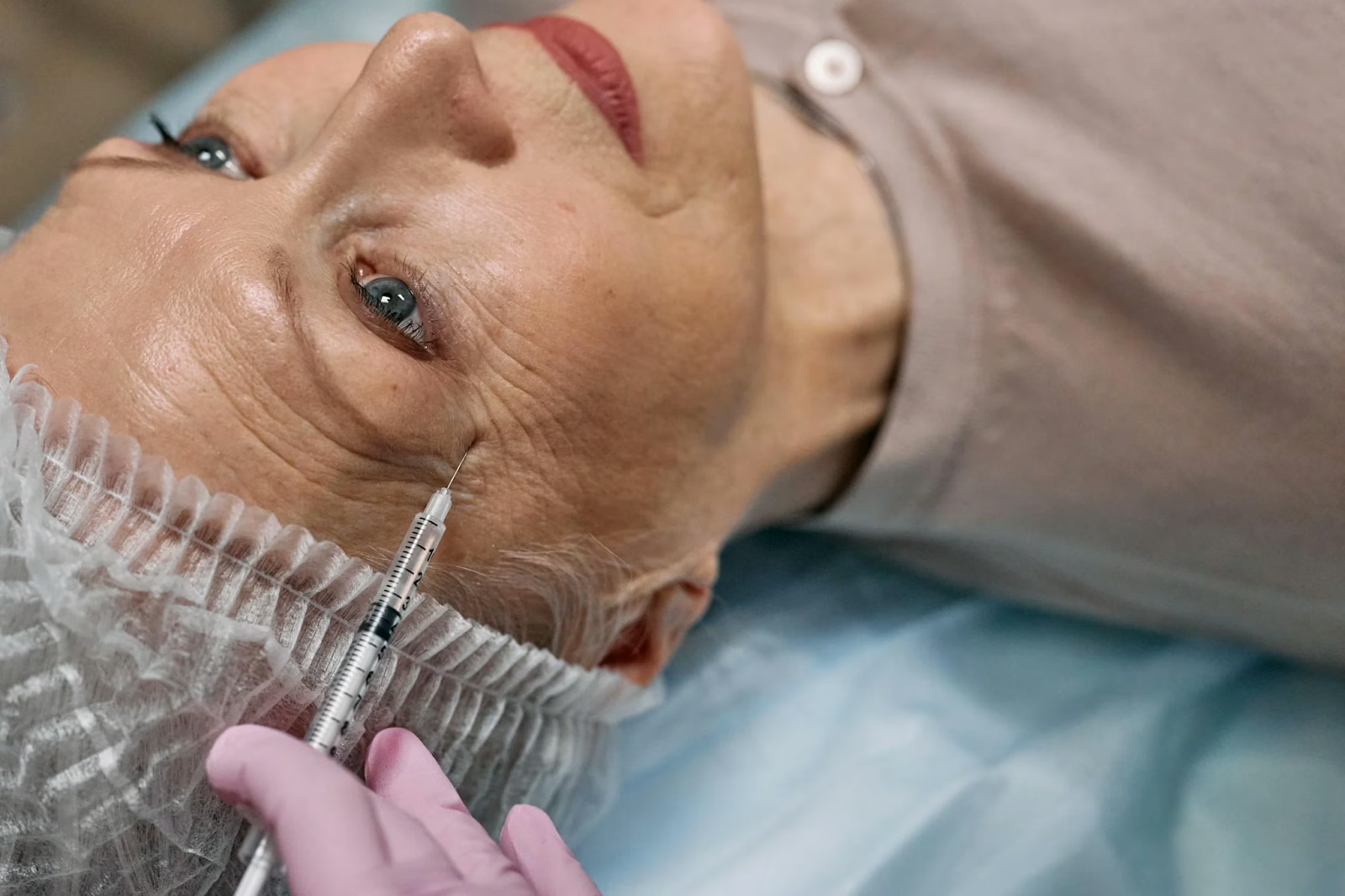
How To Fix Fix Smile Lines/ Wrinkles Around the Mouth
Smile lines, also known as nasolabial folds, are among the most common signs of facial aging that affect both men and women. These creases extend from the sides of your nose down to the corners of your mouth, becoming more pronounced with time and repeated facial expressions.
While they're a natural part of the aging process, modern facial plastic surgery offers sophisticated solutions to restore a more youthful appearance.
Key Takeaways
- Deep plane facelifts provide the most comprehensive and long-lasting solution for severe smile lines by addressing underlying facial structures.
- Injectable fillers offer immediate results with minimal downtime for mild to moderate cases.
- Surgical options like mid-facelifts target specific areas while preserving natural facial movement.
- Prevention through proper skincare and sun protection can slow the development of new lines.
- Treatment selection depends on the severity of lines, patient goals, and recovery preferences.
Understanding What Causes Smile Lines
The formation of smile lines results from multiple factors working together over time. Your skin naturally loses collagen and elastin as you age, reducing its ability to bounce back after expressions.
Primary causes include:
- Loss of collagen and elastin production
- Repetitive facial muscle contractions
- Sun damage and environmental factors
- Genetics and natural facial structure
- Lifestyle factors like smoking and dehydration
Environmental factors accelerate this process significantly. Sun exposure breaks down collagen fibers and creates free radicals that damage skin cells. The depth and prominence of these lines vary considerably between individuals, which helps determine the most effective treatment approach.
Deep Plane Facelift: The Gold Standard Solution
For patients seeking the most comprehensive and permanent correction of smile lines, a deep plane facelift represents the pinnacle of facial rejuvenation surgery.
This advanced technique addresses the underlying cause of facial aging by repositioning the deeper layers of facial tissue, not just tightening the skin surface. Unlike traditional facelifts that primarily focus on skin removal, the deep plane approach works beneath the superficial musculoaponeurotic system (SMAS).
Why deep plane facelifts excel:
- Natural results - Recreates youthful facial contours rather than pulling skin tight
- Long-lasting outcomes - Results can last ten to fifteen years
- Comprehensive correction - Addresses severe laugh lines at their structural source
- Superior technique - Works with natural facial anatomy for optimal healing
Recovery typically requires two to three weeks for initial healing, with final results becoming apparent over several months. While this represents a significant commitment, the longevity makes it an excellent long-term investment.
https://facialplasticsbh.com/getting-a-facelift-in-your-40s-what-you-need-to-know/

Mid-Facelift and Targeted Surgical Options
For patients with moderate smile lines who aren't ready for a full facelift, a mid-facelift offers an excellent middle-ground solution. This procedure specifically targets the area between the lower eyelids and the corners of your mouth.
The technique repositions the malar fat pads to their more youthful position, naturally softening the appearance of smile lines. Most patients can return to work within ten days, though swelling may persist for several weeks.
Additional surgical considerations:
- Buccal fat removal for fuller cheeks that contribute to pronounced folds
- Combined procedures for comprehensive facial rejuvenation
- Customized approaches based on individual facial anatomy
Results appear gradually as tissues settle into their new position, with final outcomes visible after three to six months.
Injectable Solutions for Immediate Results
Injectable dermal fillers provide an excellent non-surgical option for patients seeking immediate improvement in smile line appearance.
Popular filler options include:
Hyaluronic Acid Fillers
- Juvederm and Restylane for immediate volume restoration
- Results visible immediately after injection
- Typically last six to twelve months
- Can be completed during a lunch break
Advanced Collagen Stimulators
- Radiesse (calcium hydroxyapatite) for longer-lasting results
- Sculptra (poly-L-lactic acid) for gradual, natural improvement
- Results can last up to two years
- Stimulate natural collagen production
The choice between different filler types depends on patient goals, budget, and tolerance for multiple appointments. Most patients find that with regular maintenance, results seem to last longer as the skin develops structural memory.
https://facialplasticsbh.com/facelift/
Advanced Non-Surgical Treatments
Modern technology offers sophisticated alternatives to traditional surgical approaches for smile line correction.
Collagen Induction Therapy (Microneedling)
This innovative treatment stimulates your body's natural healing response through controlled micro-injuries. Professional treatments typically require a series of sessions spaced four to six weeks apart.
Benefits include gradual skin texture improvement and reduced line depth over several months. The minimal downtime makes this ideal for patients preferring subtle enhancement over dramatic change.
Laser Resurfacing Options
Laser treatments remove damaged surface skin layers while stimulating deeper collagen production. Fractional laser treatments create zones of controlled injury, allowing faster healing while promoting significant skin improvement.
Results continue developing over several months as new collagen forms and skin texture improves.
Considerations for Facial Nerve Conditions
Patients with a history of facial nerve issues require special consideration when planning smile line treatments. Facial paralysis or weakness can create asymmetrical aging patterns, making one side of the face appear more aged than the other.
The expertise of a best facelift surgeon becomes particularly crucial when dealing with complex cases. Surgical techniques may need modification to protect existing nerve function while still achieving aesthetic goals.

Prevention and Maintenance Strategies
While treatment options continue to advance, prevention remains the most cost-effective approach to maintaining a youthful appearance.
Daily Prevention Methods:
- Apply SPF 30+ sunscreen consistently
- Use retinoids and vitamin C in skincare routine
- Maintain proper hydration levels
- Follow antioxidant-rich diet
Professional Maintenance:
- Regular chemical peels and medical-grade facials
- Periodic filler touch-ups as needed
- Annual consultations for treatment planning
Professional skincare treatments help maintain results between major procedures by removing dead skin cells and improving product penetration for better at-home skincare results.
Discover your best treatment option and take the first step toward restoring your confident, youthful appearance.
Conclusion
Smile lines don't have to be an inevitable part of aging when you have access to advanced treatment options. From the comprehensive results of deep plane facelifts to the convenience of injectable fillers, modern facial plastic surgery offers solutions for every level of concern and commitment.
The key lies in choosing the right approach based on your specific needs, lifestyle, and aesthetic goals. Working with an experienced facial plastic surgeon ensures you receive personalized recommendations that address your unique facial anatomy and aging patterns.

Botox Before Blepharoplasty?
The timing of cosmetic treatments can make or break your results, especially when it involves the delicate eye area. Many patients assume getting Botox before their planned blepharoplasty will enhance their outcome, but this approach actually works against you.
Key Takeaways
- Botox should be avoided for several weeks before blepharoplasty surgery to prevent interference with surgical outcomes.
- Active Botox can alter the natural muscle function that surgeons rely on during eyelid procedures.
- The temporary paralysis from Botox can mask underlying tissue conditions that affect surgical planning.
- Waiting allows your surgeon to accurately assess your natural eyelid position and muscle tone.
- Combining treatments requires careful timing and professional coordination for optimal results.
The Critical Problem with Pre-Surgery Botox
Here's what happens when Botox is active during surgery: your muscles can't provide the natural feedback surgeons need. The temporary paralysis creates an artificial baseline that makes accurate surgical planning nearly impossible.
During blepharoplasty, your surgeon must evaluate several key factors:
- Natural muscle tone and movement patterns
- True eyelid position without artificial relaxation
- Actual tissue elasticity and skin behavior
- Precise measurements for incision placement
When Botox blocks these natural responses, surgeons are essentially working blind. They can't see how your eyelids truly function or where they naturally rest.
Why Professional Surgeons Insist on Botox-Free Periods
Experienced plastic surgeons have a universal rule: no active Botox before eyelid surgery. This isn't a preference, it's a medical necessity based on decades of surgical experience and documented complications.
The Science Behind the Rule:
Research shows that neurotoxins like Botox can remain active in muscle tissue for 3-6 months. During this time, the affected muscles cannot contract normally, which creates three major surgical challenges:
- Inaccurate Assessment: Surgeons cannot determine your baseline appearance
- Unpredictable Healing: Paralyzed muscles may heal differently than active ones
- Asymmetrical Results: One side may respond differently if Botox distribution was uneven
https://facialplasticsbh.com/blepharoplasty-before-after/
The consequences often don't appear until months later when the Botox wears off and your natural muscle function returns. Suddenly, the surgical results that looked perfect initially may appear overcorrected or asymmetrical.
 Understanding Muscle Memory in Surgical Planning
Your facial muscles have developed complex movement patterns over decades. These patterns are unique to you and influence how your face expresses emotion, blinks, and functions throughout the day.
Upper blepharoplasty requires understanding these individual patterns to preserve natural function while improving aesthetics. When Botox disrupts this natural state, it forces surgeons to make educated guesses rather than precise measurements.
What Surgeons Need to See:
- How your eyelids naturally close and open
- Your typical brow position during various expressions
- The way your skin naturally folds and creases
- True muscle tension and relaxation patterns
For specialized procedures like double eyelid surgery, these natural patterns are even more critical for creating authentic-looking results.
The Optimal Timeline for Treatment Combination
Smart treatment sequencing maximizes your investment in both procedures. Here's the professional-recommended timeline:
Before Surgery:
- Stop Botox treatments 3-4 months prior to your eyelid surgery
- Allow complete muscle function to return
- Schedule your surgical consultation only after Botox has worn off
After Surgery:
- Wait for complete healing (typically 3-6 months)
- Resume Botox treatments to maintain smooth results
- Work with your surgeon to coordinate future treatments
This strategic approach allows both treatments to work at full effectiveness without interference.
https://facialplasticsbh.com/how-to-relieve-pain-after-blepharoplasty-surgery/
Alternative Solutions During the Waiting Period
Patients often worry about wrinkles appearing while waiting for surgery. Several options can help bridge this gap without compromising your surgical outcome:
Non-Invasive Options:
- Professional skincare treatments to improve skin texture
- Gentle radiofrequency treatments for mild tightening
- Specialized eye creams with proven peptides
Some patients explore non-surgical blepharoplasty alternatives, though these have limitations compared to surgical correction.
The key is maintaining realistic expectations during this transition period. The temporary appearance of fine lines is minor compared to the risk of requiring revision surgery due to poor initial planning.
 Real-World Consequences of Poor Timing
Medical literature documents numerous cases where patients received Botox too close to their surgical date, resulting in complications that required additional procedures. These cases serve as important reminders of why timing protocols exist.
Common Issues Include:
- Overcorrection of skin removal due to artificially relaxed muscles
- Asymmetrical healing patterns between treated and untreated areas
- Unexpected changes in eyelid position as Botox wears off post-surgery
- Need for revision procedures to correct initial miscalculations
One documented case involved a patient who received Botox two weeks before her eyelid lift. The surgeon, unable to assess her natural muscle tone, removed what appeared to be the correct amount of skin. However, when the Botox wore off three months later, her eyelids appeared overcorrected and required a secondary procedure to add tissue back.
Advanced Surgical Techniques and Botox Interactions
Modern facial plastic surgery has evolved to include highly precise techniques that depend even more heavily on accurate muscle assessment. Computer-assisted planning and advanced imaging require surgeons to understand your natural facial dynamics completely.
These technological advances make the presence of active Botox even more problematic. The sophisticated measurements and calculations that drive modern surgical planning become meaningless when muscle function is artificially altered.
Cutting-Edge Approaches That Require Natural Baselines:
- 3D surgical planning systems that map facial movement
- Customized incision patterns based on individual muscle anatomy
- Precise fat repositioning techniques that depend on natural tissue behavior
- Advanced suturing methods that account for natural healing patterns
Surgeons who perform high-end procedures often use specialized techniques that would be impossible to execute accurately with active Botox in the system. The investment in these advanced approaches is wasted if the foundational assessment is compromised.
When Professional Guidance Makes the Difference
Working with an experienced facial plastic surgeon who understands these treatment interactions is essential. They can evaluate your specific situation and recommend the optimal approach for your goals.
Your surgeon will assess whether you're a good candidate for combining treatments and help you understand:
- The realistic timeline for your desired results
- How different treatments complement each other
- What to expect during each phase of your treatment plan
- Which advanced techniques might benefit your specific case
The investment in professional surgical correction deserves the best possible outcome, which means following expert recommendations even when patience is required. Top-tier surgeons have protocols in place specifically to prevent the complications that arise from poor treatment timing.
Questions Your Surgeon Will Address:
- Whether your case requires specialized techniques that are more sensitive to Botox interference
- How your individual healing patterns might be affected by recent neurotoxin treatments
- What alternative approaches might work better for your timeline and goals
- How to coordinate future treatments for optimal long-term results
Ready to create a comprehensive treatment plan that maximizes your results? Discover your personalized approach to eyelid enhancement with our experienced surgical team.
Conclusion
The answer to whether you should get Botox before blepharoplasty is definitively no. Active Botox interferes with surgical planning, compromises accuracy, and can lead to results that require costly revision procedures.
By spacing these treatments properly, you allow each to work at its full potential. Your patience during the waiting period protects your investment and ensures the natural, refreshed appearance you're seeking. The combination of surgical precision followed by strategic Botox maintenance creates superior long-term results that enhance your natural beauty without compromising function or authenticity.
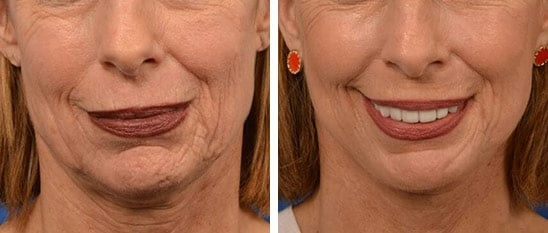
Sagging Skin Along Jawline? Best Solutions For Jowls
The development of jowls represents one of the most noticeable signs of facial aging, affecting the definition and contour of the jawline. As skin loses elasticity and facial volume diminishes over time, the tissue along the lower face begins to sag, creating the characteristic drooping appearance that many find concerning. Understanding your options for addressing this common aging concern can help you make informed decisions about restoring a more youthful, defined jawline.
Key Takeaways
- Jowls form when facial skin loses elasticity and volume, causing tissue to sag along the jawline.
- Deep plane facelifts provide the most comprehensive and long-lasting solution for moderate to severe jowl correction.
- Dermal fillers offer temporary improvement by adding volume but cannot address underlying skin laxity.
- The Center For Advanced Facial Plastic Surgery specializes in sophisticated surgical techniques for optimal jowl correction.
- Treatment choice depends on jowl severity, patient age, recovery preferences, and desired longevity of results.
Understanding What Causes Jowls
Before exploring treatment options, it's essential to understand what are jowls and why they develop. The formation of jowls involves multiple anatomical changes that occur naturally with aging. Collagen production decreases significantly after age 25, while the facial fat pads that provide youthful volume begin to descend and deflate.
The jawline's definition relies heavily on the integrity of the superficial musculoaponeurotic system (SMAS), a network of muscles and connective tissue beneath the skin. When this support structure weakens, gravity pulls the overlying tissue downward, creating the sagging appearance characteristic of jowls.
Environmental factors also contribute to jowl formation:
- Sun exposure accelerates collagen breakdown through photoaging
- Lifestyle factors such as smoking and poor nutrition expedite aging
- Genetics determine predisposition to earlier jowl development
- Bone remodeling reduces skeletal support for facial tissues
https://facialplasticsbh.com/face/neck-lift/jowl-lift-surgery/
Non-Surgical Treatment Options
Dermal Fillers for Volume Restoration
Dermal fillers represent the most popular non-surgical approach to addressing mild jowl concerns. These injectable treatments work by strategically adding volume to specific areas of the face, creating a lifting effect that can temporarily improve the appearance of early jowl formation.
The treatment process involves careful assessment of facial symmetry to determine optimal injection points. Experienced practitioners typically target the cheek area, jawline, and sometimes the chin to create a more youthful contour. The procedure takes approximately 30 to 45 minutes, with results visible immediately.
However, it's crucial to understand the limitations of this approach. Fillers add volume but cannot address the fundamental issue of skin laxity that causes jowl formation. They work best for patients with mild sagging and good skin elasticity.
Energy-Based Treatments
Various energy-based technologies claim to tighten neck area and improve jowl appearance through controlled heating of deeper tissue layers. These treatments include radiofrequency, ultrasound therapy, and laser procedures that aim to stimulate collagen production.
While these technologies can offer subtle improvements for very mild cases, the results are often temporary and require multiple sessions. The heating effect may temporarily tighten collagen fibers, but it cannot replicate the comprehensive tissue repositioning achieved through surgical intervention.

Surgical Solutions: The Gold Standard
Deep Plane Facelift Technique
For patients seeking comprehensive and long-lasting solutions to sagging jowls, surgical intervention remains the gold standard. The deep plane facelift technique represents the most advanced approach to addressing jowl formation.
Unlike traditional facelift techniques that primarily address skin excess, the deep plane approach targets the underlying SMAS layer where jowl formation actually begins. By releasing and repositioning these deeper structures, surgeons can restore natural jawline contours while maintaining individual facial characteristics.
The procedure involves:
- Carefully separating the SMAS layer from underlying structures
- Repositioning tissues to their more youthful location
- Removing excess skin with meticulous closure techniques
- Preserving facial nerve pathways throughout the procedure
This technique provides superior, longer-lasting results because it addresses the root cause of jowl formation rather than merely camouflaging symptoms.
https://facialparalysisinstitute.com/blog/muscle-retraining-after-facial-nerve-transfer-surgery-what-you-need-to-know/
Choosing the Right Provider
Center For Advanced Facial Plastic Surgery Excellence
When considering surgical solutions for jowl correction, selecting a highly qualified specialist is paramount to achieving optimal results. The Center For Advanced Facial Plastic Surgery represents one of the premier destinations for sophisticated facial rejuvenation procedures, particularly for patients seeking the most advanced techniques in jowl correction.
The center's approach combines cutting-edge surgical techniques with an artistic understanding of facial aesthetics. Their surgeons specialize in deep plane facelift procedures, which provide the most natural and long-lasting results for jowl correction.
What sets this practice apart is their understanding that each patient's facial anatomy is unique, requiring customized treatment approaches rather than one-size-fits-all solutions. Their surgeons have extensive experience in preserving facial nerve function while achieving dramatic improvements in jawline definition.
Comparing Treatment Approaches
Effectiveness and Longevity
The fundamental difference between surgical and non-surgical approaches lies in their ability to address underlying causes of jowl formation. While dermal fillers provide temporary improvement by adding volume, they cannot correct the skin laxity and tissue descent that creates jowls.
Non-Surgical Results:
- Temporary improvement lasting 12-18 months
- Best for mild jowling with good skin elasticity
- Requires regular maintenance treatments
- Minimal downtime with immediate return to activities
Surgical Results:
- Long-lasting improvement for 10-15 years
- Addresses root cause of jowl formation
- Comprehensive tissue repositioning
- Natural-looking results that age gracefully
Recovery Considerations
Non-surgical treatments offer minimal disruption to daily routine. Initial swelling at injection sites typically peaks within 24 hours and subsides over three to five days. Most patients return to work immediately.
Surgical recovery requires more planning and commitment. Deep plane facelift patients experience swelling and bruising that peaks around day three and gradually subsides over two to three weeks. Most patients feel comfortable returning to social activities after two weeks.

Making Your Treatment Decision
The decision between surgical and non-surgical jowl treatment should be based on several key factors. Age plays a significant role, as younger patients with mild jowling may achieve satisfactory results with non-surgical approaches, while those with more advanced aging typically require surgical intervention.
The severity of your jowl formation is perhaps the most important consideration:
- Mild cases: Early tissue descent with minimal skin excess may respond to strategic filler placement
- Moderate to severe cases: Significant skin laxity requires comprehensive tissue repositioning through surgery
Your lifestyle and recovery preferences also influence the decision. Patients who cannot accommodate surgical recovery may prefer non-surgical options, understanding that results will be more modest and temporary.
Ready to explore your options for jowl correction? Schedule your consultation with our expert team to determine the most appropriate treatment approach for your individual needs and aesthetic goals.
Recovery and Results Timeline
Non-Surgical Recovery
Patients choosing dermal filler treatments can expect minimal disruption to their routine. Initial swelling peaks within 24 hours and subsides over three to five days. Final results become apparent once all swelling has subsided, usually within one to two weeks.
Surgical Recovery Process
Deep plane facelift recovery follows a predictable timeline. The first 48 hours involve the most significant swelling and discomfort, well-managed with prescribed medication. By the end of the first week, sutures are removed and patients begin seeing emerging results. Most people feel comfortable returning to office work after 10 to 14 days.
Conclusion
The choice between surgical and non-surgical treatments for jowl correction depends on your individual anatomy, aesthetic goals, and lifestyle preferences. While dermal fillers can provide temporary improvement for mild cases, deep plane facelift techniques offer the most comprehensive and long-lasting solution for moderate to severe jowl formation.
The key to achieving optimal results lies in selecting an experienced surgeon who specializes in facial rejuvenation and understands the complex anatomy involved in jowl correction. Whether you choose surgical or non-surgical intervention, the most important factor is selecting a qualified provider who prioritizes your safety, natural-looking results, and long-term satisfaction.
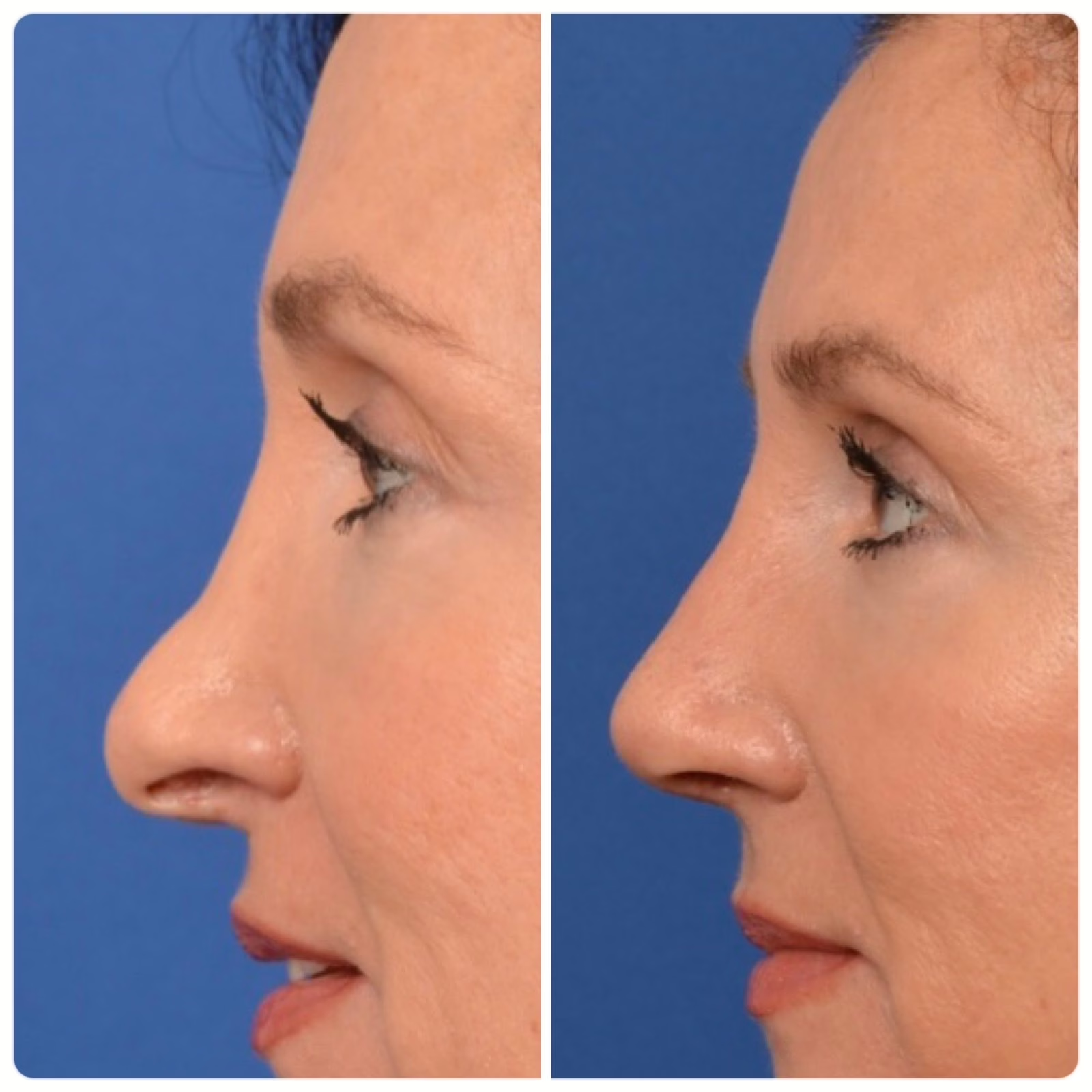
Getting Rid Of "Nose Hump" Or Dorsal Hump Nose
A dorsal hump can significantly impact how you feel about your facial profile, creating a prominent bump along the bridge of your nose that draws unwanted attention. This common nasal irregularity affects millions of people worldwide and can stem from genetics, injury, or natural aging processes. While the condition rarely causes medical complications, many individuals seek treatment to achieve a smoother, more refined nasal contour.
Key Takeaways
- Dorsal humps are raised areas on the nose bridge caused by irregularities in underlying cartilage or bone structure.
- Genetic factors play the primary role in dorsal hump development, though trauma and aging can also contribute.
- Non-surgical treatments like dermal fillers offer temporary improvement for mild to moderate humps.
- Surgical rhinoplasty provides permanent correction by reshaping or removing excess cartilage and bone.
- Recovery time varies between procedures, with non-surgical options requiring minimal downtime compared to surgical interventions.
Understanding the Dorsal Hump
The dorsal hump represents a visible elevation along the nasal bridge, typically located in the upper two-thirds of the nose. This prominence occurs when excess cartilage, bone, or both create an irregular contour that disrupts the smooth line from the forehead to the nasal tip. According to research published in the Journal of Plastic and Reconstructive Surgery, dorsal humps affect approximately 15-20% of the general population.
The anatomical structure involves the nasal bones and upper lateral cartilages, which form the framework of the nose bridge. When these structures develop disproportionately or sustain damage, they create the characteristic bump that many find aesthetically displeasing.
https://facialplasticsbh.com/are-you-considering-rhinoplasty-heres-what-you-need-to-know/
What Causes Dorsal Humps?
Understanding the root causes helps patients make informed treatment decisions:
1. Genetic Factors
Genetics serve as the predominant factor in dorsal hump development, with the American Society of Plastic Surgeons noting that approximately 80% of cases have hereditary components. If either parent carries genes for prominent nasal bones or cartilage overgrowth, their children face increased likelihood of developing similar features.
2. Trauma and Injury
Nasal injuries from sports, accidents, or physical altercations can damage the delicate cartilage and bone structures. When the upper lateral cartilages detach from the nasal bones or when fractures heal improperly, the resulting scar tissue and bone remodeling can create permanent bumps along the bridge.
3. Natural Aging Process
As skin loses elasticity and underlying tissues shift, previously subtle irregularities may become more noticeable. The natural drooping of the nasal tip with age can create an optical illusion that makes existing dorsal irregularities appear more pronounced.

Non-Surgical Treatment Options
For individuals seeking improvement without surgical intervention, several approaches can provide temporary enhancement:
Dermal Fillers Injectable treatments containing hyaluronic acid offer immediate results with minimal downtime. These work by adding volume around the dorsal hump, creating the illusion of a smoother nasal profile. Results typically last 12-18 months, requiring periodic touch-up treatments.
Makeup Contouring Strategic use of highlighting and shadowing techniques can temporarily minimize the appearance of dorsal humps. While this provides no structural change, it offers a cost-effective way to test how you might look with a smoother profile.
According to data from the American Society for Aesthetic Plastic Surgery, non-surgical nose reshaping procedures have increased by 45% over the past five years.
https://facialplasticsbh.com/tag/rhinoplasty/
Surgical Solutions: The Gold Standard
Surgical correction through rhinoplasty remains the most effective option for permanent dorsal hump removal. This procedure involves precise removal or reshaping of excess cartilage and bone to create a smooth, aesthetically pleasing nasal profile.
Modern Techniques Include:
- Open Rhinoplasty - Provides superior visualization for complex cases
- Closed Rhinoplasty - Reduces visible scarring with faster recovery
- Ultrasonic Surgery - Uses piezoelectric technology for precise bone sculpting
- Preservation Rhinoplasty - Maintains natural architecture while removing excess tissue
The surgical approach depends on the hump's composition and severity. For primarily cartilaginous humps, surgeons use specialized instruments to carefully trim and sculpt the upper lateral cartilages. Bony humps require more complex techniques, including controlled reshaping of the nasal bones.

CENTER For Advanced Facial Plastic Surgery: Premier Expertise
When considering dorsal hump correction, selecting an experienced specialist makes the difference between satisfactory and exceptional results. The CENTER For Advanced Facial Plastic Surgery stands among the nation's premier destinations for sophisticated nasal refinement procedures.
Their approach emphasizes:
- Comprehensive evaluation and personalized treatment planning
- Advanced technology and cutting-edge techniques
- Customized treatment strategies for individual anatomy
- Continuous education and innovation in facial plastic surgery
Rather than applying cookie-cutter solutions, their surgeons assess each patient's unique anatomy, aesthetic goals, and lifestyle considerations. This attention to detail extends throughout the entire patient journey, from initial consultation through long-term follow-up care.
Recovery Process and What to Expect
Understanding the healing timeline helps patients prepare adequately for their transformation:
- Week 1: Most patients return to desk work, though some swelling and discomfort persist
- Weeks 2-4: Majority of visible swelling subsides, breathing improves
- Months 3-6: Subtle refinements continue as tissues settle
- Month 12: Final results become apparent
The first few days post-surgery typically involve moderate discomfort, which prescription pain medication effectively manages. Nasal congestion and drainage are normal during this period, gradually improving as swelling subsides.
Managing Nose Irregularities and Potential Complications
While dorsal hump correction generally produces excellent results, understanding potential issues such as nose irregularities helps patients make informed decisions:
Common Temporary Effects:
- Numbness around the surgical site
- Altered sensation that typically resolves within months
- Temporary breathing changes as passages adjust
Rare but Possible Complications:
- Minor asymmetries that may require touch-up procedures
- Prolonged swelling in complex cases
- Need for revision surgery in less than 5% of cases
Experienced surgeons minimize risks through careful pre-operative planning and precise surgical execution. When minor issues do occur, they often improve naturally as healing progresses.
Special Considerations for Complex Cases
Certain patients present unique challenges requiring specialized expertise:
Individuals with previous nasal surgery, significant trauma history, or concurrent functional issues like breathing difficulties or facial synkinesis need particularly careful evaluation. These complex cases often benefit from a staged approach, with initial procedures focusing on structural correction followed by refinement surgeries.
Revision rhinoplasty cases present particular technical challenges, as scar tissue and altered anatomy complicate surgical approaches. Selecting a surgeon with extensive revision experience becomes crucial for achieving satisfactory results.

Investment and Value Considerations
The financial investment in dorsal hump correction varies based on several factors:
- Geographic location and surgeon experience
- Procedure complexity and technique used
- Facility accreditation and comprehensive care included
- Whether functional improvements qualify for insurance coverage
While cost represents an important consideration, focusing solely on price often leads to disappointing results. Quality surgical outcomes require investment in experienced surgeons, accredited facilities, and comprehensive care. Many practices offer financing options to make procedures more accessible.
The long-term satisfaction and confidence gained from excellent results often justify the initial investment many times over. Insurance coverage depends primarily on whether functional improvements are necessary, with pure cosmetic procedures typically requiring out-of-pocket payment.
Making Your Decision
Choosing to address a dorsal hump represents a significant personal decision requiring careful consideration. The process should begin with consultations with qualified facial plastic surgeons to discuss your concerns, goals, and treatment options.
Key Questions to Ask:
- What is the surgeon's specific experience with dorsal hump correction?
- Which technique would work best for your anatomy?
- What realistic outcomes can you expect?
- Can you review before-and-after photos of similar cases?
Consider timing carefully, allowing adequate recovery time before important events. Most patients find that scheduling surgery during cooler months helps minimize sun exposure during healing while providing time for complete recovery.
Modern nose job techniques have evolved significantly, offering more predictable results with reduced recovery times. Advanced nose surgery methods ensure both functional and aesthetic improvements when performed by experienced specialists.
Transform your profile with expert dorsal hump correction and discover the confidence that comes with facial harmony.
Conclusion
Dorsal hump correction offers transformative results for individuals seeking refined nasal profiles and enhanced facial harmony. Whether through non-surgical treatments for mild irregularities or comprehensive surgical correction for significant concerns, modern techniques provide safe, effective solutions tailored to individual needs.
Success requires realistic expectations, careful planning, and commitment to the recovery process. When approached thoughtfully with qualified professionals, these procedures consistently deliver the refined, balanced nasal contours that patients desire, contributing significantly to improved self-confidence and satisfaction with their appearance.
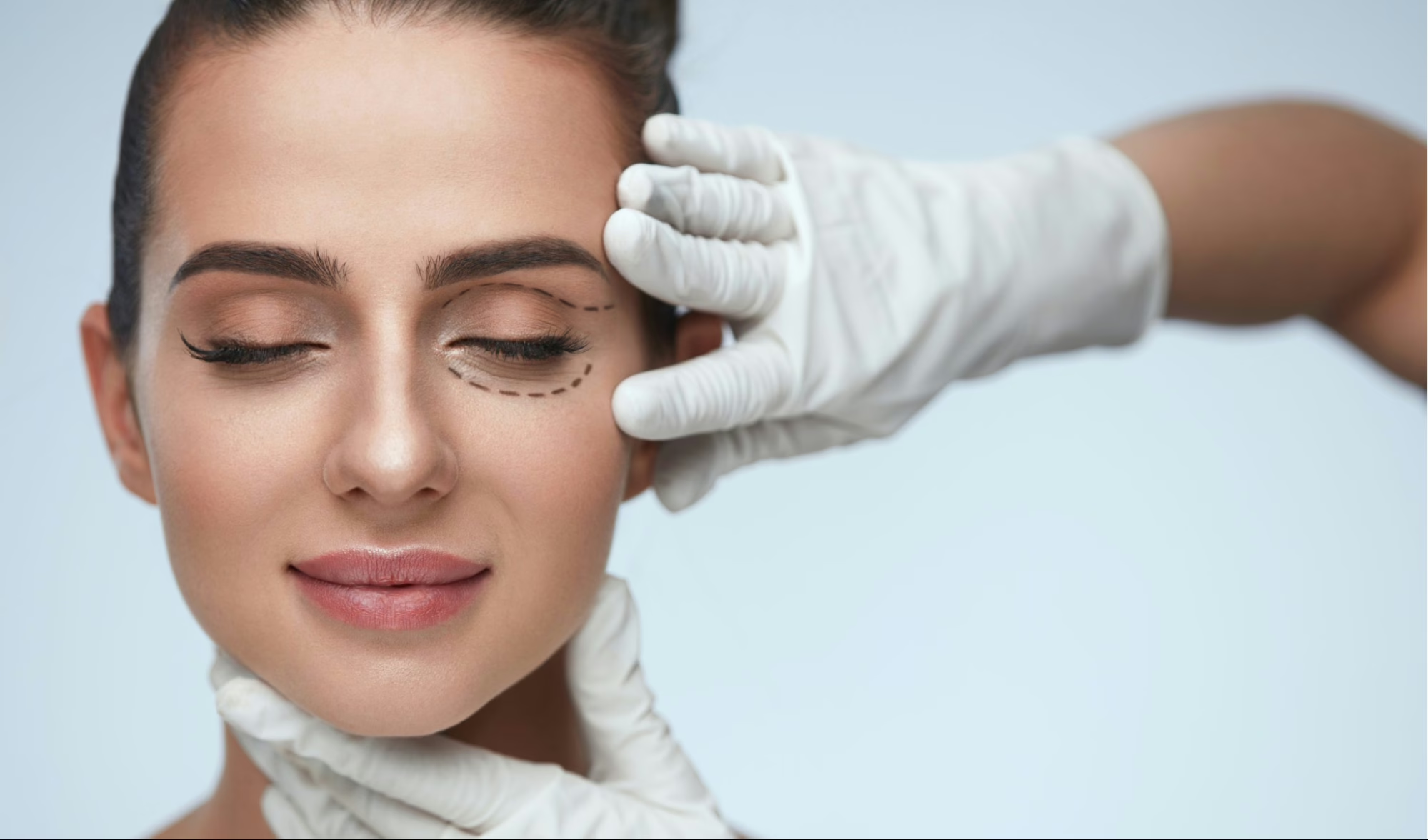
Blepharoplasty Before & After
Blepharoplasty is a type of eyelid surgery that helps refresh the way your eyes look by removing or adjusting extra skin, fat, or muscle. While creams and injectables may offer short-term fixes, this procedure provides a longer-lasting answer to puffiness or sagging around the eyes. The goal isn’t to change your face, but to bring back a lighter, more awake look that still feels like you.
If you’ve noticed heaviness around your eyes or always look tired even when you’re not, this procedure might be worth considering. Let’s walk through what blepharoplasty is, how it works, and what kind of transformation you can expect.
What Is Blepharoplasty?
Blepharoplasty is a minimally invasive surgery focused on reshaping the upper and/or lower eyelids. It addresses issues like puffiness, sagging skin, and bags that can make the eyes appear older or fatigued. The results are long-lasting and tailored to each patient’s features.
Unlike injectables that add volume temporarily, blepharoplasty changes the structure of the eyelids to create a naturally refreshed look. It’s one of the most effective ways to restore eye definition without overdoing it.
Types of Blepharoplasty
Upper Blepharoplasty
Upper blepharoplasty focuses on removing loose or sagging skin from the upper eyelids. This excess skin can sometimes extend over the lash line, which may lead to a heavy, tired appearance or even impair vision.
By lifting and tightening the area, this procedure helps open up the eyes, making them look more alert and functional without drastically changing their shape.
Lower Blepharoplasty
This procedure addresses the lower eyelid area, where puffiness and under-eye bags often develop. It involves carefully removing or shifting fat deposits to create a smoother contour beneath the eyes. The goal is to reduce heaviness and restore a more youthful, rested appearance without altering your natural expression.
Combination Procedures
For patients with concerns in both the upper and lower eyelids, combining the procedures in one session is often the best approach. It allows the surgeon to create a more balanced and harmonious result, enhancing the overall appearance of the eyes. Addressing both areas at once can also streamline recovery and reduce the need for multiple surgeries down the line.
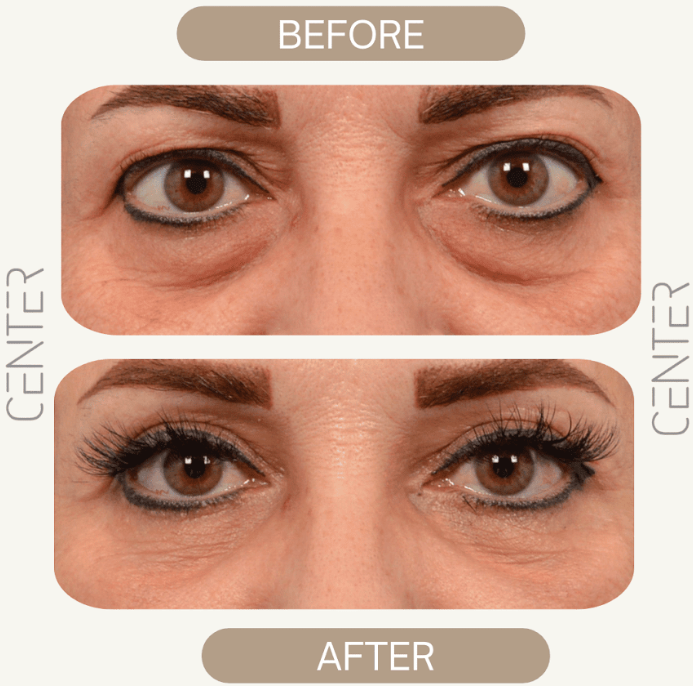
Blepharoplasty Before and After: Real Patient Transformations
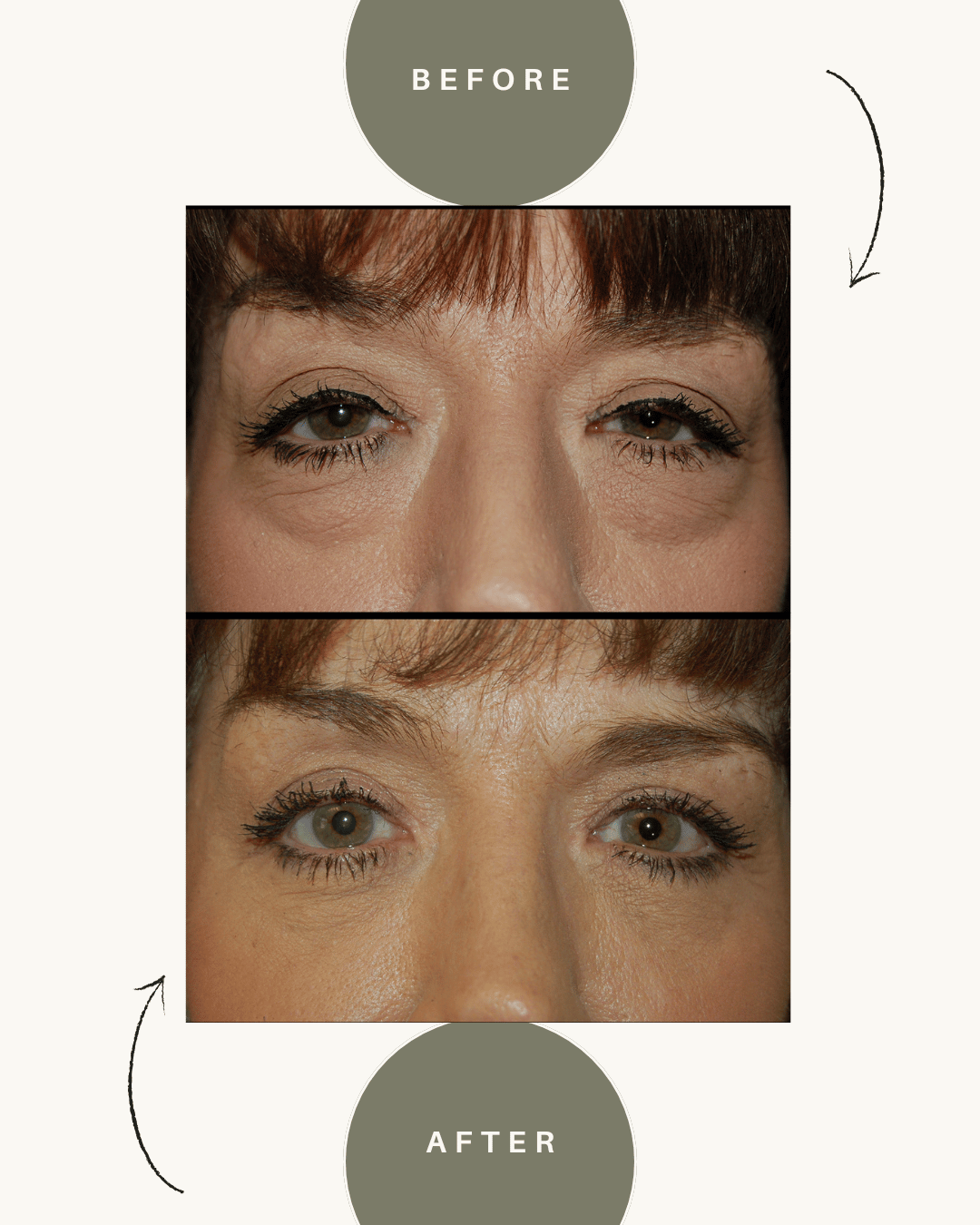
The true value of this procedure is often seen in side-by-side comparisons. Patients typically show more alert, youthful eyes after surgery - without looking like someone else. The results are subtle but impactful.
What to Expect in Results
Right After Surgery
Bruising, swelling, and a sense of tightness around the eyes are all expected after surgery. These symptoms are part of the body’s natural healing response as it adjusts to the changes. While they can feel uncomfortable at first, they tend to improve steadily with rest and proper care.
After 1–2 Weeks
By the end of the first or second week, swelling typically goes down enough for early results to become visible. At this stage, patients often notice a more open, refreshed eye area even as healing continues. Most people feel ready to return to work, run errands, or engage in other light activities without discomfort or self-consciousness.
Final Results (2–3 Months)
As the healing process continues, the tissues gradually settle into their final position. Incisions soften and fade, blending into the natural creases of the skin. By this stage, the full results become visible, revealing eyes that appear brighter, smoother, and naturally refreshed.
Before Image Alt Text: A close-up of a patient’s eyes before blepharoplasty, showing puffy lower lids and sagging upper lids.
After Image Alt Text: The same patient post-surgery, with lifted upper eyelids and smoother, flatter under-eyes.
Who Is a Good Candidate for Blepharoplasty?
You may be a good fit for blepharoplasty if you:
- Have sagging or drooping upper eyelids that interfere with vision or expression
- Struggle with persistent under-eye puffiness or bags
- Want a more permanent solution instead of injectables or creams
- Seek a natural result that fits your facial structure
You may not be a good candidate if you:
- Have untreated dry eye or certain eye conditions
- Aren’t medically cleared for surgery
- Expect dramatic, unrealistic changes or a completely different look
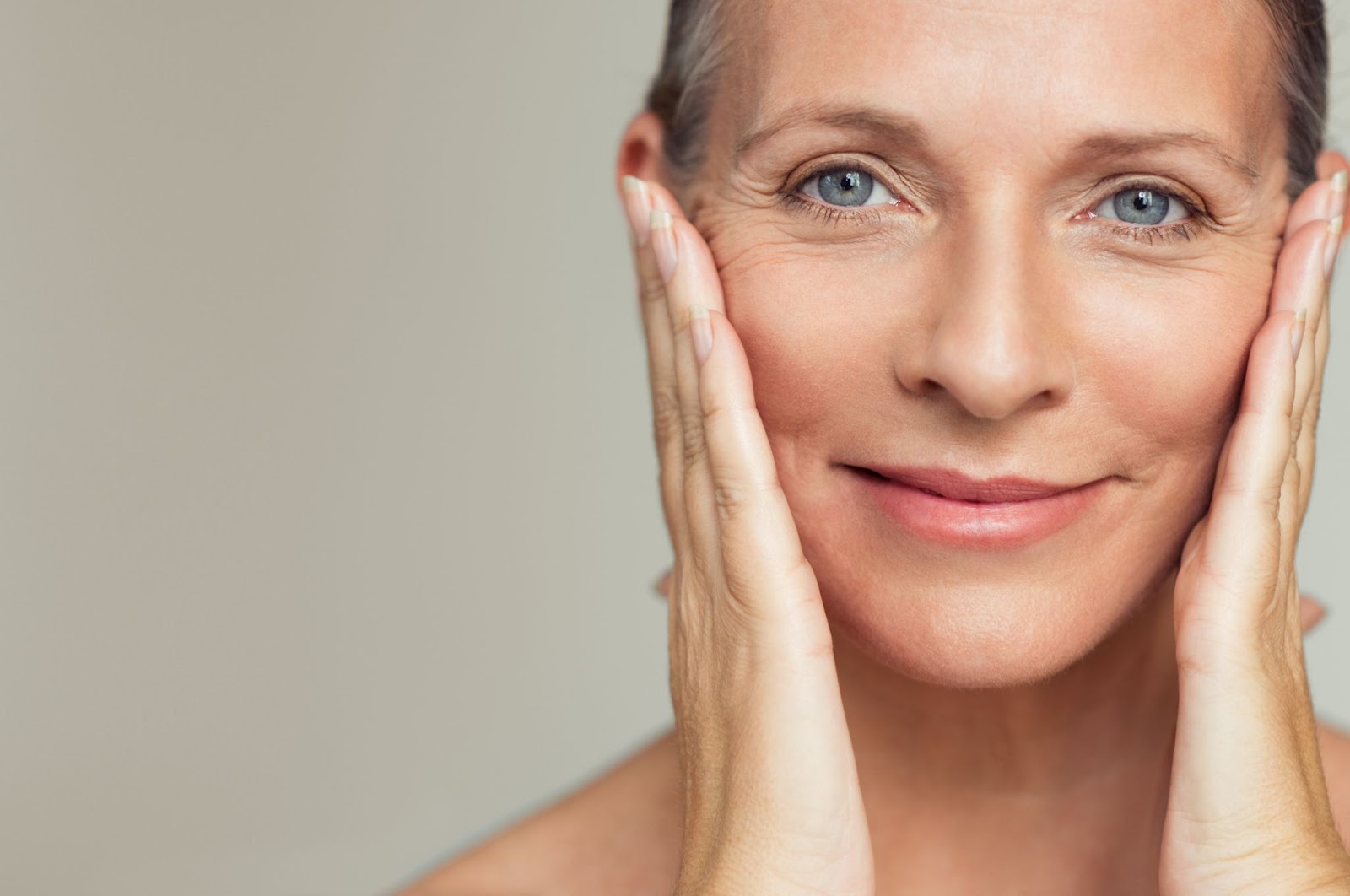
What to Expect During and After the Procedure
The Blepharoplasty Procedure
- Anesthesia: Local anesthesia with sedation is common.
- Incision Placement: Hidden in natural creases of the eyelid or inside the lower lid.
- Tissue Removal or Repositioning: Surgeon removes or adjusts skin, fat, and muscle.
- Stitching: Incisions are closed with fine sutures.
- Duration: Typically lasts 1 to 2 hours.
Recovery Timeline
First Few Days
Swelling, tightness, and bruising are common. Use cold compresses and follow aftercare instructions. For additional comfort, patients often use techniques to help relieve pain after blepharoplasty surgery during the first few days.
First Week
Around the end of the first week, sutures are typically removed during a quick follow-up visit. At this point, most patients feel well enough to ease back into their normal routines. Light daily activities, like walking or returning to work, can often be resumed without discomfort.
First Month
As swelling continues to subside, the improvements in eyelid contour and overall eye shape become more noticeable. Patients often begin to see their eyes taking on a lighter, more refreshed appearance. The heaviness diminishes, allowing the natural brightness of the eyes to come through more clearly.
2–3 Months
Over time, scars gradually fade and blend into the natural folds of the skin. As healing completes, the final outcome becomes more apparent. The eye area looks smoother and more defined, giving a subtle but noticeable lift to the overall facial expression.
Blepharoplasty vs. Non-Surgical Options
Key Differences
- Surgery is permanent. Injectables need maintenance.
- Blepharoplasty removes skin or fat. Fillers add volume.
- Surgery defines the eye shape. Topicals only offer surface-level change.
Who Benefits from Each?
Blepharoplasty: Ideal for those with loose skin or structural puffiness.
Fillers or creams: Better suited for people with mild volume loss or fine lines.
Some patients benefit from combining both approaches for a more refined result. If your concerns center on drooping eye lids, a consultation can help clarify whether surgery or a non-invasive option fits best.
Common Myths and Misconceptions
Myth 1: Blepharoplasty Looks Obvious
Reality: When performed by a skilled and experienced surgeon, the results blend seamlessly with your natural features. Friends or colleagues may notice you look more refreshed, but not necessarily "surgical." The goal is to enhance, not alter, your expression.
Myth 2: Recovery Takes Too Long
Reality: Within two weeks, much of the swelling has usually resolved, and patients start to feel more like themselves again. Most are able to resume regular routines and feel confident returning to work or social activities. The healing process continues, but the major discomforts tend to fade quickly.
Myth 3: Only Older People Get It
Reality: While aging is a common factor, genetics also play a major role in how the eyelids change over time. It's not unusual for individuals in their 30s or 40s to consider blepharoplasty if they notice puffiness or sagging that runs in the family. Early intervention can offer long-term benefits and help maintain a refreshed look.
Myth 4: It Causes Dry Eye
Reality: While some patients may experience temporary dryness after surgery, careful surgical technique can significantly reduce this risk. Surgeons who specialize in eyelid procedures know how to preserve the delicate structures that support eye moisture and comfort. For more information, here’s a detailed look at dry eye after surgery.
How to Choose the Right Surgeon
- Choose a board-certified facial plastic surgeon
- Look for before and after galleries with natural results
- Read patient reviews for satisfaction and care quality
- Ask questions during consultation:
- How often do you perform blepharoplasty?
- Do you customize techniques by patient anatomy?
- What’s your approach to preventing fine lines or avoiding complications?
Additional Considerations
Some patients explore laser blepharoplasty vs traditional blepharoplasty to decide which technique is better for their case. Others combine blepharoplasty with brow lifts for more comprehensive facial rejuvenation.
Some may also be interested in eye lift surgery as an additional or alternative procedure depending on their goals. If you’re unsure whether your issue stems from sagging brows or eyelids, your surgeon can help determine the best solution.
If you’re thinking about eyelid surgery, it starts with a consultation. Schedule a consultation with Dr. Azizzadeh to explore your goals and see how a personalized plan could help.
Conclusion
Blepharoplasty offers subtle but significant improvements to the eye area. Whether you’re looking to reduce puffiness, lift sagging lids, or simply look more rested, this procedure can help restore balance and confidence.
The goal isn’t to look different. It’s to look more like yourself—well-rested, expressive, and refreshed.

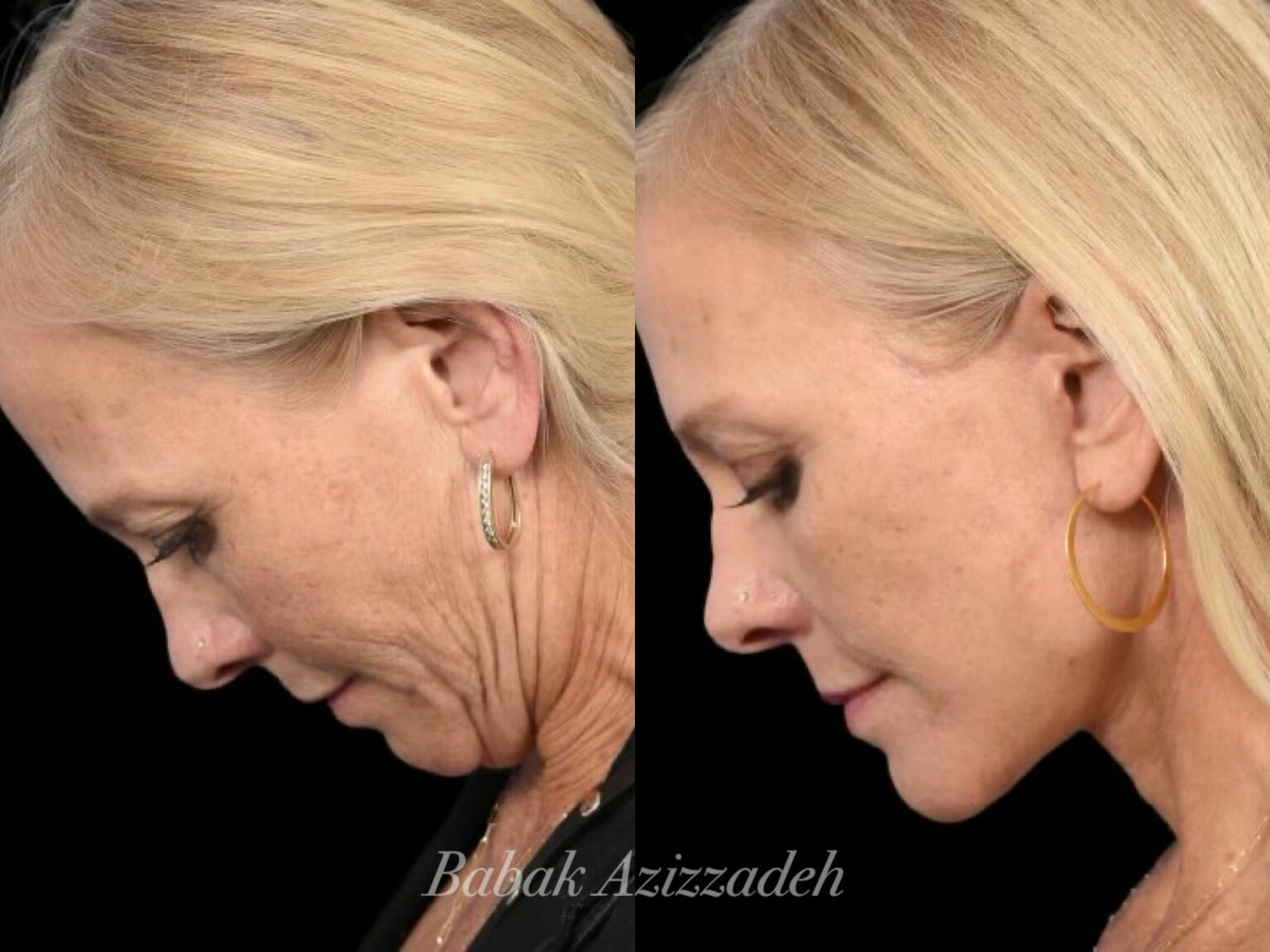
Best Facelift Surgeons In Beverly Hills
If you're considering a facelift, Beverly Hills is a top destination for this type of surgery. Known for its luxurious lifestyle and high-profile clientele, the area boasts some of the most skilled and reputable plastic surgeons. In this article, we'll explore the best facelift surgeons in Beverly Hills, highlighting their qualifications, experience, and what makes them stand out in the field of cosmetic surgery.
Introduction to Facelift Surgery
A facelift is a surgical procedure to reduce visible signs of aging in the face and neck, such as deep creases, sagging skin, and loss of jawline definition. It improves contours, creating a youthful, refreshed appearance. As we age, skin loses elasticity, leading to wrinkles, sagging, and a tired look. A facelift aims to reposition skin, tighten muscles, and remove excess skin for a smoother, firmer, and more defined appearance.
Here's what a facelift can potentially address:
- Lines on the forehead
- Frown lines
- Droopy eyebrows
- Hollows under the eyes
- Nasolabial folds (those lines from your nose to the corners of your mouth)
- Marionette lines (lines from the corners of your mouth down to your chin)
- Sagging jowls
- Loss of facial volume
- Laxity of the skin
It's important to have realistic expectations. A facelift can't completely transform your appearance or make you look like a different person. What it can do is help you look like a younger, more refreshed version of yourself. And that can make a big difference in your confidence and self-esteem.
Why Choose Beverly Hills for Facelift Surgery?
Beverly Hills is a popular destination for facelifts due to its high-quality surgeons, cutting-edge technology, and privacy. With a focus on specialized training and understanding of facial anatomy, Beverly Hills offers advanced procedures that deliver natural-looking and long-lasting results. Clinics in the area also prioritize confidentiality, ensuring the privacy and discretion of patients, especially those in the public eye. Choosing a surgeon is a personal decision, and Beverly Hills offers a unique blend of expertise, technology, and discretion that sets it apart from other locations. Ultimately, the decision to get a facelift is yours.
Qualities of the Best Facelift Surgeons
Choosing a surgeon for a facelift is a big deal. You're not just looking for someone who can perform the surgery; you want someone who can deliver results that look natural and last. So, what should you look for in the best facelift surgeons?
- Extensive Experience: Look for a surgeon who has performed a high volume of facelift procedures. Experience translates to skill and a better understanding of facial anatomy.
- Artistic Eye: A great facelift isn't just about tightening skin; it's about restoring youthful contours and proportions. Your surgeon should have an artistic eye and a deep understanding of facial aesthetics.
- Board Certification: This ensures that your surgeon has met rigorous standards of training and expertise in plastic surgery. Don't skip this step!
It's important to remember that a facelift is a surgical procedure, and like any surgery, it carries risks. Choosing a qualified and experienced surgeon can help minimize these risks and ensure a successful outcome.
- Excellent Communication Skills: Your surgeon should be able to clearly explain the procedure, potential risks and benefits, and what you can expect during recovery. You should feel comfortable asking questions and expressing your concerns.
- Positive Reviews and Testimonials: Check online reviews and testimonials to get a sense of other patients' experiences with the surgeon. While not every review is perfect, a consistent pattern of positive feedback is a good sign.
- Before & After Photos: Review before and after photos of the surgeon's previous patients to get an idea of their aesthetic style and the quality of their work. Do the results look natural and pleasing to you?
Consider a surgeon's dedication to using elite techniques for optimal results. The best facelift Beverly Hills has to offer is within reach if you do your research.
Qualities of the Best Facelift Surgeons

1. Dr. Babak Azizzadeh of the CENTER for Advanced Facial Plastic Surgery
When you're considering a facelift in Beverly Hills, you'll quickly come across Dr. Babak Azizzadeh. He leads the CENTER for Advanced Facial Plastic Surgery, and he's known for his detailed approach and focus on natural-looking results. It's not just about tightening skin; it's about creating harmony and balance in your facial features.
With decades of experience and dual board certification in Facial Plastic and Reconstructive Surgery and Head and Neck Surgery, Dr. Azizzadeh has built a reputation as a leading expert in his field. His work has been published in numerous peer-reviewed journals, including PubMed, and he is an active contributor to medical research and education through platforms like ResearchGate. His expertise in complex procedures like facial nerve repair and deep-plane facelifts has made him a go-to specialist for both celebrities and patients from around the globe.
Dr. Azizzadeh’s reputation extends beyond the operating room. He’s been featured in major media outlets and is a trusted voice on educational platforms like YouTube, where he shares insights on facial aesthetics, surgical techniques, and patient journeys.
Patient Ratings & Reviews

Dr. Azizzadeh consistently earns high marks from patients. On Yelp, he holds an impressive 4.5-star rating, with many patients praising his compassionate approach, attention to detail, and transformative results. Reviewers often highlight how he listens intently, creates a customized plan for each individual, and delivers outcomes that look natural and refined. Additional glowing testimonials can be found on RealSelf and his official clinic review page.
2. Dr. Garth Fisher, MD | Beverly Hills Plastic Surgery
Dr. Garth Fisher is a long-established plastic surgeon based in Beverly Hills, known for his work in cosmetic surgery for the face, breast, and body. With decades of experience, he has treated a diverse clientele, including high-profile individuals and international patients seeking personalized aesthetic procedures.
Patient Ratings & Reviews

Dr. Fisher holds a 4.0-star rating on Yelp from over 70 reviews. While some patients describe him as attentive and skilled, others mention a more businesslike atmosphere and longer wait times for appointments. Notably, 24 users marked him as “Recommended,” reflecting generally favorable feedback.
3. Dr. Ben Talei | Beverly Hills Center for Plastic & Laser Surgery

Dr. Ben Talei is a Beverly Hills facial plastic surgeon with two board certifications and a reputation for blending art and medicine. Patients love his warm, individualized approach and the way he prioritizes their overall well-being. He’s especially skilled in deep-plane facelifts, nose reshaping, and subtle, non-surgical enhancements. Every treatment he offers is carefully customized to look natural and hold up beautifully over time.
Patient Ratings & Reviews
Dr. Talei holds a 4.7‑star rating on Yelp, with many reviewers praising his gentle bedside manner, clear communication, and transformative outcomes. Patients often note the clinic’s warm, supportive vibe and his attention to detail throughout the process.
4. Dr. Ritu Chopra | Chopra Plastic Surgery

Dr. Ritu Chopra is a board-certified plastic surgeon based in Beverly Hills, specializing in advanced facial rejuvenation. He combines precise surgical techniques with a deep understanding of facial anatomy to deliver subtle yet powerful results. His expertise spans facelifts, neck lifts, and non-surgical enhancements.
Patient Ratings & Reviews
Dr. Chopra holds a 4.2‑star rating on Yelp, with patients applauding her compassionate bedside manner, clear explanations, and exceptional aesthetic outcomes. Many highlight her meticulous attention to detail and the confidence they gained post-surgery.
5. Dr. Marc Mani | Marc Mani, MD

Dr. Marc Mani is a renowned Beverly Hills cosmetic surgeon with a reputation for performing deep-plane facelifts that produce natural-looking, elegant results. He has built his name on artistry, precision, and confidentiality, attracting a high-profile clientele including celebrities and international patients. Known for tailoring his surgical approach to each face, Dr. Mani emphasizes structural rejuvenation rather than surface-level tweaks.
Patient Ratings & Reviews
Dr. Mani holds a 4.2-star rating on Yelp, with patients praising his calm demeanor, surgical skill, and eye for symmetry. Many reviews mention that their results looked subtle and refined rather than overly tight or obvious. Clients appreciate the quiet luxury of his clinic, the attentive post-op care, and the fact that he personally handles consultations without rushing. While some note that he's selective about candidates, others say that honesty gave them more trust in his advice. For many, the natural and youthful results were worth every penny.
What to Expect During a Facelift Consultation
A facelift consultation is a crucial step in a cosmetic procedure. It involves filling out medical history and discussing your goals with the surgeon. The surgeon will examine your face, examining skin elasticity and bone structure. They will discuss different techniques, potential risks, complications, and recovery processes. A good surgeon will be upfront and honest, allowing you to make an informed decision. They will also provide an estimate of the cost, as facelifts can be expensive. The consultation is a two-way street, and it's important to feel comfortable with the surgeon and trust their judgment.
Here's a few things to keep in mind:
- Bring a list of questions. It's easy to forget things in the moment.
- Be prepared to talk about your lifestyle. Smoking, for example, can affect healing.
- Don't be afraid to say no. If you're not comfortable with something, speak up.
The goal is to leave the consultation feeling informed and empowered, ready to make the best decision for yourself.
Post-Operative Care and Recovery Tips
What you do afterward is super important for getting the best results and healing up smoothly. Let's talk about what you can expect and how to make the recovery process as easy as possible.
Following your surgeon's instructions is paramount for a successful recovery.
- Rest is Key: Seriously, take it easy. Plan to rest as much as possible for the first week or two. No crazy workouts or heavy lifting. Your body needs time to heal.
- Manage Swelling and Bruising: Ice packs are your best friend. Use them as directed to help reduce swelling and bruising. Keeping your head elevated, even while sleeping, can also make a big difference.
- Medication: Stick to the pain medication schedule your surgeon gives you. Don't wait until you're in a lot of pain to take something. Also, be sure to take any antibiotics prescribed to prevent infection.
It's normal to feel a bit anxious or down after surgery. Just remember that this is temporary. Focus on taking care of yourself and following your doctor's advice, and you'll be back to your old self before you know it.
Choosing the Right Surgeon for Your Facelift
You wouldn't trust just anyone to fix your car's engine, right? Same goes for your face. You need someone who knows what they're doing, someone with experience, and someone who understands your goals.
Choosing a surgeon in Beverly Hills gives you access to some of the best in the world. But with so many options, how do you narrow it down? Here's the deal:
- Do your homework. Read reviews, check out before-and-after photos, and make sure they're board-certified. Don't just go with the first name you hear.
- Trust your gut. During your consultations, pay attention to how the surgeon makes you feel. Do they listen to your concerns? Do they explain things clearly? Do you feel comfortable and confident in their abilities?
- Be realistic. A facelift can make you look younger and more refreshed, but it's not a magic wand. Discuss your expectations with your surgeon and make sure they're achievable.
Ultimately, the decision is yours. Take your time, do your research, and choose a surgeon who you trust implicitly. Your face is in their hands, so make sure they're the right hands for the job. Look for elite techniques that can address your facial issues.
Remember, this is an investment in yourself. Choose wisely, and you'll be thrilled with the results. A facial plastic surgeon can help you achieve your goals.
Ethnic Cosmetic Surgery Explained
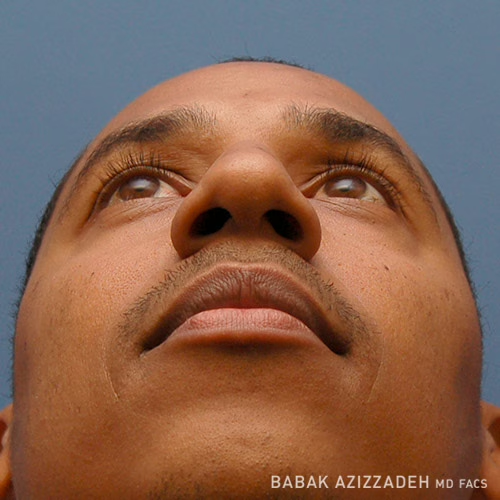
When it comes to facial cosmetic surgery, there’s no one-size-fits-all approach—nor should there be. Ethnic cosmetic surgery is about respecting individual features while enhancing appearance in a way that honors a patient’s background and identity.
Key Takeaways
- Ethnic cosmetic surgery enhances, not erases, cultural identity.
- Every face heals and scars differently—skin type matters.
- The best results balance proportion, not just change features.
- Good surgeons don’t chase trends—they study heritage.
- Consultation is about goals, not just procedures.
What Does Ethnic Cosmetic Surgery Really Mean?
Ethnic cosmetic surgery refers to procedures that acknowledge and preserve the unique facial traits of diverse populations. These include skin thickness, bone structure, scar behavior, and the cultural significance of specific features.
While all cosmetic procedures aim for harmony, ethnic facial plastic surgery adds a layer of nuance by ensuring results don’t erase or distort an individual’s identity. For instance, a cosmetic surgery plan for an East Asian patient may account for flatter nasal bridges, while a plan for a Black patient might focus on balancing wide nasal bases or fuller lips without altering core identity markers.
Related: The History of Facial Plastic Surgery: From Ancient Times to the Middle Ages [Infographic]
It’s Not About Changing Who You Are
Some people worry that getting surgery means giving in to Western beauty standards. That fear is valid, especially when certain features have been historically stigmatized.
But a well-trained facial plastic surgeon doesn’t aim to erase cultural identity. Instead, they help patients refine their appearance while keeping them recognizable—to themselves and their communities. It’s not about looking “less ethnic,” it’s about enhancing symmetry, balance, and expression.
What Makes an Ethnic Approach Different?
Working with diverse facial anatomy means understanding how different skin types react to surgery. For example, patients with darker skin tones are more likely to develop keloid scars. Others may have thicker dermis layers, which respond differently to lifts and lasers.
Ethnic facial plastic surgery also takes into account skeletal structure. A surgeon treating a Southeast Asian patient may plan differently than one treating a Middle Eastern patient, even for the same type of procedure.
Examples of Ethnic Cosmetic Procedures
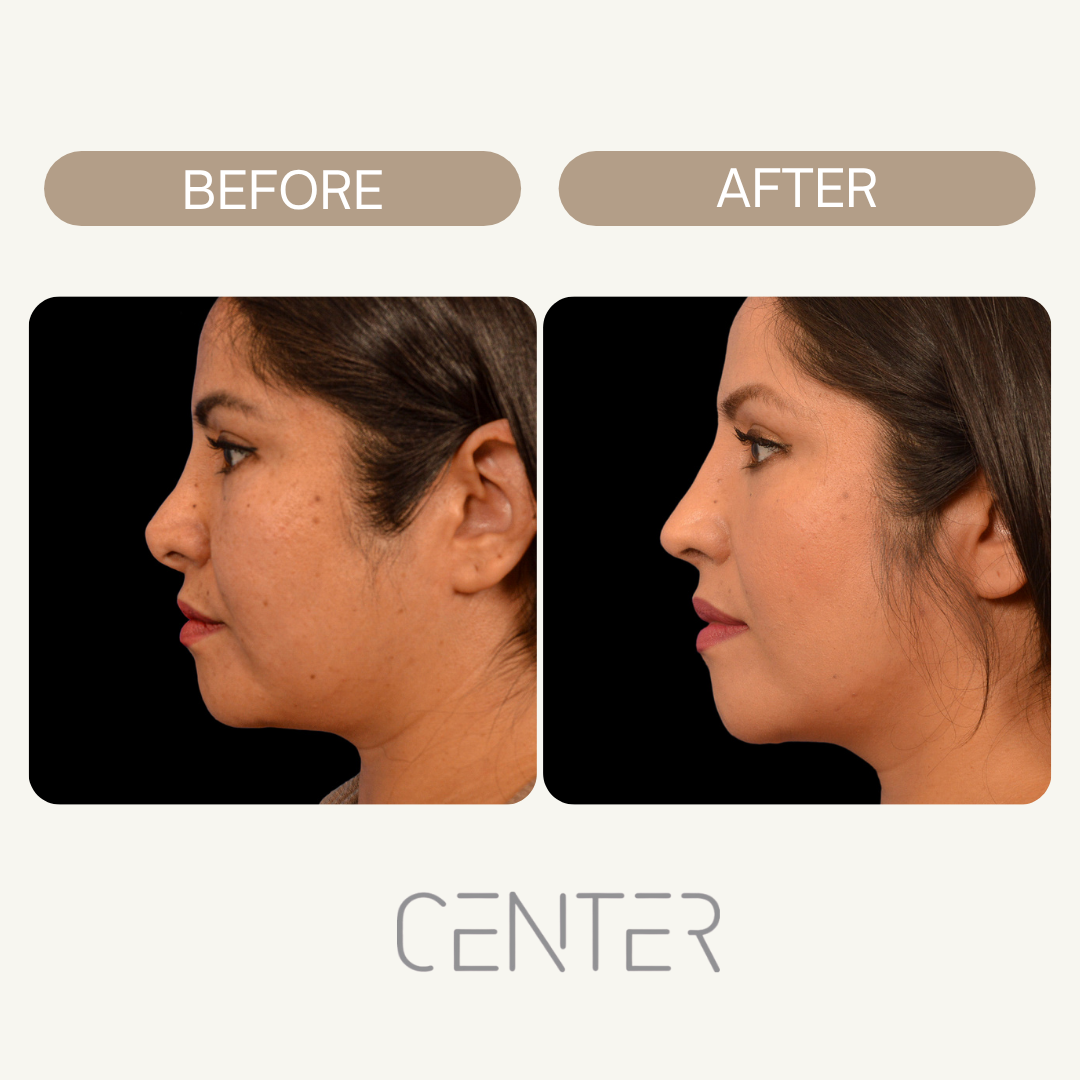
Ethnic cosmetic surgery encompasses a range of procedures tailored to highlight and refine features unique to a patient’s cultural background. While the types of surgeries may look familiar, the approach and purpose behind each are anything but generic.
- Rhinoplasty: Often requested by patients who want subtle refinements to nasal structure, ethnic rhinoplasty focuses on improving shape and function while preserving cultural features. Whether lifting the tip, narrowing the bridge, or reshaping nostrils, the aim is harmony, not homogenization.
- Blepharoplasty: This procedure is commonly performed to refresh the eyelid area without erasing ethnic traits such as monolids or epicanthic folds. Techniques are customized to respect natural contours while reducing puffiness or heaviness.
- Chin and jaw contouring: These surgeries help define lower facial structure, particularly when aiming for a stronger jawline or better balance with the nose and cheeks. For men and women alike, the key is improving proportions, not Westernizing the face.
- Cheek augmentation: Using fat grafting or implants, surgeons enhance volume in a way that maintains symmetry and respects skin thickness and facial width. It’s often used to achieve natural fullness in midface areas that tend to flatten with age.
- Lip reshaping or augmentation: Cultural perceptions of lip shape vary, so the goal is not volume for volume’s sake. Instead, the focus is on subtle contour improvements that enhance definition and flow naturally with surrounding features.
For instance, ethnic rhinoplasty aims to refine the nose without creating a generic or “standard” shape. The idea isn’t to copy a European nose—it’s to reduce a hump, lift a tip, or adjust nostrils while still looking authentic.
Why Cultural Sensitivity Matters
Surgery that doesn’t account for a person’s heritage can lead to results that feel unnatural—and, in some cases, completely erase features that reflect who they are. Trying to copy another person’s facial features without respecting natural anatomy often creates a lack of facial harmony, which is critical for both surgical success and overall attractiveness. The best outcomes don’t come from replacing identity, but from enhancing balance and proportion.
This is why Dr. Azizzadeh doesn’t follow a cookie-cutter approach. His goal is to enhance a person’s natural beauty without imposing someone else’s aesthetic ideals. He takes the time to understand each patient’s background, story, and goals—ensuring results that feel authentic, harmonious, and true to who they are.
Related: Ethnic Rhinoplasty
Managing Expectations
When patients bring in photos of celebrities or influencers, it’s often helpful to have an honest discussion about what’s realistic. A nose that flatters one face may not suit another’s bone structure or skin type.
During a consultation, it’s important to explore why you want a change, and what kind of result feels right—not just what’s trendy. That’s why understanding the misconceptions of cosmetic surgery is so important before deciding on a treatment path.

What If You’re Unsure?
It’s completely normal to feel unsure about cosmetic surgery, especially when your identity is an important part of your appearance. Deciding to make a change takes time, reflection, and the right kind of support.
When you’re choosing whether to move forward, it helps to be informed and emotionally ready. Your heritage, life experiences, and sense of self all matter—and should be part of the decision-making process. There’s no right or wrong timeline, just your own.
But if you’ve been thinking about it for a while and want answers, a consultation with someone who understands how to protect your identity—not override it—can bring clarity. Sometimes, just talking through your options is enough to help you decide.
Fat Grafting vs. Fillers in Ethnic Procedures
Concerns about fillers are common among patients of color, particularly when it comes to avoiding an overfilled or artificial look. For this reason, fat grafting has gained popularity as a more natural option that uses the patient’s own tissue to restore volume.
- Under-eye hollows: Fat grafting helps smooth out this delicate area without creating the puffiness that sometimes results from fillers. The result is a refreshed but soft appearance that blends with the rest of the face.
- Cheek enhancement: Patients looking to lift and fill their midface often prefer fat grafting for its subtle contouring. It provides volume without the sharp angles or exaggerated fullness some associate with synthetic fillers.
- Longevity: While fillers need routine maintenance, fat grafting offers results that tend to last much longer. This makes it a cost-effective and low-maintenance choice over time.
- Natural texture: Because fat is taken from your own body, it feels more organic when placed in facial areas. This can be especially reassuring for patients who are concerned about how enhancements might feel to the touch.
- Cultural fit: For many ethnic patients, fat grafting maintains the softness and shape of culturally distinct features rather than altering them. It aligns with a desire for harmony instead of dramatic change.
Compared to more traditional cosmetic procedures, fat grafting is often favored for its ability to respect and preserve identity while offering lasting enhancement.
Why Dr. Azizzadeh’s Approach Works
Dr. Azizzadeh is known for his ability to balance science, artistry, and cultural sensitivity. His clients don’t come to him looking to “fit in.” They come to feel more like themselves, with small changes that restore confidence.
His approach is rooted in honoring what makes you unique—not replacing it. Whether it’s the angle of your jaw or the shape of your eyelids, his goal is to make sure everything looks in harmony.
If you’ve been considering a cosmetic change and want to talk to someone who respects where you come from and where you’re going, schedule a consultation at CENTER for Advanced Facial Plastic Surgery. There’s no pressure—just perspective.
Conclusion
Ethnic cosmetic surgery isn’t about changing who you are—it’s about showing up with more confidence in how you already look. From subtle enhancements to structural changes, the best procedures reflect who you are and where you come from.
With the right surgeon, cultural identity and cosmetic improvement can coexist beautifully.
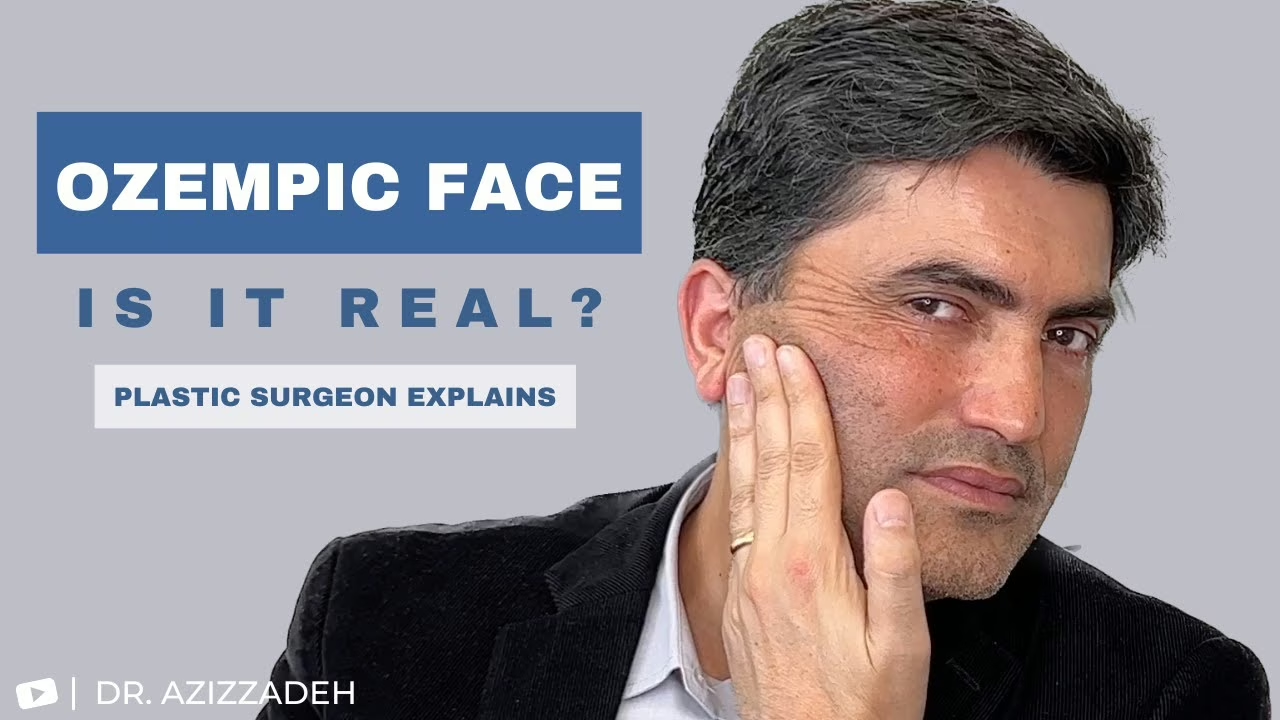
Best Cosmetic Procedures for Treating Ozempic Face
Ozempic Face refers to the volume and elasticity lost from the face after rapid weight loss. Whether it’s from medications like Ozempic or natural dieting, these facial changes can be frustrating. Fortunately, cosmetic procedures can help restore a more youthful appearance.
Key Takeaways
- Ozempic Face results from rapid weight loss leading to volume loss in the face.
- Dermal fillers can effectively restore lost volume and smooth out wrinkles.
- Fat transfer techniques like BeautiFill can rejuvenate the face with natural fat.
- Skin tightening treatments help combat sagging skin after weight loss.
- Consulting with a specialist is key to creating a personalized treatment plan.
Effective Solutions for Ozempic Face
You've probably heard about "Ozempic Face" and you're wondering what you can do about it. You're not alone! Lots of people are experiencing this after using medications like Ozempic for weight loss. Check out this video for more information: https://www.youtube.com/@facialplasticsla/search?query=ozempic
Understanding Ozempic Face
Ozempic Face happens when you lose a lot of weight quickly - especially in your face. As fat disappears, you might see hollow cheeks, deeper wrinkles, and sagging skin. Rapid weight loss makes it hard for the skin to tighten up at the same pace, especially if you're older or naturally have looser skin. Your face can end up looking deflated, making you look older than you feel, even if you're healthier overall.
Why Treatment is Essential
It’s not just about looks, though that’s definitely part of it. When your face loses volume, it can affect your confidence and how you see yourself. Sagging skin and hollowed features can make you feel self-conscious or disconnected from your reflection. Addressing these changes can help you feel more like yourself again—supporting both your self-image and emotional well-being.
Long-Term Effects of Ozempic
Ozempic and similar medications can have long-term effects on the face due to weakened collagen and elastin, leading to sagging and volume loss. It's crucial to consider preventative measures and treatments for a youthful appearance. Individual experiences with Ozempic face vary, so consult a specialist for personalized treatment plans.
Dermal Fillers for Volume Restoration
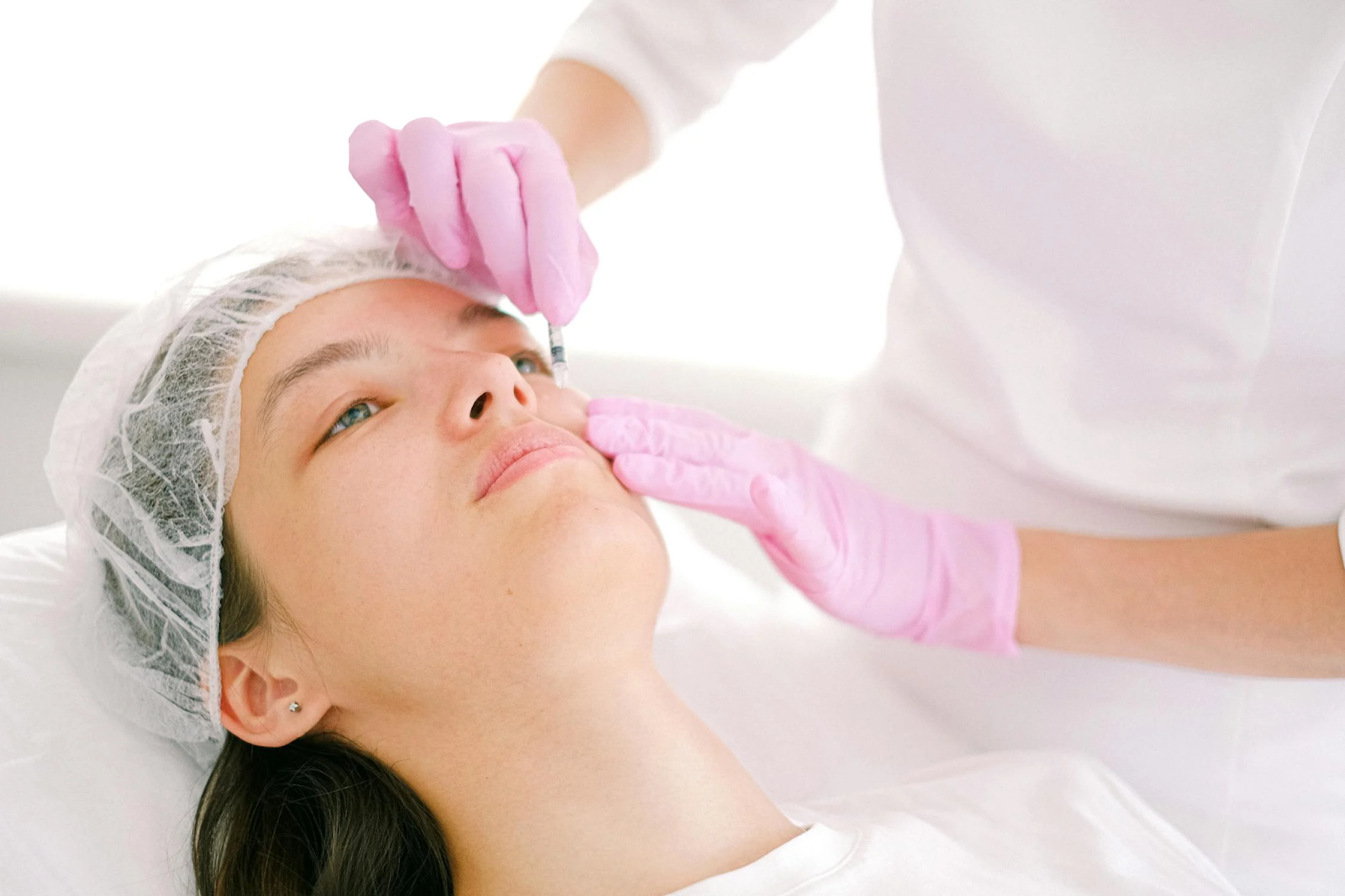
Ozempic Face, a condition caused by weight loss and medications like Ozempic, can cause volume loss and age-related changes. Dermal fillers can help address this issue.
Understanding Ozempic Face
Ozempic Face is essentially the loss of facial volume that can occur with rapid weight loss. When you lose weight quickly, you lose fat not just in your body, but also in your face. This can lead to a hollowed-out appearance, especially in the cheeks and temples. It's like the scaffolding under your skin is shrinking, causing sagging and wrinkles to become more noticeable. It's not a great look, and it can be frustrating when you're working hard to improve your health.
Why Treatment is Essential
Why bother with treatment? Well, for starters, it can really boost your confidence. When you look in the mirror and see a tired, aged face, it can affect your self-esteem. Addressing the volume loss can help you look and feel more like yourself. Plus, it's not just about vanity. Restoring volume can actually improve the overall structure of your face, making you look healthier and more vibrant. It's about feeling good in your own skin.
Types of Dermal Fillers
- Common types include Juvéderm and Restylane, which add volume and smooth wrinkles.
- Radiesse fillers stimulate collagen production for long-lasting results.
- Sculptra gradually restores volume over time.
- Each filler has unique texture and consistency, suited for specific areas of the face.
- HA fillers are commonly used in cheeks and lips, Radiesse for deeper folds and wrinkles.
Related: The Complete Guide to Dermal Filler Injections
Benefits of Hyaluronic Acid
Hyaluronic acid fillers are super popular for a reason. They're made from a substance that naturally occurs in your body, which means they're generally safe and well-tolerated. One of the biggest benefits is that they're reversible. If you don't like the results, an enzyme called hyaluronidase can be injected to dissolve the filler. HA fillers also attract water, which helps to hydrate the skin and give it a more youthful glow. Plus, they're versatile and can be used to treat a variety of concerns, from fine lines to deep wrinkles. Hyaluronic acid is a great option if you're new to fillers and want a safe, effective way to restore lost volume.
Choosing the Right Filler
Choosing the right filler really depends on your individual needs and goals. It's not a one-size-fits-all situation. You'll want to consider the area you're treating, the amount of volume loss, and your desired results. A consultation with a qualified injector is key. They can assess your face, discuss your options, and recommend the best filler for you. Don't be afraid to ask questions and express your concerns. Here are some things to keep in mind:
- Area of treatment: Some fillers are better suited for certain areas of the face.
- Desired results: Do you want subtle enhancement or a more dramatic change?
- Longevity: How long do you want the results to last?
It's important to have realistic expectations. Fillers can definitely improve your appearance, but they're not a magic bullet. They can't completely erase wrinkles or restore the same volume you had in your 20s. The goal is to enhance your natural features and help you look like a refreshed version of yourself.
Fat Transfer Techniques for Rejuvenation
Fat transfer techniques are increasingly popular for facial rejuvenation, particularly for volume loss, to restore a youthful look and are becoming increasingly popular for Ozempic Face solutions.
What is Fat Transfer?
Fat transfer, also known as fat grafting or fat transfer injections, is a natural alternative to synthetic dermal fillers. This procedure uses fat harvested from your own body—typically from areas like the abdomen or thighs—and strategically injects it into the face to restore volume and contour. It’s a popular choice for treating age-related hollowing or volume loss due to weight changes.
Advantages of Fat Transfer
Fat transfer has some serious advantages:
- Natural Results: Since it's your own fat, it looks and feels more natural than synthetic fillers.
- Long-Lasting: Fat transfer results can last for years, unlike fillers that need to be touched up every so often.
- Dual Benefit: You get the added bonus of contouring in the area where the fat is taken from, like your tummy or thighs.
Fat transfer is a great option if you're looking for a more permanent solution to volume loss in your face. It's a natural way to restore a youthful appearance and can have a significant impact on your overall look.
Ideal Candidates for Fat Transfer
The ideal candidate for fat transfer typically is someone who:
- Has experienced volume loss in their face due to weight loss or aging.
- Has enough excess fat in other areas of their body to harvest.
- Is in good overall health and has realistic expectations about the results.
If you're considering fat transfer, it's important to talk to a qualified professional who can assess your individual needs and determine if it's the right option for you.
Related: Fat Transfers Explained
Skin Tightening Treatments to Combat Sagging
Hey, have you noticed some sagging skin after weight loss, maybe even related to using medications like Ozempic? It's a common concern, and luckily, there are treatments to help! Check out this video from Facial Plastics LA for more info: Ozempic. Let's explore some options to get your skin looking firmer.
Non-Surgical Skin Tightening Options
If you're not quite ready for surgery, there are some great non-invasive options out there. These treatments focus on stimulating collagen production to tighten the skin gradually. Think of it as encouraging your skin to bounce back on its own.
- Ultrasound Therapy (Ultherapy): This uses focused ultrasound energy to target deep layers of the skin, stimulating collagen production. It's great for lifting and tightening sagging skin, especially around the neck and lower face. Ultherapy is a great non-invasive option.
- Radiofrequency (RF) Therapy: RF treatments use energy to heat the skin, which also stimulates collagen and elastin production. This can improve skin texture and firmness over time.
- Microneedling with Radiofrequency (e.g., Morpheus8): This combines microneedling with RF energy to deliver targeted heat to deeper layers of the skin. It's effective for improving skin texture, reducing wrinkles, and tightening mild to moderate sagging.
- Sylfirm X: A next-generation RF microneedling treatment that uses dual-wave technology to address skin laxity, pigmentation, and redness. It’s effective for tightening skin while also improving tone and texture with minimal downtime.
Non-surgical options are appealing because they typically involve minimal downtime. You might experience some redness or swelling, but you can usually return to your normal activities right away.
Laser Treatments Explained
Laser treatments are another way to address sagging skin. Different types of lasers work in different ways, but the goal is usually to stimulate collagen production and improve skin texture.
- Ablative Lasers: These lasers remove the outer layers of damaged skin, promoting new collagen growth. They can be effective for treating wrinkles, scars, and uneven skin tone, but they also require more downtime.
- Non-Ablative Lasers: These lasers heat the underlying skin without removing the outer layers. They're less invasive than ablative lasers and have a shorter recovery time, but they may require more treatments to achieve the desired results.
- Fractional Lasers: These lasers treat only a fraction of the skin at a time, leaving the surrounding tissue intact. This can reduce downtime and improve healing.
Radiofrequency Therapy Benefits
Radiofrequency therapy (RF) is a popular non-invasive method for skin tightening due to its collagen stimulation, minimal downtime, and versatility. It can be used on various areas of the face and body to address sagging skin and wrinkles. Consistency is key, so expect multiple sessions for optimal results. Consult a qualified professional for the best results.
Surgical Options for Lasting Results


Facelift Techniques for Ozempic Face
Facelifts are popular for addressing sagging skin and restoring a youthful contour. There are different types, including SMAS, Mini, deep plane facelifts, and Mid-Facelifts, depending on specific needs. A facelift can be a long-term solution for Ozempic faces, offering impressive results despite not being a quick fix.
Combining Procedures for Optimal Outcomes
Sometimes, a facelift alone isn't enoug h. You might need to combine it with other procedures to get the best possible results. Think of it like this: you're not just tightening the skin, you're also restoring volume and addressing other age-related changes.
Here are some procedures that are often combined with a facelift:
- Eyelid Surgery (Blepharoplasty): Addresses sagging or puffy eyelids.
- Neck Lift (Platysmaplasty): Tightens the neck muscles and removes excess skin.
- Fat Grafting: Adds volume to areas that have lost it, like the cheeks.
Combining procedures can give you a more balanced and natural-looking result. It's like hitting the reset button on your face.
Recovery and Expectations
Okay, let's be real: surgery isn't a walk in the park. Recovery takes time, and you need to be prepared for that. Expect some swelling, bruising, and discomfort. Your surgeon will give you specific instructions on how to care for your incisions and manage any pain.
Here's a general timeline:
- First Week: Rest, ice, and pain medication.
- 2-3 Weeks: Swelling and bruising start to subside.
- Several Months: Final results become visible.
It's important to have realistic expectations. A facelift can make you look younger and more refreshed, but it won't completely change your appearance. And remember, results can vary from person to person. Talk to your surgeon about what you can realistically expect from the procedure.
Preventative Measures for Maintaining Youthful Appearance
Weight loss can lead to changes in your face, including the dreaded "Ozempic Face." To maintain your skin's health, make lifestyle changes such as hydration, protein intake, and sun protection. Drinking 1-2 liters of water daily, consuming enough protein, and wearing sunscreen are essential for maintaining skin and muscle quality. A simple skincare routine, including gentle cleansing, regular exfoliation, and moisturizing, can help prevent premature aging. Choose a moisturizer that is suitable for your skin type and contains ingredients like hyaluronic acid for hydration.
Consultation with a Specialist
Sometimes, you need a professional opinion. A consultation with a dermatologist or cosmetic surgeon can provide personalized advice and treatment options. They can assess your skin's condition, discuss your concerns, and recommend the best course of action for you. Don't be afraid to ask questions and explore all your options. It's all about finding what works best for you.
Personalized Treatment Plans for Best Results
Personalized treatment plans are essential for cosmetic procedures, addressing specific concerns, skin type, and goals. Consultation with specialists helps identify treatment options and pros/cons. Regular follow-ups and home skincare routines are crucial for maintaining results. Dr. Azizzadeh believes every patient deserves a tailored treatment plan.
Final Thoughts on Treating Ozempic Face
If you've noticed changes in your face after using Ozempic, you're not alone. Many people experience what’s called "Ozempic Face" due to rapid weight loss. But don’t worry, there are plenty of options to help you regain that youthful look. From dermal fillers to fat transfer techniques, you can find a treatment that fits your needs. It's important to consult with a qualified professional who can guide you through the best choices for your situation. Remember, looking good is about feeling good too, so take the steps to restore your confidence and enjoy your new body without the worry of looking older than you feel.
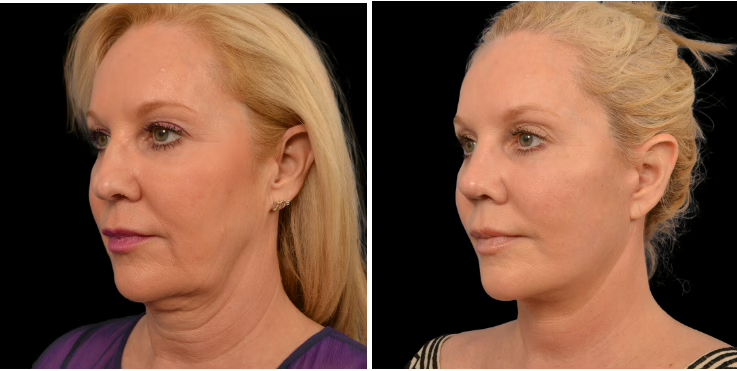
The Complete Guide to Deep Plane Facelift
A facelift should never make you look like a different person or someone who has had work done. It should make you look rested, refined, and authentically yourself. That principle is at the core of every Dr. Azizzadeh deep plane facelift performed at the CENTER for Advanced Facial Plastic Surgery in Beverly Hills.
Over the years, patients have come in with the same concern expressed different ways: I don't want to look pulled. I still want to look like me. Those concerns are valid. Most people aren't trying to change their face. They're trying to preserve the version of themselves that feels aligned with how they feel on the inside.
The deep plane facelift is one of the most advanced procedures in modern facial rejuvenation because it doesn't rely on pulling the skin tighter. Instead, it works on the deeper structures of the face, the tissues that actually descend with age. When performed correctly and combined with the right supporting procedures, the result isn't a tight face. It's a naturally restored face.
Key Takeaways
- Dr. Babak Azizzadeh is a dual board-certified facial plastic surgeon recognized globally for his deep plane facelift expertise and facial nerve safety approach.
- Every deep plane facelift performed by Dr. Azizzadeh is built around the patient's anatomy, not a one-size-fits-all technique.
- A deep plane facelift lifts the deeper layers of the face, not just the skin.
- It provides natural, long-lasting results without a pulled appearance.
- Recovery takes about two to four weeks, with improvements continuing over months.
- Ideal candidates have moderate to severe facial aging and good overall health.
- The procedure is more technically advanced than a traditional facelift, requiring a highly skilled surgeon.
What Is a Deep Plane Facelift?
A deep plane facelift is a surgical procedure that repositions the deeper layers of the face rather than simply tightening the skin. To understand why that matters, it helps to understand how the face actually ages. Aging isn't just a skin problem. Over time, facial fat pads descend, ligaments lose their support, skin loses elasticity, the jawline softens, jowls develop, and the neck begins to lose definition. If you only tighten the skin, you're treating the surface while ignoring the foundation.
The deep plane facelift works beneath the SMAS layer, which stands for the superficial musculoaponeurotic system, and releases key retaining ligaments. This allows the deeper facial tissues to be repositioned more naturally as a unified structure, restoring the cheek, jawline, lower face, and often the neck together. The result is lifting and releasing rather than pulling.
It's also worth knowing the difference between a standard deep plane facelift and an extended deep plane facelift. The extended version repositions both the platysma and SMAS, addressing the entire face and neck as one continuous unit. This significantly improves deep neck results as well, particularly when structural neck contouring is also performed.
How Does a Deep Plane Facelift Work?
Surgery begins with small incisions near the ears, sometimes extending into the hairline, depending on the patient's anatomy and goals. From there, the surgeon accesses and adjusts the deeper facial layers rather than just the skin surface. By repositioning these underlying structures, the procedure smooths deep folds, lifts sagging jowls, and restores natural volume to the cheeks.
Unlike older facelift techniques that relied on pulling the skin tighter, the deep plane approach preserves facial volume and maintains a more youthful, natural-looking result. Because the work happens at a deeper level, results also tend to be more durable and long-lasting.
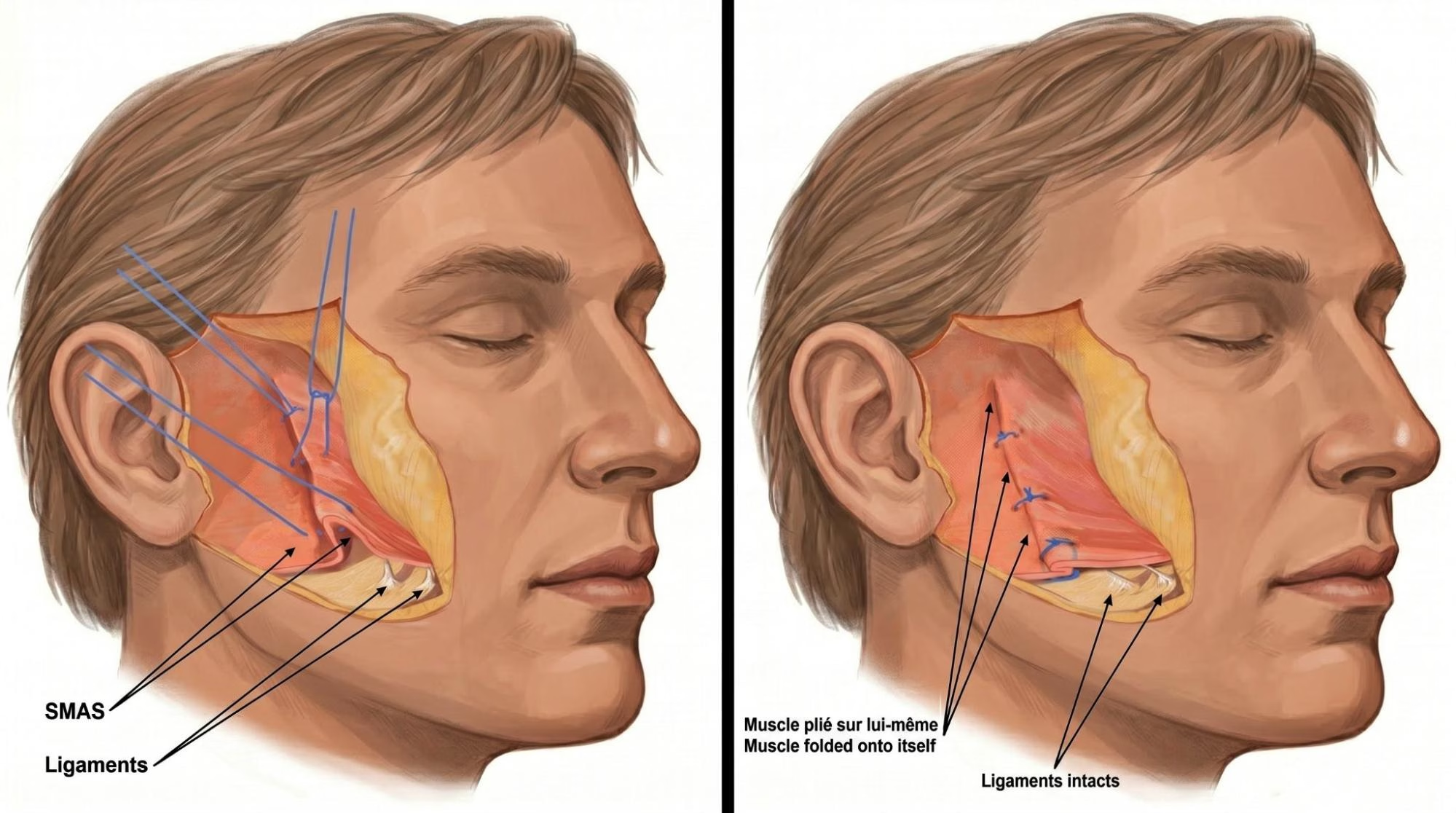 What Does a Deep Plane Facelift Improve?
A deep plane facelift addresses many of the most common and frustrating signs of facial aging, especially in the midface, lower face, jawline, and neck. It can meaningfully improve:
- Sagging cheeks
- Jowls and loss of jawline definition
- Deep nasolabial folds
- Marionette heaviness
- Neck laxity and lower facial skin looseness
- Facial heaviness from descended soft tissue
- A tired or aged appearance that no longer responds well to injectables
The deep plane facelift is powerful because it treats the face in three dimensions. It doesn't simply lift skin upward. It restores deeper soft tissue to a more youthful and anatomically appropriate position. A natural facelift isn't created by tightening harder. It's created by lifting the right structures in the right direction.
Deep Plane Facelift Before and After
Before surgery, patients typically present with loose skin, deep folds, and hollowed or heavy cheeks. After a properly performed deep plane facelift, the most noticeable changes appear in the midface, jawline, and neck. The face looks lifted and refreshed without the artificial tightness associated with older techniques.


NOTE: You can view additional before and after results in the deep plane facelift before and after gallery and the full facial surgery gallery.
Why Dr. Azizzadeh Uses an Anatomy-Driven Approach
There is no single facelift that is right for everyone. Some patients need a deep plane facelift. Some need a deep plane facelift combined with structural neck contouring. Some need a more limited lower facelift. Some need fat grafting, eyelid surgery, brow refinement, or nonsurgical maintenance. And some patients aren't ready for surgery yet.
Dr. Azizzadeh's responsibility is to work with each patient to determine the actual cause of their aging pattern. Is it skin laxity? Is it cheek descent? Is it neck muscle banding or deeper structural neck issues? Is it volume loss or sun damage? Once the anatomy is clearly understood, the right treatment plan becomes much clearer.
This is why Dr. Azizzadeh doesn't chase trends. The deep plane facelift is not better simply because it's popular. It's better suited to the right patient because it addresses the underlying structural causes of facial aging.
Dr. Babak Azizzadeh, MD, FACS is a dual board-certified facial plastic and reconstructive surgeon based in Beverly Hills. He is President-elect of the American Academy of Facial Plastic and Reconstructive Surgery and has trained surgeons from around the world in advanced deep plane techniques. His background in facial nerve surgery directly informs his approach to facelift safety, restraint, and natural results. You can find his published research on PubMed and his media features at facialplasticsbh.com/in-the-news.
Deep Plane Facelift vs. SMAS Facelift
One of the most common questions patients ask about deep plane vs SMAS facelift is simple: what's the actual difference? The SMAS is a strong layer of connective tissue beneath the skin. Most modern facelifts involve it in some way. The key difference is how the surgeon works with it.
In a traditional SMAS facelift, the surgeon separates the skin from the SMAS and tightens or folds it. In a deep plane facelift, the surgeon works beneath the SMAS and platysma muscle, releases the retaining ligaments, and repositions the deeper facial tissues more naturally as a composite unit. Both can be effective. The question is which technique best matches the patient's anatomy and goals.
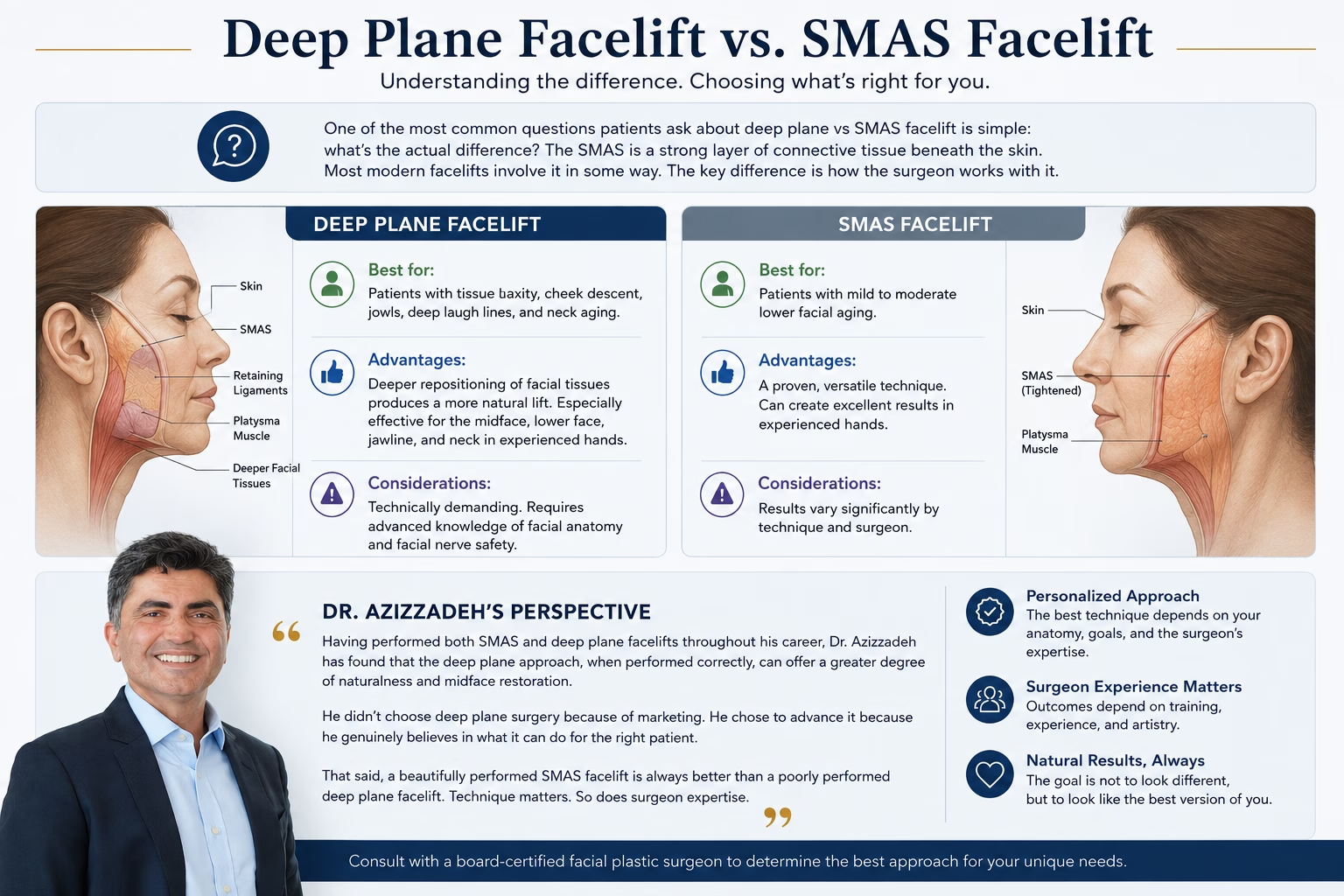 Deep Plane Facelift
- Best for: Patients with tissue laxity, cheek descent, jowls, deep laugh lines, and neck aging.
- Advantages: Deeper repositioning of facial tissues produces a more natural lift. Especially effective for the midface, lower face, jawline, and neck in experienced hands.
- Considerations: Technically demanding. Requires advanced knowledge of facial anatomy and facial nerve safety.
SMAS Facelift
- Best for: Patients with mild to moderate lower facial aging.
- Advantages: A proven, versatile technique. Can create excellent results in experienced hands.
- Considerations: Results vary significantly by technique and surgeon.
Dr. Azizzadeh's Perspective
Having performed both SMAS and deep plane facelifts throughout his career, Dr. Azizzadeh has found that the deep plane approach, when performed correctly, can offer a greater degree of naturalness and midface restoration. He didn't choose deep plane surgery because of marketing. He chose to advance it because he genuinely believes in what it can do for the right patient. That said, a beautifully performed SMAS facelift is always better than a poorly performed deep plane facelift. Technique matters. So does surgeon expertise.
For a deeper overview of facelift options, see different types of facelifts explained.
Deep Plane Facelift vs. Mini Facelift
The term mini facelift is more of a marketing phrase than a clearly defined surgical technique. One surgeon's mini facelift might involve a short incision and limited skin elevation. Others could include a meaningful SMAS modification. The phrase usually suggests something smaller, less invasive, and less costly. In reality, it can mean very different things depending on who's performing it.
Dr. Azizzadeh advises patients to be careful with the mini facelift concept. If an incision is being made on your face, the right procedure needs to be chosen to actually achieve the desired result. The goal should never be to pick the smallest operation just because it sounds easier. All facelift procedures, whether labeled mini, SMAS, lower facelift, or deep plane, carry risks. Smaller doesn't automatically mean safer, and less invasive doesn't always mean better.
The best procedure is the least invasive one that can safely and beautifully achieve the result you actually need. Sometimes that means a comprehensive deep plane face and neck lift. Sometimes it means continuing nonsurgical treatment until the timing and anatomy are right.
Deep Plane Facelift vs. Endoscopic Facelift
Endoscopic facial rejuvenation uses small incisions and camera-assisted techniques. It can be very useful for the brow, temples, and sometimes the midface. For younger patients with early facial descent and minimal loose skin, an endoscopic approach may be appropriate.
That said, the endoscopic facelift typically uses a vertical vector, which limits customization, and may not allow full repositioning of lax tissues. That full repositioning is a hallmark of the deep plane face and neck lift.
Endoscopic Lift May Be Appropriate For:
- Early cheek, brow, or temple descent
- Mild midface flattening
- Minimal excess skin
- Younger patients with good skin elasticity
- Patients without significant jowls or neck laxity
Deep Plane Facelift Is Usually More Appropriate For:
- Jowling and lower face heaviness
- Neck laxity and loose skin
- Sagging cheeks
- Loss of jawline definition
- More advanced tissue descent
Smaller incisions are appealing, but they aren't the most important part of the operation. What matters is whether the procedure can adequately correct the anatomy. If a patient has true jowling, loose neck skin, and lower facial descent, a purely endoscopic approach may not provide enough correction.
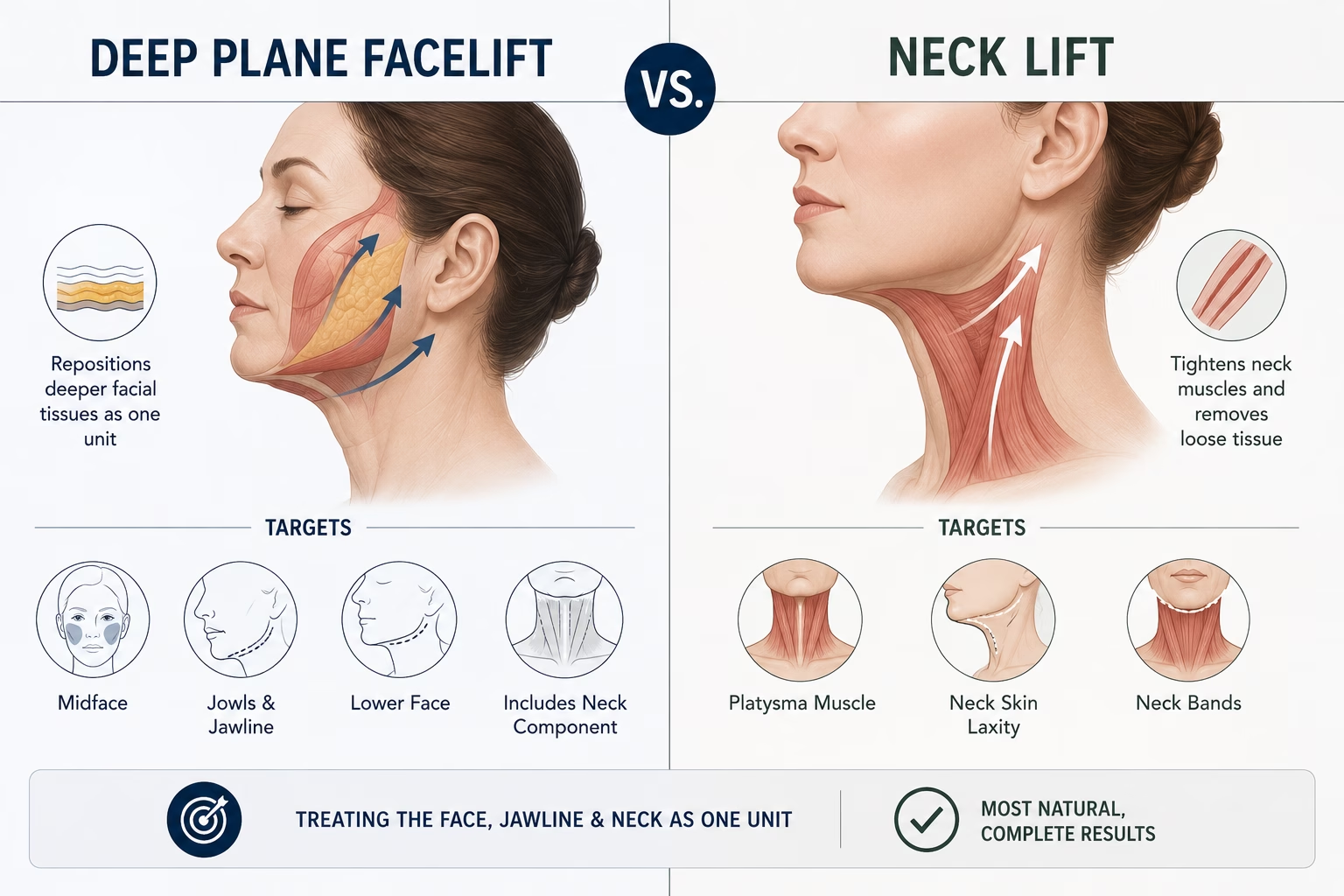 Deep Plane Facelift vs. Neck Lift
The face and neck age together, which is why most patients benefit from a combined approach. In Dr. Azizzadeh's practice, a deep plane facelift always incorporates a neck lift component. The more important question isn't what the procedure is called. It's what anatomy is actually being treated.
Some patients also have deeper structural neck issues that go beyond what a standard platysmaplasty can address. These may include prominent or ptotic submandibular glands, deep subplatysmal fat, or unfavorable chin and skeletal anatomy. When appropriate, Dr. Azizzadeh performs structural neck contouring to address these deeper structures as part of a comprehensive facial rejuvenation plan.
A rejuvenated face with an untreated neck can look incomplete. Treating the face, jawline, and neck as one continuous aesthetic unit is what produces the most natural results.
Why Deep Neck Anatomy Matters as Much as the Facelift
A beautiful deep plane facelift can restore the cheek, soften the jowl, and reposition the lower face. But if the deeper structures of the neck aren't addressed with the same level of precision, the result won't look complete.
The neck determines how the jawline is seen. It creates the transition between the face and the body, defines the cervicomental angle, and determines how light moves across the lower face. This is why Dr. Azizzadeh uses the term structural neck contouring. The neck has to be treated structurally, not superficially.
This approach is detailed in his peer-reviewed publication Extended Deep Plane Facelift and Structural Neck Contouring: Technical Considerations for Comprehensive Surgical Facial Rejuvenation, which outlines the advanced anatomic knowledge and technical skill required to perform this combined procedure safely and optimally.
When evaluating a patient, Dr. Azizzadeh looks at the entire face-neck unit: the mandible, chin projection, hyoid position, platysma, submandibular glands, superficial and deep fat compartments, buccal fat pad, parotid region, jowls, and facial nerve anatomy. A facelift that treats only the face while ignoring the neck leaves the result unfinished.
The Submandibular Glands and Neck Aesthetics
The position and size of the submandibular glands matter more to neck results than most people realize. A prominent or ptotic gland creates fullness beneath the jawline and disrupts the contour that should define the transition between the mandible and upper neck.
When modification is indicated, the goal is almost never complete removal. It's typically a reduction of the lower portion that contributes to visible fullness, with salivary function preserved. Not every patient needs this. The right approach is always anatomy-based.
The Buccal Fat Pad, Parotid Region, and Their Connection to the Neck
The buccal fat pad is one of the most misunderstood structures in facial aesthetics. It spans a large region of the face, from the temple and cheekbone area all the way to the lower face and upper jawline. Because of this, it can influence facial shape in younger patients and contribute to heaviness, jowling, and loss of definition as the face ages.
Dr. Azizzadeh has published extensively on this topic, including the paper Buccal Fat Pad Modification in Deep Plane Facelift: Technical and Facial Nerve Considerations. His view is that buccal fat should never be treated as a trend or a routine removal procedure. Its management must be individualized to each patient.
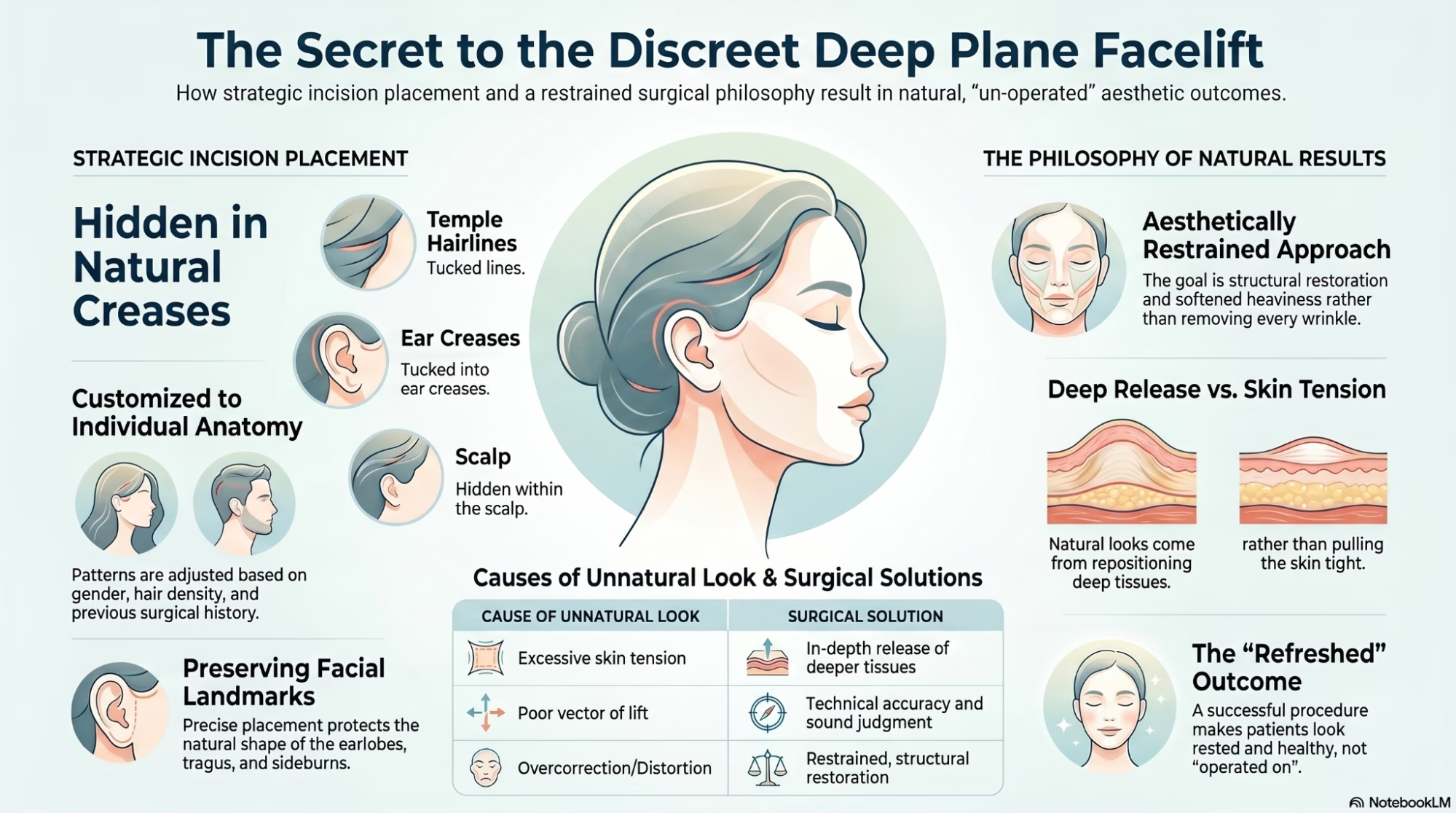 Where Are Deep Plane Facelift Incisions Placed?
Facelift incisions are one of the most important parts of the entire procedure. A facelift scar shouldn't announce itself. It should be placed thoughtfully in natural creases, around the ear, and in the hairline so it can heal as discreetly as possible.
A typical deep plane face and neck lift incision pattern includes placement in the temple hairline, around the sideburn area (depending on gender and hairline), in natural creases in front of the ear, around or behind the tragus, around the earlobe, behind the ear, into the scalp hairline, and sometimes beneath the chin for neck work.
The incision pattern must be customized. A patient with a high hairline, male beard growth, thin hair, or prior facelift scars requires a different strategy. The goal is not only to lift the face. It's to preserve the hairline, sideburn, ear shape, tragus, earlobe, and natural frame of the face.
Will a Deep Plane Facelift Look Natural?
It should, when it's performed with technical accuracy and sound surgical judgment. The unnatural facelift look usually comes from excessive skin tension, poor vector of lift, inadequate release of deeper tissues, overcorrection, distortion around the mouth or ear, or failure to treat the neck appropriately.
A natural facelift Beverly Hills patients consistently describe as their goal is one that's aesthetically restrained. The aim isn't to remove every sign of age. It's to restore facial structure, improve definition, soften heaviness, and create a more refreshed appearance while preserving the face's individuality. A successful facelift shouldn't make people ask what you had done. It should make them think you look rested, healthy, and confident.
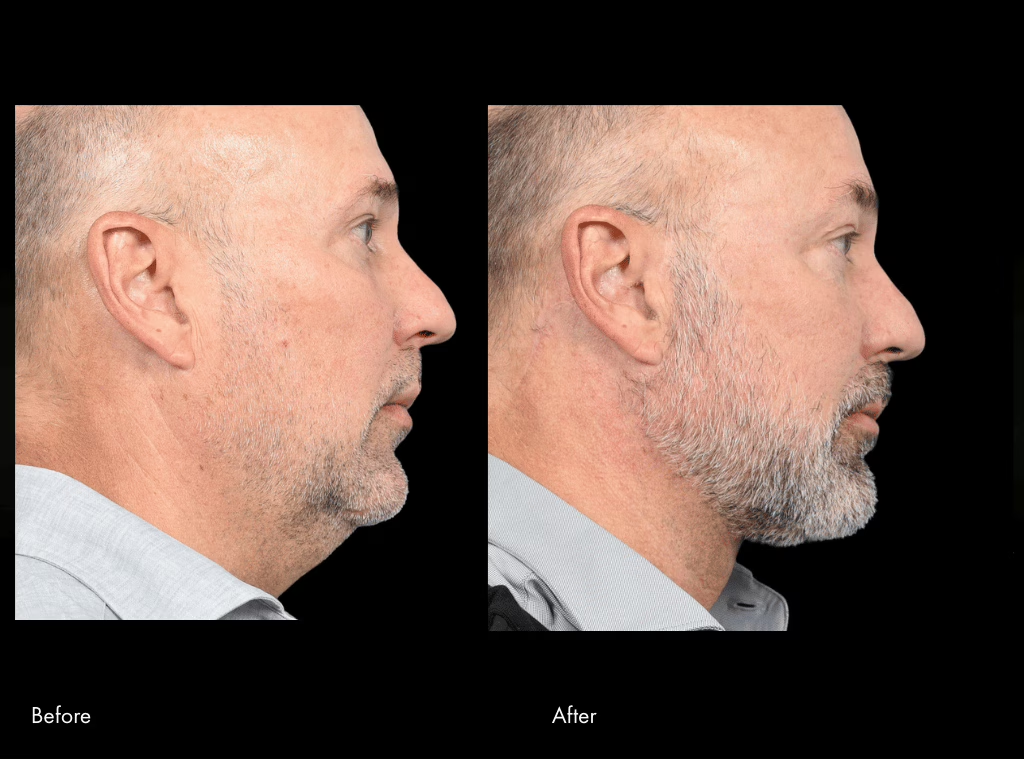 Who Is a Good Candidate for a Deep Plane Facelift?
This procedure is best suited for individuals experiencing visible signs of aging that are structural rather than only surface-level. Good candidates typically have moderate to severe skin laxity, sagging jowls, and deep facial changes that can't be meaningfully corrected with nonsurgical treatments. Healthy skin elasticity and realistic expectations also matter.
You may be a candidate if you have:
- Sagging cheeks or jowls
- Loose lower facial skin or loss of jawline definition
- Neck laxity or heavy fullness in the neck
- Deepened folds caused by tissue descent
- Frustration with temporary injectable treatments
- Good general health and realistic expectations
You may not be ready if your aging is very mild, your main concern is skin texture only, you smoke and aren't willing to stop, or you're not medically cleared for surgery. In those cases, nonsurgical treatment or observation is the more appropriate path, and Dr. Azizzadeh will say so directly during a consultation.
What a Deep Plane Facelift Can and Cannot Do
It Can:
- Lift sagging cheeks and improve jowls
- Define the jawline and restore lower facial structure
- Improve deep folds caused by tissue descent
- Improve the neck when combined with neck lifting
- Reduce the need for excessive filler
- Create a more refreshed and youthful facial contour
It Cannot:
- Stop aging
- Change your fundamental identity
- Remove fine lines or correct surface discolorations
- Replace laser resurfacing for skin quality
- Replace Botox for expression lines
- Correct eyelid aging unless eyelid surgery is also performed
- Address structural neck issues unless structural neck contouring is included
This is why Dr. Azizzadeh thinks in terms of comprehensive facial rejuvenation rather than one isolated procedure. The deep plane facelift restores structure. Other treatments may be needed to refine the eyes, skin, brow, lips, or facial volume.
 Should a Deep Plane Facelift Be Combined With Other Procedures?
Often, yes, but only when the anatomy supports it. In Dr. Azizzadeh's practice, a deep plane facelift is naturally combined with a neck lift. Depending on the patient's goals and anatomy, it may also be combined with structural neck contouring, blepharoplasty, brow lift or refinement, facial fat grafting, chin augmentation, laser resurfacing, or buccal fat repositioning in selected cases.
The goal is not to do more procedures. The goal is to create balance. If the lower face is rejuvenated but the eyelids remain heavy, the result looks incomplete. A beautiful facelift is a complete understanding of facial harmony.
What Is the Best Age for a Deep Plane Facelift?
There's no universal best age. Patients often ask what the best age for facelift surgery actually is, and the honest answer is that it depends entirely on anatomy. Some patients are candidates in their 30s and 40s due to genetics, weight loss, or early anatomic issues like prominent submandibular glands or poor neck definition. Others are better suited in their 50s, 60s, or beyond. Candidacy depends more on anatomy and degree of aging than on a number.
What matters most is whether the anatomy justifies surgery, whether you're personally ready, and whether you're medically and emotionally prepared for the procedure and recovery. Dr. Azizzadeh evaluates the face with your goals in mind, not just your birthdate.
Am I Too Young for a Facelift?
You're too young for a deep plane facelift if your anatomy doesn't justify surgery. That may sound obvious, but it matters. Surgery shouldn't be performed because it's trending or because someone on social media had one. If you have early jowling, genetic lower face heaviness, loose neck skin, or filler fatigue, you may be a younger candidate. The goal in those cases is structural correction that looks subtle and long-lasting.
Am I Too Old for a Facelift?
Age alone doesn't determine candidacy. Health, anatomy, healing ability, skin quality, and realistic expectations matter more than age. Some patients in their 70s are excellent surgical candidates. Before surgery, Dr. Azizzadeh evaluates medical history, medications, smoking status, blood pressure, healing risk, and overall health. Safety is always the first priority.
 How Long Does a Deep Plane Facelift Last?
Deep plane facelift results are often discussed in the 10- to 15-year range, though this varies based on skin quality, anatomy, genetics, lifestyle, sun exposure, weight stability, and the quality of the surgical technique. The procedure doesn't stop aging. What it does is reset the facial foundation. After surgery, the face continues to age, but from a more restored starting point.
Factors that influence longevity include the surgeon who performed the procedure, skin elasticity, bone structure, facial volume, degree of preoperative aging, smoking history, sun damage, and weight changes over time. Patients who maintain a stable weight, protect their skin from sun exposure, and follow up with thoughtful nonsurgical maintenance tend to preserve their results longer.
What Is Recovery Like After a Deep Plane Facelift?
Recovery varies based on the patient and the extent of surgery. Most patients should expect swelling, bruising, temporary numbness around the ears, and some discomfort in the early days. These are normal parts of healing. The face gradually settles over weeks to months.
Week One
The first week is focused on rest, swelling control, wound care, and careful follow-up. Patients should keep the head elevated, avoid strenuous activity, and follow all postoperative instructions closely.
Weeks Two to Three
Bruising and swelling continue to improve. Many patients begin to feel more comfortable socially, though the face is still healing.
Weeks Three to Six
Patients often resume more normal activity depending on their healing and the specific procedure. Exercise and travel should be cleared by the surgical team.
Three Months and Beyond
The face continues to refine. Swelling decreases, incisions mature, and the result becomes more natural. Incision lines typically fade significantly over time, though healing varies from person to person.
Deep Plane Facelift vs. Nonsurgical Rejuvenation
Nonsurgical treatments have an important place in facial rejuvenation, and the question of nonsurgical facelift vs surgery is one Dr. Azizzadeh addresses frequently. Botox, Daxxify, fillers, biostimulators like Sculptra and Radiesse, laser resurfacing, chemical peels, and medical-grade skincare can all improve dynamic wrinkles, volume loss, skin texture, and early laxity. They're excellent for maintenance, prevention, and minor refinement.
But nonsurgical treatments can't do what surgery does. They can't remove meaningful excess skin, release retaining ligaments, reposition descended facial tissues, or rebuild the jawline the way a deep plane facelift can. The distinction matters: nonsurgical treatments are for surface refinement, while surgery addresses structural aging.
Filler Fatigue: When Injectables Start Working Against You
There's a point where repeated filler use can become less effective, and sometimes counterproductive. When filler is used repeatedly to compensate for tissue descent, the face may begin to look heavier, rounder, or less defined. The patient doesn't necessarily look younger. They may just look fuller, and unnatural puffiness can set in.
This is what many people call filler fatigue. Filler works well when it's used for the right reasons, but it can't correct every aspect of aging. When the face needs lifting, adding volume isn't always the answer. At that point, a surgical consultation can be genuinely clarifying, not because every patient needs surgery, but because it helps define what's actually possible.
Pros and Cons: Surgery vs. Nonsurgical Treatment
Surgery can: reposition descended tissues, improve jowls, restore jawline definition, address loose skin, improve the neck, and provide longer-lasting structural correction.
Surgery requires: anesthesia, incisions, recovery time, and acceptance of surgical risks. It also requires a qualified surgeon with significant facelift expertise.
Nonsurgical treatment can: improve fine lines, restore mild volume loss, improve skin texture, and require little downtime. It can also maintain surgical results long-term.
Nonsurgical treatment cannot: remove significant loose skin, fully correct jowls, or reposition descended tissues. Overuse can also lead to an unnatural swollen appearance.
The best rejuvenation plans often combine surgical procedures for structure with nonsurgical treatments for refinement and maintenance. Surgery resets the foundation, and treatments like Botox, fillers, and laser resurfacing help preserve and extend those results over time.
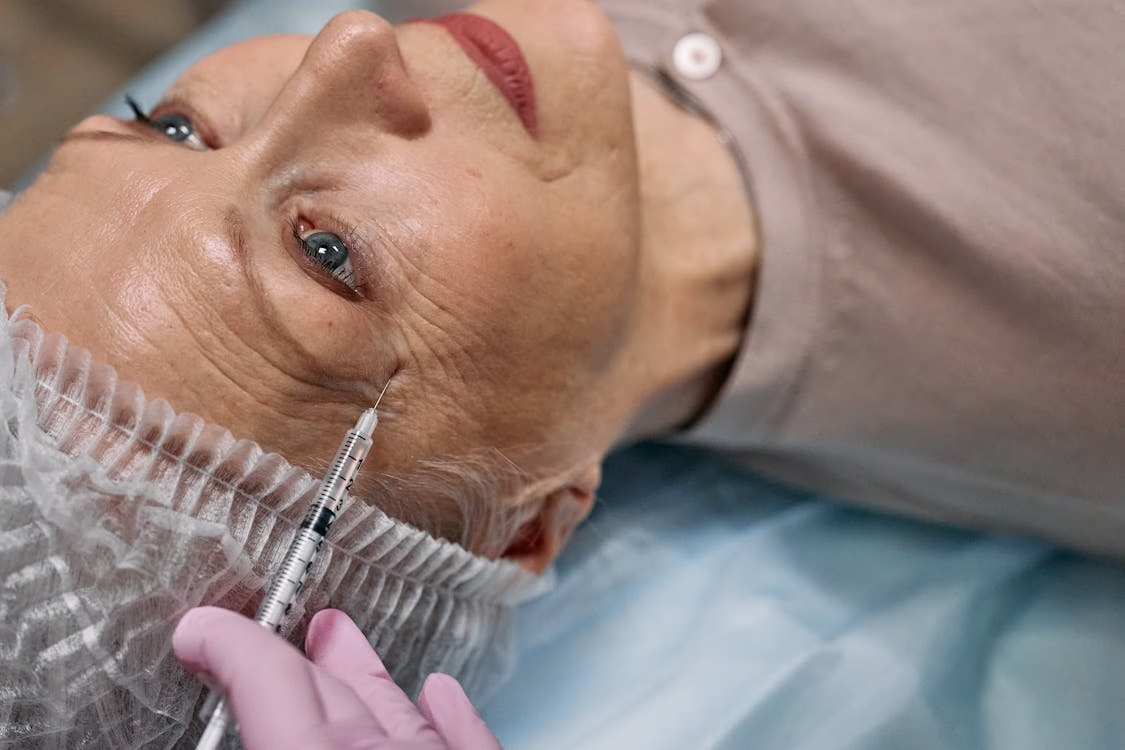 Nonsurgical Alternatives to a Deep Plane Facelift
For those not ready for surgery, nonsurgical treatments can provide temporary improvements. The most common options include injectable fillers to restore lost volume in the cheeks and jawline, Botox to reduce wrinkles and slow further sagging, laser resurfacing and microneedling to improve skin tone and texture, and ultrasound or radiofrequency treatments to tighten the skin non-invasively.
These treatments offer subtle enhancements, but they don't provide the lasting structural correction of a deep plane facelift. They're best understood as a complement to surgery, not a replacement for it.
What Does a Deep Plane Facelift Cost?
The cost of a deep plane facelift varies depending on the surgeon's expertise, location, and any additional procedures performed. Prices typically range from $15,000 to $50,000. While more expensive than a traditional facelift, the deep plane technique's longer-lasting results reduce the need for repeated touch-ups over time.
Factors that influence cost include the surgeon's experience and reputation, the geographic location of the practice, facility and anesthesia fees, and whether additional procedures such as fat grafting or neck lift are included. For many patients, the longer-lasting nature of the deep plane result makes it a more cost-effective choice compared to repeated nonsurgical treatments over the same period.
What Are the Risks of a Deep Plane Facelift?
Every surgical procedure carries risks. For facelift and neck lift surgery, these can include bleeding, hematoma, infection, scarring, skin healing issues, asymmetry, numbness, nerve injury, anesthesia risks, and the potential need for revision surgery.
The deep plane facelift requires particularly significant anatomic expertise because the surgeon is working near facial muscles, salivary glands, and critical nerve branches. If the surgeon doesn't have the restraint and aesthetic judgment to control the degree of correction, the result can look unnatural. This is why surgeon selection matters as much as technique.
When searching for a deep plane facelift surgeon Beverly Hills patients can trust, board certification is the starting point. Look for certification from the American Board of Facial Plastic and Reconstructive Surgery, American Board of Plastic Surgery, or American Board of Otolaryngology with Facial Plastic Surgery Fellowship Training. Facial surgery specialization, extensive deep plane facelift experience, proven facial nerve knowledge, and natural-looking before-and-after results are also non-negotiable factors.
Why Patients Choose Dr. Azizzadeh for Deep Plane Facelift Surgery
At the CENTER for Advanced Facial Plastic Surgery, Dr. Azizzadeh offers deep plane facelift Beverly Hills patients a level of anatomic precision and facial nerve expertise that's rare anywhere in the world. His work focuses exclusively on the face, with patient safety at the center of everything he does. Facelift surgery requires more than technical skill. It requires an understanding of identity, expression, anatomy, and restraint. His goal is always to improve the face in a way that looks natural, youthful, and appropriate, never artificial.
Dr. Azizzadeh's background in facial nerve surgery and facial reanimation directly informs his facelift approach. The face is not static. It moves, expresses, and communicates. A facelift must respect that. The best result is not simply a younger face. It's a face that still feels alive.
His published research and media appearances, including features in The New York Times, CNN, and Oprah, reflect his standing in the field. You can find recent press coverage at facialplasticsbh.com/in-the-news.
Schedule Your Consultation in Beverly Hills
Considering a deep plane facelift in Beverly Hills? Schedule a private consultation with Dr. Babak Azizzadeh at the CENTER for Advanced Facial Plastic Surgery. Dr. Azizzadeh will evaluate your anatomy, explain your options, and help you decide whether a deep plane facelift, neck lift, SMAS facelift, mini facelift, endoscopic approach, or nonsurgical plan is best suited to your goals.
Frequently Asked Questions
What is a deep plane facelift?
A deep plane facelift is an advanced technique that repositions the deeper layers of the face, including soft tissue and support structures beneath the SMAS layer. It's designed to restore the cheeks, jawline, lower face, and neck more naturally than skin-tightening approaches.
How is a deep plane facelift different from a SMAS facelift?
A SMAS facelift tightens or folds the SMAS layer. A deep plane facelift works beneath it, releasing retaining ligaments and repositioning deeper facial tissues as a more unified structure. Both can be effective, and the right choice depends on the patient's anatomy and goals.
How long does a deep plane facelift last?
Results are often discussed in the 10- to 15-year range, though this depends on the surgeon performing the procedure, skin quality, genetics, lifestyle, and postoperative care. The procedure doesn't stop aging, but it resets the facial foundation.
What is the best age for a deep plane facelift?
There's no single best age. Some patients are candidates in their 30s and 40s due to genetics or early anatomic factors, while others are better suited in their 50s, 60s, or beyond. Candidacy depends more on facial anatomy and degree of aging than on chronological age.
Is a deep plane facelift better than a mini facelift?
When comparing a mini facelift vs deep plane facelift, the right choice comes down to the degree of aging and what the anatomy actually requires. For patients with true cheek descent, jowling, jawline aging, and neck laxity, the deep plane approach is typically more appropriate. A mini facelift may be suitable for very limited concerns, but the term covers a wide range of techniques and should be evaluated carefully with a qualified surgeon.
Are deep plane facelift scars visible?
All facelifts create scars, but careful incision design conceals them around the hairline, ear, and natural creases. Placement should be customized to the patient's anatomy, hairline, gender, and prior surgical history.
Does a deep plane facelift include the neck?
In Dr. Azizzadeh's practice, yes. A deep plane facelift is always combined with a neck lift. Patients with deeper structural neck issues may also benefit from structural neck contouring. Treating the face and neck together consistently produces the most balanced result.
Can a deep plane facelift replace Botox or fillers?
No. A facelift repositions sagging tissue, while Botox treats dynamic expression lines and fillers restore volume. After surgery, nonsurgical treatments may still be used for refinement and ongoing maintenance.
Is nonsurgical treatment better than a facelift?
Nonsurgical treatments and facelifts serve different purposes and are often complementary. Nonsurgical options work well for surface refinement and early aging. Surgery addresses structural changes that injectables and devices simply can't correct.
Will I look like myself after a deep plane facelift?
That's the goal. A properly performed deep plane facelift should restore your facial structure while preserving your identity, expression, and natural character. The result should make you look like a rested, refreshed version of yourself, not a different person.
How do I choose the best deep plane facelift surgeon?
Look for board certification in facial plastic and reconstructive surgery, specialized experience in deep plane facelift and revision procedures, documented facial nerve expertise, and a portfolio of natural-looking before and after results. How the surgeon speaks about your face during a consultation matters too. The plan should feel individualized and medically grounded.

How early Is Too Early for Facelifts
Thinking about a facelift? You might be wondering if you’re too young or too old for the procedure. The truth is, there’s no one-size-fits-all answer. Each person’s skin ages differently, and factors like genetics, lifestyle, and even cultural influences can play a big role in making that decision. So, let’s break down when it might be the right time to consider a facelift and what to keep in mind if you’re thinking about going under the knife.
Key Takeaways
- There's no perfect age for a facelift; it varies by individual.
- Social media can create unrealistic beauty standards, pushing younger people to consider surgery early.
- Understanding your skin type and ethnic background is important in making a decision.
- Early facelifts can offer natural-looking results and quicker recovery, but they come with risks.
- Consulting a board-certified surgeon is crucial for personalized advice and managing expectations.
Understanding The Right Age For Facelifts
The Myth Of A Perfect Age
It's easy to think there's some magic number, a perfect age to get a facelift. The truth is, it's not that simple. There's no one-size-fits-all answer. What works for your neighbor might not be right for you. The decision to consider a facelift is deeply personal and depends on a mix of factors.
Factors Influencing Timing
Several things play a role in when a facelift might be a good idea. Genetics are huge – some people just naturally age differently. Lifestyle choices, like smoking or spending lots of time in the sun, can speed up the aging process. Even stress levels can have an impact. It's about looking at the whole picture, not just your age. For example, Gen Xers are increasingly opting for facelifts to combat facial aging, rather than waiting for a specific age.
Personalized Considerations
Ultimately, deciding when to get a facelift is about you. What are your goals? What are your concerns? How do you feel about the way you look? A good surgeon won't just look at your face; they'll listen to your story and help you figure out what's best for you. It's about finding a solution that fits your unique needs and expectations.
Thinking about a facelift? Don't get hung up on age. Focus on what you want to achieve and find a surgeon who understands your vision. It's a journey, not a race.
Evaluating Skin Types And Ethnic Considerations

How Ethnicity Affects Aging
It's not just about age; your ethnic background plays a big role in how your skin ages. Different ethnicities have varying levels of melanin, which affects how well your skin is protected from sun damage. For example, people with more melanin tend to show fewer signs of aging from sun exposure compared to those with less. This means that the timing and type of facelift procedures on dark-complexioned skin might need to be adjusted based on your ethnicity.
Skin Elasticity Variations
Skin elasticity is another key factor. Some ethnicities naturally have thicker skin or more collagen, which can influence how your skin responds to aging and surgery. Thicker skin might mean that wrinkles appear later in life, but it could also affect how well the skin retracts after a facelift. Understanding these variations is important for setting realistic expectations and planning the surgery.
Tailoring Procedures To Individual Needs
Facelifts aren't one-size-fits-all. What works for one person might not work for another, especially when considering different skin types and ethnic backgrounds. A good surgeon will assess your skin's unique characteristics and tailor the procedure to meet your specific needs. This might involve using different techniques or focusing on certain areas to achieve the best possible results.
- Consider these points when thinking about a facelift:
- Melanin levels and sun protection.
- Skin thickness and collagen content.
- Individual aging patterns.
It's important to have an open and honest conversation with your surgeon about your ethnicity and skin type. This will help them create a personalized plan that addresses your specific concerns and maximizes your chances of a successful outcome.
The Benefits Of Early Facelifts

Subtle Changes For Natural Results
Getting a facelift earlier in life, like in your 40s, often means you'll see more natural-looking results. The changes are subtle, not drastic. It's about refining what you already have, not completely reinventing your face. Think of it as a gentle refresh, helping you look like a younger, more vibrant version of yourself, rather than someone else entirely. This approach can avoid that "overdone" look that some people worry about.
Faster Recovery Times
One of the cool things about getting a facelift when you're younger is that your body tends to bounce back faster. Your skin has more elasticity, and your body is generally better at healing. This means less downtime and a quicker return to your normal routine. Who wouldn't want that?
Long-Term Aesthetic Advantages
Thinking long-term, an early facelift can help preserve youthful facial features by addressing visible signs of aging before they progress further. While it doesn't stop the aging process, it can extend the period in which you look more refreshed and rejuvenated. This approach may reduce the need for more extensive procedures down the line. It’s less about prevention and more about maintaining results and building confidence as you age.
Getting a facelift earlier can mean you won't need as much work done later in life. It's an investment in your future appearance and self-esteem.
Consulting With A Board-Certified Surgeon
Choosing to undergo a facelift, especially at a younger age, is a big deal. It's not like picking out a new haircut. That's why talking to a board-certified surgeon is so important. These surgeons have gone through years of training and have seen all sorts of cases. They know the ins and outs of facial anatomy and can give you an honest assessment of whether a facelift is right for you at this stage in your life. They're not just going to tell you what you want to hear; they'll give you the facts.
Long-Term Considerations For Younger Patients
Younger patients should consider the long-term effects of a facelift, as natural aging continues and results may not last forever. Touch-ups and future surgical needs may be necessary to maintain desired looks. Complications can have emotional impacts. Maintaining results requires daily sunscreen use, a healthy lifestyle, and good skincare products. Commitment to skin and health is crucial for the most out of the procedure. Younger patients have different needs and goals, so choices made now can affect their future health and appearance.
Timing for Facelifts
Deciding when to get a facelift is a personal journey, and there’s no one-size-fits-all answer. While some people in their 30s may feel ready for this step, it’s essential to consider your unique skin type, lifestyle, and overall health. Factors like genetics and sun exposure can influence how your skin ages, meaning some might notice sagging earlier than others. Instead of rushing into surgery, think about gradual ways to maintain your appearance. Consulting with a qualified surgeon can help you weigh the pros and cons, ensuring that your choice aligns with your long-term goals. Remember, it’s not just about looking younger; it’s about feeling confident in your skin.